*UPDATED* (and still true)
When you build "luxury" new apartments in big numbers, the influx of supply puts downward pressure on rents at all price points -- even in the lowest-priced Class C rentals. Here's evidence of that happening right now:
There are 21 U.S. markets where Class C rents are falling at least 4% YoY. What is the common denominator? You guessed it: Supply. Of those, all but one have supply expansion rates ABOVE the U.S. average.
There's no demand issue in any of these 12 markets. They're all among the absorption leaders nationally -- places like Austin, Phoenix, Salt Lake City, Raleigh/Durham, Atlanta, Tampa, Dallas, Charlotte, Orlando, etc. But they all have a lot of new supply.
Simply put: Supply is doing what it's supposed to do when we build A LOT of apartments. It's a process academics call "filtering." New pricey apartments are pulling up higher-income renters out of moderately priced Class B units, which in turn cut rents to lure Class C renters, and on down the line it goes.
Less anyone still in doubt, here's another factoid: Where are Class C rents growing most? You guessed it (I hope!) -- in markets with little new supply. Class C rent growth topped 4% in 22 of the nation's 150 largest metro areas, and nearly all of them have limited new apartment supply.
Most new construction tends to be Class A "luxury" because that's what pencils out due to high cost of everything from land to labor to materials to impact fees to insurance to taxes, etc.
So critics will say: "We don't need more luxury apartments!"
Yes, you do. Because when you build "luxury" apartments at scale, you will put downward pressure on rents at all price points.
Spread the word.
Apartment rents continue to bounce back ... like a partially deflated ball.
YTD rent growth is at 4-year high, but well below pre-pandemic norms.
Latest in the newsletter.
@j_asherscoville Yup, but conspiracy theorists like to ignore the fact that millions of teachers and firefighters etc are the real people behind the big names.
Elizabeth Warren on why the housing bill is big Congress's relationship with private equity:
“Never before has Congress put any restriction on the ability of private equity to move into whatever industry they want, buy up whatever they want, and destroy whatever they want."
@mnolangray 100% agree. I love visiting those cities, especially those in the Midwest with some history and character mixed with local coffee, local foodie scenes, breweries, boutique hotels etc.
@pdubdev multifamily specifically, i should have been more clear. and saying it's "demonstrably false" -- come on dude, don't be that guy with bad hot takes. REITs and individual families represent a drop in the bucket. nearly everything else is some form of "private equity."
The Census is just catching up with reality.
Remember: Census data on multifamily starts missed the peak of prior cycle, then played some catch up. No surprise.
Real-life starts peaked in 2023, plunged in 2024-25 and now plateauing.
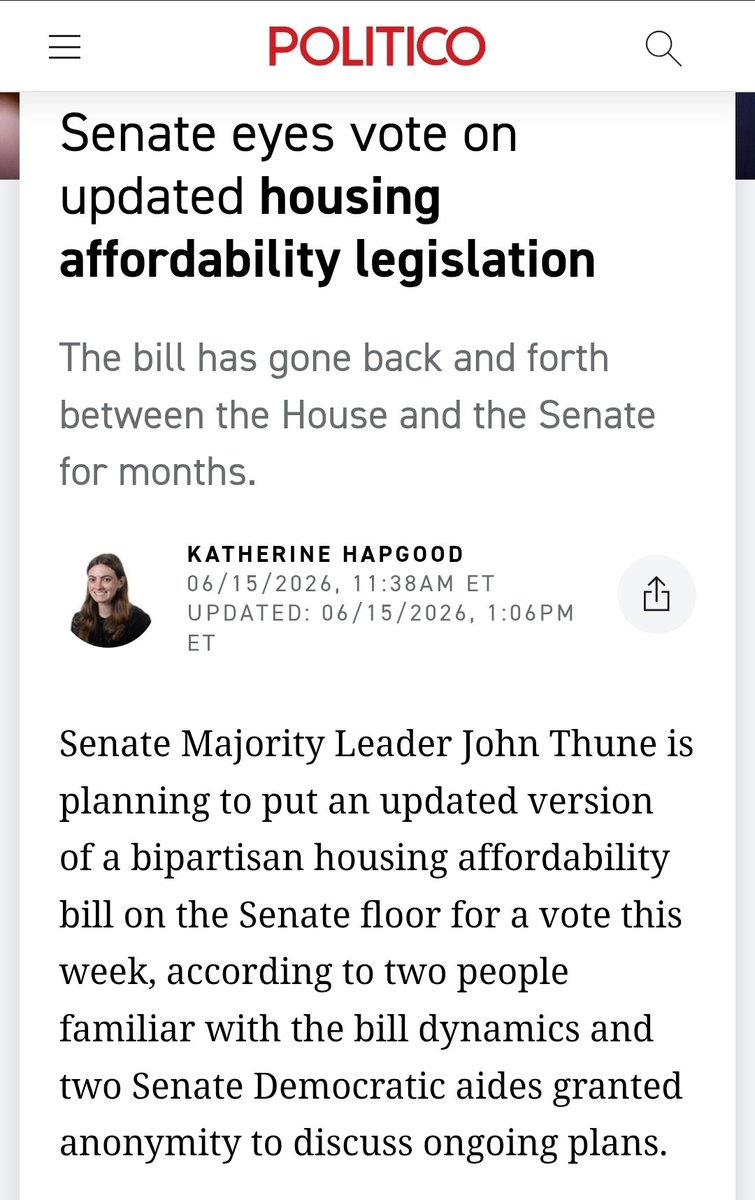
🚨 HOUSING NEWS: WE HAVE A BICAMERAL DEAL
House Financial Services Committee French Hill (R-Ark.) dropped his opposition to the latest Senate text this afternoon after negotiators agreed to last minute changes
Senate will vote on housing bill this afternoon. Scoop in PBN texts
@JohnnyDrama0 Some of bigger guys are still active yes but historically 75% of apartment starts are small local groups who face tougher environment, higher cost of capital, few efficiencies of scale etc. Incredibly fragmented business, far more than homebuilding.
The four corners of financial policy leadership on Capitol Hill make their bicameral housing bill official with this press release
Welcome to the world, bicameral 21st Century ROAD to Housing Act