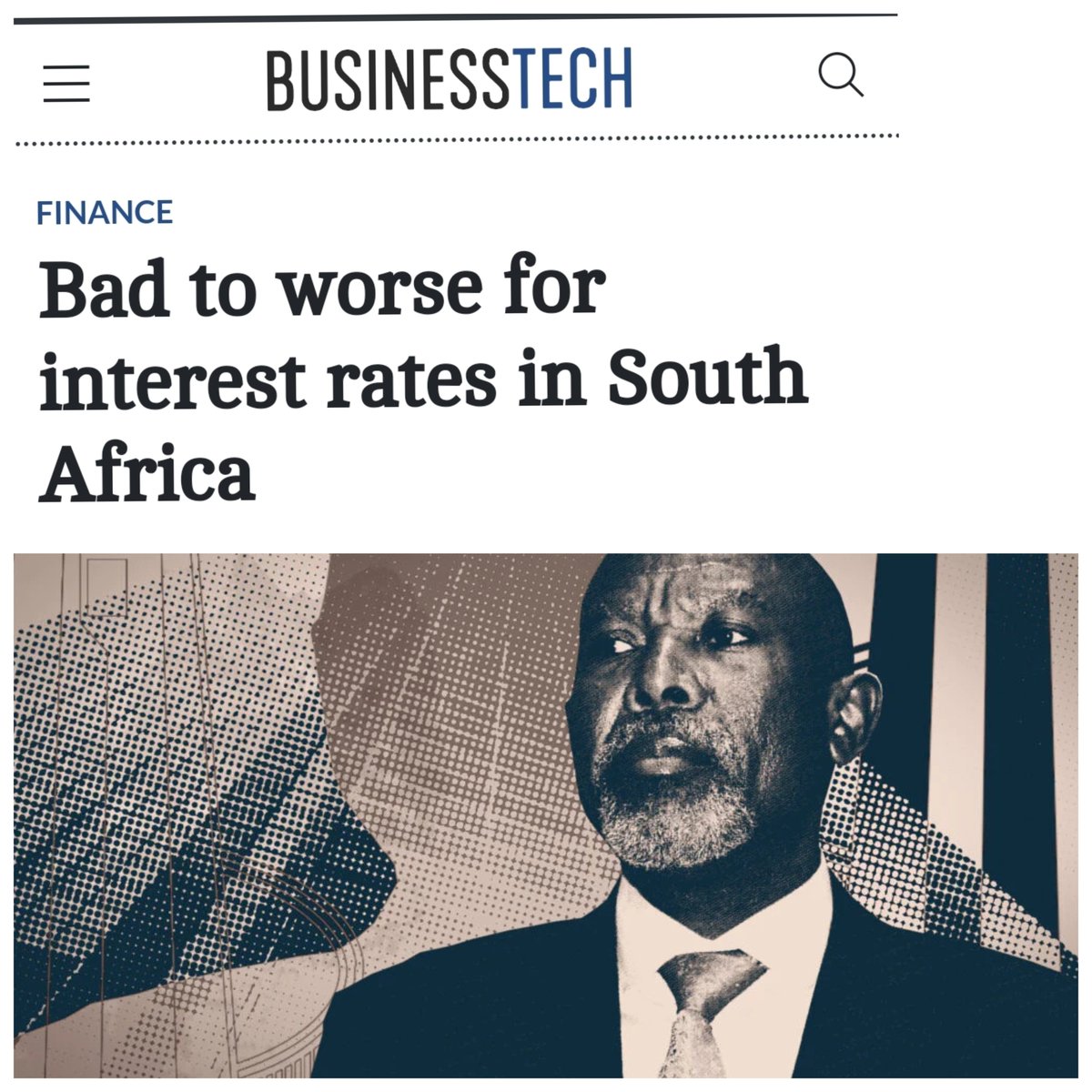
Last year, the South African Reserve Bank changed its inflation target from 3 - 6% to 3%, because they said the 6% was too high and that other countries had their target inflation around 2% to 3%.
Now they must keep interest high to reach their IMF-imposed target.
All of this is because the SARB operates on economic policies designed for rich economies where most people are employed and “managing demand” actually works.
Think of it this way: In a rich economy with high employment, when inflation rises, it usually means there’s too much consumer spending. Raising interest rates cools this demand.
In South Africa, however, where over 30% of people are unemployed, raising interest rates doesn’t fix the supply issue. It simply punishes already indebted households.
The SARB will say by keeping the financial markets stable through inflation control they protect the poor from loss of buying power. But this is just poverty maintenance, not alleviation.
Preserving the purchasing power of R370 may keep a person from sliding further into starvation, but it does not pull them out of poverty.
By lowering the target to 3% to align with the American and European central banks, the SARB is concerned with protecting foreign capital from currency depreciation. This makes South Africa attractive to foreign investors who hold government debt, but forces domestic monetary policy to punish to its own citizens.
Economists claim that the Reserve Bank has no choice but to raise interest rates to lower inflation, because that’s how monetary policy works, as if it’s a law of nature, when it’s just a choice of economic framework.
When they say South Africa has no choice, what they mean is that under the existing policy choices, any alternative policy triggers an immediate crisis.
What they mean is that because South Africa’s economic system is based on importing more value than it exports, bridging the gap relies on foreign investors buying South African government bonds and equities, a.k.a “hot money”.
These foreign portfolio investors can press a button and withdraw billions of dollars in seconds. So, to prevent them from pressing that button, the Reserve Bank must keep domestic real interest rates high enough to make South African debt attractive.
Basically, the South Africa is held hostage and forced to run monetary policy not for the primary benefit of the domestic real economy, but to maintain the confidence of foreign financial markets.
All of this *can* be changed, but it requires bearing the short-term pain that comes with switching the macroeconomic model.
The government and the Reserve Bank are far too captured to even consider this, and so South Africa keeps circling the drain indefinitely, and this is good enough for the technocrats in Pretoria.
@El_Sporo@NunguSompisi@PUMA 😂the funniest thing about this is that sundowns fans dont see the mockery in the tweet. The shirt is so basic that we start noticing sponsors disappearing , nothing special in the design