@_The_Prophet__ Think of Gaza but on a larger scale. What Israel did to Gaza they can do to Iran but only by directing US forces to do it for them. They don't care if the regime falls. A failed state with internal conflictswill do just as well. Look at the encouragement of the Kurds in parallel
A perfect example of how all of this was allowed to happen.
A man who is himself an immigrant fears people who want to determine their own gender or who simply seek a better life.
He throws them all into the same category and then claims that this is worse than what openly authoritarian regimes are doing.
This is exactly how societies lose perspective.
Blind resentment, poor education and cultivated ignorance create a world where people are taught to fear the powerless while ignoring the people who actually hold power.
So he continues to rage about trans people while dictators consolidate control, institutions erode and the risk of real destruction grows. The tragedy is not only the hatred. The tragedy is the complete failure to recognize where the real threats are.
And no, I am neither left nor right.
I do not even know what label would apply to me. I simply believe that people should be free to live as they choose as long as they do not harm others. At the same time, I believe that change should be carefully considered and that truth, freedom, transparency and accountability must always be preserved.
If that makes me “left” in your eyes, then place me there if it makes you more comfortable.
@BrianRoemmele What about Europe ? I'm British living in France and I know fa about ClaudeBots. At least you have gotten one more from a different area. :-)
a few unrelated observations/notes
1. @manyfest_ recently made me realize that beyond the obvious point that covenants on Kaspa can serve as first class state machines, they also have 2 significant properties:
• they are lightweight: on chain we store commitments to rules/state, and txns provide the witnesses for changes (transient cost vs persistent contract storage/rent)
• they can be entered atomically (multiple parties can create and enter into the covenant in one txn)
the last two properties seem to have significant potential in the agentic era. agents can define custom rules and agreements between them without deploying a contract (compare this to eth/sol contract/program). covenants are a fast, lightweight tool for such agent-to-agent rule systems.
2. Kaspa is reentering the GPU era. Kaspa r&d is already experimenting with several GPU workstations for zk proving.
3. @coderofstuff_ is doing fantastic work advancing dk in parallel to covpp work (and making sure the content of my long-overdue, unshared post gets shared nonetheless) https://t.co/Ij6QSXKUIr
Most anxiety is physiological, not psychological.
Low HRV reflects a system locked in defense.
Breathing changes HRV by directly signaling safety.
Why breath training matters more than meditation ↓
https://t.co/7kTogtJlzt
🚨 Long text, also available in different languages, links to different languages in the bottom of the post.
Why we believe $KAS is going to $1 — and why this is realistic?
Our conviction is not based on short-term price action, but on what is fundamentally unfolding within Kaspa right now. Kaspa doesn’t just solve the scalability trilemma, it addresses a much bigger question:
How do you build a high-performance, decentralized proof-of-work network that can act as a global settlement layer and an application platform, without sacrificing security or decentralization?
With the latest technical developments, most notably vProgs and Covenants++ from the Yellow Paper, Kaspa is moving beyond the role of a pure payment chain.
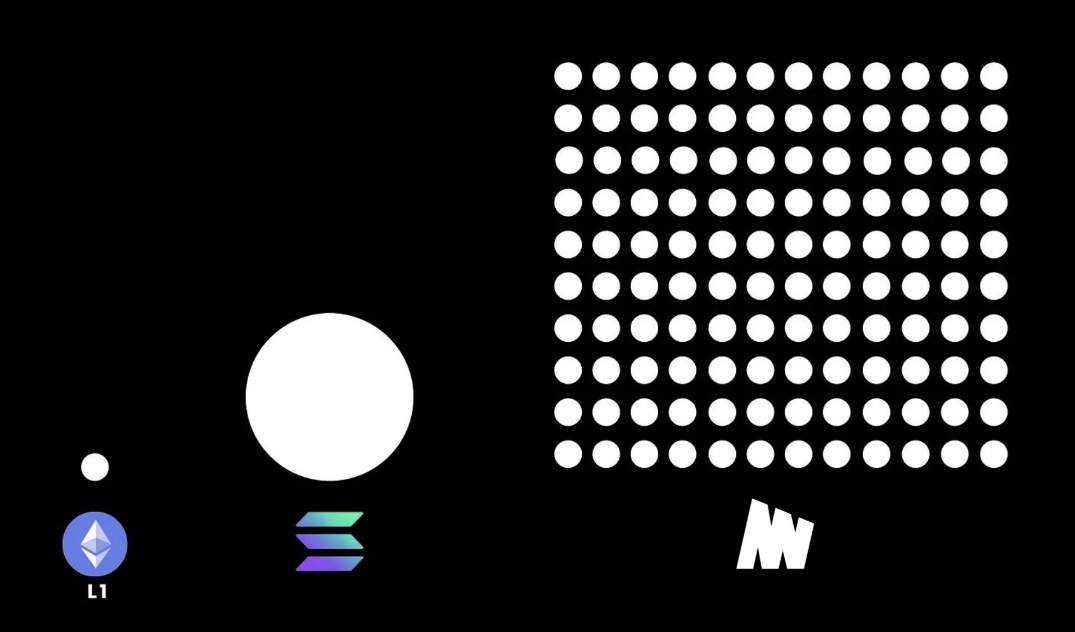
Execution is intentionally not monolithic on L1, but off-chain, while sequencing, finality, and security remain anchored to Kaspa L1. This is a fundamentally different architectural path than Ethereum or Solana and directly addresses systemic issues such as L1 congestion, centralized sequencers, and ecosystem fragmentation.
As Hans Moog (@hus_qy) put it succinctly: Kaspa may be late to the party and that is precisely its advantage.
While many DLT projects evolved incrementally over time, accumulating complexity, technical debt, and contradictions, Kaspa had the opportunity to observe, abstract, and distill the best ideas from years of global research. No buzzwords, no legacy baggage, just focus on what truly works, and ruthless elimination of everything else.
This becomes tangible in the vProgs framework, which has recently been open-sourced: a post-Amdahl execution model enabling inter-block parallelism, almost entirely without locks, speculative execution, or unnecessary logic. Behavior emerges from dependencies and relations rather than complex control flows. Hardware maps directly to workload, enabling linear scalability where traditional blockchain execution models hit hard limits.
This is where the explosive potential of the current phase lies. Kaspa isn’t just becoming faster, it’s becoming fundamentally simpler, more robust, and more scalable. These kinds of architectural leaps are rare, difficult to replicate, and historically exactly what drives long-term repricing.
At the same time, Kaspa is expanding beyond crypto-native use cases through @KaspaKii (thank you so much). Initiatives such as WarpCore and ISO-20022 compatibility are not marketing narratives, they are infrastructure work. Kaspa is becoming technically compatible with existing financial systems, settlement flows, and real-world use cases outside the pure crypto space. This is where long-term volume and relevance are created.
⚠️Crucially, this evolution is not happening on L1 alone.
Around Kaspa, an ecosystem is emerging that many still underestimate: a highly active community of developers building tools, libraries, explorers, wallets, research, Layer-2 approaches, and early applications. Much of this happens quietly, without heavy marketing, but this is exactly how sustainable networks are built.
Many of these developments go unnoticed simply because so much is happening behind the scenes. This is where technically minded communities see value early. A useful analogy is Amazon. To most people, Amazon is an e-commerce giant. Yet its true value engine is Amazon Web Services (AWS), infrastructure that runs quietly in the background, represents a smaller share of revenue, but generates a disproportionate share of profits. Technology is often underestimated when it’s invisible. Kaspa is building exactly this kind of technology, decentralized infrastructure, in a sector that is likely to evolve far more toward decentralization than many currently expect.
From an economic perspective, $1 is far from extreme.
Due to Kaspa’s Chromatic Emission Schedule, roughly 27.1 out of 28.7 billion KAS are already in circulation, with over 95% of supply mined by mid-2026. Structural miner sell pressure is fading rapidly. Kaspa becomes more scarce every month, not more diluted.
At $1, Kaspa’s market capitalization would be approximately $27–28 billion. Historically, this is moderate:
about 5% of Ethereum’s peak, 20% of Solana, 15% of Binance Coin, and roughly equivalent to Litecoin at its cycle highs. The difference is obvious: Litecoin was a legacy payment network. Kaspa offers second-level finality, native parallelism, and programmable functionality. It is difficult to argue consistently that a network with orders of magnitude higher throughput and expanding utility should not reach at least comparable valuation levels.
Our conclusion:
$KAS is still priced like a fast payment coin. In reality, it is evolving into a high-performance, decentralized settlement layer for sovereign applications and real-world financial infrastructure. When this disconnect closes, $1 is not a moon target — it is a rational repricing.
— https://t.co/AhEGEac1qP
We recommend everyone to study $KAS in detail.
This post is available in multiple languages:
🇩🇪DE -> https://t.co/VM84m33TeD
🇪🇸ES -> https://t.co/qAJZGMCVts
🇵🇹PT -> https://t.co/7SmvLvtGmv
🇨🇳CN -> https://t.co/bHxTZtzAcG
🇹🇭TH -> https://t.co/9WbFW6sTCn
🇧🇩BN -> https://t.co/acjWVnOxU4
🇹🇷TR -> https://t.co/IcrOaIogBg
🇯🇵JP -> https://t.co/M2v5UX4Wei
Have you ever looked at different DLT projects and realized they're all converging on the same ideas, just with different terminology?
And have you ever wondered what would happen if you forced all DLT projects to have a baby, where each could only contribute their most powerful ideas?
You'd be surprised by the overlap - how non-unique many projects actually are - and how few genuinely good ideas exist. Often they sound almost trivial once you strip away the noise.
The problem is that fundamental breakthroughs get buried under layers of unnecessary complexity - the inevitable result of gradually expanding a protocol's capabilities as research progresses.
With Kaspa, we have the benefit of being late. In fact, we're so late that we arrive at the party when almost all the research has already been done. We can skip the archaeology and just make that perfect baby - making the final breakthrough on our quest for perfection.
Today we are open-sourcing our vprogs framework: https://t.co/eCvvSAyt1n
A post-Amdahl execution engine that enables inter-block parallelism and linear scaling beyond boundaries traditionally assumed to be possible in the context of DLT execution.
By deeply understanding causal actors and domains, we eliminate almost all logic and instead encode behavior in dependencies and relational properties of a generic type framework.
This allows us to transparently map hardware resources to workload - achieving linear scalability.
The design principles:
- No fsync / WAL flush boundaries
- No mutexes / locks
- Versioned append-only data with efficient rollbacks
- Maximal parallelism - even inter-block - breaking through Amdahl's law
- No wasted CPU cycles on speculative execution
This repo is still heavily WIP with rough edges (we don't even prune state yet). But the goal of this repository is to create a concrete instantiation of all existing research directions condensed into a singular, maximally performant type framework that gets away with almost no logic.
There's still room for improvements (zero-copy deserialization, NUMA affinity, etc.) but we're converging toward a system that can eventually no longer be optimized or simplified.
The holy grail of blockchain execution isn't more complex but orders of magnitude less complex than anything that exists today!
I am really looking forward to tell you more about this in the coming weeks (I just ordered a new microphone pre-amp to be able to host regular hangouts where we can discuss and explain how everything works under the hood - let's pray for a fast delivery 😅).
Google is worth >$3.8 trillion. Facebook (Meta) is worth >$1.65 trillion
They got rich by being in the middle
When you send a message on Facebook, you aren't just sending data. You are entering a walled garden
Facebook tracks your data, sells ads against your attention, and decides if you are allowed to speak. They are the digital landlord. You are the tenant paying rent with your privacy
This is the "Web2" model: Companies build platforms, trap users inside, and extract maximum value
Now look at email. Who owns email?
There is no "Email CEO." There is no headquarters for SMTP (Simple Mail Transfer Protocol). It is just a set of rules that computers agree on
Because nobody owns it, nobody can ban you from email. Nobody charges you a "30% tax" to send an email (unlike Apple’s App Store). Gmail might show you ads, but you can switch to Outlook or ProtonMail and still talk to the same people
Kaspa also is not a company. It's a protocol, like email
There is no "Kaspa Inc." taking a cut of your transactions. There will be no CEO who can decide to freeze your funds because they don't like your politics
It is a public utility; digital pavement in a sense
In the old model (Web2), the goal was to build the biggest company
In the new model (Web3), the goal is to build the most valuable public infrastructure
If you build a business on top of Twitter (X), Elon Musk can change the algorithm tomorrow and destroy your business. You are building a house on rented land, so to speak
If you build a business on top of Kaspa-- a payment app, a micropayment game, a supply chain tracker-- the rules cannot change against you. The land is neutral.
In the 1990s, the value accrued to the applications (Google, Amazon). The underlying internet protocols (TCP/IP) stayed "free"
In crypto, the value accrues to the protocol itself
Because Kaspa is money, not just data, everyone who holds the coin owns a share of the network. When the network becomes more useful, the value doesn't go to a CEO's stock options. It goes to the users, the miners, and the holders
The next trillion-dollar entity may not be a corporation with a headquarters in Silicon Valley
It may be a piece of open-source code running on thousands of laptops, owned by nobody and everybody
Crypto is having two completely different conversations and most people are in the wrong one
Conversation A: "TradFi finally involved! Bitcoin ETFs! Institutional adoption!"
Conversation B: "how do we get a billion people using apps built on crypto infrastructure without knowing they're using crypto?"
Guess which one actually matters. Guess which one Twitter is obsessed with
Current crypto serves maybe 100 million people: tech nerds, speculators, ideological converts
The next billion don't give a shit about any of that. They have actual problems: construction worker in Dubai losing 8% on remittances, freelancer who can't trust cross-border clients, someone watching savings evaporate in Venezuela
Yeah, crypto is "going mainstream" in 2025-- but in ways that won't matter for the next billion users
BlackRock made Bitcoin ETF a flagship 2025 theme alongside Treasuries and U.S. blue chips. $25 billion in inflows. Institutional investors increased crypto allocations-- 73% cite "higher future returns" as motivation. Major banks deploying enterprise blockchain for securities settlement
This is all Wall Street getting Bitcoin exposure for portfolio diversification
None of it solves remittance fees. None of it helps freelancers trust strangers. None of it stops Venezuelan savings from evaporating. It's speculation repackaged as "institutional adoption"
The people missing the plot think "mainstream" means Goldman Sachs trading BTC
Actual mainstream is someone in Manila using an app-- not knowing it runs on crypto-- to send money home in 3 seconds with 0.1% fees instead of Western Union's 8% and 3-day wait
We're in crypto's 2003 moment
Dotcom crash killed many internet-based companies. Most people declared "internet is dead." But the people who stayed built Google, Facebook, AWS-- solving actual problems, not chasing Nasdaq valuations
Crypto's 2021-2022 bubble burst. NFT profile pics, DeFi ponzis, play-to-earn scams-- dead. Wall Street jumped in with ETFs because that's what they know how to do: financialize assets. But this is NOT the breakthrough
The breakthrough is infrastructure built for years that normies will never see
They won't use "crypto." They'll use apps. Remittance apps. Escrow apps without lawyers. Content platforms where you pay $0.001 per article instead of being pay-walled. Supply chain verification via QR codes
They'll never know the words "blockchain" or "ZK proofs"-- just like you don't think about HTTPS or TCP/IP (let's not pretend the vast majority of us reading this post even understand deeply what either ZK or TCP/IP even means)
Mainstream finance is talking about Bitcoin ETF outflows and institutional portfolio allocation
Builders are talking about off-chain execution, ZK proof verification, computational DAGs for atomic composability-- the infrastructure that makes apps work seamlessly while running on decentralized rails
Wall Street measures success in AUM and inflows
Builders measure (and I will be measuring) success in "will my grandmother use it without knowing?"
The dotcom crash didn't kill the internet-- it killed the bullshit and cleared the way for real infrastructure. Crypto's doing the same thing right now
Wall Street thinks they're mainstreaming crypto with ETFs. They're just financializing another asset class. The actual mainstream moment happens when a billion people use apps built on crypto infrastructure without knowing or caring what's underneath
The bubble tourists talk about institutional adoption. The builders keep working on the hard problems. Watch what happens next
A post coming soon on what I think is the problem; crypto has been trying to solve compute-as-a-service but failing because web2 does this better. The real opportunity (blocks + ZK proofs [fancy math]) is broadcasting verified computation on a public ledger that coordinates immediate settlement
Most crypto projects do incentives that drive project for hype. Instead minima has no incentives.
It runs on collaboration, not competition. Every user runs a full node on their phone or IoT device — no energy-guzzling mining, no block rewards centralizing power.
Minimal chose true decentralization over short-term pumps. Fair access for everyone from day one.
@TFTC21@Kevin_McKernan There is zero credible evidence linking Shinzo Abe’s assassination to vaccines, mRNA tech, or Covid policy. Post your source here. I'm waiting.
$Minima Blockchain where every chip is an equal constructing and validating node, making it the most
Distributed and most decentralized blockchain to ever be.. like @Instynkt2 said
It'll become a part of everyday life similar to Bluetooth and GPS in our devices for nothing. 👾