This piece collapses under the weight of its own theatrics. A single maritime incident, with no casualties, no environmental spill, and no verified evidence of systematic suppression, is inflated into an indictment of UAE governance.
The absence of viral footage is treated as the smoking gun of state censorship. Controlled port environments have restricted access by design, and not every incident produces a stream of smartphone clips simply because smartphones exist. Turning “we didn’t see enough videos” into “the government is hiding everything” is guesswork dressed in certainty, and serious editors should know the difference.
On the photography question specifically, the piece betrays a striking ignorance of how modern technology actually works. Every image captured on a smartphone carries embedded metadata, including precise GPS coordinates of where and when it was taken. In an active conflict environment, a single photograph shared carelessly does not just show a burning ship. It can confirm a strike’s accuracy, reveal defensive positions, or hand an adversary real-time intelligence about damage assessment. Every serious military and security establishment in the world, including those of the US and the UK, restricts photography in sensitive zones during active hostilities for exactly this reason. Framing the UAE’s position as exotic authoritarian vanity, while ignoring this elementary operational security reality tells you something about the piece’s intentions.
The article quotes UAE cybercrime provisions as though they are instruments invented specifically to silence inconvenient truths, when laws restricting the spread of false or panic-inducing information during security crises exist in virtually every jurisdiction. Federal Decree-Law No. 34 of 2021 targets content that is false, misleading, or capable of disturbing public order, not personal communication or eyewitness testimony as such. The operative legal question in every case is what was shared, with whom, and whether it met that threshold. None of that analysis appears in the piece. Instead, private messaging, rumour propagation, and professional reporting are blended into a single outrage bucket, and the reader is invited to feel rather than think.
The piece’s most emotive claim is that three survivors were arrested for sending private photos to reassure their families after a residential strike. A serious publication would ask what those images actually contained, whether they included locational metadata capable of being extracted and exploited, what specific provision was invoked, and what the evidentiary basis for any charge was. None of those questions are asked.
Quoting one individual claiming “hundreds” of arrests without verifiable data, judicial records, or official statistics is not evidence. It is hearsay. Rigorous reporting would cross-check, contextualise, and distinguish between enforcement against active disinformation and arbitrary detention. This piece does none of that. It piles anecdote on speculation, labels the result systemic repression, and moves on before the reader can notice the evidentiary gap.
In its final stretch, the piece abandons any pretence of covering the incident and pivots to kafala, urban theory, and Mike Davis’s decade-old prose about Blade Runner fantasies. This is where the mask slips entirely. The tanker was never really the story. The Creek Harbour tower was never really the story. They were hooks, convenient pegs on which to hang a critique of Dubai and the UAE that was written long before any of these events occurred. The incident did not generate the analysis. The analysis was waiting for an incident. This isn’t journalism, it’s fiction with a headline.
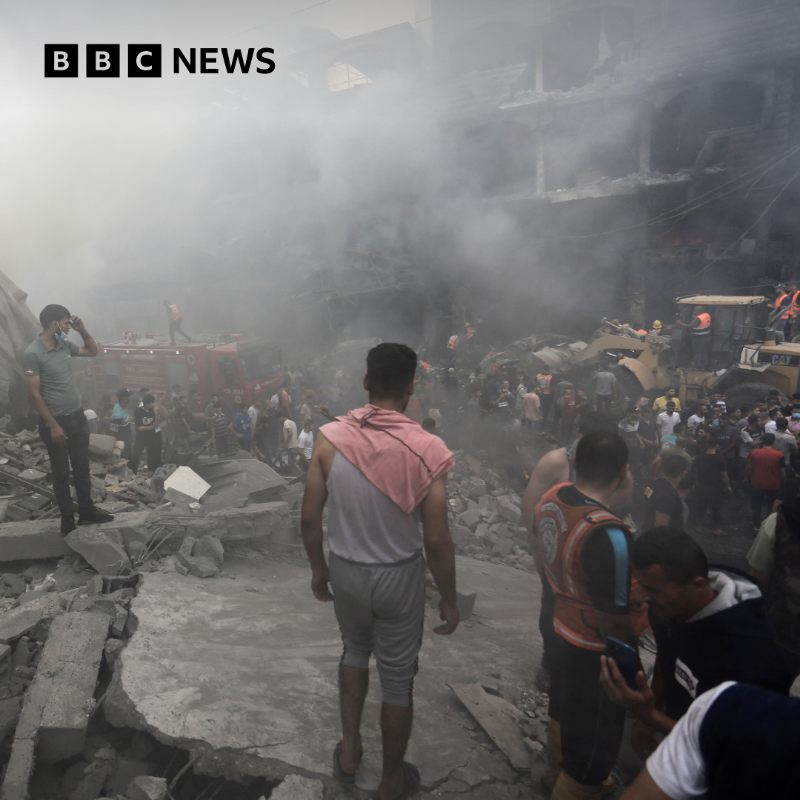
More than 500 people have died in Gaza after Israel launched massive retaliatory air strikes, according to Gaza's health ministry
More than 700 people have been killed in Israel since Hamas launched its attacks on Saturday
Follow the latest ⬇️