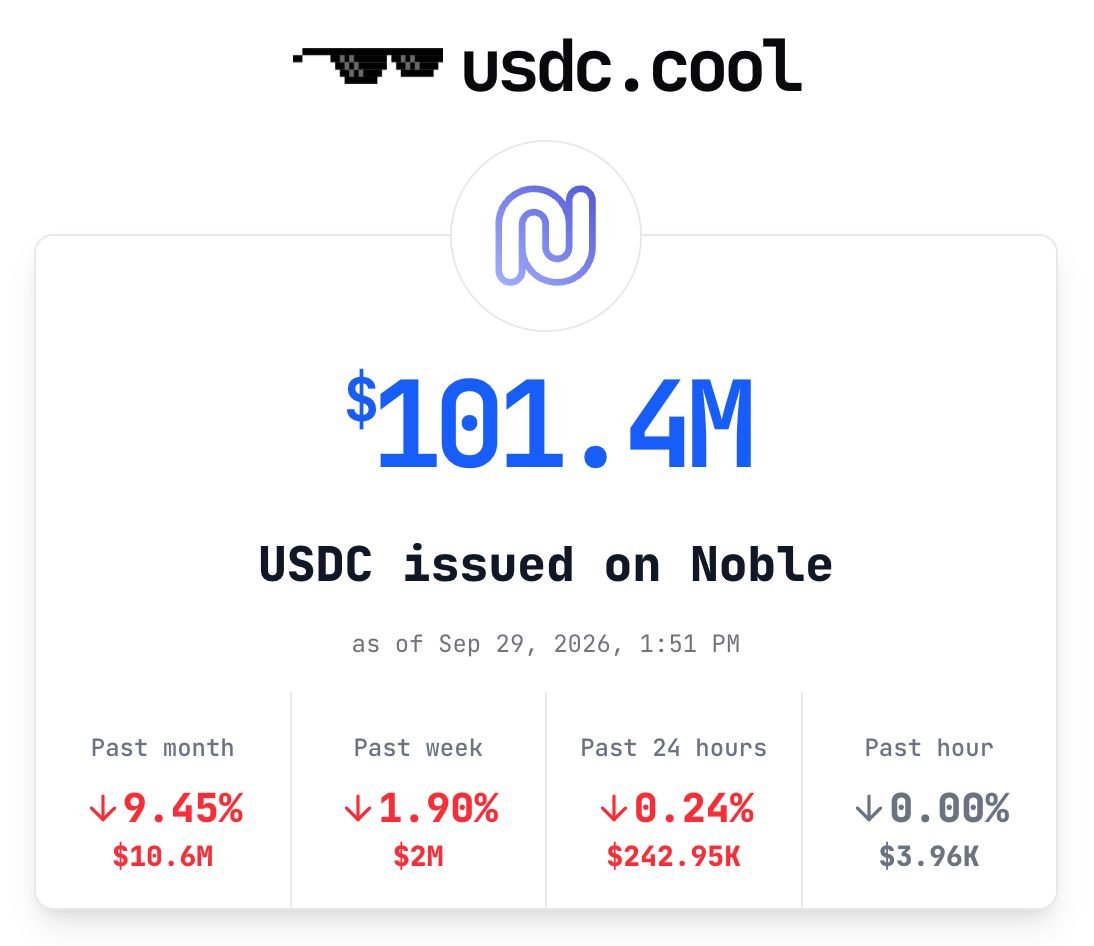
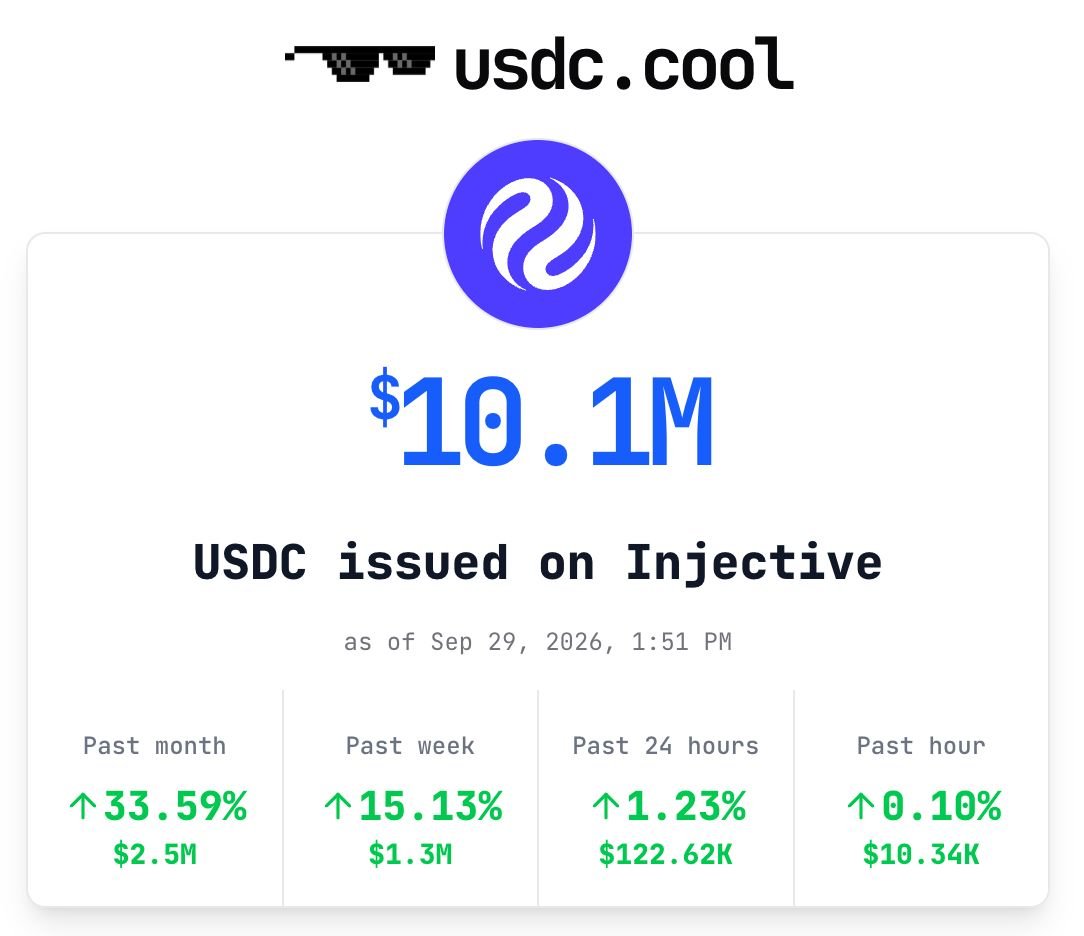
@injective So the 33%+ figure is better understood in context.
USDC liquidity is starting to move toward Injective as Noble is phased out and USDC.inj becomes the shared standard across Cosmos and dYdX.
The migration is already live.
Injective just shared a number that’s easy to scroll past:
USDC issuance on Injective is up 33%+ over the past month.
At the same time, more than $100M of USDC issuance is being moved over from Noble as Cosmos transitions to USDC.inj.
$INJ @injective
🧵👇
@injective There’s also a clock running in the background.
Circle stops new USDC minting on Noble on October 13.
From October 31, CCTP V1 burn limits begin decreasing, with Noble’s Circle Mint and CCTP access scheduled to end on January 13, 2027.
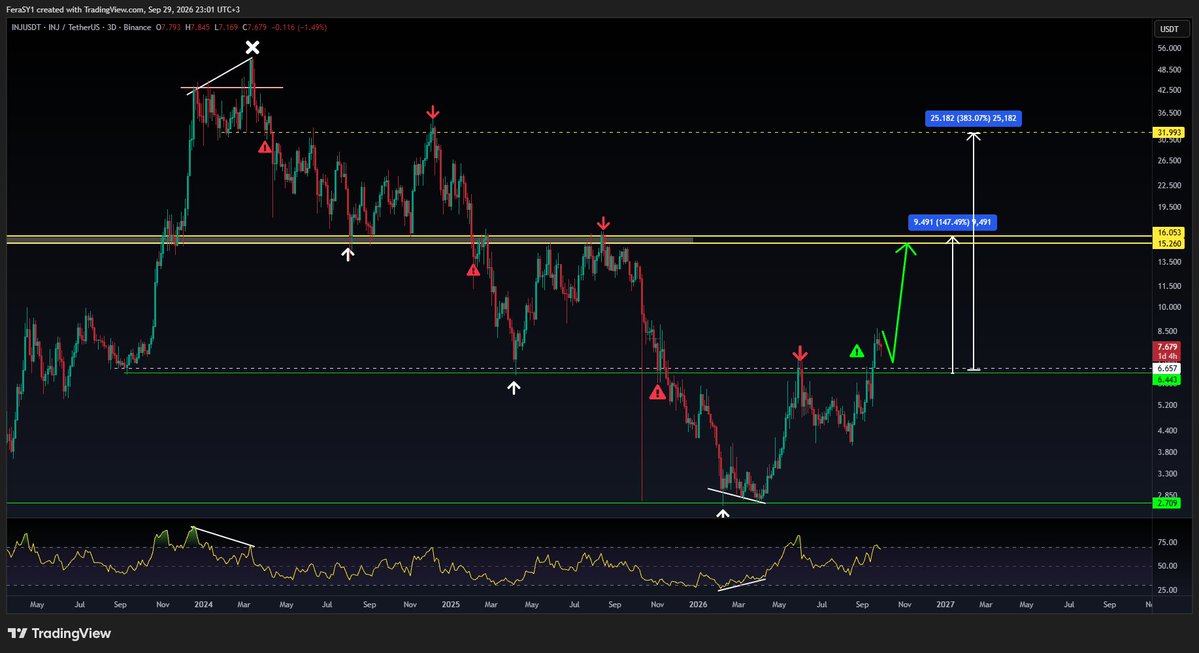
#INJ $INJ
bullish !
I see this going to 10 then 15.5$
Note: I am already building a position with my https://t.co/qyYnDhQqhy members
#injusdt#bullish#altcoins
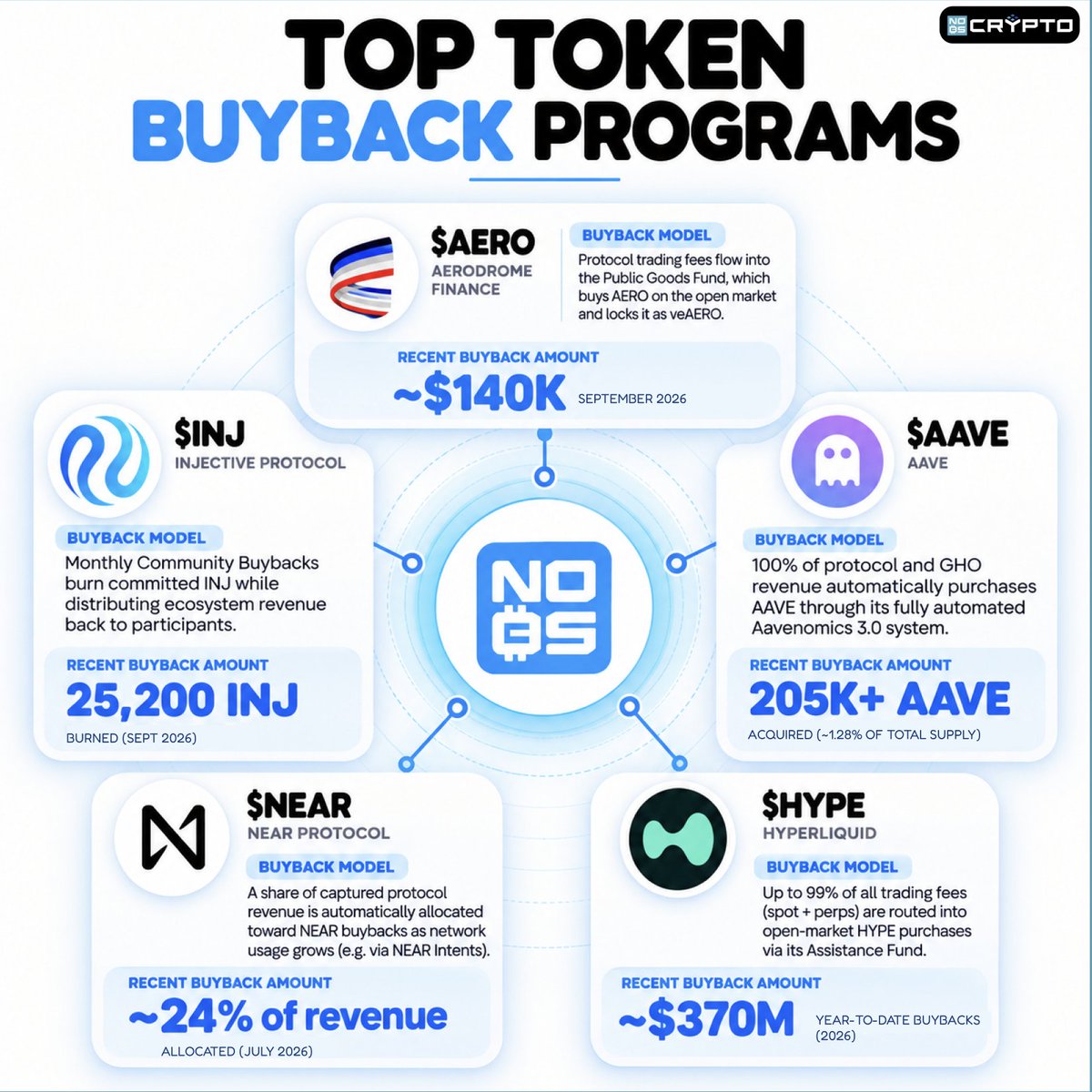
We always hear teams DUMPING tokens
But few realize there's a small handful where teams are BUYING back tokens
The purpose of these buybacks range from
• Token burns
• Lock & stake
• Ecosystem Funds
Let's look at a few
• $AERO
• $AAVE
• $HYPE
• $INJ
• $NEAR
And these projects aren't just buying back their tokens for number to go up
Most times these buybacks directly reflect ecosystem incentives and overall network growth.
Let's look into each of these 5 key examples
AERODROME FINANCE–––
Aerodrome's model is one of the more direct pipelines in DeFi:
A share of protocol trading fees flows straight into its Public Goods Fund and Flight School program
They use that revenue to buy AERO on the open market.
But the AERO doesn't just get burned and forgotten, it gets locked as veAERO.
That's the actual point of the mechanism: converting protocol revenue into long-term governance power
It's less about shrinking supply and more about concentrating influence with the protocol itself.
Most recently, the Public Goods Fund executed a buyback worth roughly $140K on Sept 3, 2026.
AAVE–––
Aave's buyback program is structured as a continuous, revenue-funded operation rather than a one off event.
It launched around April 2025, initially run by the Aave Finance Committee and TokenLogic
They execute open market AAVE purchases on a recurring basis using real protocol revenue.
Then on June 25, 2026, Aave shipped Aavenomics 3.0, automating the program entirely, funded by 100% of protocol + GHO revenue.
Now it runs continously unless governance halts it.
More Aave use = More AAVE bought back automatically
It reduces reliance on emissions-based incentives, using real lending/borrowing revenue to create sustained demand instead.
As automation went live in June 2026...
The program's acquired over 205,000 AAVE (~1.28% total supply) since inception.
HYPERLIQUID––––
Hyperliquid takes the most aggressive approach of the five projects listed here.
Its Assistance Fund routes up to 99% of all trading fees, spot and perps combined, directly into HYPE buybacks.
The utility angle is scale: as Hyperliquid expands into new markets...
Fee revenue grows, and the buyback flow grows proportionally with it.
As of Aug 31, 2026, Hyperliquid's buybacks totaled roughly $370M year-to-date for 2026.
INJECTIVE PROTOCOL––––
Injective's approach is participatory rather than purely mechanical.
This is thru its monthly Community Buy-Back
Here's how it works:
Users voluntarily commit their own INJ into a pool in exchange for a pro-rata share of ecosystem revenue (paid out in USDT and other tokens).
Once committed, that INJ is permanently burned for good
The purpose is twofold:
Itt gives holders a direct yield-like incentive tied to real ecosystem revenue
Simultaneously making burns a community-driven event than just protocol execution behind the scenes
Most recently, September 2026's Community Buyback round burned 25,200 INJ, continuing the monthly cadence.
That's on top of the former Burn Auction model, which had already burned 6.78M INJ (~7% of supply)
NEAR PROTOCOL––––
NEAR's buyback isn't structured around a fixed dollar budget like Aave's or Hyperliquid's,
Rather it's a direct % of captured protocol revenue
Meaning buyback size scales directly with network usage rather than a governance-set allocation.
This matters because it ties buybacks to real efficiency gains, specifically from NEAR Intents,
Which has been improving revenue capture per unit of transaction volume.
From July 2026, roughly 24% of NEAR's captured revenue over the 30 days was feeding the buyback flow
In other words, as NEAR's underlying tech gets more efficient at capturing value, the buyback mechanism gets stronger.
––––
Five different mechanisms. Same underlying signal.
Teams with real revenue are choosing to buy their own tokens back instead of just emitting more.
This shows a protocol that's putting it's money where the utility is🔑
🥷 INJECTIVE ANNIVERSARY CAMPAIGN IS HERE 🥷
@Injective Anniversary is coming.
This campaign commemorates what $INJ has built over the years, told by the community that stayed through every chapter.
Last year’s Anniversary winners return to host.
Prepare your posts, threads, and graphics. Official host will start soon.
🗓️ Duration: Oct 1 - Nov 8
🎁 Prizes: 180 INJ + 8 Ninja Passes
Campaign Plan:
1️⃣ Hosts: Quote-tweet this Lounge post, set the vibe & run their days
2️⃣ Topics: Locked to Injective’s journey, alphas and milestones
3️⃣ Rewards: @InjectiveLounge announces winners every 4 days
⚡Lock in, ninjas! ⚡
@injective Those are described as integrations/use cases to be rolled out, so I wouldn't treat every one as fully live yet.
That distinction matters.
The Solana expansion isn't one giant product launch. It's a shared INJ asset being plugged into different parts of the Solana
The list of Solana integrations for $INJ looks long, but there’s a reason it matters beyond the number of logos.
Sunrise gives INJ a shared Solana asset layer that different apps can integrate around.
That makes the rollout much more interesting to me. @injective
🧵👇
@injective The rollout also leaves room for other use cases.
Injective's announcement mentions potential INJ routes through Jupiter and Titan, possible execution through DFlow, and potential lending through Kamino.
@injective So one BuyBack now has two different things happening at once:
$INJ gets removed from circulation, participants still receive their normal revenue share, and eligible addresses can get an extra Stock Token.
Pretty interesting change to the BuyBack.
The new Stockdrop is probably the part of this BuyBack people will talk about most.
When you take part in the @injective Community BuyBack, you now have a chance to receive a tokenized stock as an extra reward. $INJ 🧵👇
@injective The stock tokens are delivered on Robinhood Chain, not directly on Injective.
And they represent economic exposure to the underlying stock, not actual ownership of the company. That distinction is important. @injective