Retired USAF veteran and former FAA electronics specialist focused on real citizen-driven government reform.
Founder and President of Citizens Ratification Inc. and creator of the Citizens Ratification Amendment (CRA) — a constitutional proposal designed to restore continuous Citizens Oversight of government without changing the Republic itself.
I believe government power should remain limited, accountable, and answerable to the American people — especially regarding laws, regulations, executive orders, and federal authority.
Open to respectful public discussions about the CRA, government, technology, and politics. You’re welcome to DM me.
Military Service — USAF (1981–2005)
• Enlisted: November 7, 1981
• Retired: November 30, 2005
• Specialized in Aircraft Avionics and Electronic Systems
Deployments and Operations
• Honduras (1984)
• Iraq — Operation Desert Storm (1991)
• Bosnia — Operation Joint Guard (1996)
• Afghanistan — Operation Enduring Freedom (2001)
• Iraq — Operation Iraqi Freedom (2003)
Additional Service Activities
• Airborne Firefighting
• Hurricane Relief
• Cargo Transportation
• Aircraft Ground Crew Operations
Federal Aviation Administration (2005–2018)
• Advanced Aviation Technology
• One of only twelve nationally certified for Power Systems at the Los Angeles Air Route Traffic Control Center
Technology Background
• Founded and led a technology company (1995–2000)
Citizens Ratification Amendment (CRA)
• Began development in 2018
• Focused on restoring structured Citizens Oversight while preserving constitutional government
#RetVet #CitizenReform #GovernmentReform #USAF #FAA #CRA #CitizensOversight #Veteran
The people of the United States, in order to restore and secure the enduring consent of the governed, do establish this Citizens Ratification Amendment as a permanent mechanism of democratic oversight and a coequal fourth branch of government known as the Citizens Ratification Branch.
We the People of the United States and of every State shall not be subject to any Federal, State, county, or municipal law, executive order, or regulation which the citizens have not ratified in accordance with this Amendment. All enforceable acts of government shall be presented monthly through a secure national Citizens Ratification Branch Portal for direct citizen ratification or rejection.
All ratifications and related processes shall be conducted electronically through the Citizens Ratification Branch Portal employing state-of-the-art verification methods, including biometric and encrypted credentials with quantum-resistant cryptography or higher standards as technology advances, prioritizing individual integrity and approaching one hundred percent certainty in confirming lawful access by verified citizens of voting age. Any non-citizen or fraudulent access attempt shall constitute a high crime and misdemeanor subject to prosecution. The Portal shall maintain no permanent storage of personal identifying data beyond what is strictly necessary for authentication.
Each official tally of citizen selections shall be certified under oath or penalty of perjury by the Director of the Citizens Ratification Branch. Participation by at least ten percent of registered Portal users in the relevant jurisdiction shall be required for any ratification or rejection to take legal effect. Federal measures shall be subject to nationwide citizen ratification. State-level measures shall be subject only to residents of that State. County and municipal measures shall be subject only to residents of the affected jurisdiction.
A majority of participating citizens recording their selections shall determine acceptance or rejection. Citizens may cast selections of Accept or Reject at any time, and forensic audits of all selections shall be conducted with transparent results published in the Portal. The Citizens Ratification Branch shall provide a publicly visible neutral Artificial Intelligence assistant known as Sentinel to generate clear, factual, scientific, and objective summaries, responses, and educational resources for all citizens. Sentinel shall hold no authority over outcomes and shall refer all flagged issues, anomalies, or concerns to the Director for assignment to investigative boards.
The Citizens Ratification Branch shall maintain a Master Law Library as the sole authoritative register of all measures at every level of government. Only measures not rejected in accordance with this Amendment shall remain enforceable. Citizens may search the Library by category, jurisdiction, and date. Classified or confidential measures shall appear as non-revealing placeholders with classification status certified annually by the President. Absence of a rejection flag in the Library shall signify enforceability. No regulation shall take effect until entered into the Library after three consecutive ratifications.
Statutory laws and executive orders shall take effect immediately upon issuance and shall remain enforceable unless rejected by the citizens in three consecutive monthly cycles meeting the participation threshold. Regulations shall not take effect upon issuance and shall become enforceable only after being ratified by the citizens in three consecutive monthly cycles. Upon the first or second rejection of any measure, it shall remain enforceable and citizens shall receive immediate Portal notification of the rejection count and status. Upon the third consecutive rejection, the measure shall be immediately declared void and unenforceable, marked as unratified in all public legal records, and may not be enforced in its rejected form. Any intervening month failing the participation threshold or yielding approval shall reset the strike count to zero. Nothing in this Amendment restricts the legislative or executive branches from revising, reissuing, or reenacting measures.
The Citizens Ratification Branch shall include a Citizen Commons for open discussion where citizens retain full free-speech rights and may block, filter, or curate their own experience. The Branch shall be governed by a Director appointed by the President of the United States and a Board consisting of one member appointed by each State Governor. The Branch shall have no employees and shall execute all operational functions through contracted services terminable at any time by the Board without cause or penalty. Compensation for the Director and Board Members shall be provided by their appointing authorities.
Any person, including the Director, Board Members, contractors, vendors, technical personnel, public officials, or private citizens, who tampers with, delays, interferes with, manipulates, alters, suppresses, or distorts any citizen selection, tally, Portal display, summary, Master Law Library entry, or ratification process commits a high crime and misdemeanor punishable by imprisonment of not less than twenty years nor more than life in federal prison, by impeachment where applicable, or by both. Such violations shall trigger immediate forensic investigation and referral to the Department of Justice.
The Citizens Ratification Branch shall be fully funded by the United States Treasury as a coequal constitutional branch through mandatory appropriations. Initial funding shall be twenty-five billion dollars per year until twenty-five million citizens register on the Portal, after which funding shall follow a benchmark of approximately one thousand dollars per registered citizen per year, inflation-adjusted, used exclusively for Portal, Library, and citizen services. No external revenue sources shall be permitted.
This Amendment strengthens the Republic, preserves the powers of the Legislative, Executive, and Judicial Branches, and ensures that no enforceable measure shall exist without the continuing consent of the governed expressed through the Citizens Ratification Branch. All provisions of this Amendment are self-executing.
The people of the United States, in order to restore and secure the enduring consent of the governed, do establish this Citizens Ratification Amendment as a permanent mechanism of democratic oversight and a coequal fourth branch of government known as the Citizens Ratification Branch.
We the People of the United States and of every State shall not be subject to any Federal, State, county, or municipal law, executive order, or regulation which the citizens have not ratified in accordance with this Amendment. All enforceable acts of government shall be presented monthly through a secure national Citizens Ratification Branch Portal for direct citizen ratification or rejection.
All ratifications and related processes shall be conducted electronically through the Citizens Ratification Branch Portal employing state-of-the-art verification methods, including biometric and encrypted credentials with quantum-resistant cryptography or higher standards as technology advances, prioritizing individual integrity and approaching one hundred percent certainty in confirming lawful access by verified citizens of voting age. Any non-citizen or fraudulent access attempt shall constitute a high crime and misdemeanor subject to prosecution. The Portal shall maintain no permanent storage of personal identifying data beyond what is strictly necessary for authentication.
Each official tally of citizen selections shall be certified under oath or penalty of perjury by the Director of the Citizens Ratification Branch. Participation by at least ten percent of registered Portal users in the relevant jurisdiction shall be required for any ratification or rejection to take legal effect. Federal measures shall be subject to nationwide citizen ratification. State-level measures shall be subject only to residents of that State. County and municipal measures shall be subject only to residents of the affected jurisdiction.
A majority of participating citizens recording their selections shall determine acceptance or rejection. Citizens may cast selections of Accept or Reject at any time, and forensic audits of all selections shall be conducted with transparent results published in the Portal. The Citizens Ratification Branch shall provide a publicly visible neutral Artificial Intelligence assistant known as Sentinel to generate clear, factual, scientific, and objective summaries, responses, and educational resources for all citizens. Sentinel shall hold no authority over outcomes and shall refer all flagged issues, anomalies, or concerns to the Director for assignment to investigative boards.
The Citizens Ratification Branch shall maintain a Master Law Library as the sole authoritative register of all measures at every level of government. Only measures not rejected in accordance with this Amendment shall remain enforceable. Citizens may search the Library by category, jurisdiction, and date. Classified or confidential measures shall appear as non-revealing placeholders with classification status certified annually by the President. Absence of a rejection flag in the Library shall signify enforceability. No regulation shall take effect until entered into the Library after three consecutive ratifications.
Statutory laws and executive orders shall take effect immediately upon issuance and shall remain enforceable unless rejected by the citizens in three consecutive monthly cycles meeting the participation threshold. Regulations shall not take effect upon issuance and shall become enforceable only after being ratified by the citizens in three consecutive monthly cycles. Upon the first or second rejection of any measure, it shall remain enforceable and citizens shall receive immediate Portal notification of the rejection count and status. Upon the third consecutive rejection, the measure shall be immediately declared void and unenforceable, marked as unratified in all public legal records, and may not be enforced in its rejected form. Any intervening month failing the participation threshold or yielding approval shall reset the strike count to zero. Nothing in this Amendment restricts the legislative or executive branches from revising, reissuing, or reenacting measures.
The Citizens Ratification Branch shall include a Citizen Commons for open discussion where citizens retain full free-speech rights and may block, filter, or curate their own experience. The Branch shall be governed by a Director appointed by the President of the United States and a Board consisting of one member appointed by each State Governor. The Branch shall have no employees and shall execute all operational functions through contracted services terminable at any time by the Board without cause or penalty. Compensation for the Director and Board Members shall be provided by their appointing authorities.
Any person, including the Director, Board Members, contractors, vendors, technical personnel, public officials, or private citizens, who tampers with, delays, interferes with, manipulates, alters, suppresses, or distorts any citizen selection, tally, Portal display, summary, Master Law Library entry, or ratification process commits a high crime and misdemeanor punishable by imprisonment of not less than twenty years nor more than life in federal prison, by impeachment where applicable, or by both. Such violations shall trigger immediate forensic investigation and referral to the Department of Justice.
The Citizens Ratification Branch shall be fully funded by the United States Treasury as a coequal constitutional branch through mandatory appropriations. Initial funding shall be twenty-five billion dollars per year until twenty-five million citizens register on the Portal, after which funding shall follow a benchmark of approximately one thousand dollars per registered citizen per year, inflation-adjusted, used exclusively for Portal, Library, and citizen services. No external revenue sources shall be permitted.
This Amendment strengthens the Republic, preserves the powers of the Legislative, Executive, and Judicial Branches, and ensures that no enforceable measure shall exist without the continuing consent of the governed expressed through the Citizens Ratification Branch. All provisions of this Amendment are self-executing.
The Citizen Commons is the vibrant heart of public deliberation within the secure CRB Portal. It is a dedicated citizen-owned space where Americans from every background can openly discuss debate and analyze government measures policies and ideas. As a core element of the Citizens Ratification Amendment CRA the Commons transforms passive consent into active ongoing oversight empowering citizens to safeguard the republic while government continues to govern.
The Commons exists to strengthen the peoples sovereign authority over the measures that affect their lives. It provides a permanent neutral platform where citizens can examine laws regulations and executive orders in real time alongside the Master Law Library and Sentinel AI assistance. Here oversight becomes collective and informed. Citizens share insights question assumptions highlight real-world consequences and build consensus around what should stand or be rejected. When a measure draws sustained public concern the Commons naturally becomes a focused hub for informed debate amplified by Portal notifications ensuring the peoples will is heard clearly and deliberately.
This space turns citizen ratification from a simple yes-or-no tally into a living process of accountability. Individuals can review neutral summaries explore modeling of economic and constitutional impacts challenge claims and persuade others before recording their selections. Diverse perspectives clash productively under full free-speech protections exposing weaknesses in proposed measures and revealing strengths. The Commons creates a distributed intelligence network where ordinary Americans pool knowledge and experience to evaluate whether a measure truly serves the public interest or primarily benefits insiders.
What makes the Commons powerful is its focus on genuine oversight. Citizens retain complete authority over their experience. They can filter block or curate content to match their interests ensuring participation feels manageable. This user-controlled environment prevents echo chambers while encouraging thoughtful engagement. Educational resources and probability-rated information from Sentinel AI elevate discussion without dictating outcomes.
In practice the Commons shines during key moments of oversight. A controversial regulation or spending decision often reveals hidden costs or favoritism under public scrutiny. Citizens surface overlooked impacts compare proposals across jurisdictions and track how measures evolve. This collective vigilance makes it far harder for cronyism regulatory overreach or wasteful programs to persist unchecked. Officials and lawmakers face stronger incentives to prioritize broad public benefit.
The space remains secure verifiable and dedicated solely to the peoples deliberation. Private citizens enjoy unrestricted lawful speech while public officials remain accountable for material falsehoods regarding enforceable measures.
The Citizen Commons perfectly embodies Government Governs. Citizens Safeguard. It adds no new governmental power and does not replace representative institutions. Instead it equips citizens with the tools and space to exercise sovereignty intelligently and peacefully. It restores the missing return path of consent envisioned by the Founders where knowledge debate and voluntary engagement reinforce accountability.
By fostering informed civic life the Commons ensures citizen will is thoughtfully formed. It bridges the gap between everyday Americans and government making oversight practical scalable and rooted in free speech. Combined with the Portals transparent Library and ratification system it creates full citizen authority to see understand discuss and accept or reject what governs them.
As the CRB becomes operational the Citizen Commons will stand as a living example of a restored public square secure citizen-owned and dedicated to the free exchange of ideas that sustains liberty.
Imagining Government Measures Under Citizens Oversight
Today many government measures—laws, regulations, executive orders, and spending decisions—arise less from public need and more from organized influence. Lobbyists shape legislation for narrow interests. Aid flows to causes that deliver political or financial returns. The system rewards “pay to play,” while the public bears the costs in taxes, regulation, and lost liberty. Measures often pass with little sustained scrutiny.
The Citizens Ratification Amendment (CRA) changes this without dismantling the republic. Government still governs—Congress legislates, executives execute, agencies administer, courts adjudicate. Citizens do not write laws or run operations. The Citizens Ratification Branch (CRB) restores the return path of consent. Every enforceable law, executive order, and regulation enters the Master Law Library. Citizens gain structured authority to ratify or reject them through the secure CRB Portal. The three-strike rule ensures stability: laws and executive orders take effect immediately but can be voided after three consecutive monthly majority rejections (with at least 10% participation). Regulations require three consecutive ratifications to become enforceable.
A New Incentive Landscape
Once operational, the CRA and CRB shift the calculus for lawmakers and regulators. Every measure faces sustained public review, neutral Sentinel AI summaries, modeling, and transparent tallies. Lobbyists lose permanent low-visibility wins. Measures serving mainly well-funded factions become vulnerable to rejection.
Imagine an infrastructure bill loaded with earmarks. Today it passes easily. With Citizens Oversight, citizens see the full text, costs, and AI analysis. If it delivers poor value—high costs, crony contracts, or minimal benefit—citizens register rejection. One strike triggers notifications. A second amplifies visibility. The third voids the measure. Legislators learn measures must earn broad consent or be revised.
Regulatory overreach faces the same test. Rules imposing heavy costs on small businesses while benefiting larger competitors require three consecutive ratifications. Without support, they stall. Regulators gain incentive to draft narrower rules that serve the public.
Foreign aid, subsidies, or corporate welfare that recycle taxpayer dollars to donors face sustained rejection. Officials prioritize clearer benefits, reducing waste and refocusing on core functions.
Serving the People Again
When government can no longer “sell” outcomes to the highest bidder, incentives realign toward public service. Lawmakers design measures that survive review: simpler laws with fewer hidden provisions, realistic cost estimates, broader consensus, and fewer perpetual programs requiring ongoing consent.
The Master Law Library becomes the authoritative record of enforceability. Rejected measures are marked and removed. The Citizen Commons allows open discussion while Sentinel AI provides neutral summaries—freeing citizens from partisan media.
This is not gridlock. Laws and executive orders take effect immediately and remain unless persistently rejected. Most beneficial measures continue. Only those generating broad dissatisfaction face the full process. The 10% threshold prevents transient outrage from destabilizing governance while empowering sustained will.
Long-Term Shifts
Citizens Oversight encourages a healthier political culture. Officials govern more prudently. Educational resources and modeling tools raise civic literacy. Citizens exercise sovereignty selectively. Government returns to serving the people rather than extracting for insiders.
The CRA assumes neither perfect citizens nor officials. Transparent consent, combined with severe anti-tampering penalties, favors measures with ongoing public support. “Government Governs. Citizens Safeguard.” becomes reality.
This vision is achievable through dual-track ratification and disciplined implementation.
I believe Americans will pass the Citizens Ratification Amendment (CRA) because the foundation for its success already exists in the hearts of the people. Polls consistently show that roughly 85% of Americans—from every political party, every ethnic background, every region—support fair elections. Fair elections are not a Republican issue or a Democratic issue. They are not about favoring one ethnicity over another. They are simply about integrity, transparency, and equal voice for every citizen.
The CRA is built on that exact same non-partisan principle. It does not push any party ideology. It does not rewrite the Constitution or replace our Republic. It operates squarely within Article V and leaves every core institution intact: elections continue, Congress legislates, the President executes, courts adjudicate, and states govern. What the CRA adds is a peaceful, structured mechanism of Citizens Oversight—a return path of consent so that “We the People” can safeguard the outcomes of government after laws are passed.
At its heart, the CRA is about issues, not partisanship. Through the Citizens Ratification Board (CRB) Portal and the Master Law Library, every statutory law, regulation, executive action, and implementing measure becomes transparent and reviewable. Citizens gain powerful, unbiased tools: Sentinel AI for neutral summaries, cost modeling, impact assessments, and educational resources that cut through spin. No more relying solely on partisan media or distant representatives. Citizens get the facts, the context, and the direct question: “Should this measure continue?”
This is why broad majorities can unite behind it. When government measures drift too far from public will—whether on spending, regulation, borders, entitlements, education, or foreign policy—citizens across the spectrum feel the disconnect. Elections can change leaders, but unwanted policies often remain. The CRA closes that gap with a simple, high-threshold process: measures take effect normally, but sustained majority rejection (with minimum participation thresholds) triggers strikes. After three consecutive rejections, the measure is voided. Government can try again with something citizens will accept, but repeated disregard becomes visible and accountable.
The CRB ensures fairness and accessibility. It provides all the unbiased information citizens need on every government measure, plus tools to learn the truth, model outcomes, challenge summaries, and participate securely. Participation starts at realistic levels (around 10% nationwide for federal measures) and scales with engagement. Anti-tampering protections are severe. This is not mob rule or direct legislation—it is a constitutional safeguard that restores ongoing consent while preserving representative government. Government governs. Citizens safeguard.
Americans have always risen to defend liberty when the principles are clear and the process is fair. Fair elections prove we can agree on fundamentals across divides. The CRA embodies that same unifying spirit: empowering citizens to ratify what works and peacefully correct what doesn’t—without violence, without revolution, without favoring any party or group. It is the natural next step in our constitutional journey, restoring the sovereignty of the people in a modern Republic.
This is why I am confident the CRA will pass. It doesn’t divide us by ideology or identity. It unites us around the timeless American belief that legitimate government rests on the continuing consent of the governed. Together, through CRI’s nonprofit, nonpartisan effort, we can make it happen—for ourselves and for future generations.
President Jeff Gunson (USAF Ret.), Citizens Ratification Inc. (CRI) Nonprofit, nonpartisan, pro bono
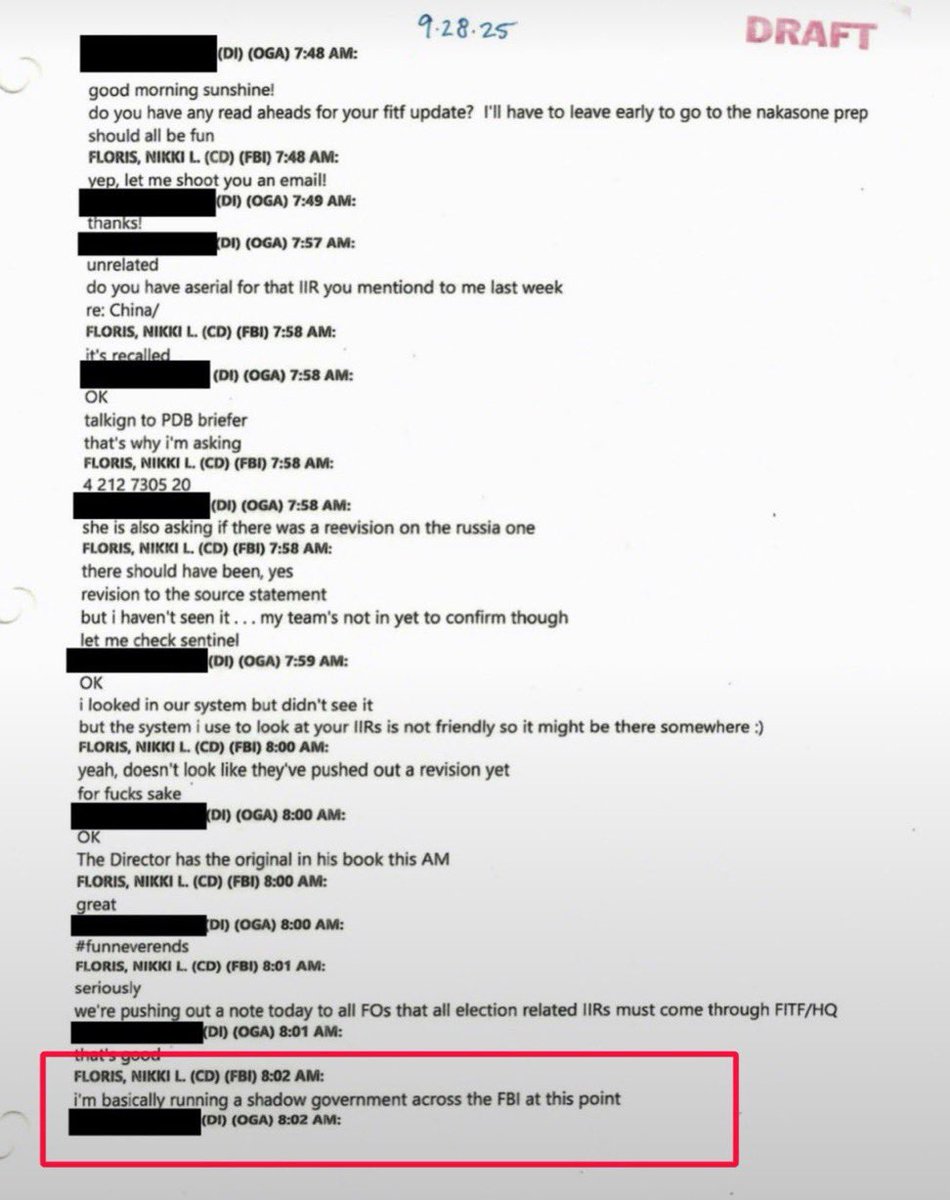
Analysis Summary The speech highlights election security crises: massive foreign (esp. China) data breaches of voter files, intel agency cover-ups, non-citizen registration, insecure voting infrastructure, fraud, and lack of basic safeguards (ID, citizenship proof, mail-in limits). These undermine trust and democracy.
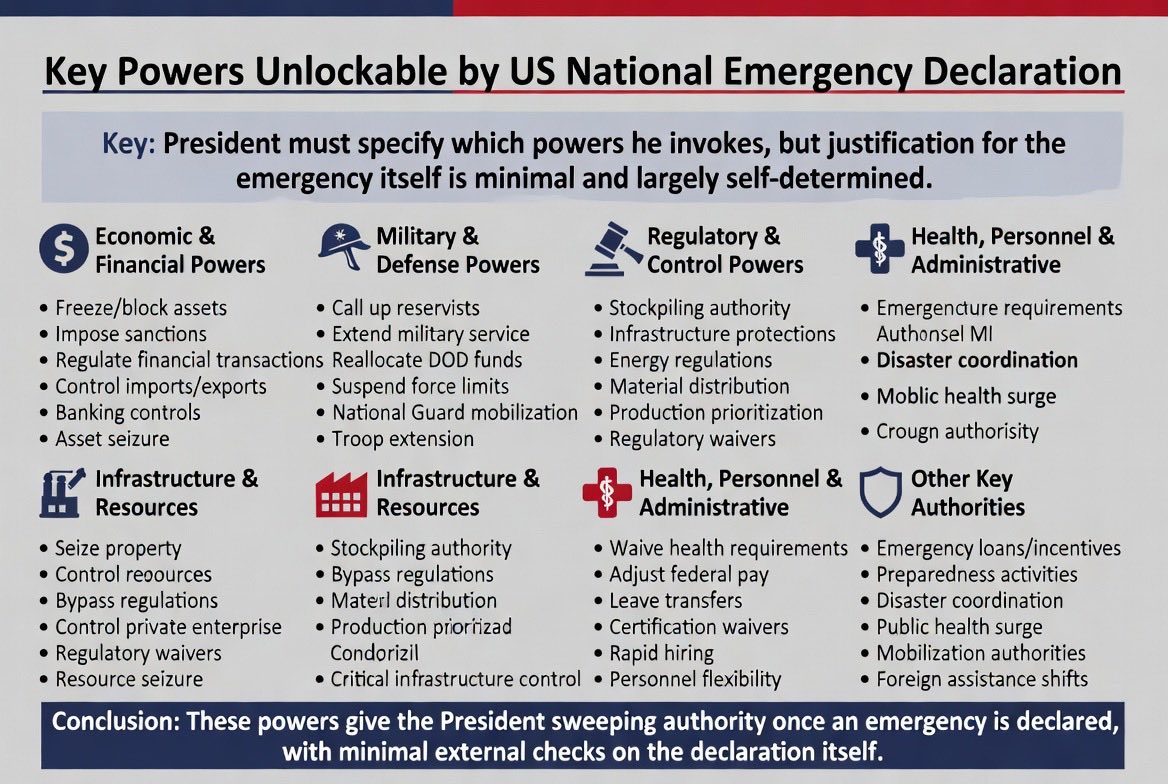
What the President Can Do (via National Emergency Declaration Powers): Declare a national emergency on election integrity/national security threats and invoke these to correct problems:
•Freeze assets, impose sanctions, regulate fin trans, control imp/exp — Sanction foreign actors (China, etc.) involved in data breaches/meddling.
•Call up reservists, extend mil svc, NG mobilization, troop ext — Deploy military/National Guard for election security support if needed.
•Realloc DOD fnds, prior contr, alloc mat, exp ind cap — Fund and prioritize secure voting tech/infrastructure upgrades.
•Seize comm fac, control trans, seize prop, control res — Take control of compromised election systems/databases if critical.
•Bypass reg, reg waiv, infra act, crit infra ctrl — Fast-track security fixes, bypass bureaucratic delays on voting machines/rolls.
•Control priv ent — Regulate private voting machine companies for mandatory security standards.
•Stock auth, prep act, stock use, prep surge — Stockpile secure election supplies/tech; prepare rapid response.
•Waive hlth req, cert waiv, rapid hir, pers flex — Expedite hiring/security clearances for election personnel.
•Dis coord, PH surge (adapt), SC prior — Coordinate federal/state response to clean voter rolls/remove ineligible voters.
•Fin freeze, asset seiz, sanc exp — Target domestic enablers of fraud/cover-ups.
•Stat susp, limit susp, rule waiv, bypass appr — Temporarily suspend conflicting rules for immediate reforms.
Conclusion: With a declaration, the President has sweeping tools to secure elections quickly (data protection, roll cleanup, infrastructure hardening, sanctions, coordination) with minimal checks—directly addressing the vulnerabilities and cover-ups described.
Analysis Summary The speech highlights election security crises: massive foreign (esp. China) data breaches of voter files, intel agency cover-ups, non-citizen registration, insecure voting infrastructure, fraud, and lack of basic safeguards (ID, citizenship proof, mail-in limits). These undermine trust and democracy.
What the President Can Do (via National Emergency Declaration Powers): Declare a national emergency on election integrity/national security threats and invoke these to correct problems:
•Freeze assets, impose sanctions, regulate fin trans, control imp/exp — Sanction foreign actors (China, etc.) involved in data breaches/meddling.
•Call up reservists, extend mil svc, NG mobilization, troop ext — Deploy military/National Guard for election security support if needed.
•Realloc DOD fnds, prior contr, alloc mat, exp ind cap — Fund and prioritize secure voting tech/infrastructure upgrades.
•Seize comm fac, control trans, seize prop, control res — Take control of compromised election systems/databases if critical.
•Bypass reg, reg waiv, infra act, crit infra ctrl — Fast-track security fixes, bypass bureaucratic delays on voting machines/rolls.
•Control priv ent — Regulate private voting machine companies for mandatory security standards.
•Stock auth, prep act, stock use, prep surge — Stockpile secure election supplies/tech; prepare rapid response.
•Waive hlth req, cert waiv, rapid hir, pers flex — Expedite hiring/security clearances for election personnel.
•Dis coord, PH surge (adapt), SC prior — Coordinate federal/state response to clean voter rolls/remove ineligible voters.
•Fin freeze, asset seiz, sanc exp — Target domestic enablers of fraud/cover-ups.
•Stat susp, limit susp, rule waiv, bypass appr — Temporarily suspend conflicting rules for immediate reforms.
Conclusion: With a declaration, the President has sweeping tools to secure elections quickly (data protection, roll cleanup, infrastructure hardening, sanctions, coordination) with minimal checks—directly addressing the vulnerabilities and cover-ups described.
Analysis Summary The speech highlights election security crises: massive foreign (esp. China) data breaches of voter files, intel agency cover-ups, non-citizen registration, insecure voting infrastructure, fraud, and lack of basic safeguards (ID, citizenship proof, mail-in limits). These undermine trust and democracy.
What the President Can Do (via National Emergency Declaration Powers): Declare a national emergency on election integrity/national security threats and invoke these to correct problems:
•Freeze assets, impose sanctions, regulate fin trans, control imp/exp — Sanction foreign actors (China, etc.) involved in data breaches/meddling.
•Call up reservists, extend mil svc, NG mobilization, troop ext — Deploy military/National Guard for election security support if needed.
•Realloc DOD fnds, prior contr, alloc mat, exp ind cap — Fund and prioritize secure voting tech/infrastructure upgrades.
•Seize comm fac, control trans, seize prop, control res — Take control of compromised election systems/databases if critical.
•Bypass reg, reg waiv, infra act, crit infra ctrl — Fast-track security fixes, bypass bureaucratic delays on voting machines/rolls.
•Control priv ent — Regulate private voting machine companies for mandatory security standards.
•Stock auth, prep act, stock use, prep surge — Stockpile secure election supplies/tech; prepare rapid response.
•Waive hlth req, cert waiv, rapid hir, pers flex — Expedite hiring/security clearances for election personnel.
•Dis coord, PH surge (adapt), SC prior — Coordinate federal/state response to clean voter rolls/remove ineligible voters.
•Fin freeze, asset seiz, sanc exp — Target domestic enablers of fraud/cover-ups.
•Stat susp, limit susp, rule waiv, bypass appr — Temporarily suspend conflicting rules for immediate reforms.
Conclusion: With a declaration, the President has sweeping tools to secure elections quickly (data protection, roll cleanup, infrastructure hardening, sanctions, coordination) with minimal checks—directly addressing the vulnerabilities and cover-ups described.
Analysis Summary The speech highlights election security crises: massive foreign (esp. China) data breaches of voter files, intel agency cover-ups, non-citizen registration, insecure voting infrastructure, fraud, and lack of basic safeguards (ID, citizenship proof, mail-in limits). These undermine trust and democracy.
What the President Can Do (via National Emergency Declaration Powers): Declare a national emergency on election integrity/national security threats and invoke these to correct problems:
•Freeze assets, impose sanctions, regulate fin trans, control imp/exp — Sanction foreign actors (China, etc.) involved in data breaches/meddling.
•Call up reservists, extend mil svc, NG mobilization, troop ext — Deploy military/National Guard for election security support if needed.
•Realloc DOD fnds, prior contr, alloc mat, exp ind cap — Fund and prioritize secure voting tech/infrastructure upgrades.
•Seize comm fac, control trans, seize prop, control res — Take control of compromised election systems/databases if critical.
•Bypass reg, reg waiv, infra act, crit infra ctrl — Fast-track security fixes, bypass bureaucratic delays on voting machines/rolls.
•Control priv ent — Regulate private voting machine companies for mandatory security standards.
•Stock auth, prep act, stock use, prep surge — Stockpile secure election supplies/tech; prepare rapid response.
•Waive hlth req, cert waiv, rapid hir, pers flex — Expedite hiring/security clearances for election personnel.
•Dis coord, PH surge (adapt), SC prior — Coordinate federal/state response to clean voter rolls/remove ineligible voters.
•Fin freeze, asset seiz, sanc exp — Target domestic enablers of fraud/cover-ups.
•Stat susp, limit susp, rule waiv, bypass appr — Temporarily suspend conflicting rules for immediate reforms.
Conclusion: With a declaration, the President has sweeping tools to secure elections quickly (data protection, roll cleanup, infrastructure hardening, sanctions, coordination) with minimal checks—directly addressing the vulnerabilities and cover-ups described.
Analysis Summary The speech highlights election security crises: massive foreign (esp. China) data breaches of voter files, intel agency cover-ups, non-citizen registration, insecure voting infrastructure, fraud, and lack of basic safeguards (ID, citizenship proof, mail-in limits). These undermine trust and democracy.
What the President Can Do (via National Emergency Declaration Powers): Declare a national emergency on election integrity/national security threats and invoke these to correct problems:
•Freeze assets, impose sanctions, regulate fin trans, control imp/exp — Sanction foreign actors (China, etc.) involved in data breaches/meddling.
•Call up reservists, extend mil svc, NG mobilization, troop ext — Deploy military/National Guard for election security support if needed.
•Realloc DOD fnds, prior contr, alloc mat, exp ind cap — Fund and prioritize secure voting tech/infrastructure upgrades.
•Seize comm fac, control trans, seize prop, control res — Take control of compromised election systems/databases if critical.
•Bypass reg, reg waiv, infra act, crit infra ctrl — Fast-track security fixes, bypass bureaucratic delays on voting machines/rolls.
•Control priv ent — Regulate private voting machine companies for mandatory security standards.
•Stock auth, prep act, stock use, prep surge — Stockpile secure election supplies/tech; prepare rapid response.
•Waive hlth req, cert waiv, rapid hir, pers flex — Expedite hiring/security clearances for election personnel.
•Dis coord, PH surge (adapt), SC prior — Coordinate federal/state response to clean voter rolls/remove ineligible voters.
•Fin freeze, asset seiz, sanc exp — Target domestic enablers of fraud/cover-ups.
•Stat susp, limit susp, rule waiv, bypass appr — Temporarily suspend conflicting rules for immediate reforms.
Conclusion: With a declaration, the President has sweeping tools to secure elections quickly (data protection, roll cleanup, infrastructure hardening, sanctions, coordination) with minimal checks—directly addressing the vulnerabilities and cover-ups described.
“ABC and NBC and others will not air President Trump's primetime address...”
I wasn't shocked. I was angry. But not for the partisan reasons the replies were screaming about. My anger was deeper, rooted in the annual ritual I’d just finished that morning—renewing my truck’s registration.
Four hundred and sixty-two dollars. Gone. Just to keep my 2015 Ford on public roads. That’s on top of property taxes, state income tax, and the sales tax I paid on the gas I used to drive to the DMV. We citizens are nickel-and-dimed for every inch of public infrastructure we touch. Roads, schools, bridges—we pay for them, blood and bone, year after year.
So, when I read that ABC and NBC—two entities that use the public airwaves to beam their signals into my living room—decided they were the arbiters of what constitutes a national emergency, I saw red.
Did you know what those broadcasters pay for their frequency licenses? Virtually nothing. A rounding error. They hold a perpetual lease on the most valuable real estate in the nation—the electromagnetic spectrum—for pennies. Why? Because they promise us "public service" and fund their operations through billions in advertising revenue. They get to use our air for free, sell our attention to the highest bidder, and call it a civic duty.
But where is the "public service" in silencing a sitting President during a declared national crisis? This isn't journalism; it's gatekeeping. They have presumed to act as the Ministry of Truth, deciding that a direct address from the Commander-in-Chief isn't suitable for the very citizens who pay their salaries through corporate ad buys.
They’ve forgotten who owns the air. It isn't them. It's us.
If I have to pay hundreds of dollars a year to the county just for the privilege of driving on asphalt I already paid for, then these corporate broadcasters can damn well pay market value for their spectrum.
Let’s put their licenses up for an annual public auction.
Every year, the FCC opens the floor. Want to broadcast on Channel 7, NBC? Bid against Sinclair, or a consortium of local stations, or hell, even a public cooperative. Pay the American public what that slice of the electromagnetic spectrum is truly worth. Let the free market, not a boardroom in Manhattan, determine who gets to use our public airwaves.
If they want the power to censor our elected representatives, they can pay the king's ransom for it—every single year. Otherwise, they can hand those frequencies back to the people they claim to serve. Let them feel the squeeze of an annual registration fee for once. I guarantee they'd change their tune about what constitutes "news" real fast.
“ABC and NBC and others will not air President Trump's primetime address...”
I wasn't shocked. I was angry. But not for the partisan reasons the replies were screaming about. My anger was deeper, rooted in the annual ritual I’d just finished that morning—renewing my truck’s registration.
Four hundred and sixty-two dollars. Gone. Just to keep my 2015 Ford on public roads. That’s on top of property taxes, state income tax, and the sales tax I paid on the gas I used to drive to the DMV. We citizens are nickel-and-dimed for every inch of public infrastructure we touch. Roads, schools, bridges—we pay for them, blood and bone, year after year.
So, when I read that ABC and NBC—two entities that use the public airwaves to beam their signals into my living room—decided they were the arbiters of what constitutes a national emergency, I saw red.
Did you know what those broadcasters pay for their frequency licenses? Virtually nothing. A rounding error. They hold a perpetual lease on the most valuable real estate in the nation—the electromagnetic spectrum—for pennies. Why? Because they promise us "public service" and fund their operations through billions in advertising revenue. They get to use our air for free, sell our attention to the highest bidder, and call it a civic duty.
But where is the "public service" in silencing a sitting President during a declared national crisis? This isn't journalism; it's gatekeeping. They have presumed to act as the Ministry of Truth, deciding that a direct address from the Commander-in-Chief isn't suitable for the very citizens who pay their salaries through corporate ad buys.
They’ve forgotten who owns the air. It isn't them. It's us.
If I have to pay hundreds of dollars a year to the county just for the privilege of driving on asphalt I already paid for, then these corporate broadcasters can damn well pay market value for their spectrum.
Let’s put their licenses up for an annual public auction.
Every year, the FCC opens the floor. Want to broadcast on Channel 7, NBC? Bid against Sinclair, or a consortium of local stations, or hell, even a public cooperative. Pay the American public what that slice of the electromagnetic spectrum is truly worth. Let the free market, not a boardroom in Manhattan, determine who gets to use our public airwaves.
If they want the power to censor our elected representatives, they can pay the king's ransom for it—every single year. Otherwise, they can hand those frequencies back to the people they claim to serve. Let them feel the squeeze of an annual registration fee for once. I guarantee they'd change their tune about what constitutes "news" real fast.
“ABC and NBC and others will not air President Trump's primetime address...”
I wasn't shocked. I was angry. But not for the partisan reasons the replies were screaming about. My anger was deeper, rooted in the annual ritual I’d just finished that morning—renewing my truck’s registration.
Four hundred and sixty-two dollars. Gone. Just to keep my 2015 Ford on public roads. That’s on top of property taxes, state income tax, and the sales tax I paid on the gas I used to drive to the DMV. We citizens are nickel-and-dimed for every inch of public infrastructure we touch. Roads, schools, bridges—we pay for them, blood and bone, year after year.
So, when I read that ABC and NBC—two entities that use the public airwaves to beam their signals into my living room—decided they were the arbiters of what constitutes a national emergency, I saw red.
Did you know what those broadcasters pay for their frequency licenses? Virtually nothing. A rounding error. They hold a perpetual lease on the most valuable real estate in the nation—the electromagnetic spectrum—for pennies. Why? Because they promise us "public service" and fund their operations through billions in advertising revenue. They get to use our air for free, sell our attention to the highest bidder, and call it a civic duty.
But where is the "public service" in silencing a sitting President during a declared national crisis? This isn't journalism; it's gatekeeping. They have presumed to act as the Ministry of Truth, deciding that a direct address from the Commander-in-Chief isn't suitable for the very citizens who pay their salaries through corporate ad buys.
They’ve forgotten who owns the air. It isn't them. It's us.
If I have to pay hundreds of dollars a year to the county just for the privilege of driving on asphalt I already paid for, then these corporate broadcasters can damn well pay market value for their spectrum.
Let’s put their licenses up for an annual public auction.
Every year, the FCC opens the floor. Want to broadcast on Channel 7, NBC? Bid against Sinclair, or a consortium of local stations, or hell, even a public cooperative. Pay the American public what that slice of the electromagnetic spectrum is truly worth. Let the free market, not a boardroom in Manhattan, determine who gets to use our public airwaves.
If they want the power to censor our elected representatives, they can pay the king's ransom for it—every single year. Otherwise, they can hand those frequencies back to the people they claim to serve. Let them feel the squeeze of an annual registration fee for once. I guarantee they'd change their tune about what constitutes "news" real fast.
🚨 IT'S OFFICIAL: THIS is why the networks were terrified to air Donald Trump's address tonght
"Hundreds of millions of U.S. voter files are in the hands of foreign governments."
"Our machines and ballot counting systems are exposed to hacking and manipulation and corruption."
"China and other countries have been trying to meddle in our elections."
"Evidence of fraud has been buried."
"Hundreds of thousands of non-citizens and dead people are listed and active on the voter rolls..."
"...and yet we still have elections with no voter ID, no proof of citizenship, and tens of millions of ballots floating aimlessly through the mail!"
🚨 IT'S OFFICIAL: THIS is why the networks were terrified to air Donald Trump's address tonght
"Hundreds of millions of U.S. voter files are in the hands of foreign governments."
"Our machines and ballot counting systems are exposed to hacking and manipulation and corruption."
"China and other countries have been trying to meddle in our elections."
"Evidence of fraud has been buried."
"Hundreds of thousands of non-citizens and dead people are listed and active on the voter rolls..."
"...and yet we still have elections with no voter ID, no proof of citizenship, and tens of millions of ballots floating aimlessly through the mail!"
Thousands of pages of foreign IP address sending and receiving data to election precincts and servers outside the United States during the 2020 Election.
CISA, DHS, the FBI, and the CIA knew all about it because they were in on it. The deep state rot runs deep, but not for much longer.