@BarackObama Rigorous debate and mutual respect? Ask Jewish students at Harvard how they are doing? Or any of the prospective students who didn’t get accepted at Harvard solely on the basis of their skin color.
@jasonwhitlock She had 35. Your constant ragging on her is getting old. I love all your posts and much respect. But your “thing” with CC is wearing thin.
@KamalaHarris Would you be open to actually answering the questions you are asked? I really want to know and don’t know any more today than I did before the debate.
@runyandy@jasonwhitlock I would not disagree. My point better stated: coaching and teaching in a high school might prepare a candidate but not necessarily qualify them. Many great coaches and teachers wouldn’t be qualified to be the principal of their school.
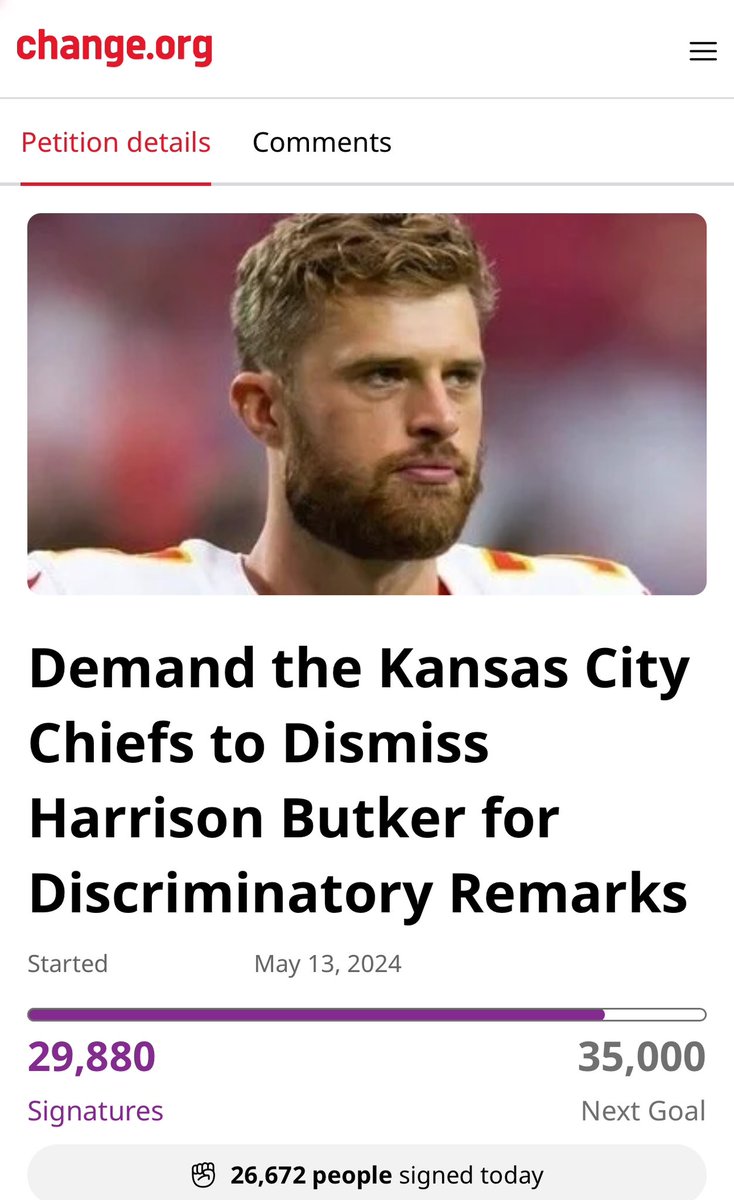
There’s currently a petition on https://t.co/mDFvSORB7o calling for the Chiefs to release Harrison Butker for his commencement speech.
You think of all the horrible things current NFL players have done — Tyreek Hill beating his kids, DeShaun Watson, the various deadbeat Dads.
But it’s the Catholic guy telling women that families are more important than careers where people draw the line
As I explained to Jesse Watters tonight, a strange new pattern of psychopathologies has deranged our institutions and plunged our public life into hysteria, narcissism, and moral theatrics. We have created a Cluster B Society.
https://t.co/r2D3PYaHND
My first assignment as a junior editor at the Harvard Journal on Legislation (1999-2000) was to cite check an article submitted by one Sen. Joseph R. Biden. I was shocked by the plagiarism I discovered. 🧵
There is no such thing as a person who doesn’t feel difficult emotions.
We all have them. We can’t completely rid ourselves of them—nor do we need to. We can meet them with emotional agility.
Emotions get a bad reputation, but they’re actually powerful tools that are essential to our growth.
The key is to understand the difference between feeling our feelings and allowing them to dictate our behavior.
What is often referred to as "compassion fatigue" is not caused by too much compassion.
Rather, it's predicted by difficulty in setting boundaries, struggling with emotion regulation, systems that demand the impossible, and similar.
This is a crucial distinction.
The remedy for "compassion fatigue" is not to reduce compassion.
When we reduce compassion there is actually more - not less - likelihood that we will get burned out and experience lower wellbeing.
The creation of a disconnect between us and others, and us and ourselves - our values, our humanity, our flaws, does not support a culture of emotional health.
2 of 2. I have not known the hopeless and meaninglessness of this kind of temporal existence since I surrendered my life to Jesus Christ the Fall of my freshman year at Yale University. I was searching for truth and I met “the way, the truth, and life.” He changed everything.
1 of 2. Woke up this morning wondering what it would be like not knowing or having any sense of “now” connected to eternity? What would it be like to know or experience my life as purely material, a product of a material world with no REAL meaning or purpose?