Five collections of poetry about love, loss, hope, healing, darkness and the quiet in between, from free verse, haiku, senryu, and tanka.
Find all five here: https://t.co/VTaNTyLNvP
The Battle of Ascalon took place on August 12, 1099, and is widely considered the final major military engagement of the First Crusade. While the battle itself was a swift, surprise dawn attack by the Crusaders rather than a prolonged bloodbath of close-quarters slaughter, it was immediately preceded and defined by the extreme brutality and violence of the Siege of Jerusalem just weeks earlier....
On July 15, 1099, Crusader forces captured Jerusalem after a grueling campaign. Shortly after, the Crusaders learned that a massive Fatimid Caliphate army (around 20,000 strong) led by Vizier al-Afdal Shahanshah was marching from Egypt to retake Jerusalem. Gathering roughly 10,200 men, Crusader leaders—including Godfrey of Bouillon, Raymond IV of Toulouse, Robert II of Normandy, and Robert II of Flanders—decided to take the offensive rather than wait for a siege. They marched south from Jerusalem carrying the relic of the True Cross.
. . . .
Crusader banners were quickly unfurled along the bloodstained walls of Jerusalem after the city had fallen on July 15, 1099, after a brutal siege that left thousands of its inhabitants dead. Contemporary chroniclers describe streets choked with corpses, and the stench of slaughter in the air as victorious knights and foot soldiers looted homes, monasteries, and mosques. Sadly, the survivors were forced to flee outside the walls or submit to their new rulers. Their triumph had delivered the conquerors control of the Holy City, but their position remained uncertain.
The reality was that just a handful of war-weary warriors stood in command of a kingdom that lacked stability and sufficient reinforcements. Their food and supplies were dwindling. What is more, many of the knights and footmen who had endured the march across Anatolia and Syria now considered their vows had been fulfilled and began preparations for their return to Europe. Those who remained had to somehow establish order in a land still simmering with unrest.
To the south, a new threat loomed: the Fatimid vizier, al-Afdal Shahanshah, had dispatched an army from Egypt before the city had even fallen. His troops marched north to reclaim what the Fatimids had lost. For decades, the rulers of Egypt had fought to control the Levant by defending their territories against both Turkish incursions and local uprisings. However, their grasp on Palestine had weakened in recent years, but Jerusalem’s fall to Christian invaders was an intolerable humiliation and al-Afdal intended to drive the crusaders into the sea.
Back in Jerusalem, scouts brought reports of the Egyptian advance, warning that thousands of enemy soldiers had already crossed into their territory. The crusaders knew that they could not afford to linger behind the walls of Jerusalem. They knew that if the Fatimid army could manage to establish itself at the crucial city of Ascalon, which was the strongest fortress on the southern coast, any hope of defending the Holy Land would collapse. The city’s strategic position made it a key stronghold, and the crusaders knew they had to act before their enemies fortified their position.
Vizier al-Afdal Shahanshah understood that the loss of the Holy City threatened Fatimid control over Palestine and undermined Egyptian authority in the region. In the months during the Crusader advance on the city, he had the foresight to order the recruitment of fresh troops, as well as gathering supplies in anticipation of a full-scale campaign. Thankfully, he could rely on the resources of Egypt, thanks to its prosperous agriculture. His first objective was to reach Ascalon quickly in order to establish a strong defensive position.
#archaeohistories
🚂 Ever seen how an American freight locomotive is operated?
Eight throttle settings, multiple braking systems and thousands of tonnes to control. Smooth acceleration and braking are essential to managing the forces between wagons.
🎥 @michael_____22222 (Instagram)
#FreightRail #Locomotives #RailwayEngineering
The archaeological discovery of a 17th-century female skeleton buried in Pień, Poland, featuring an iron sickle placed across the neck and a padlock attached to the foot to prevent her from rising from the dead....
In 2022, the skeletal remains of a female 'vampire' were found in a 17th-century Polish graveyard – with a sickle across her neck to prevent her rising from the dead.
Professor Dariusz Poliński from Nicholas Copernicus University headed the archaeological dig that led to the discovery of the remains, which were found wearing a silk cap and with a protruding front tooth. "The sickle was not laid flat but placed on the neck in such a way that if the deceased had tried to get up… the head would have been cut off or injured," Poliński told the Daily Mail.
In the 11th century, citizens of Eastern Europe reported fears of vampires and began treating their dead with anti-vampire rituals, according to Smithsonian magazine, believing that "some people who died would claw their way out of the grave as blood-sucking monsters that terrorized the living".
By the 17th century, such burial practices "became common across Poland in response to a reported outbreak of vampires."
"Other ways to protect against the return of the dead include cutting off the head or legs, placing the deceased face down to bite into the ground, burning them, and smashing them with a stone," Poliński told the New York Post.
Though other common anti-vampire burial methods included a metal rod hammered through the skeleton, the remains in Poland were found with the sickle across the neck and a padlocked toe to restrain her.
The padlocked big toe attached to the skeleton's left foot, likely symbolized "the closing of a stage and the impossibility of returning".
#archaeohistories
This is f*cking insane. Elon Musk, the man behind SpaceXAI, was asked how a 20-year-old can avoid being left behind in the AI transition. His answer:
"To know what to ask the robots for, you need to formulate the question"
In 84 seconds, he lays out the plan: get the broadest education you can. Arts, sciences, engineering. The more you know, the better you can tell AI what you want
He even names the skill: prompt engineering. You have to convey your wishes to the robot
Then the wild part: there will be so many robots and so much AI that they'll be eager for any request you have, and it gets done immediately
Broad Knowledge → The Right Question → Grok Bot → A Team of Bots → Harness → Done Immediately
Save this before it disappears from your feed
Pick your field. Every guide here comes straight from SpaceXAI:
Getting started with Grok Bot
https://t.co/msqNlV4Ufv
Engineering: run a fleet of engineer bots
https://t.co/RSjrvkEIpn
Six bots, one mobile game studio
https://t.co/4qESPIbEwk
Design: explore more ideas with always-on bots
https://t.co/M1vloVQcEN
PMs: for the first time, a team that reports to you
https://t.co/y4iqRpsyxN
Marketing: six bots that research competitors and draft positioning
https://t.co/O63VVgwZqR
Founder-led sales: research and outreach with bots
https://t.co/F4NYyxqcSo
Recruiting: interview prep, scorecards, sourcing
https://t.co/UBfaapiBqU
Legal ops: contracts, triage and 1:1 prep
https://t.co/6WZPk7k7xw
Support: work the whole queue with bots
https://t.co/tUFlIeqzC4
Templates: share a bot as a recipe
https://t.co/lsG4KbeMcA
Every guide here is free
Soon AI will do the work. The ones who know what to ask will run it
95% will wait for someone to tell them what to study, the 5% who learn to give AI clear jobs will have a team of bots working for them
Bookmark it and open the guide for your field tonight
Then use the guide below to build your harness before everyone else does ↓
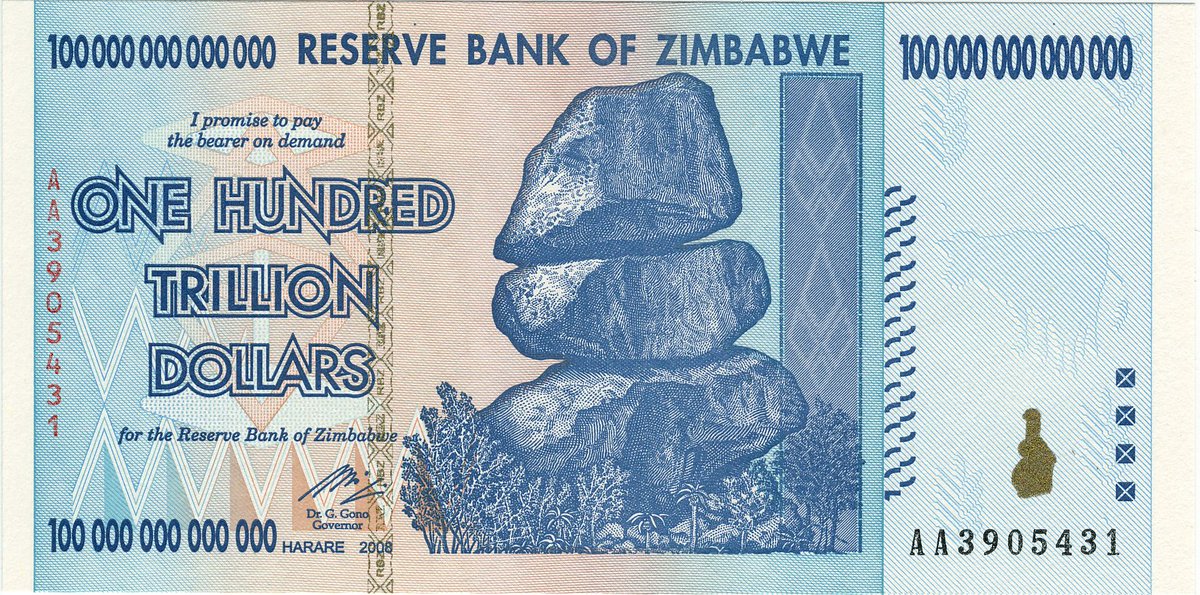
In January 2009, Zimbabwe issued a banknote for 100 trillion dollars. It had 14 zeros.
It was worth only about $30 US on the day it came out.
Zimbabwe was in the grip of one of the worst cases of hyperinflation in history. By late 2008, prices were doubling roughly every day. Shoppers carried stacks of bills, and stores changed prices several times a day.
The central bank kept printing larger notes and knocking zeros off the currency. It did not help.
In April 2009, the government gave up on the Zimbabwe dollar altogether. People used US dollars and South African rand instead.
In 2015, the old notes were officially retired. The government-set exchange rate made a 100-trillion-dollar note worth about 40 US cents.
More rare historical photos: https://t.co/dQjceOPkrz
Vlad had broken his tribute payments to the Ottoman Empire, raided Ottoman positions south of the Danube River, and executed thousands of prisoners to push back against Sultan Mehmed II...
Knowing a massive Ottoman retaliatory strike was imminent, Vlad wrote to Matthias Corvinus asking for military help. Vlad framed the rebellion not just for Wallachia's survival, but in the name of Christian faith:
"Your Majesty should know that we have broken our peace with the Ottomans, not for our own benefit, but for the honor of Your Majesty and the Holy Crown of Your Majesty, and for the preservation of Christianity."
Despite the plea, Wallachia was a small buffer state caught between superpowers. After months of brutal guerrilla warfare—including Vlad’s famous Night Attack at Târgoviște in June 1462—Vlad eventually fled to Transylvania later that year to seek direct aid from Matthias Corvinus. Instead of helping him fight the Ottomans, Corvinus had Vlad arrested and imprisoned as part of a political maneuver to appease the Ottomans and manage the volatile frontier.
. . .
On February 11, 1462, Vlad III sent Hungary’s King Matthias Corvinus an urgent appeal. The Ottoman Empire was preparing to strike Wallachia. Vlad had stopped paying tribute, attacked Ottoman positions south of the Danube, and reported killing thousands. Now he wanted Matthias to join the fight.
His appeal also served a political purpose: he needed Hungarian help. But the danger behind it was real.
. . .
Wallachia was a small Christian principality caught between Hungary and the Ottoman Empire. Its rulers had long relied on tribute and diplomacy to preserve their independence.
Vlad chose resistance.
When Sultan Mehmed II marched north in 1462, Vlad’s forces devastated the countryside to deny the invaders food, struck at them with surprise attacks, and launched a night assault on the Ottoman camp. Mehmed’s campaign failed to bring Wallachia under direct Ottoman occupation. The principality remained Christian and retained its own rulers and institutions, though it continued to owe tribute to the sultan.
That was a real achievement, but it came at a cost. Vlad lost his throne when his brother Radu, backed by the Ottomans, took power. Matthias Corvinus imprisoned Vlad, keeping him out of Wallachia for years. Released in the mid-1470s, Vlad returned to the struggle and briefly regained the throne in 1476. He was killed later that year.
He had not permanently freed Wallachia from Ottoman pressure, but he had helped prevent its conquest—and returned to fight for it even after years in captivity.
The violence was real, too. Vlad ordered executions and impalements, including of political rivals and captured enemies. Hostile German-language accounts helped turn him into a figure of almost supernatural cruelty, and some reported totals are unreliable. But propaganda did not invent his brutality; contemporary evidence confirms that he used mass impalement and terror as instruments of rule and war.
That is why Vlad is so often remembered as a monster. The horror is part of the story. But it is not the whole story.
In 1462, he stood against an expanding Muslim empire whose armies were pressing into Christian lands, demanding submission, slaughtering civilians, and carrying off captives, including young boys and girls to fill their harems. Vlad fought to keep Wallachia from being conquered and absorbed into that empire.
Vlad, of course, was no saint. He was a hard and often merciless ruler. But his cruelty does not erase his courage, or the fact that the Ottoman campaign failed to take Wallachia thanks to him.
He fought for his crown and his people and for the preservation of Christianity.
#archaeohistories
It seems like SNL hasn't been very funny recently but Will Ferrell as Alex Trebek had some pretty unhinged moments on their version of Jeopardy!, especially the late Sean Connery impressions. 😂😂😂
Take a break from football (halftime break) and listen to a few clips for laugh or two. ✌🏼
DIVORCE AGREEMENT
THIS IS INCREDIBLY WELL-PUT, AND I CAN HARDLY BELIEVE IT'S WRITTEN BY A STUDENT!!! WHATEVER HE RUNS FOR, I'LL VOTE FOR HIM.
Dear American liberals, leftists, social progressives, socialists, Marxists, and Obama supporters, et al:
We have stuck together since the late 1950s for the sake of the kids, but the whole of this latest election process has made me realize that I want a divorce. I know we tolerated each other for many years for the sake of future generations, but sadly, this relationship has clearly run its course.
Our two ideological sides of America cannot and will not ever agree on what is right for us all, so let's just end it on friendly terms. We can smile and chalk it up to irreconcilable differences and go our own way.
Here is our separation agreement:
Our two groups can equitably divide up the country by land mass, each taking a similar portion. That will be the difficult part, but I am sure our two sides can come to a friendly agreement. After that, it should be relatively easy! Our respective representatives can effortlessly divide other assets, since both sides have such distinct and disparate tastes.
—We don't like redistributive taxes, so you can keep them.
--You are welcome to the liberal judges and the ACLU.
--Since you hate guns and war, we'll take our firearms, the cops, the NRA, and the military.
--We'll take the nasty, smelly oil industry and the coal mines, and you can go with wind, solar, and bio-diesel.
--You can keep Oprah, Whoopi, Bill Maher, Michael Moore and Rosie O'Donnell. You are, however, responsible for finding a bio-diesel vehicle big enough to move all five of them.
--We'll keep capitalism, greedy corporations, pharmaceutical companies, Wal-Mart, and Wall Street.
--You can have your beloved lifelong welfare dwellers, food stamps, homeless, homeboys, hippies, druggies, and illegal aliens.
--We'll keep the hot Alaskan hockey moms, greedy CEOs, and rednecks.
--We'll keep Bill O’Reilly and Bibles and give you NBC and Hollywood.
--You can make nice with Iran and Palestine and we'll retain the right to invade and hammer places that threaten us.
--You can have the peaceniks and war protesters.
--When our allies or our way of life are under assault, we'll help provide them security.
--We'll keep our Judeo-Christian values.
--You are welcome to Islam, Scientology, Humanism, political correctness, and Shirley McLaine. You can also have the UN., but we will no longer be paying the bill.
--We'll keep the SUVs, pickup trucks, and oversized luxury cars. You can take every Volt and Leaf you can find.
--You can give everyone health care if you can find any practicing doctors.
--We'll keep "The Battle Hymn of the Republic" and "The National Anthem."
--I'm sure you'll be happy to substitute "Imagine," "I'd Like to Teach the World to Sing," "Kum Baya," or "We Are the World."
--We'll practice trickle-down economics and you can continue to give trickle-up poverty your best shot.
--Since it often so offends you, we'll keep our history, our name, and our flag.
Would you agree to this? If so, please pass it along to other like-minded liberal and conservative patriots and if you do not agree, just hit delete. In the spirit of friendly parting, I'll bet you might think about which one of us will need whose help in 15 years.
Sincerely,
John J. Wall
Law Student and an American
P.S. Also, please take George Clooney, Ted Turner, Sean Penn, Martin Short, Charlie Sheen, Barbra Streisand, and (Hanoi) Jane Fonda with you.
P.P.S. And you won't have to press 1 for English when you call our country.
Forward This Every Time You Get It !
Let's Keep This Going, Maybe Some Of It Will Start Sink in.