Ancient Roman couples had one rule before every difficult conversation.
Modern psychology has no equivalent. Divorce rates were below 5%.
Then the rule disappeared. And everything changed.
(Couples Must Read..)
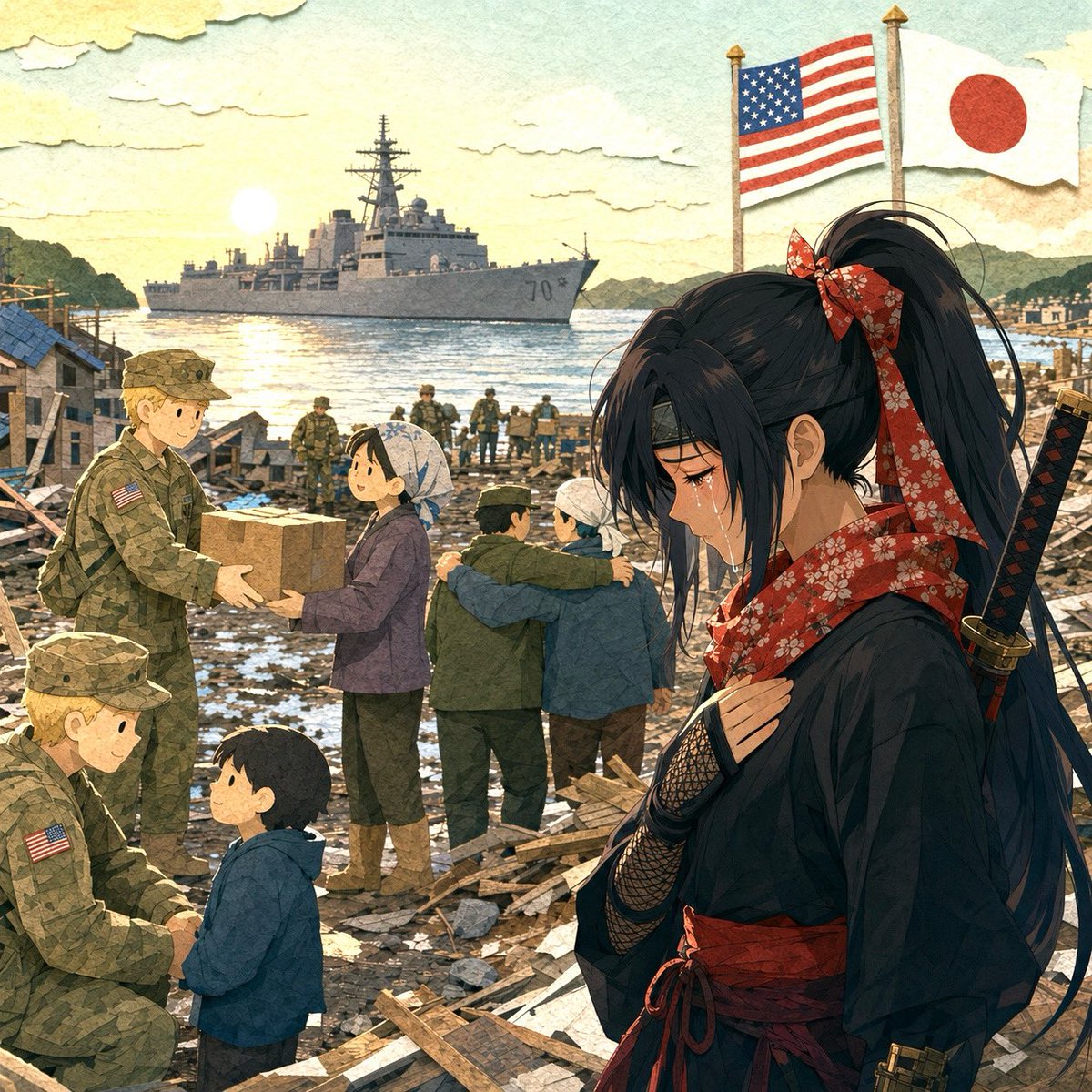
🇯🇵 Dear American friends, I will never forget this for as long as I live. 😭
March 11, 2011. 2:46 PM.
The Great East Japan Earthquake struck.
Magnitude 9.0.
The largest earthquake ever recorded in Japanese history violently shook the Tohoku region. 🌏
Then, dozens of minutes later, a tsunami beyond imagination swallowed the coastline. 🌊🌊
Around the world, many governments advised their citizens to leave Japan.
Some embassies reduced their staff or temporarily relocated their operations.
Sendai Airport filled with people desperately trying to leave Japan. ✈️
March 11.
The earthquake.
The tsunami.
Fukushima Daiichi Nuclear Power Plant lost all electrical power.
The cooling systems failed, and the reactors began to melt down. ⚠️
March 12.
Unit 1 exploded. 💥
The reactor building was torn apart, and the images spread across the world.
Fear of radiation spread across the globe, and many people tried to keep their distance from Japan.
But then…
🇺🇸 America came closer.
Within hours of the earthquake, the decision was made. On March 12, Operation Tomodachi began. 🤝
24,000 service members.
189 aircraft. ✈️
24 ships. ⚓
They headed toward the disaster area.
Even with the fear of explosions still lingering, they carefully managed the risks of radiation while delivering food, water, and medical supplies, and continued their relief operations. 🚢📦💧
It wasn’t only the U.S. military stationed in Japan.
From the American mainland, from across the Pacific, and from Americans living in Japan, an overwhelming desire arose
「We want to help Japan.」 😭
They helped restore Sendai Airport. ✈️
They delivered emergency supplies. 📦
They searched for and rescued survivors alongside the Japan Self-Defense Forces. 🛟
And they stayed by Japan’s side for as long as they were needed. 🤝
The name of the mission was…
Operation Tomodachi.
「Tomodachi.」 🥹
Perhaps that name was chosen carefully.
Or perhaps there simply wasn’t any other word that fit.
A kunoichi trains for years never to show emotion while on a mission.
To observe.
To report.
To act without being ruled by emotion.
And yet, every time I remember those ships sailing toward Tohoku, I cannot count how many times I have cried. 😭
Even today, I cannot find words in any language to express what I felt back then. 💙😭
When so many people were trying to leave Japan,
you came. 😭
When fear and uncertainty covered our nation,
you stayed by our side. 😭
You rescued survivors, delivered hope, and stood with us when we needed friends the most. 😭
A kunoichi remembers everything.
Even now, more than fifteen years later. 🕊️
Happy 250th Birthday, America. 🎉
Japan will never forget the friendship you showed us on those days. 🇯🇵🤝🇺🇸
Never.
Forever… 🥹❤️
#A250inJapan
The Jurassic Park film really dropped the ball regarding the core problem being raised by the book:
The biggest threat isn't the problem you're focusing on. It's the thing you never considered a possibility in the first place.
In the movie, you find out the dinosaurs are breeding on their own for a single scene and then it never becomes a plot point again. The only raptors they have to deal with are the three that escaped from the paddock when the electricity went out.
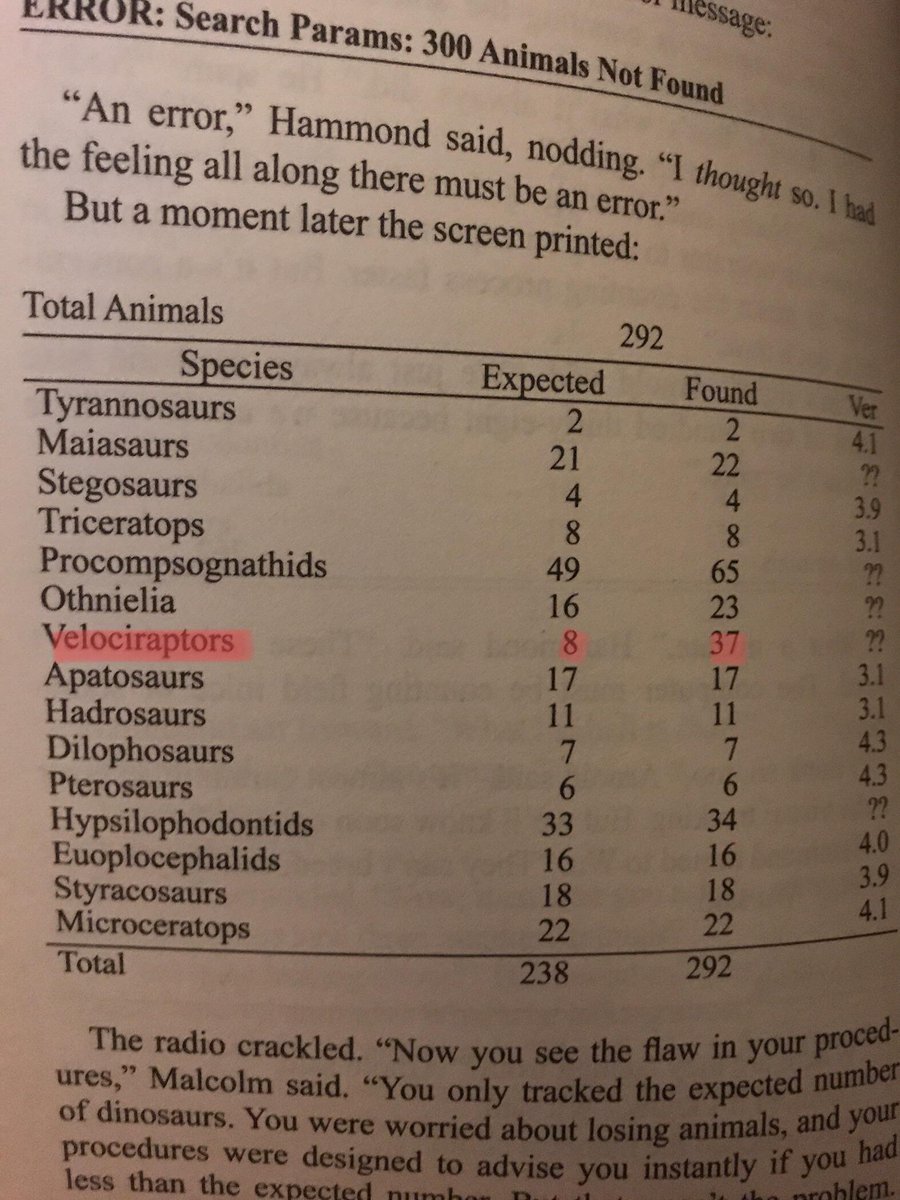
In the book, there are supposed to be 8 raptors. The system is designed to throw an alert if there are ever fewer than expected.
Nobody thought to add an alarm or interface for if there were more than expected, and by the time they figure it out there are over three dozen of the damn things running loose.
Think about how this can apply elsewhere. Not just industrial applications, but philosophically, economically, politically, or socially:
What looming catastrophe are you ignoring because you are so focused on its opposite?
What dangers and evils are you allowing to grow unchecked because you never considered them as a possibility?
Beluga Whale Escapes Research Facility And Swims Hundreds Of Miles Back To Her Baby
After months of permits and planning, a female beluga from Alaska’s Cook Inlet was moved to a marine research facility in Seward so scientists could study her recovery after giving birth before releasing her back into the wild. Her calf had already reached the age where it could survive without milk, so researchers believed the timing was safe. But what they didn’t account for was the part of motherhood that doesn’t show up on a chart. Staff said she spent her first days in the holding tank oddly calm, circling the same wall over and over, almost like she was memorizing the way out.
Then, before sunrise, cameras caught her launching herself out of the research basin and into the bay. Because she had been tagged for tracking, crews followed her signal as she pushed through open water, traveling hundreds of miles back toward Cook Inlet. Days later, she was spotted near the same stretch of water where her calf had last been seen, swimming beside the young beluga like she had never planned to leave at all. Scientists hoped to learn what a mother’s body goes through after birth, but what they learned instead was much harder to measure: a mother’s love does not end just because the milk does.