PC387 Sullivan abused me for 6 years. I am now dying as a result of that abuse. @swpolice state I am not adversely affected by their failings despite receiving reports prior to my relationship with him regarding his risk to women @commissionersw@CommissionerDA@VictimsComm
(1/3) @MsAlisonHume named a problem we see again and again in the family courts: so-called “parental alienation experts” holding enormous sway over children’s lives. Many of them without proper qualifications, and many beyond any meaningful regulation.
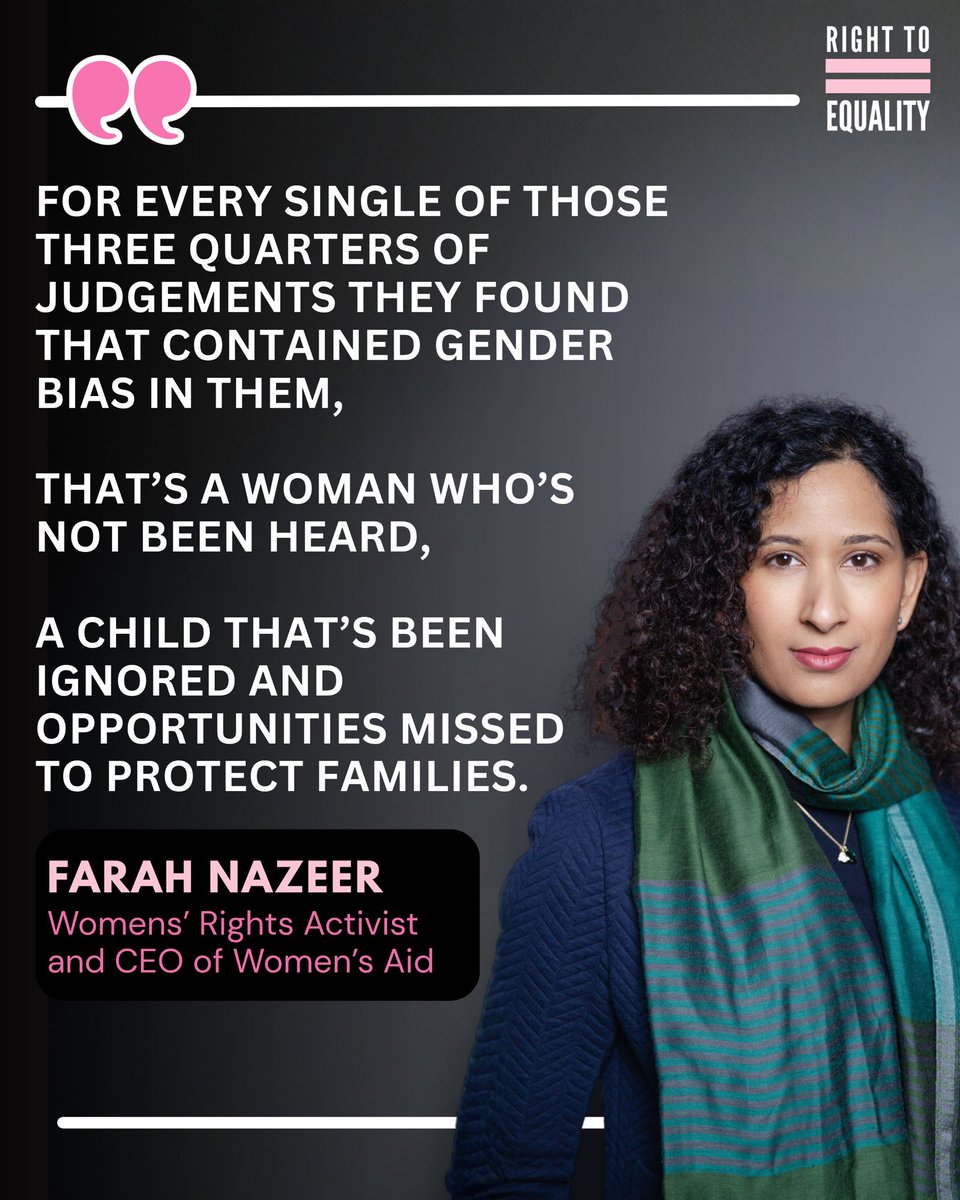
(1/2) We were honoured to have Farah Nazeer, CEO of @womensaid , join us at the launch of our new report, ‘Scratching the Surface’, to speak on judicial bias and why this issue can no longer be overlooked.
🚨 A 14-year-old girl went to the police for protection.
The detective assigned to her, John Hamilton — in child safeguarding — sent her inappropriate messages.
He denied everything. She endured a full trial. Guilty in 2026.
The person meant to protect her became the predator.
Family courts show ‘widespread’ gender bias and victim-blaming, report finds
Exclusive: Analysis shows 72.5% of 91 judgments in England and Wales contained judicial victim-blaming, with mothers scrutinised more intensely A report has found “widespread and concerning evidence” of bias and victim-blaming in the family courts – primarily disadvantaging women.
The report, Scratching the Surface: Victim-Blaming and Bias in Family Court Judgments, by the nonprofit organisation Right to Equality, will be shared with MPs on Tuesday at an event in parliament. Its analysis of 91 published family law judgments in England and Wales found “widespread and concerning evidence of victim-blaming language and attitudes – often directed towards mothers”.
It found that 72.5% of all judgments contained at least one instance of judicial victim‑blaming, and also evidence of gender bias, with “mothers’ behaviour scrutinised intensely while the fathers’ conduct was contextualised or minimised”.
Across the 91 judgments, 66 contained victim-blaming language, with 530 instances of victim‑blaming in total made by court professionals, primarily judges.
The report’s authors expressed concern the data suggested harmful attitudes could influence judicial decision‑making, “including reliance on rape myths, stereotyping, or overt scepticism toward mothers”.
Rose*, who has been in and out of family court since 2014, said she “absolutely, without a doubt” felt she had been treated differently because of her gender, while her ex-partner “wasn’t scrutinised at all”.
“He was allowed to sort of laugh and scoff and mock while we were in court, so he wasn’t in any way held to account for the behaviours that he exhibited,” she said.
“The Cafcass [Children and Family Court Advisory and Support Service] barrister said that my ex-partner should be praised for how he handled himself and conducted himself in the hearings, which is just beyond a joke. They’ve made findings of child abuse and rape, and then he’s to be praised for how he’s conducted himself is beyond belief.”She added: “So the standards are entirely different, but it’s embedded throughout. It’s not just the judiciary; it’s embedded throughout all of the agencies that are associated with the family court.
“There’s this false view that women, and mothers especially, get anything that they want in the family court – they get all the money, they get all their kids’ time, they get everything they like – and it couldn’t be any further from the truth.”
Another woman, Marie*, said: “The whole culture is victim-blaming. We’ve just been treated completely differently, actually. My whole experience has just been that my ex has just used it as a weapon, and it’s been a very effective weapon.”
She added: “The judiciary, it’s just … stuck. They still mark their own homework, and you get judges making decisions in an absolute void.
“There’s no reflective feedback, there’s no learning from the decisions they’re making, so they’re never going to improve. So somebody that’s getting it wrong is just going to carry on getting it wrong.”
The report has put forward a number of recommendations, including that the family judiciary should publish 20% of their judgments, randomly selected each month, with specific targets for judgments in which domestic and sexual abuse is raised. It also recommends judges receive mandatory training in gender bias and victim-blaming, and that the potential use of AI tools to identify bias and victim-blaming in family courts should be explored.
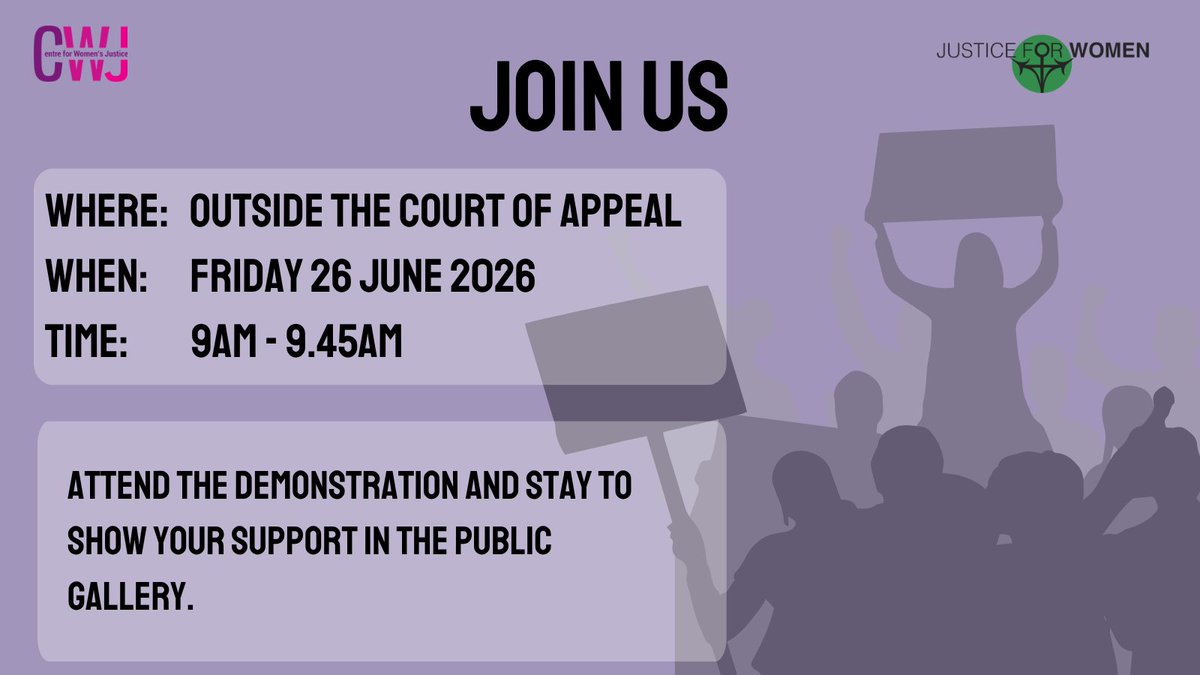
Join us outside the Court of Appeal on 26 June (9am - 9.45am) to show your support for Lisa Ellwood.
If you can't attend in person, you can still show solidarity by sending messages of support to [email protected]
🔗https://t.co/AQX9HjGtPQ
@BhattiLaib9960 The fact you are questioning this means you are not 100% happy with something. This is a very important day so do not compromise on this
@Avabelly__ If it is so innapropriate why have you taken a photo him and put it up on social media. You could actually argue that your conduct is worse given your beliefs and actions to expose this man further. I would also like to say that I don’t find it innapropriate at all
PC PAUL DAVIES
He has been convicted after encouraging a teenage girl to send naked images of herself to him. Davies had access daily to children as he was a safeguarding officer in schools.
EIGHT MONTHS RELEASED in less than half of that. ⛔️⛔️⛔️‼️‼️‼️
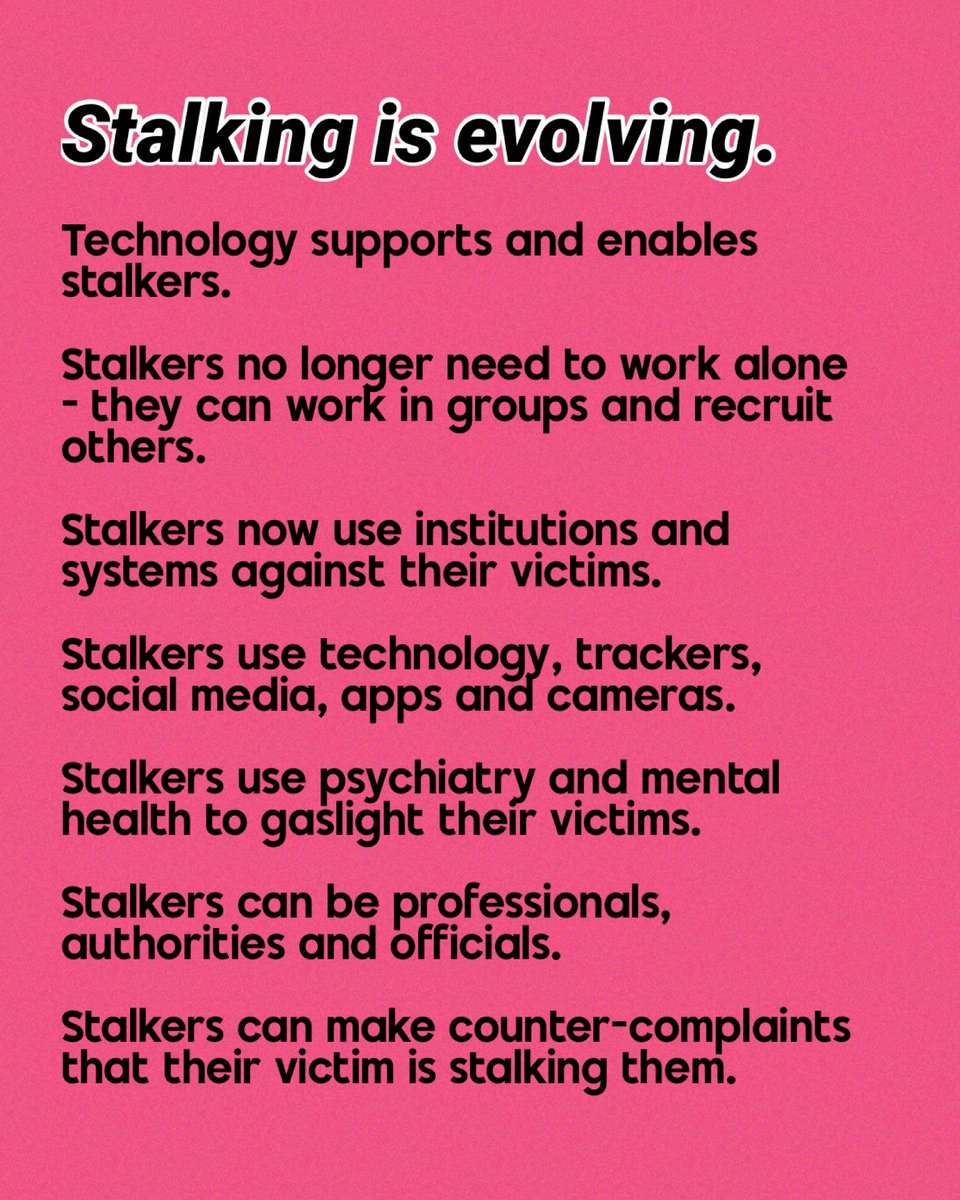
The stereotype of a ‘stalker’ is so strong that even victims struggle to realise how varied stalking can now be.
Stalking can be any of these tactics, all of these tactics - and many, many more.
Professionals desperately and urgently need to understand these presentations too - so they stop dismissing victims and missing cases of stalking because they are not ‘traditional’.
“Once a mother is labelled ‘anxious’, ‘depressed’, ‘bipolar’, ‘manipulative’, ‘borderline’, ‘histrionic’, ‘delusional’, ‘alienating’, or ‘personality disordered’, every future behaviour can become interpreted through that lens. Her fear, her anger, her attempts to protect herself and her kids - all becomes pathology.
Meanwhile, perpetrators who remain emotionally flat, persuasive, and superficially charming to the CAFCASS officer, or the psychologist, or even the police - are repeatedly rewarded by systems that still fundamentally misunderstand trauma and abuse.
Family courts are dealing with some of the most complex, high-stakes, emotionally charged cases imaginable. Yet we continue to place extraordinary weight upon psychological assessments that are often subjective, inconsistent, poorly evidenced, and heavily shaped by interpretation.
We should be asking much harder questions about the scientific validity, ethical standards, accountability mechanisms, and evidential status of these reports.”
My new article is in your inbox right now.