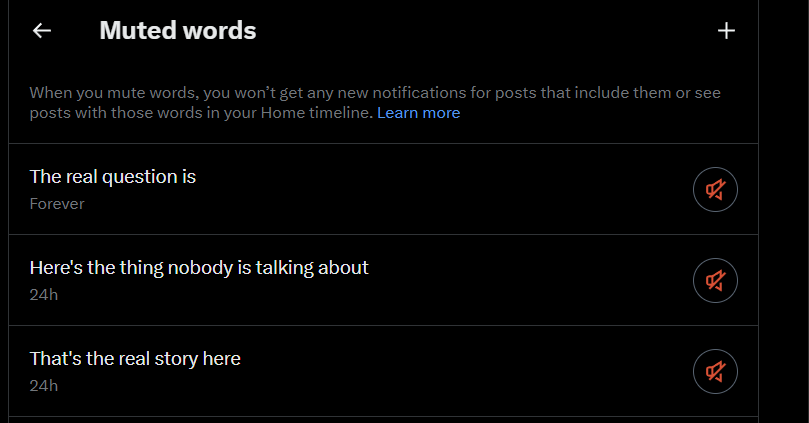
This is utterly fascinating. We’ve known code written by AI is harder to untangle. It appears this is the case with writing as well.
Tricia is an editor and she says that when an author submits work that is written by AI, she has a much harder time editing it. It’s all one interconnected black-box piece of writing that is not amenable to change. Whereas she finds that human writing, while seemingly messier, is actually much more structurally straightforward.
My theory as to why this is is that LLMs think one token at a time. And after every token, they essentially look back and ask, “have I said the thing the prompt wants me to say?” If not, it keeps elucidating.
The result is tight chain of thought writing that requires each preceding token to make sense of the next.
Whereas human writing starts from a pre-language idea in the author’s head, and looks forward many sentences and paragraphs ahead to approximate the author’s intent.
It’s somewhat fuzzy. But I think LLMs fundamentally “think” in a much different way than humans. They are certainly not useless. But I think it’s a grave mistake to equate them with human intelligence.
With all due respect, this is a fraction of the work that goes into interview formats for radio and it would be nice to see podcasters take the work as seriously as radio professionals do.
A breezy tone is great but it's VERY evident when preparation for podcasts is a little on the lazy side, ie, hosts not even reading the guests' books or listening to their albums etc
Tweet: "fuck this brownie is so good rn"
Ten immediate replies: "Well said. Brownies combine eggs, granulated sugar, and cocoa powder in a way that quietly elevates the culture. They're not just a snack, they're a vibe."
This is the work that can’t be replicated by AI or pursued by a reporter with a Substack. It requires time - during which a reporter isn’t producing a lot of copy. Building trust with sources so you can tell sensitive stories, that’s a process that doesn’t scale.
@moorehn I was just thinking I also love my initials but then got to this point and said “ah that’s me.”
“H” has a beautiful visual symmetry. With “J” I love the sound and it faces left while other letters are center or right. So J often creates balance with another letter.
1. When you write something intended to be read by an important person, go through it and cut every unnecessary word.
2. The reader of anything you publish is an important person.
Don’t write a pitch trying to make sure that in 6 pages you don’t have a single discordant note. Write a pitch such that in 6 pages you’ll have one great insight, phrases so memorably that a VC who doesn’t fund you will be saying it at cocktail parties for years.
Yes.
Writing is not a second thing that happens after thinking. The act of writing is an act of thinking. Writing *is* thinking.
Students, academics, and anyone else who outsources their writing to LLMs will find their screens full of words and their minds emptied of thought.