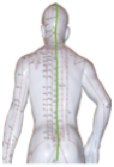
“Your spine is your Body Battery. Keep it charged”
- Paramahansa Yogananda ( Autobiography of a Yogi )
Check out this self help energy field alignment method which charges the spine with the higher vibrational frequency of emerald light.
Scroll down the page for the Emerald Alignment video
https://t.co/J1nyqP6abW
A Russian psychologist spent 10 years proving that the act of talking to yourself out loud is one of the most powerful cognitive tools the human brain has, and almost nobody outside his field has read the work.
His name was Lev Vygotsky.
He worked in Moscow in the 1920s and died of tuberculosis in 1934 at the age of 37. He had no laboratory, no funding, almost no English readers, and a body of work that the Soviet government suppressed for two decades after he died.
He produced the foundational theory of how human cognition actually develops, and the central piece of that theory was a behavior almost every adult is faintly embarrassed about.
Vygotsky noticed that young children talk to themselves constantly. They narrate their own actions, they argue with imaginary opponents, they instruct themselves through tasks out loud.
The dominant theory at the time, from the Swiss psychologist Jean Piaget, said this was a sign of cognitive immaturity that children would eventually grow out of as they learned to think properly.
Vygotsky said the exact opposite.
He argued that this self-directed speech was the most important cognitive event in the entire developmental window, because it was the moment a child first started to use language as a tool to control their own mind. The child was not failing to think. The child was learning how to think by externalizing the process and listening to themselves do it.
He predicted that as children matured, this out-loud self-talk would not disappear. It would go underground. It would become silent inner speech, which is the running monologue every adult has inside their own head for the rest of their life.
The voice you hear when you read this sentence is the direct descendant of a four-year-old narrating their own block tower.
For 50 years almost nobody outside Russia had access to his work, and the few researchers who did pick it up could not get funding to test it. Then in the early 2000s the experiments finally started to pile up, and what they found was that Vygotsky had been right about something even more important than he knew.
The first major study came from Gary Lupyan at the University of Wisconsin and Daniel Swingley at the University of Pennsylvania in 2012. They ran a simple visual search experiment. Participants were shown 20 images at once and asked to find a specific object, like a banana or a chair. In one condition they searched silently. In the other condition they were told to say the name of the object out loud to themselves while looking for it.
The participants who spoke the target name out loud found the object significantly faster, with higher accuracy, than the participants who searched in silence. The effect was strongest when the spoken word matched a familiar object the brain already had a strong category for.
Saying the word out loud literally tuned the visual system to detect that thing better. The researchers called it the label feedback effect, and the implication was that the act of vocalizing a goal physically changes how the brain processes the world while pursuing it.
The second major study came out of the University of Michigan and Michigan State in 2017. The lead researchers were Ethan Kross and Jason Moser, and they used both EEG and fMRI to record what happens inside the brain when people talk to themselves while emotionally upset.
They asked participants to recall painful autobiographical memories and reflect on them in two different ways. Some used the first person, saying things like "why am I feeling this way." Others used the third person, referring to themselves by their own name, saying things like "why is John feeling this way."
The brain scans showed that the simple act of switching from first person to third person, even silently, decreased activity in the medial prefrontal cortex, the region responsible for rumination and self-referential pain. Within a single second of using their own name instead of the word I, participants showed measurably lower emotional reactivity. The shift required no extra cognitive effort. It cost the brain nothing. And it worked.
Kross described the mechanism in his interviews. Talking to yourself by name creates a small amount of psychological distance from your own experience. Your brain processes the situation more like a problem belonging to someone else, which means it can analyze it instead of drowning in it.
What Vygotsky had intuited in 1934 turned out to be even more powerful than the developmental theory he built it into. The voice you use to talk to yourself is not background noise. It is one of the most precise cognitive tools the brain has, and you can change how it works just by changing the pronoun you use.
People who talk through problems out loud are not anxious or unstable. They are running an externalized version of a process the rest of us are running silently and worse. The kindergartener narrating their block tower, the surgeon muttering through a procedure, the engineer pacing a hallway describing a bug to nobody, the athlete repeating a cue to themselves before a free throw, they are all using the same ancient mechanism that builds and steers human thought.
You can run the experiment yourself the next time you are stuck on something hard. Stop trying to solve it silently in your head. Say it out loud. Describe what you are seeing. Walk yourself through the steps as if you were explaining it to a colleague who is not in the room.
And when something genuinely upsets you, switch to your own name. Ask why this person is feeling this way, instead of why I am feeling this way.
The voice you have been told to keep quiet your entire life is one of the oldest pieces of cognitive technology you own.
Most people are still embarrassed to use it.
What are they spraying in our skies?
30 US state legislatures are moving legislation to ban geoengineering and weather modification over their States.
The UK Government are funding experiments over our skies.
Catherine Austin Fitts on how psychopaths are able to run the world
"people who have no empathy are really good at... organizing for self-benefit"
"[So] you have... 3 to 5% sort of psychopath[s] [at the top], [and then] 20 to 25% who are making a lot of money helping them"
"then you have the other 60 to 70% [of the population] who can't fathom what's going on. And what the others are doing, what the smaller groups are doing, drives them crazy. And they become neurotic"
This clip of Catherine Austin Fitts, a former Assistant Secretary of Housing and Urban Development, investment banker, and founder of the Solari Report (@solari_the), is taken from a discussion with Alix Mayer (@alixm) posted to YouTube on June 3, 2026.
----------------Partial transcription of clip---------------
"There's a wonderful book called Political Ponerology. Have you ever read it? Okay, so, the, the description of the book is as follows. It was a psychologist who had been a young man during Hitler in Poland. And after the war then Stalin came in and he was at university and he and a group of colleagues decided, you know, because they'd been so traumatized by all this tyranny, they said, we're going to study the intersection of psychopathy with politics.
"And that's ponerology, the study of psychopathy mixed— And here's what they— And they wrote the book, he said, three times, tried to get it out from behind the Iron Curtain and then, failed, had to destroy it. And then when he finally got out after '89, he wrote it from memory.
"And here's what it said. And what he said was that most people are born with empathy and they can't fathom not only that other people don't have empathy, but that the people who have no empathy are really good at getting together and organizing for self-benefit.
"So the people with no empathy are much more effective at conspiracies than the people with empathy. Okay?
"So anyway, what he said was about 20 to 25% of the population who are competent at running things are willing to work for the people who don't have empathy as long as they get paid well.
"And if you look at the history of America, the way we've gotten here is a lot of people got paid a lot of money, whether with their stocks and bonds or whether their job helping the people who have no empathy do all the evil doing.
"I mean, you know that because if you look at what's going on in medicine, you can see it clearly.
"So what happens is you have the 3 to 5% sort of psychopathic, then you have the 20 to 25% who are making a lot of money helping them. And then you have the other 60 to 70% who can't fathom what's going on. And what the others are doing, what the smaller groups are doing drives them crazy. And they become neurotic.
"They become neurotic about the food, they become neurotic about the healthcare, they become neurotic about programmable money. And until they finally come to understand, you're dealing with psychopathic and you're dealing with people who will help the psychopaths for money.
"And what he said was once people could fathom what was going on, suddenly they started being effective."
30,000 hours of footage, equivalent to 3 years and 7 months, were filmed to capture the blooming of 77 types of flowers, and the result is spectacular.
Your Subconscious Mind Is Always Listening. 🧠✨
Every Thought Is A Command.
Every Belief Is A Program.
So Ask Yourself…
What Are You Telling Yourself Every Day? 👁️
THE UNIVERSE DOESN’T ISOLATE THE WEAK, IT ISOLATES THE CHOSEN
In the grand design of existence, isolation is not punishment — it is preparation.
The Universe pulls you away from the noise, the crowds, the distractions, not because you are weak, but because you carry something rare. A frequency too high for ordinary circles. A destiny that demands silence to be heard. A soul that must meet itself in the void before it can shine in the world.
While others chase connection, the chosen learn detachment.
While others fear loneliness, the chosen discover their own divine company.
What feels like abandonment is actually alignment. What feels like emptiness is actually space being cleared for light.
Embrace the solitude.
It is the sacred forge where stars are born.
It is the quiet chamber where prophets remember who they are.
It is the invisible hand of the cosmos saying:
“You are ready. Now walk alone until you become the path.”
The weak are never truly isolated — they are simply left in the familiar.
But the chosen? The Universe isolates them so they may become unforgettable.
✨🙌🏽💫
"Love the animals, love the plants, love everything. If you love everything, you will perceive the divine mystery in things. Once you perceive it, you will begin to comprehend it better every day."
~ Fyodor Dostoevsky
The Great Meadow in Pobojka
🎨 Stanislav Zhukovsky
@maximumpain333 I watched this 10 times and read 5 core books to start to understand it… all worth it. Long form of this lecture (2017) is here (and totally worth your 2 hours!): https://t.co/1x2lVGNZsV
THE PRICE OF AUTHENTICITY IS REJECTION
In the sacred journey of the soul, authenticity is not a gentle path lined with applause. It is the narrow road through the wilderness where the crowd thins, then disappears entirely.
To speak your truth when the world prefers comfortable lies…
To walk in alignment when conformity offers safety…
To embody your unique frequency when the collective demands harmony through sameness…
This is the mystic’s fire.
Rejection is not failure. It is the refining flame. Every time a false connection falls away, space is created for resonance. Every closed door is the Universe redirecting you toward those who vibrate at your level. The ancestors, the unseen, the fellow wanderers of the inner realms—they do not reject the real.
The price of authenticity is rejection by the unreal.
But the reward is reunion with your Soul, with Source, with the eternal.
Stand tall, mystic.
The void you feel is not emptiness.
It is the womb of your becoming.
✨🙌🏽💫