@pressjournal We have been aware of this for many years. I remember going to meetings 20 years ago about the aging population and what it would take to meet the growing need in health and social care. I guess the can was continually kicked down the road..
📖 The latest Attachment (Vol. 19, No. 1) is out! Explore cutting-edge insights on attachment, trauma, race & more from @Bowlby_Centre
📰 Purchase the latest issue here 👉 https://t.co/HEgdKc1QdR
🔗 Subscribe for the year 👉 https://t.co/8I8N2GMilM
Who is doing joined up thinking about how schools. universities, therapy culture fosters narrative of withdrawal from life for anxious and depressed young people? When I was teaching at uni, one third of students had mental health diagnosis - a large proportion anxiety/depression - with reasonable adjustments including "don't ask them any questions in class" and a lot of accommodation of absence. There were not enough private rooms for exams, as requested as an adjustment - we had to hire the local football stadium. I tried to raise this issue, arguing that anxiety often responded well to controlled exposure to the source, but was told by managers it was "best practice" to try to make life as non-intimidating as possible for anxious students. If that is representative of our culture's attitude, I am not surprised this cohort feel overwhelmed by life/work/going outside when formative institutions effectively validated this response. There are other careful ways to handle the issue, it is not "cruel" to push back on endless accommodation when the accommodation is perpetuating the problem. This is NOT a comment on the severest kinds of mental health problems - in fact, such is the huge expansion in diagnosis of milder kinds, people who have bipolar (for instance) get lost in the system. It just seems to me that this issue is systemic, and when anxiety and depression in teens and twenties are being treated as disabilities alongside severe physical incapacity, the consequences are bad, both for the first group, and for the second who are being lumped in.
Edited to add, after seeing first comment: you can acknowledge that many young people's problems are structural/economic, and they get a raw deal, whilst still noticing that - particularly in middle-class environments - anxiety and depression are being addressed in counterproductive ways. You can have both.
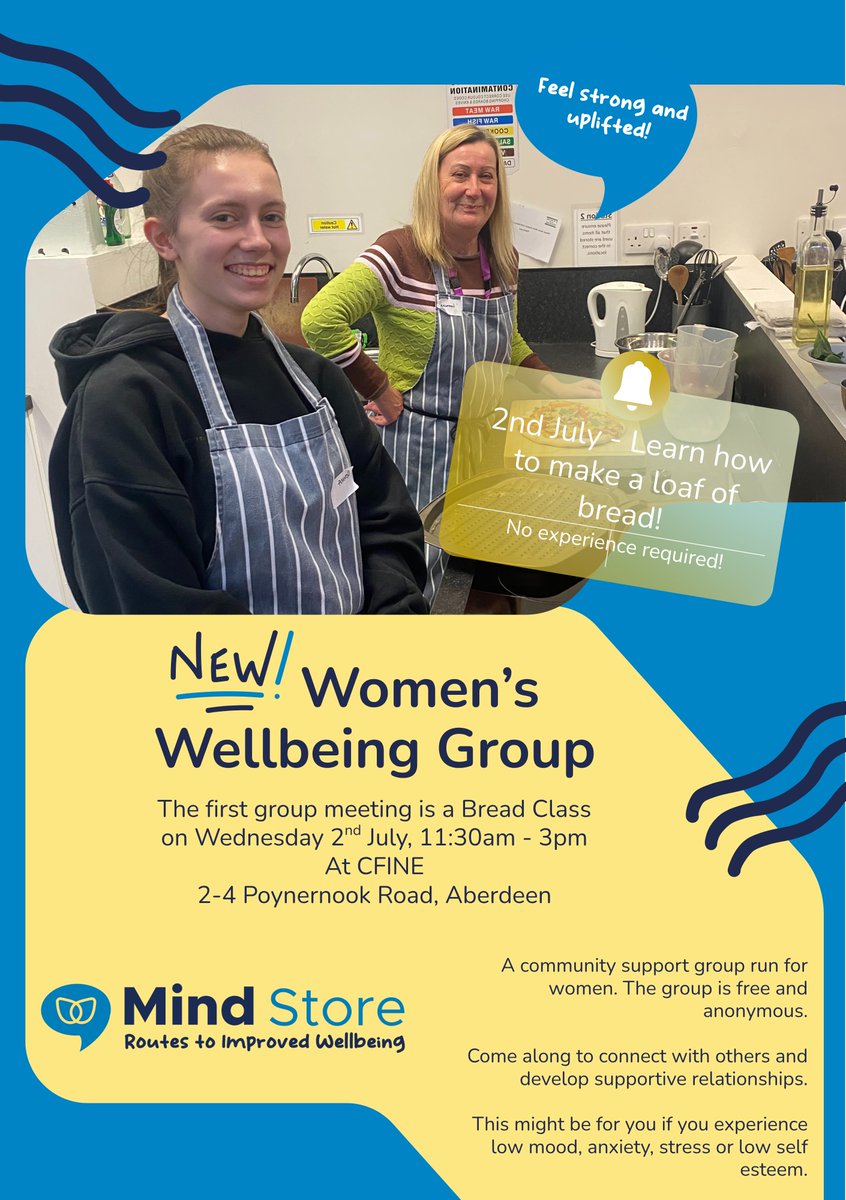
Mind Store's New Women’s Wellbeing Group!
The community support group run for women will be holding its first meeting, teaching you how to make homemade bread
🗓️Wednesday 2nd July
⏰11:30am-3pm
📍CFINE, 2-4 Poynernook Road AB115RW
Please contact [email protected]/07907473894
'The figures, believed to be the most significant insight yet into the volume of referrals for the very youngest at risk in domestic abuse situations, are still said to be an underestimation of the issue.'
https://t.co/35vU7hBPqT
As we begin the memorial week commemorating the genocide in Srebrenica, here’s a reminder of what happened twenty-nine years ago during the week of 6th July 1995. #Scotlandremembers#Srebrenicagenocide https://t.co/0dIxVvshyn
The next episode of our Let's Talk About CBT - Research Matters podcast is out this Wednesday, where Rachel (@DrRachelHandley) meets Professor Ken Laidlaw about working with older adults. Here's a taster for now...
How our lives, our planet and our mental health got trashed by something we scarcely understand: a doctrine that changed everything. Neoliberalism.
This week's column.
https://t.co/YUIOlD1beD