@gavinpurcell Really appreciate it, thank you!
Your experiments with creative personas are so inspiring, and really shifting how I think about AI as a creative intelligence.
KEEP GOING!
@gavinpurcell would you consider sharing the prompt you gave Fig? I'm curious how much was steered in the prompt, in the 'taste' you gave Fig, and by the model itself.
This is making me question so much about how creative AI can be...and I'm loving it!
By far my favourite of your experiments.
This vid from @gavinpurcell and his agent 'Fig' has me seriously questioning the assumption that AI "can't be creative"
It's beautiful, sad and funny.
My favourite kind of art.
I've never built an app before, but when she asked about finding a way to make these structures more accessible, I turned to Codex and Claude Code. This is the result. You can find it here: https://t.co/JZpHaMbrXz.
My wife is a speaker coach - and she devises incredible concepts and frameworks to help speakers.
One of those is 50 Structures for Short Talks - concise prompts to help any speaker quickly find a structure for a 'lightning' or 'spark' talk (usually about 5 mins).
These have been tested and validated by speakers at tech companies and startups. Many find that they quickly move from "I'm stressed and don't know where to start" to "I'm actually looking forward to this".
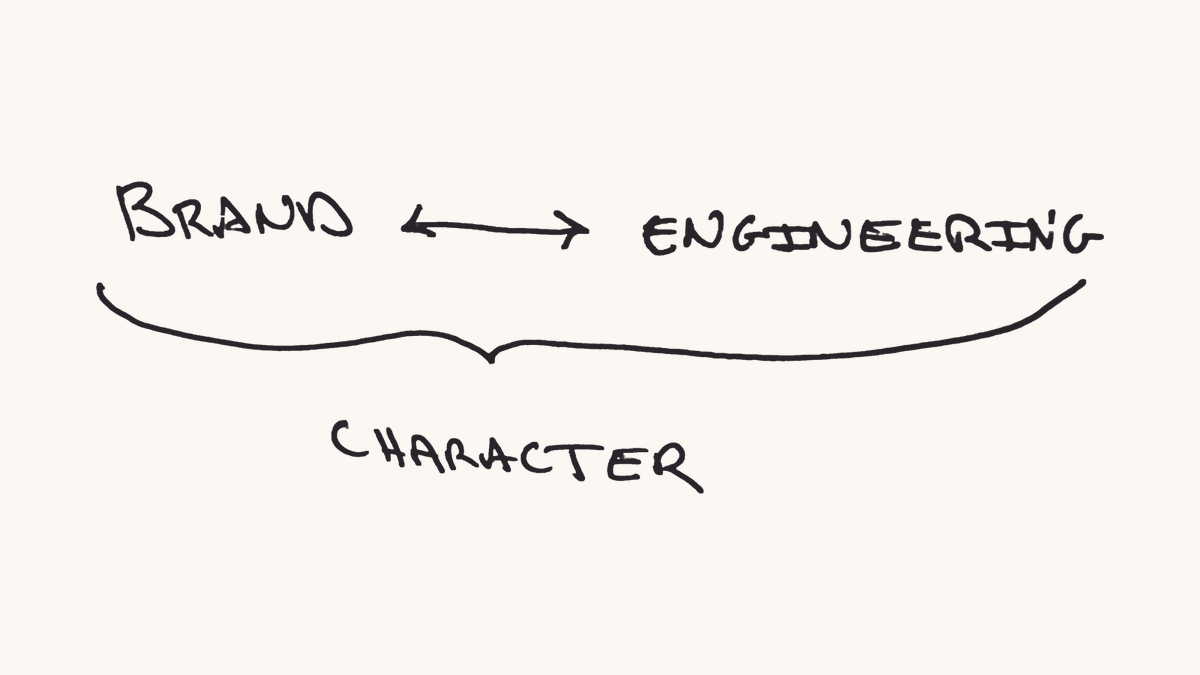
Engineering wants fast. Brand wants warm. If you've agreed the avatar is an experienced concierge, the answer is both - and both teams can bring their own expertise to this aligned vision.
When your teams disagree, what's your tiebreaker?
Teams stall when two options have similar pros and cons, and every team has its own priorities. @romanugarte_ Ugarte (@spacexai ) on @lennysan's podcast: "What would you want from your teammate in this exact situation?"
That's why I use character as a design framework. Agree who the agent, avatar or robot is, how it treats users and how they should feel.
Then engineering, UX, design and brand all design towards the same character.
For compliance, script the exact line the character says, word for word. This matters for the brand, as those are the moments users screenshot and share.
How is your character handling the questions it shouldn't answer? If you're working on this, I'm happy to talk.
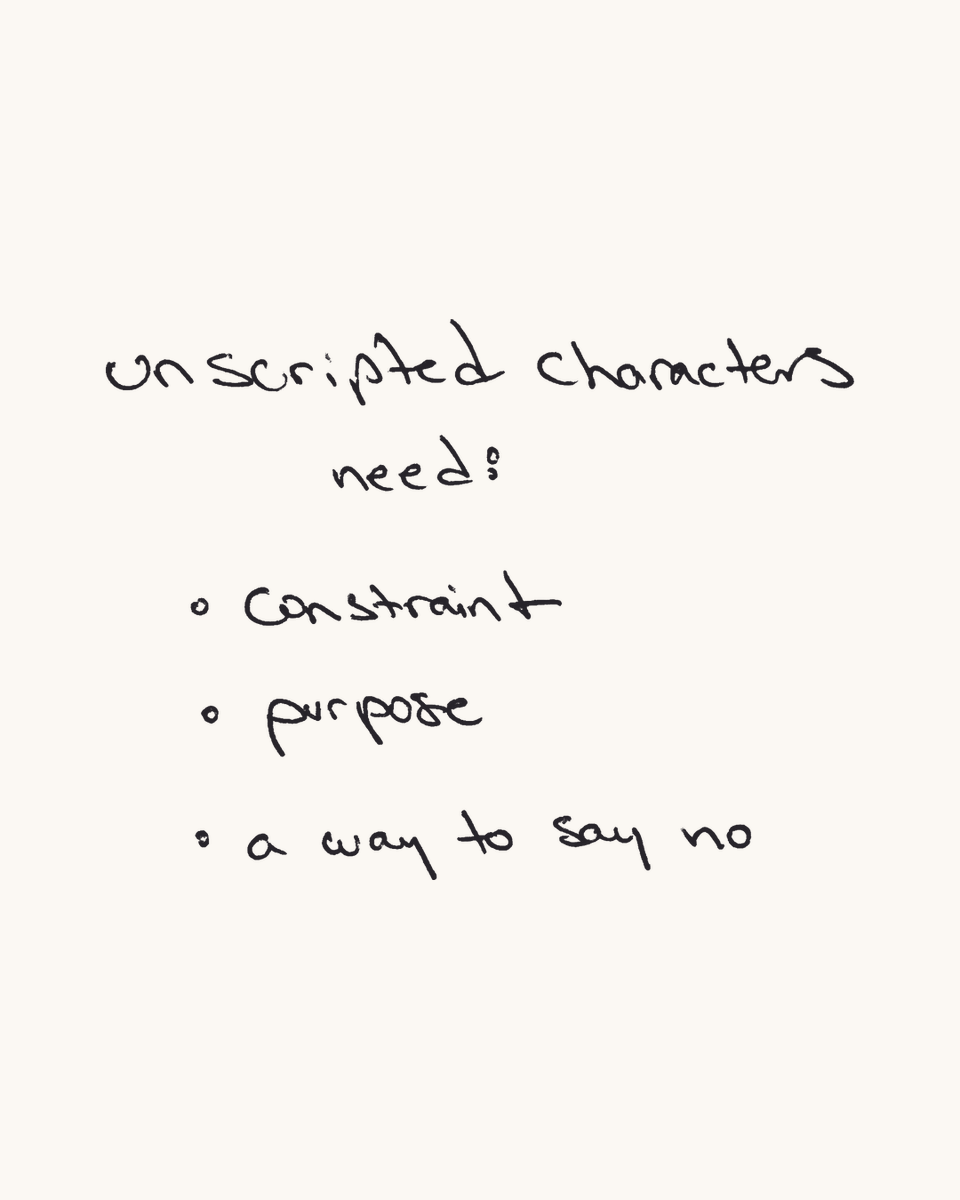
Interactive characters can't be fully scripted - you can't anticipate everything a user will say.
The instinct is a list of forbidden topics. It doesn't work in production. The list never ends & there are more important things to put in the system prompt.
Instead, I define what the character knows and wants to talk about. That gives it constraint and purpose.
Then design how it says 'no': a gentle redirect when out of scope, firmer when repeated, a hard stop at a critical boundary.
The guest relationship runs from booking online to the morning after departure > when none of your team is there.
A virtual concierge carries your brand's character through all of it.
If you lead guest experience: where would a virtual concierge genuinely help your guests?
In hospitality, your brand voice is only as consistent as whoever is on shift tonight.
The hotel avatars I've seen so far sit in the lobby. I think the bigger win is everywhere else.
Both answer the query. Only one makes you feel known and considered.
Missing from the criteria means missing from the design.
👉 Add one line to your next brief: how should the user feel afterwards?
Why are most AI service agents so dull? Because they aren't designed to delight.
Briefs measure resolution, containment and CSAT. Nobody asks how the user felt.
When I designed Vessa, a restaurant-booking character, its recommendations said "you'll like", not "these restaurants are good".
Ratings say what's good. Your favourite foods, budget and where you've eaten say what's right for you.