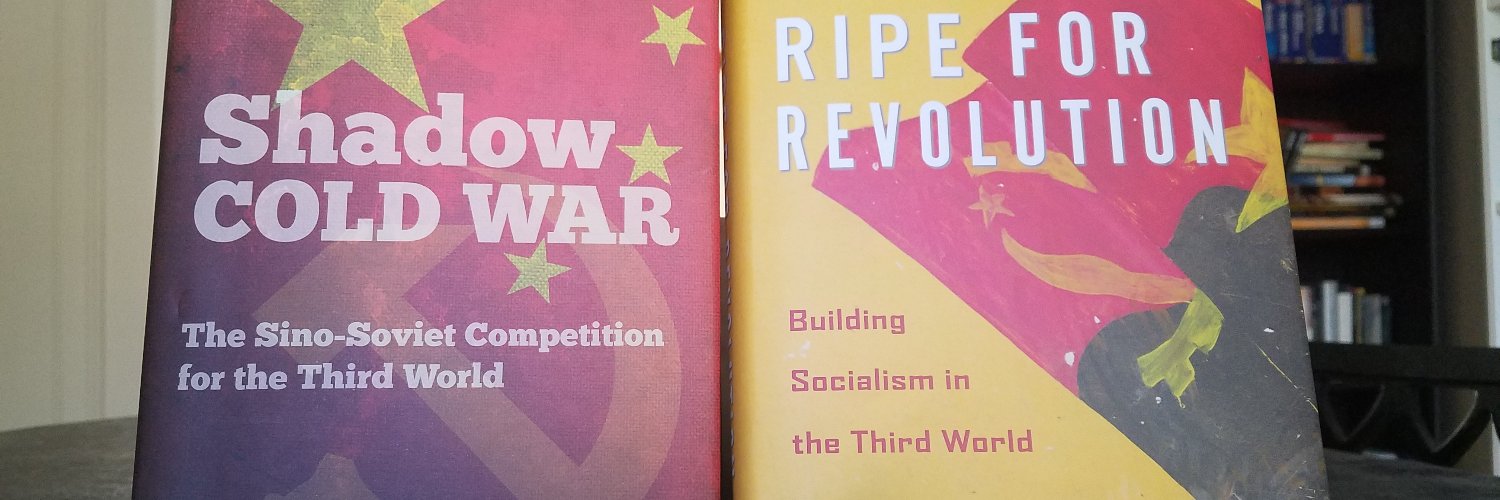
Historian of Russia, China, Iran, socialism, and revolution. Author "Ripe for Revolution: Building Socialism in the Third World." Prof @HarvardHBS. Powerlifter.
Thank you @ForeignAffairs and @MariaLipman for the positive review of my book "Ripe for Revolution: Building Socialism in the Third World" in the Nov/Dec edition of Foreign Affairs: https://t.co/mwCr0PIUlA
Does China actually want America’s global role? @JeremySFriedman argues Beijing wants influence, but not necessarily the full burden of global leadership.
Watch - https://t.co/2RQWr5KtSj
is happy to announce that I will be joining the University of Texas at Austin's School of Civic Leadership and Clements Center for National Security as a full professor this fall!
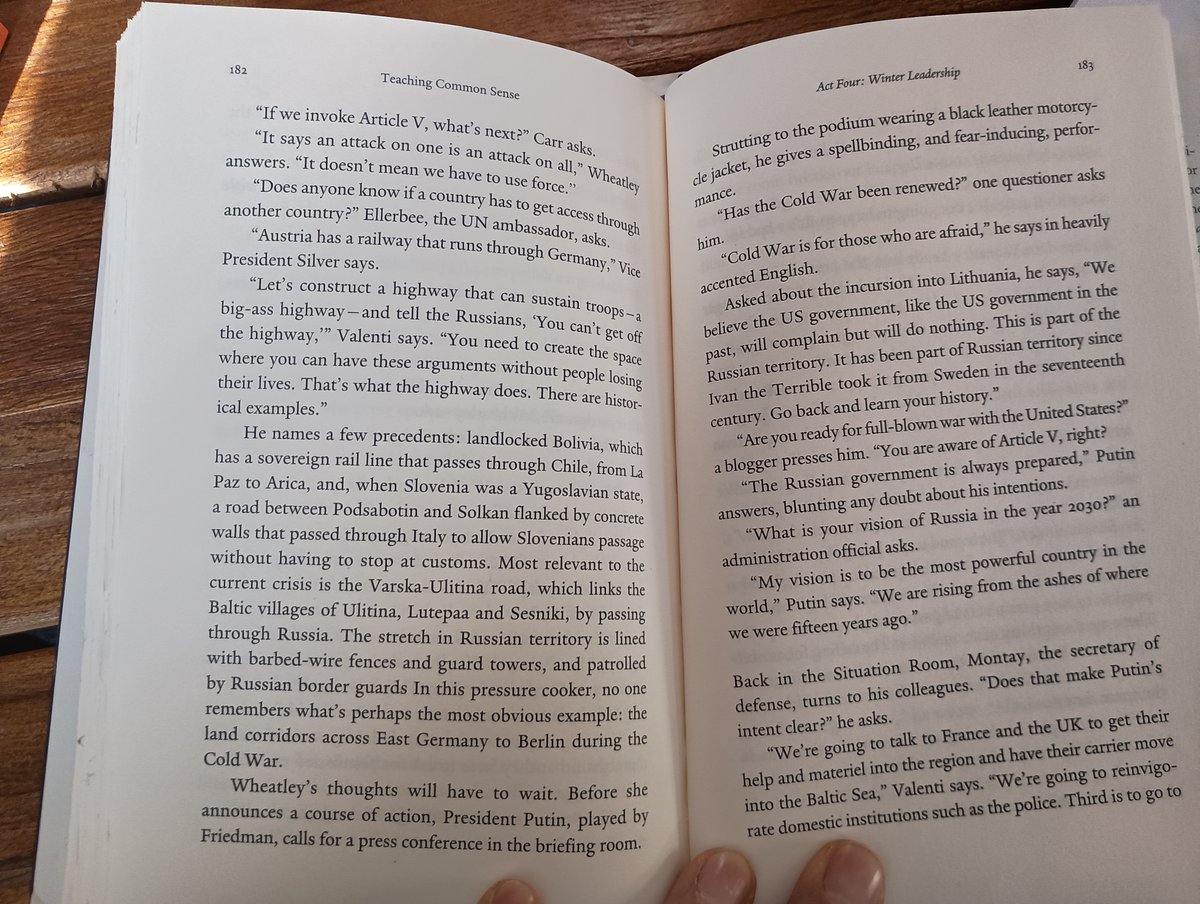
The WSJ writes about Europe war-gaming a scenario in which Russia invades Lithuania: https://t.co/yf5j5duvAK We ran this exact scenario in a simulation at Yale in 2014, and I played Putin:
China does not aspire to write all the rules of the international system, but it does want the power to revise or veto rules that conflict with its interests, writes @JeremySFriedman. https://t.co/cog6wa3vtV
My latest for @ForeignPolicy , in which I argue that China is not seeking global hegemony but global preeminence, i.e. a sort of "first among equals" status without bearing the burdens of hegemony: https://t.co/AI0TDq6lSI
The Jervis Forum Roundtable Review 17-13
Donald Stoker’s Purpose and Power: US Grand Strategy from the Revolutionary Era to the Present
“a critique of both American policymakers...[and] American scholars in their efforts to employ the concept of grand strategy” –Jeremy Friedman
https://t.co/P3t1RheayQ
@JeremySFriedman
Putin is likely to fail in Alaska for the same reason Russian leaders have historically failed to understand the US: failing to see how democracy constrains American leaders https://t.co/jSG3JIMPYc
Not a great move strategically - India's relationship with Russia is a major source of tension between Moscow and Beijing, and it's therefore not necessarily in the US interest to weaken that relationship: https://t.co/Z5leUoXrxf
Demographic decline now is about where climate change was in 1990. Some people are trying to sound the alarm, but most are still unaware or skeptical, saying things like "How can the world be warming when it's so cold?" or "Wouldn't that be good - we could grow more in Canada?"
The obvious fact about demographic decline is that, contrary to UN models, there is no reason to believe the decline will magically stabilize, but every reason to believe it will snowball - the fewer kids there are, the harder it becomes to have kids: https://t.co/KwKkQzboUd
E207 - The Sino-Soviet Split, Pt. 2 w/
@JeremySFriedman
The second part of our discussion with Jeremy Friedman on the Sino-Soviet split is out for all!




![HDiplo's tweet photo. The Jervis Forum Roundtable Review 17-13
Donald Stoker’s Purpose and Power: US Grand Strategy from the Revolutionary Era to the Present
“a critique of both American policymakers...[and] American scholars in their efforts to employ the concept of grand strategy” –Jeremy Friedman
https://t.co/P3t1RheayQ
@JeremySFriedman](https://pbs.twimg.com/media/G4MYHa0W4AAgnzg.jpg)