I joined members of the Hausa Community in Ado-Ekiti to observe today’s Juma’at prayers at the Shasha Market Central Mosque, alongside my brothers and colleagues, Governor AbdulRahman AbdulRazaq of Kwara State and Governor Babagana Umara Zulum of Borno State.
Addressing the congregation and members of the community, I commended their longstanding contributions to the growth and development of Ekiti State and encouraged them to continue to conduct themselves responsibly, live in peace, unity, and harmony with their host communities.
Don't get sucked into the negative corner of the universe.
Nigeria may not be there yet, but this administration & BAT dey try! However, more is needed 🙏🏾🙏🏾🙏🏾🙏🏾🙏🏾🙏🏾
Rufai: How will you improve Agriculture. We don’t want statistics but what you will do step by step?
Obi: How is not rocket science, if Bangladesh with 148 square kilometers of land …..
Lol 😆 Peter Obi needs to take a rest.
I recently conducted a thorough inspection of the environmental degradation and gully erosion site in Rigasa, Kaduna State, a pressing issue that has persisted for over 30 years. This relentless challenge has claimed lives, devastated livelihoods, and exposed communities to significant environmental hazards and safety risks, all without sufficient intervention.
In response, I am pleased to announce that the Kaduna State Government, through the Ministry of Environment and Natural Resources, will initiate a comprehensive intervention aimed at reclaiming degraded lands, restoring livelihoods, and fostering a healthier, safer environment for residents along the affected corridor.
This ambitious project will span a 17-kilometer stretch across the Igabi and Kaduna South Local Government Areas, covering Rigasa and other communities along the corridor, which are predominantly urban-poor communities that make significant contributions to the economic growth and development of Kaduna State. The project has an approved contract sum of N34 billion, and the necessary funding has been secured to ensure a seamless implementation process. Groundbreaking is scheduled to occur in two weeks, with project completion anticipated within 18 months.
While the construction will impact over 1,200 households, we have allocated more than N2 billion for compensation and resettlement support. This initiative will not only create direct and indirect employment opportunities but also stimulate economic activity and enhance the quality of life for our citizens. Upon completion, the project is expected to directly benefit and positively impact more than 2 million people living and working within the affected corridor and surrounding communities.
Senator Uba Sani, CON
Governor, Kaduna State.
Fellow Nigerians
Today, we celebrate democracy and the enduring Nigerian spirit. For 27 unbroken years, since May 29, 1999, Nigerians have chosen their leaders through the ballot, witnessed peaceful transitions of power, and resolved disagreements in courtrooms and legislative chambers—not through violence. We have experienced the longest stretch of civilian rule in our history. Our democracy is not perfect, but it is ours, and we must continue to defend and strengthen it.
I had the distinct honour of delivering the welcome address at the Renewed Hope Ambassadors (RHA) Retreat for National Mobilisation in my capacity as Deputy Director-General, Party Outreach, Engagement, and Mobilisation. This retreat served as a vital forum for party leaders, governors, legislators, ministers, and other key stakeholders to cultivate a more cohesive approach to national mobilisation and grassroots engagement.
Our discussions were centered on enhancing the connection between governance and the citizenry, while establishing a unified framework for articulating the objectives and impact of the Renewed Hope Agenda across our nation.
A significant outcome of this gathering was the acknowledgment of His Excellency, President Bola Ahmed Tinubu, GCFR, whose bold reforms are steering our nation toward economic stabilization, infrastructure advancement, institutional resilience, and sustainable growth. It was a consensus among participants that these remarkable achievements must be strategically amplified and effectively communicated to reach Nigerians at the grassroots level.
As we concluded, we emerged with a renewed commitment to unity, coordination, and sustained engagement, all aimed at advancing national development and ensuring the enduring success of the Renewed Hope Agenda.
Senator Uba Sani, CON
Governor, Kaduna State.
“KADUNA SCORES ANOTHER BIG WIN UNDER UBA SANI”
By Raheem Braimah
The recent announcement of the 2025 Phillips Consulting State Performance Index (pSPI) has illuminated Kaduna State’s remarkable progress, ranking it third nationally and awarding it an Excellent Four-Star Rating. This accolade not only showcases the state’s achievements but also serves as an independent validation of the transformative and inclusive leadership exemplified by Governor Uba Sani since he assumed office on May 29, 2023.
The significance of this ranking is profound. It reflects measurable advancements in governance, fiscal management, economic development, infrastructure, healthcare, education, agriculture, security, and social inclusion. Utilising a robust methodology that combines objective performance indicators with citizen feedback, the assessment illustrates Kaduna’s substantial strides in critical areas vital to the well-being of its citizens.
Governor Sani’s leadership style has been characterized by a commitment to dialogue, inclusion, and meaningful service over mere propaganda. This approach resonates deeply in a state previously beset by insecurity and social fragmentation. Upon assuming office, Sani faced a daunting landscape where banditry and violent attacks had become commonplace, leading to a crisis of confidence among the populace. Rather than succumbing to despair, he chose to rebuild trust through focused initiatives.
A cornerstone of Governor Sani’s security strategy is the Kaduna Peace Model. By working closely with security agencies, traditional leaders, and local stakeholders, the administration has adopted a holistic approach to peace-building, addressing not only immediate security threats but also their underlying causes. This multidimensional strategy has yielded impressive results, with reports indicating a significant reduction in violent crime rates. Communities previously paralysed by fear are regaining their confidence, farmers are returning to their fields, and schools that once faced disruptions are now operational.
In fiscal management, the Governor Sani administration has exhibited remarkable discipline. Faced with substantial debt obligations, the governor opted for restraint, prioritizing fiscal sustainability over short-term gains. This prudent governance approach has seen Kaduna State repay more than ₦90 billion in inherited debts without incurring new loans, a feat that underscores responsible governance. The administration’s commitment to transparency has fostered investor confidence, enhancing revenue collection and reducing dependency on external funding sources.
Equally remarkable has been the restoration of confidence in Kaduna’s financial management architecture. Under Uba Sani, transparency and accountability ceased to be rhetorical ornaments and became measurable governance principles. For two consecutive years, Kaduna emerged as Nigeria’s most transparent and accountable state, according to the Transparency and Integrity Index released by the Centre for Fiscal Transparency and Public Integrity, supported by the MacArthur Foundation.
This ranking was not accidental. Kaduna institutionalized open procurement systems, strengthened citizen engagement frameworks, expanded fiscal transparency mechanisms, and deepened the Open Government Partnership framework through its extended State Action Plan III covering 2024–2027. Governance increasingly became participatory rather than opaque.
Perhaps nowhere is the administration’s reformist instinct more visible than in revenue generation. At the time Governor Sani assumed office, Kaduna’s monthly internally generated revenue hovered around ₦5 billion. Through tax reforms, automation, expansion of the tax net, and improved ease of doing business, Kaduna rapidly emerged as the leading internally generated revenue-performing state in Northern Nigeria.
https://t.co/KAUdfDsVxK
May this blessed Juma’at Day bring us closer to Allah’s mercy and guidance. May He strengthen our iman, bless our efforts, and place goodness in all that lies ahead. May He grant comfort to the troubled, healing to the unwell, forgiveness to the departed, and abundant barakah to our families and loved ones. May our hearts remain steadfast in remembrance of Allah SWT and our lives be enriched by His countless favors. Ameen.
JUMU’AT MUBARAK
Now, this is the way the Priest should release the blessing;
"The Lord bless you
The Lord keep you
The Lord caused this verse to shine upon you
The Lord be gracious to you
The Lord lift up his countenance upon you
And give you peace."
Kaduna ADC is actually the most useless opposition party in the country
His Excellency, Gov Uba Sani, can hardly believe his luck
But that’s to be expected when you assemble a group of old corrupt political figures who are desperate for power & present them as an opposition.
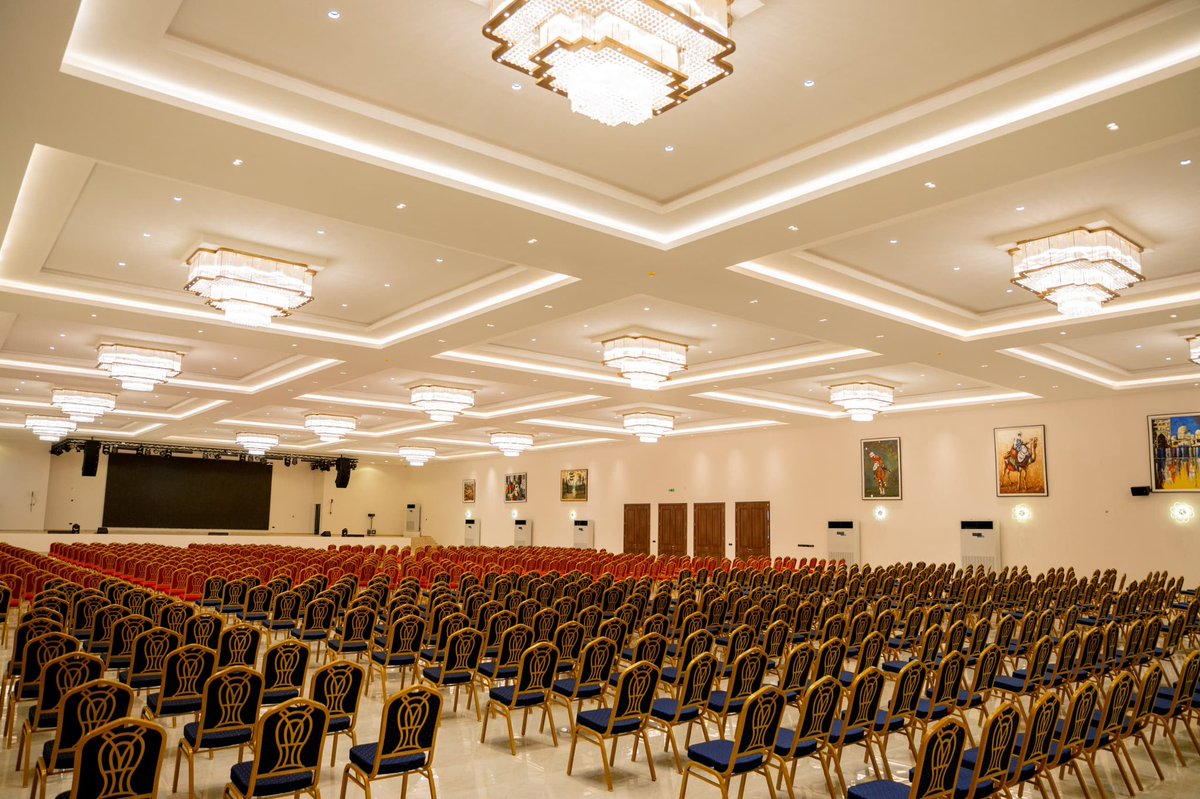
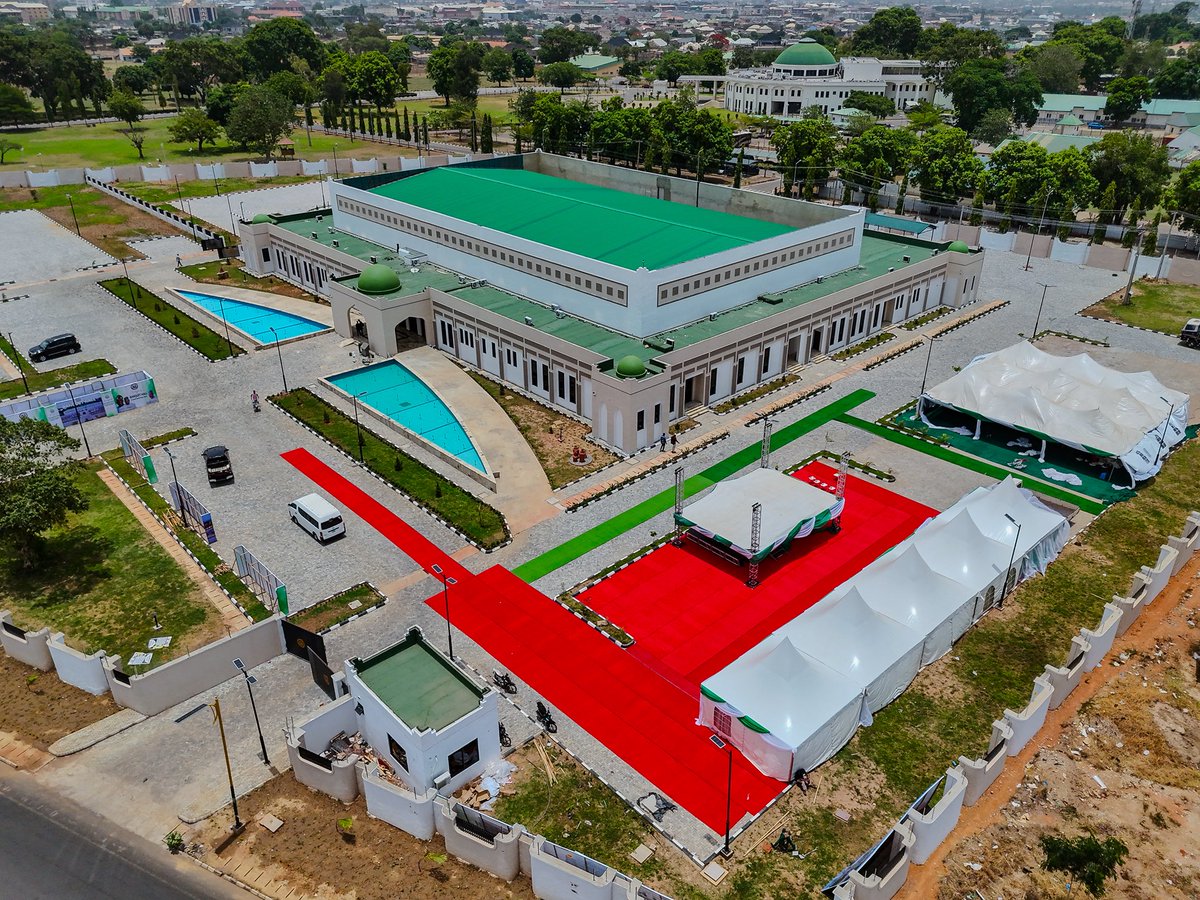
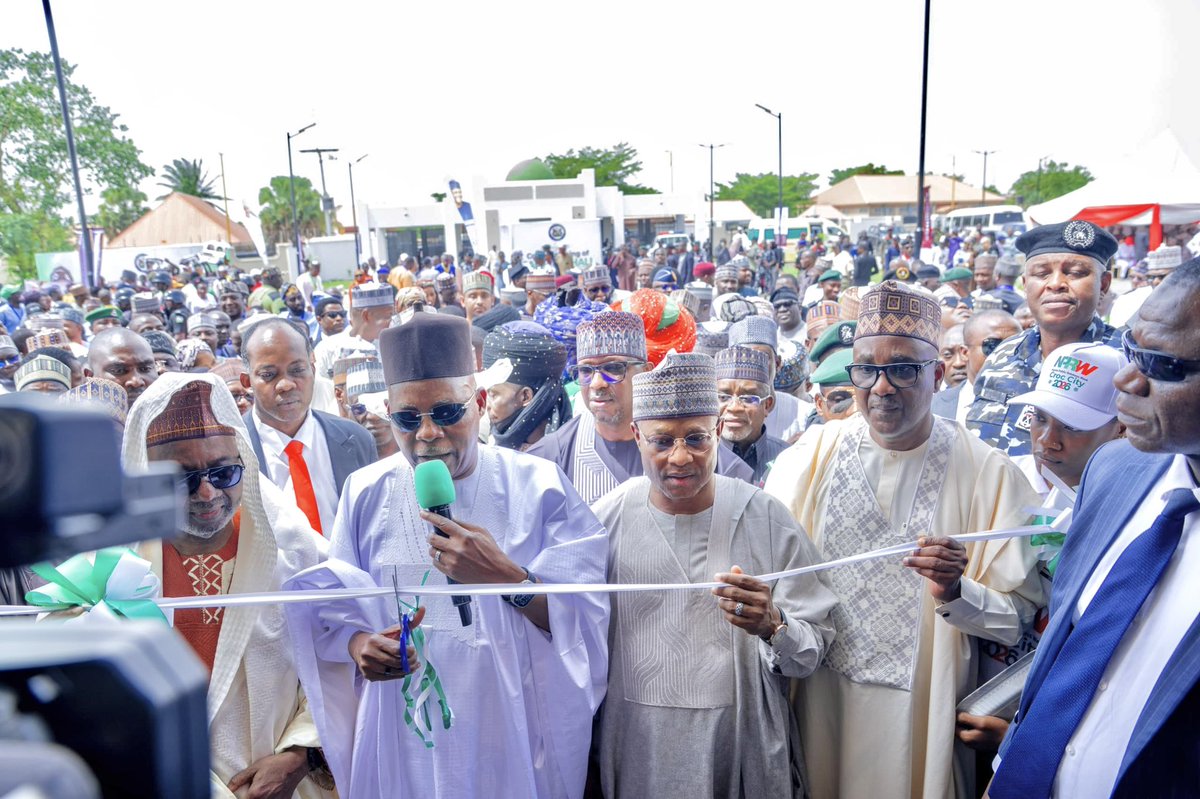
Today, we did more than commission a building; we gave expression to a governing vision rooted in purpose, dignity, and long-range thinking. The unveiling of the Abba Kyari Banquet Hall is not an isolated achievement, but a deliberate investment in the institutional architecture of Kaduna State; a space designed to host consequential conversations, deepen partnerships, and project the confidence of a state that is prepared to lead. It affirms our readiness not only to serve our people with commitment, but to engage meaningfully with ideas and alliances that shape development beyond our immediate boundaries.
I am particularly encouraged by the presence and thoughtful reflections of His Excellency, the Vice President, Senator Kashim Shettima, GCON. His generous observation that Kaduna continues to set a standard worthy of emulation is both humbling and instructive. It reinforces the importance of sustaining a careful balance between advancing citizens’ welfare, implementing impactful policies, and strengthening the institutions that give governance its enduring legitimacy. His remarks underscore a shared understanding that infrastructure of this nature is not ornamental, but integral to the evolving demands of leadership in a modern state.
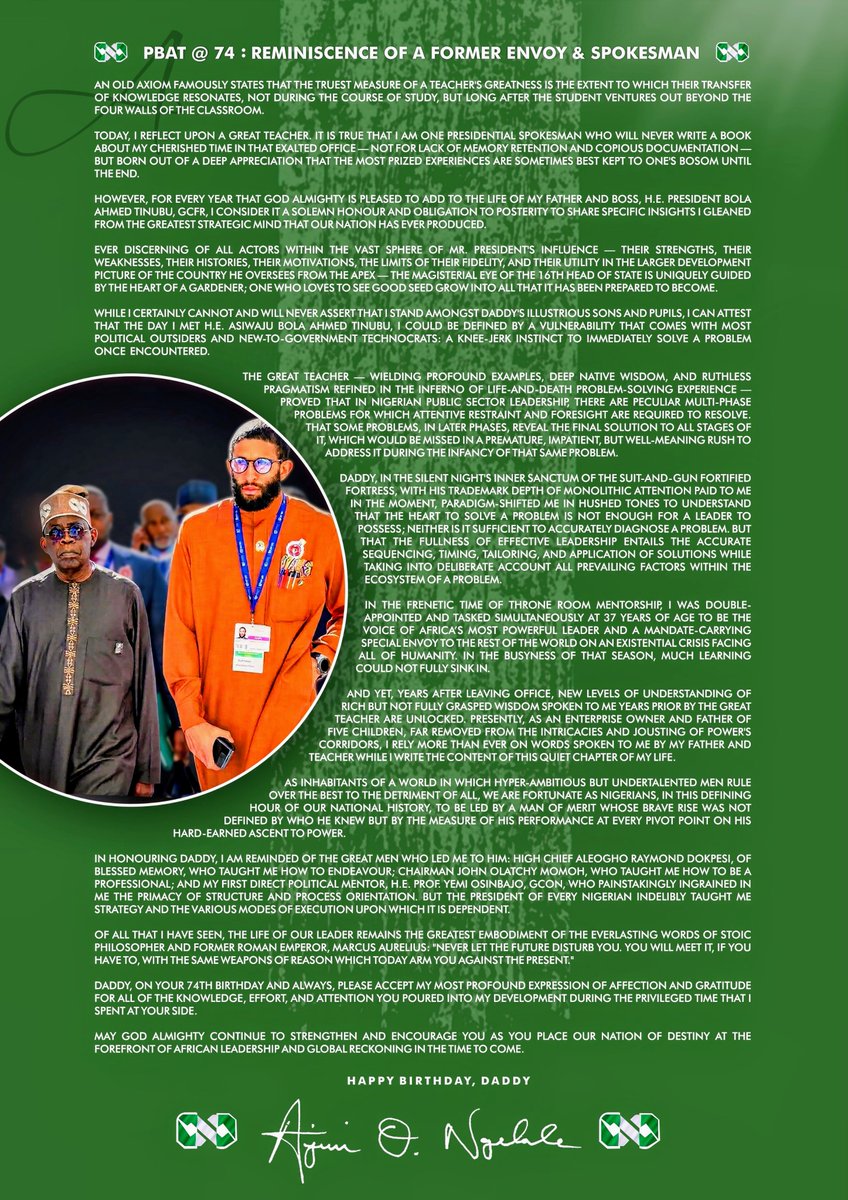
PBAT @ 74: REMINISCENCE OF A FORMER ENVOY & SPOKESMAN
An old axiom famously states that the truest measure of a teacher's greatness is the extent to which their transfer of knowledge resonates, not during the course of study, but long after the student ventures out beyond the four walls of the classroom.
Today, I reflect upon a great teacher. It is true that I am one presidential spokesman who will never write a book about my cherished time in that exalted office — not for lack of memory retention and copious documentation — but born out of a deep appreciation that the most prized experiences are sometimes best kept to one's bosom until the end.
However, for every year that God Almighty is pleased to add to the life of my Father and Boss, H.E. President Bola Ahmed Tinubu, GCFR, I consider it a solemn honour and obligation to posterity to share specific insights I gleaned from the greatest strategic mind that our nation has ever produced.
Ever discerning of all actors within the vast sphere of Mr. President's influence — their strengths, their weaknesses, their histories, their motivations, the limits of their fidelity, and their utility in the larger development picture of the country he oversees from the apex — the magisterial eye of the 16th head of state is uniquely guided by the heart of a gardener; one who loves to see good seed grow into all that it has been prepared to become.
While I certainly cannot and will never assert that I stand amongst Daddy's illustrious sons and pupils, I can attest that the day I met H.E. Asiwaju Bola Ahmed Tinubu, I could be defined by a vulnerability that comes with most political outsiders and new-to-government technocrats: a knee-jerk instinct to immediately solve a problem once encountered.
The Great Teacher — wielding profound examples, deep native wisdom, and ruthless pragmatism refined in the inferno of life-and-death problem-solving experience — proved that in Nigerian public sector leadership, there are peculiar multi-phase problems for which attentive restraint and foresight are required to resolve. That some problems, in later phases, reveal the final solution to all stages of it, which would be missed in a premature, impatient, but well-meaning rush to address it during the infancy of that same problem.
Daddy, in the silent night's inner sanctum of the suit-and-gun fortified fortress, with his trademark depth of monolithic attention paid to me in the moment, paradigm-shifted me in hushed tones to understand that the heart to solve a problem is not enough for a leader to possess; neither is it sufficient to accurately diagnose a problem. But that the fullness of effective leadership entails the accurate sequencing, timing, tailoring, and application of solutions while taking into deliberate account all prevailing factors within the ecosystem of a problem.
In the frenetic time of throne room mentorship, I was double-appointed and tasked simultaneously at 37 years of age to be the voice of Africa’s most powerful leader and a mandate-carrying special envoy to the rest of the world on an existential crisis facing all of humanity. In the busyness of that season, much learning could not fully sink in.
And yet, years after leaving office, new levels of understanding of rich but not fully grasped wisdom spoken to me years prior by the great teacher are unlocked. Presently, as an enterprise owner and father of five children, far removed from the intricacies and jousting of power's corridors, I rely more than ever on words spoken to me by my Father and Teacher while I write the content of this quiet chapter of my life.
As inhabitants of a world in which hyper-ambitious but undertalented men rule over the best to the detriment of all, we are fortunate as Nigerians, in this defining hour of our national history, to be led by a man of merit whose brave rise was not defined by who he knew but by the measure of his performance at every pivot point on his hard-earned ascent to power...
A STATEMAN AT 74: CELEBRATING A LIFE OF COURAGE, REFORM AND NATIONAL RENEWAL
Today, we celebrate the enduring legacy of a man whose life has been defined by courage, conviction, and an unyielding commitment to the progress of Nigeria. As His Excellency, President Bola Ahmed Tinubu, GCFR, marks his 74th birthday, I join millions of Nigerians and admirers across the world in paying tribute to an extraordinary leader, a servant of the people, and a reformer of global stature.
For decades, President Tinubu stood at the forefront of Nigeria’s pro-democracy struggle. From the trenches of resistance, he aligned with civil society organisations, labour unions, journalists, academics, and student movements in a sustained and principled assault against military rule. That collective struggle, to which he gave so much of himself, culminated in the historic restoration of democratic governance in 1999. Asiwaju Bola Ahmed Tinubu’s role in that defining chapter of our national journey remains indelible.
In the years that followed, His Excellency, President Tinubu distinguished himself not only as a democrat of note but as a master strategist in political organisation and coalition-building. His pivotal role in forging the alliance that birthed the All Progressives Congress (APC) reshaped Nigeria’s political landscape. It led to a watershed moment in 2015 when, for the first time in our history, an incumbent administration was peacefully defeated at the polls; an achievement that further deepened democratic practice in our country.
In 2023, history called upon him once again. A man long regarded as a central force in Nigerian politics assumed the highest office in the land. Yet, rather than rest on reputation, President Tinubu has governed with clarity of purpose and a willingness to take difficult but necessary decisions in the national interest.
His administration has embarked on bold and far-reaching reforms that are already repositioning Nigeria on a stronger and more sustainable footing. The removal of the long-standing fuel subsidy, a policy that had become economically unsustainable and deeply distortive, signaled a decisive break with the past. Equally significant is the unification of the foreign exchange market, which has restored greater transparency, improved investor confidence, and set the stage for long-term economic stability.
These reforms, though demanding in the immediate term, have begun to unlock critical resources for national development. Across the country, we are witnessing renewed investments in infrastructure, including landmark projects such as the Lagos-Calabar Coastal Highway, the 375 km Abuja-Kaduna-Zaria-Kano road rehabilitation and up-grade project and the Sokoto-Badagry Superhighway. These initiatives are not merely roads; they are economic corridors designed to stimulate commerce, connect communities, and expand opportunity.
Your Excellency’s Renewed Hope Agenda has since rejuvenated Agriculture and Agri-business across the country; the health sector across the country has been bolstered with huge investments and increased personnel; and in the social sector, the establishment of the Nigerian Education Loan Fund (NELFUND) reflects a deep sensitivity to the aspirations of young Nigerians. By expanding access to tertiary education, this initiative is investing in the nation’s future and empowering a new generation to contribute meaningfully to national development.