Following the digital classroom experience led by H.E. President William Ruto, at the ICT Authority, we continued with engagements across the country, highlighting how technology is supporting teaching and learning in public junior schools.
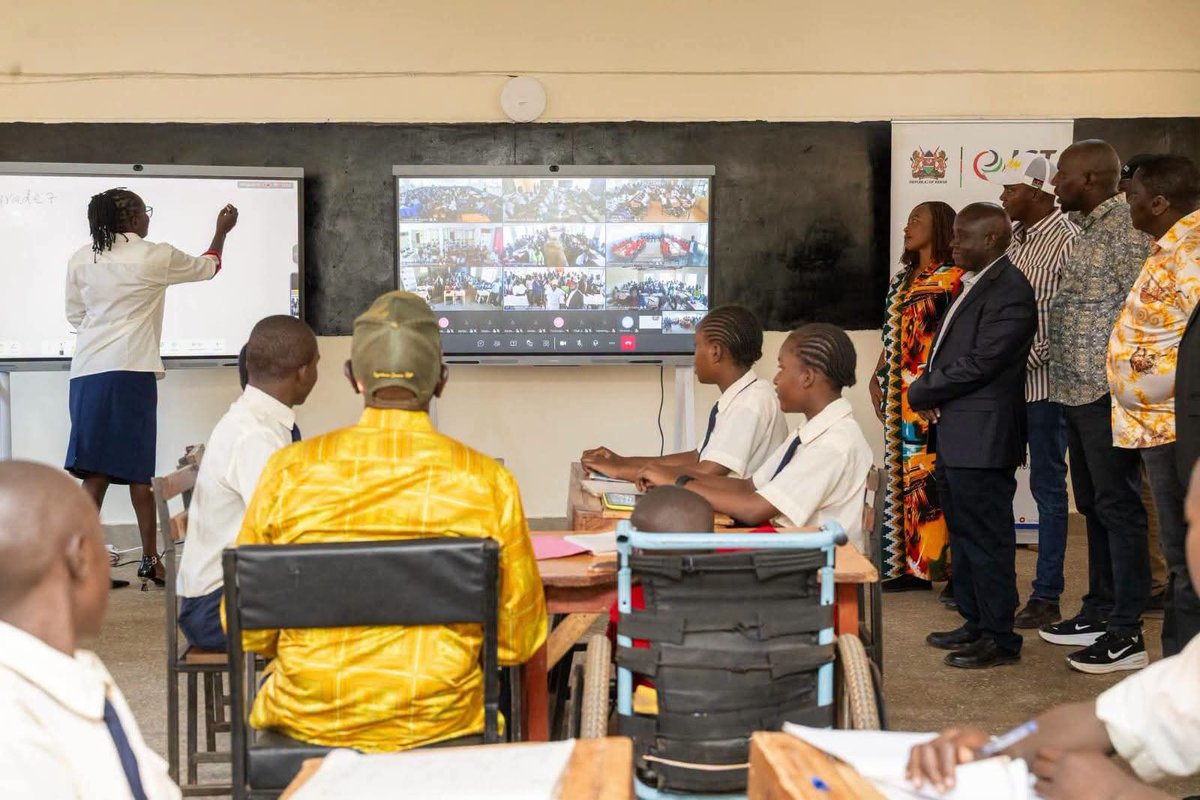
At Sitotwet Junior School in Narok County, I joined @ICTAuthorityKE Board Members Savio Wambugu, Naiyanoi Ngeno Ntutu and Dan Weche for the classroom experience. The area Member of Parliament was represented by his spouse, Mrs. Elizabeth Ntutu. Also present were senior government officials from the county and the Ministry of Education.
Through the Digital Literacy Programme, implemented by the ICT Authority, public junior schools are being equipped with interactive smart boards and laptops, alongside teacher training to support their use in the classroom. These engagements bring schools, communities and leaders together to experience how digital tools are becoming part of everyday learning.
TRANSFORMING EDUCATION THROUGH DIGITAL TECHNOLOGY
H.E. President Dr. William Samoei Ruto led the National Digital Class Experience at Kiminini Comprehensive School, Trans Nzoia County, in a demonstration of the Government's commitment to transforming teaching and learning, expanding access to quality education and preparing Kenyan learners for a digital future.
More than a demonstration of technology in the classroom, the exercise reflected the Government's resolve to make digital learning an integral part of Kenya's education system.
I was privileged to join His Excellency the President alongside the Principal Secretary, State Department for ICT and the Digital Economy, @tanuijohn , CBS, and ICT Authority Director of Programmes and Standards, Mr. Bwaley, as learners and teachers from different parts of the country connected in real time for a shared classroom experience.
Seeing learners separated by hundreds of kilometres participate in the same lesson demonstrated what is possible when technology is deliberately integrated into education.
This commitment is already translating into tangible results. Through the Digital Learning Programme, implemented by the ICT Authority under the Kenya Digital Economy Acceleration Project (KDEAP), 10,382 public Junior Schools, representing nearly 50 per cent of all public Junior Schools, have been equipped with interactive smart boards and laptops. More than 64,000 teachers have also been trained to support digital learning.
As the President stated, the Government is targeting all public Junior Schools by April 2027, ensuring that more learners, regardless of their location, can benefit from technology-enabled education.
During the National Digital Class Experience, learners and teachers from 12 counties connected virtually with the President at Kiminini, including Baringo (Kabimoi JSS), Kakamega (Kakamega JSS), Elgeyo Marakwet (Kaptarkok JSS), Kericho (Kericho Township JSS), Uasin Gishu (Lemoru JSS), Marsabit (Marsabit JSS), Turkana (Nadwat JSS), Nyeri (Nyaribo JSS), Kisumu (Obambo JSS), Kiambu (St. George's JSS), Mombasa (St. Augustine JSS) and West Pokot (Tilak JSS).
The Cabinet Secretary for Information, Communications and the Digital Economy, @honkabogo , EGH, joined the experience virtually from St. George's Junior Secondary School in Ruiru, Kiambu County, while our Board Chairperson, Hon. Lily Ng'ok, led the ICT Authority team at Kericho Township Junior Secondary School in Kericho County.
At the @ICTAuthorityKE , we remain committed to translating the government agenda on digital learning into practical outcomes for learners and teachers across the country.
The significance of this initiative lies not merely in changing the tools used in classrooms, but in enriching the learning experience, strengthening digital literacy and equipping young Kenyans with the knowledge and skills to thrive in an increasingly digital world.
MAZINGIRA DAY 2026
Environmental conservation is a shared responsibility, and every effort to protect and restore our environment is an investment in the well-being of present and future generations.
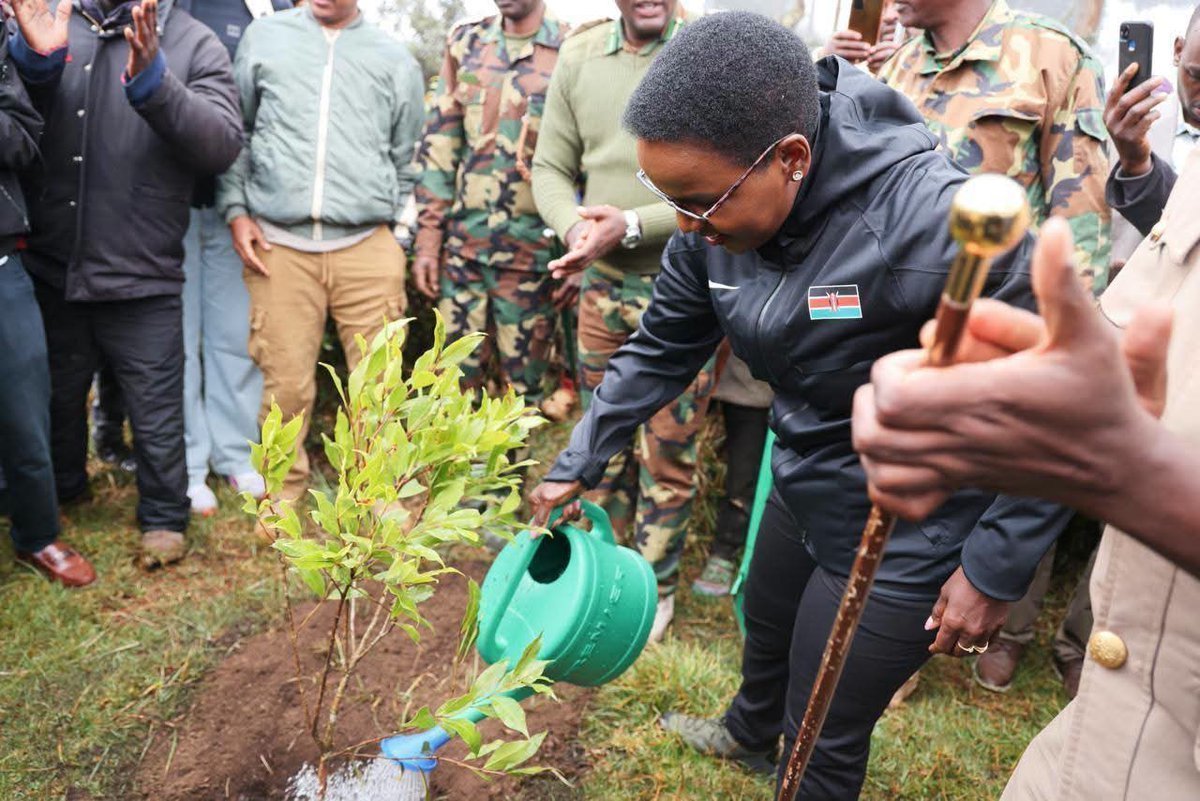
As Kenya commemorates Mazingira Day 2026 under the theme, “Our Environment, Our Responsibility: Collective Action for Tree Growing and Environmental Stewardship,” I joined the Cabinet Secretary for Information, Communications and the Digital Economy, Hon. William Kabogo Gitau, EGH, and the Principal Secretary for Correctional Services, Dr. Salome Muhia-Beacco, in tree-growing activities to mark the occasion.
Beyond planting trees, Mazingira Day reminds us of the importance of sustained environmental stewardship and the responsibility of institutions, communities and individuals to contribute towards a greener and more sustainable Kenya.
Through such collective efforts, at the @ICTAuthorityKE we are supporting Kenya’s national target of growing 15 billion trees by 2032.
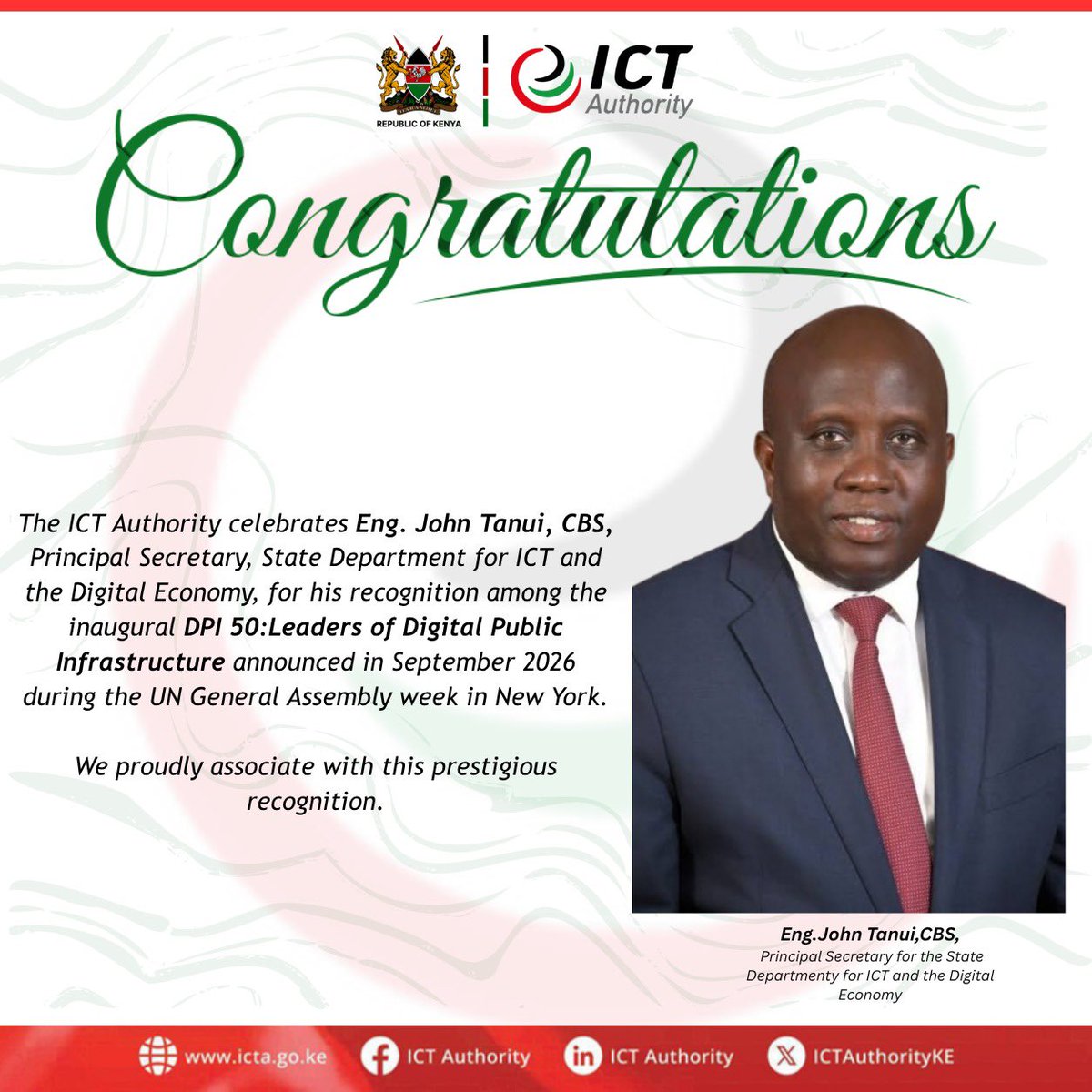
The ICT Authority celebrates Eng. John Tanui, CBS, Principal Secretary, State Department for ICT and the Digital Economy, for his recognition among the inaugural DPI 50:Leaders of Digital Public Infrastructure announced in September 2026 during the UN General Assembly week in
LEADERSHIP IN THE AGE OF AI
Artificial Intelligence (AI) presents opportunities to improve public services, support innovation and broaden economic opportunities.
On the sidelines of the 81st Session of the United Nations General Assembly (UNGA 81) in New York, I represented the Cabinet Secretary for Information, Communications and the Digital Economy, @honkabogo , EGH, at the “Leadership in the Age of AI” roundtable.
The conversation explored how governments can move beyond AI strategies and pilots towards practical adoption that can strengthen public service delivery, support better decision-making and create opportunities for inclusive economic growth. Among the participants was the Rt. Hon. Tony Blair, alongside leaders from government, technology, investment and development institutions.
As AI continues to reshape economies and public services, the discussion underscored the importance of strong institutions, secure and trusted data systems, local talent and effective partnerships in supporting responsible AI adoption. @MoICTKenya@ICTAuthorityKE
DIGITAL LEARNING ROLLOUT CONTINUES ACROSS THE COUNTRY
The rollout of the Digital Literacy Programme (DLP) Phase II continues across the country, expanding access to technology-enabled learning in public Junior Schools and equipping teachers with digital tools to support classroom instruction.
In Nyeri County, the rollout continued at Nyaribo Junior School, where Amb. Dr. Caroline W. Karugu, Principal Secretary, State Department for East African Community Affairs and Acting Principal Secretary, State Department for ASALs and Regional Development, joined learners, teachers and other stakeholders in marking the programme’s progress.
Nationally, more than 62,000 teachers have already been trained to integrate these technologies into teaching and learning.
The Nyeri rollout is part of the wider national programme targeting 10,382 public Junior Schools across all 47 counties during this phase.
Through the @ICTAuthorityKE , the Government continues to strengthen the digital foundations of education by providing schools with devices, connectivity and the skills needed to make technology part of everyday learning.
The programme is being implemented under the Kenya Digital Economy Acceleration Project (KDEAP), with support from the World Bank. @honkabogo@MoICTKenya@tanuijohn
BUILDING A SHARED AI FUTURE
On the sidelines of the 81st Session of the United Nations General Assembly in New York, I represented @tanuijohn , CBS, Principal Secretary, State Department for ICT and the Digital Economy, at the GSMA Partners for Impact roundtable on “Building a Shared AI Future.”
The conversation brought together government, international organisations and industry to exchange perspectives on the opportunities presented by AI, what countries need to participate in this shift, and how its benefits can reach more people and economies.
The discussions covered AI readiness, including connectivity, infrastructure, energy and talent; building trust and accountability as AI is deployed across different sectors; strengthening cybersecurity capabilities; and cooperation between governments, industry and other partners to widen access to the benefits of AI.
For Kenya, these conversations connect with ongoing efforts to expand connectivity, strengthen digital infrastructure, build digital skills and create the foundations needed for people, businesses and public institutions to participate in an increasingly AI-driven economy.
As AI continues to shape economies and the delivery of services, the focus must remain on building the foundations for its responsible adoption and ensuring that the opportunities it creates contribute to inclusive growth and development. @MoICTKenya@ICTAuthorityKE
STRENGTHENING KENYA’S CAPACITY IN DATA, AI AND INNOVATION
Kenya has taken another important step towards strengthening its capacity to use data, artificial intelligence, research and innovation to drive better policy and economic outcomes.
On the sidelines of the 81st Session of the United Nations General Assembly in New York, the Government of Kenya signed a five-year Memorandum of Understanding with the Emerging Markets Working Group of the Hoover Institution at Stanford University to deepen cooperation in digital transformation, AI, data governance, policy research, innovation and institutional capacity development.
The MoU was signed by Prime Cabinet Secretary and Cabinet Secretary for Foreign and Diaspora Affairs Dr. @MusaliaMudavadi and Dr. Jendayi Frazer, Co-Director of the Emerging Markets Working Group, at the Permanent Mission of Kenya to the United Nations.
The value of this partnership lies in moving from data to insight, and from insight to action.
An immediate priority is the El Niño Impact Monitoring and Response System, integrating climate, geospatial, water, agriculture and infrastructure data to generate county-level intelligence and support faster, coordinated responses.
The partnership will also advance a Digital Trade Readiness Index, PPP Governance Tracker and Sectoral Resilience Scorecard to strengthen digital trade readiness, governance and risk-informed policy and investment decisions.
Beyond these tools, the strategic objective is to build lasting institutional capability in evidence generation, analytics, monitoring, evaluation and policy development.
Our ambition is not simply to digitise existing processes, but to build a government and economy that can use technology and intelligence to anticipate challenges, allocate resources effectively and create new opportunities for citizens and businesses.
I was privileged to be part of this important engagement alongside Principal Secretary for ICT and the Digital Economy, Eng. @tanuijohn , CBS, and other government leaders and partners, as we continue advancing Kenya’s digital transformation agenda. @ICTAuthorityKE@moict
Kenya’s digital economy is about creating opportunities for people, businesses and innovators to participate, compete and grow.
At the CIPE Digital Economy Forum 2026, I joined private-sector leaders, startups, MSMEs, investors and development partners for a conversation on how we can strengthen the environment for digital businesses in Kenya.
We are strengthening the foundation. Among them reliable and secure digital infrastructure, accessible digital government services, digital skills, and strong collaboration between government and the private sector.
But infrastructure and technology are only part of it. The digital transformation agenda has been deliberately geared towards opening more opportunities for our people, women entrepreneurs, MSMEs and innovators to turn ideas into enterprises, access markets and participate meaningfully in the economy.
At the ICT Authority, our priorities include expanding connectivity, strengthening digital skills, improving access to digital government services and supporting an ecosystem where innovation and enterprise can thrive.
The Ministry of Information, Communications and the Digital Economy is advancing the integration of technology into learning, supporting the continued transformation of Kenya’s education sector.
Implemented by the @ICTAuthorityKE , the initiative includes the distribution of smartboards and laptops, digitisation of curriculum content and teacher training to strengthen learning outcomes and expand opportunities for every child.
Working with the Ministry of Education, the Kenya Institute of Curriculum Development (KICD) and the Teachers Service Commission (TSC), the first phase has reached 10,384 public Junior Schools and trained 62,364 teachers from all the 47 counties.
Teachers are central to the effective use of technology in the classroom. The ICT Authority recognizes the teachers who facilitated the process and assures them of authority’s support in facilitating them timely, so far facilitation has been completed for 9 counties and the remaining within the month.
We sincerely appreciate our teachers’ for their support and collaboration, partnership and continued commitment to equipping learners to be ready for a digital and AI future.
BUILDING AN INCLUSIVE AND RESPONSIBLE DIGITAL FUTURE
Digital transformation must ultimately be about people — whether they can access technology, use it meaningfully and translate it into opportunities that improve their lives.
For us at the ICT Authority, connectivity is only the beginning. Through Digital Hubs, public Wi-Fi, expansion of connectivity and digital skilling, we are taking technology and opportunities closer to communities and enabling more Kenyans to participate in the digital economy.
We must equally create an environment where MSMEs and emerging innovators can thrive through simple and predictable processes that allow good ideas to grow into solutions, businesses and jobs.
As we embrace AI, Kenya must not simply consume solutions developed elsewhere. We have the talent to build AI that understands our languages, communities and realities, while ensuring its development and use remain responsible.
We are also investing in the next generation of digital talent. Through the Presidential Digital Talent Programme, we bring on board 400 graduate interns annually, with more than 3,700 young professionals having benefited since inception.
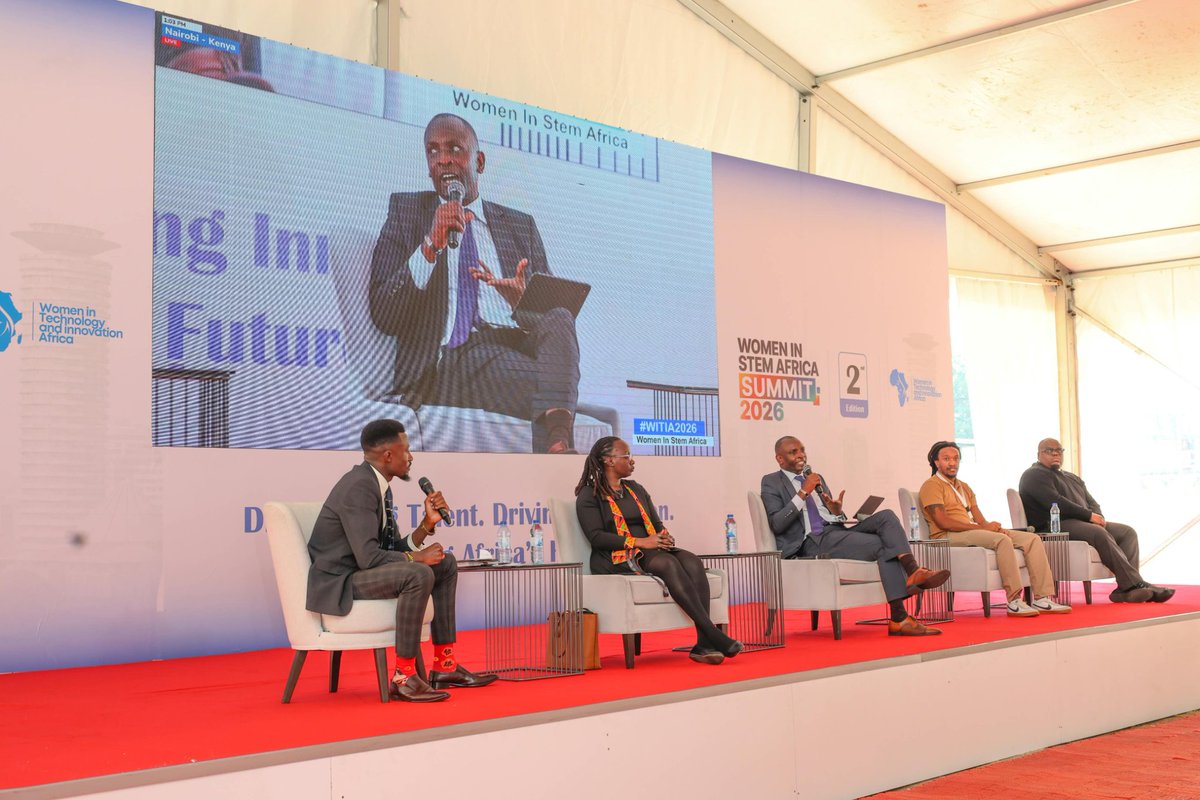
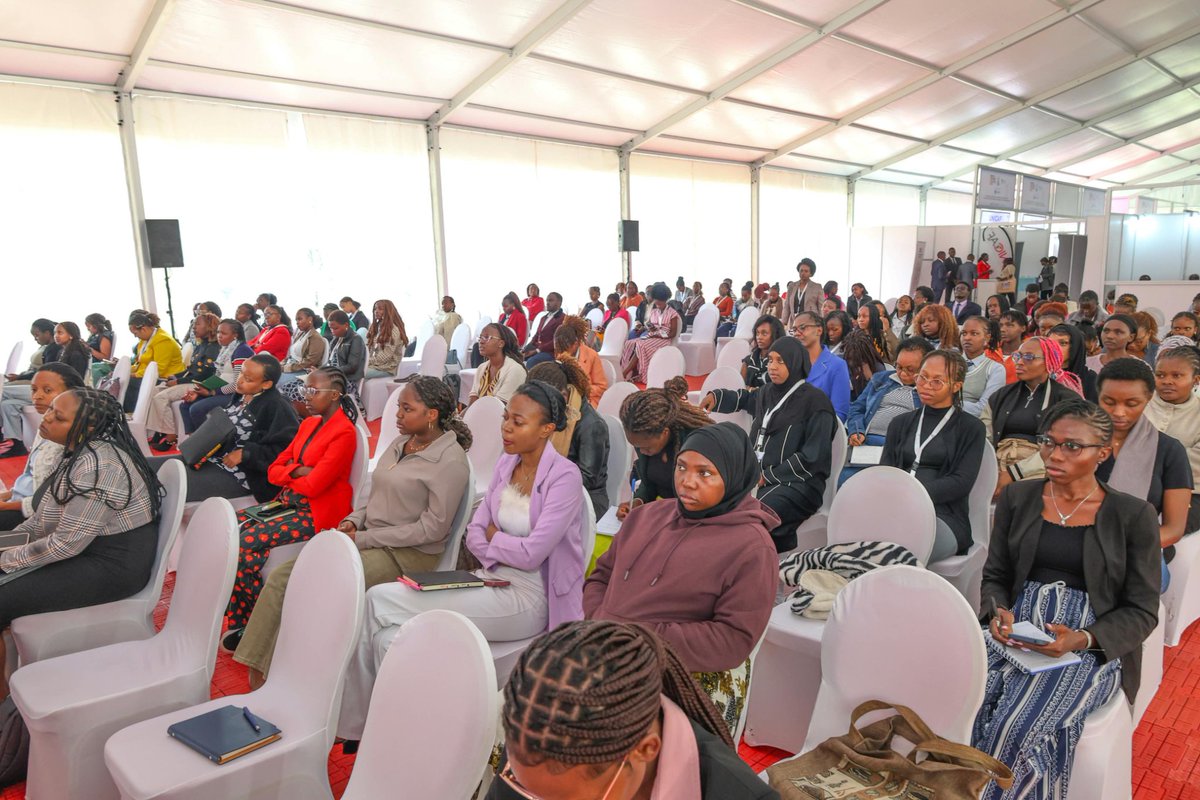
I shared these perspectives at the Women in STEM Africa Summit 2026 at KICC, where I joined technology leaders and innovators in discussing how we can build a digital future that expands opportunity, includes everyone and reflects who we are.
ALIGNING FOR STRONGER PROGRAMME DELIVERY
Delivering on our mandate requires us to continuously assess not only the progress we are making, but also the risks and challenges that could stand in the way of achieving our targets.
I joined the @ICTAuthorityKE Board and Management in reviewing the performance of our key programmes, including the rollout of public Wi-Fi, connectivity of public institutions, expansion of digital infrastructure and digital skills development, among other interventions supporting Kenya’s digital transformation.
The engagement gave us an opportunity to look closely at where we are against our targets, the implementation challenges we need to address and the risks that require greater attention.
For me, effective risk management is ultimately about delivery. It is about anticipating challenges early, strengthening accountability and making sure that our programmes achieve the impact they are intended to have.
The expansion of digital infrastructure, connectivity and digital skills is central to advancing H.E. President William Ruto’s vision under the Bottom-Up Economic Transformation Agenda (BETA), by expanding access to technology, creating economic opportunities and ensuring more Kenyans benefit from the digital economy.
Our focus remains on accelerating implementation and ensuring that the Authority’s programmes deliver meaningful and measurable impact for citizens.
RETHINKING E-WASTE AS AN ECONOMIC OPPORTUNITY
My recent visit to Nandi Hills reinforced something I strongly believe: e-waste is an environmental challenge, but it also presents an opportunity for skills, enterprise and jobs.
I interacted with 151 young Kenyans trained in the repair, refurbishment and reuse of phones, laptops, computers and printers, alongside responsible e-waste management.
What stood out for me is the opportunity in devices we often consider obsolete. A laptop can be repaired and used again, a phone refurbished and made affordable to another user, and components recovered and reused. With the right skills, young people can turn this into a livelihood.
Through the ICT Authority’s National Refurbishment, Assembly and e-Waste Management Programme, we are working to grow these skills while promoting responsible management of electronic equipment.
As Kenya’s digital transformation accelerates, we must also think about the full lifecycle of the devices we use. Nandi Hills demonstrated that we can address e-waste while creating economic opportunities for our young people.
I appreciate Nandi Hills MP Hon. Bernard Kitur for his partnership and support in making this initiative possible for young people in Nandi Hills Constituency.