I'm extremely proud of what we've been able to achieve with Huff. Thank you to all of the hard-working contributors who have helped turn this into something special.
We're just getting started, I can't wait to see what the future holds for us.
1/
🔥 Today we're thrilled to release Huff, the most gas-optimized smart contract language to ever touch the EVM
🏎️ Huff enables you to optimize your contracts by up to 80% compared to other languages like Solidity and Vyper
👨💻 Check it out at https://t.co/eA5YCoEzWh
Two reasons Cignetti would say this:
USC as a team is better built than last year and the best talent are freshmen.
Riley has had two timelines at USC. Quick build around Caleb and rebuild from ground up afterward.
ah my b, thought you were on the "fuck the iphone we can just use an LLM for everything" train
think we agree that a physical device is significantly worse than an actual working version of our current siri on ios
a lot of innovation is possible and necessary on modern (mobile, especially) operating systems. physical form factors likely won't change for a while
also below is the humane ai pin, 2024's "iphone killer"
https://t.co/nR5Q0DLapA
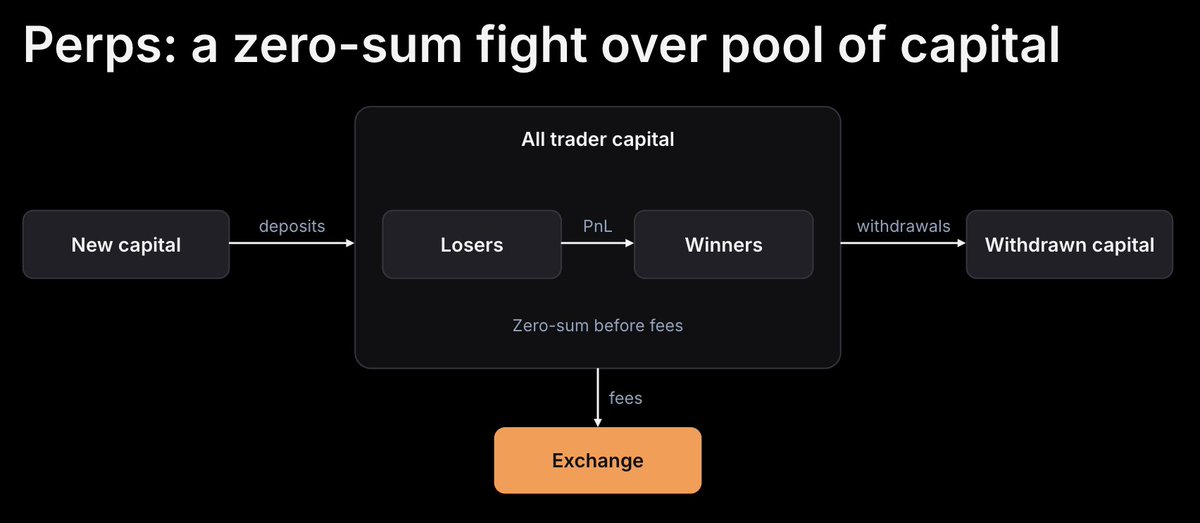
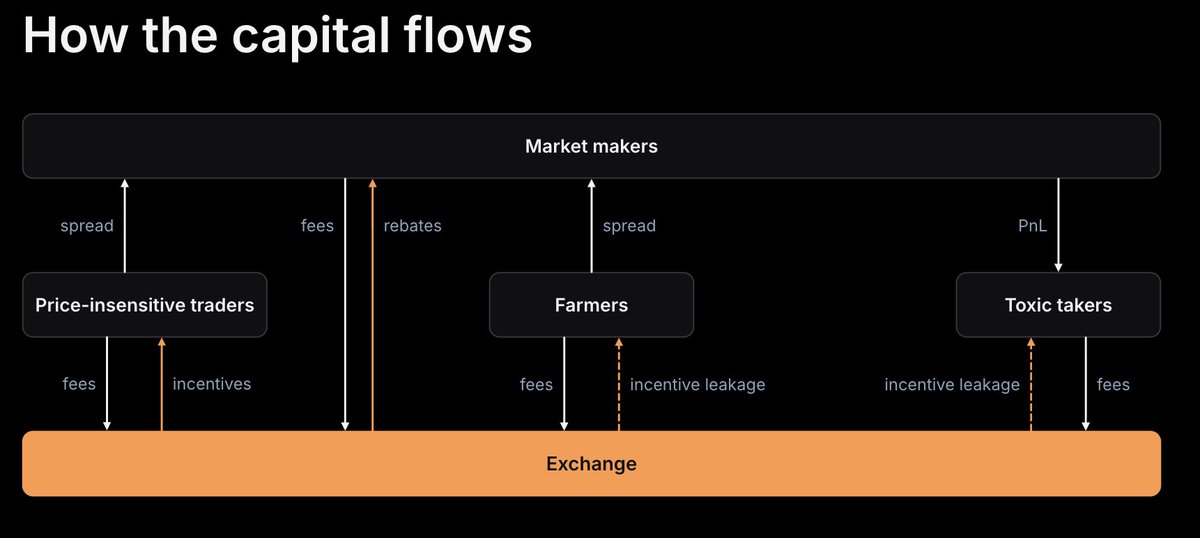
I gave a talk at 200ms (formerly MEV Day) in London yesterday. Here are my 2 most important slides.
Nobody has any business building an exchange without understanding its economics, and the most important prerequisite is internalizing that not all activity is equal.
🚨GAME CHANGER🚨
Introducing “SMART” — the new air traffic management tool that saves YOU time, cuts back DELAYS, and makes your flying experience BETTER
MORE TO COME ✈️
I have a major result to share.
I’ve found conclusive forensic evidence that the top 4 Chinese AI labs—DeepSeek, Moonshot, MiniMax and Ant Group—have built their newest models on NVIDIA’s most advanced Blackwell chips, which are barred from export to China.
This sounds insane, but I discovered that almost every AI model carries a hidden signature of the GPU that trained it. When a model is first set up, the starting values of its weights are laid out in a pattern that depends on the exact GPU. Each combination of GPU and seed number produces a unique pattern—a sort of fingerprint of the hardware used to create the model. Traces of that pattern survive training into the published model.
Again, this evidence isn’t based on any insider information or leaking. It’s based on a forensic analysis of the model weights released by the companies themselves.
I searched more than six trillion combinations of chip layout and seed number and matched them to open-weights models. In doing so, I found conclusive evidence that six Chinese AI models—including DeepSeek-V4-Pro, Kimi K3, and MiniMax-M3—were initialized on NVIDIA Blackwell systems. Four of the models match Grace Blackwell, the GB200 and GB300 parts in NVIDIA’s flagship liquid-cooled rack-scale systems.
I then verified these results on real hardware. Running unmodified PyTorch with the seeds I’d recovered, a Blackwell B300 reproduced DeepSeek-V4-Flash’s untouched starting weights bit for bit, and a rented GB200 reproduced Kimi K3’s to a correlation of 0.999995. A Hopper H100 reproduced none of DeepSeek-V4-Flash’s, and changing the seed by one broke the match. (DeepSeek’s seed is 953049583 by the way.) The method also was verified to match 24 known open-weights models to the hardware that developers said they used.
It is exceedingly unlikely that these results are a coincidence. Across six trillion combinations, the best accidental match should reach only about 8 sigma (i.e., eight standard deviations above what random chance would produce). The real matches range from 49 to 1,385 sigma, and even the weakest single test hits 20.
These were data-center-scale training runs. With some analysis of release schedules and model details, I estimate that the largest, Kimi K3 and DeepSeek-V4-Pro, used 2,000 to 3,000 Blackwell GPUs each. Clusters of this size cost on the order of $150 to $200 million each to buy, and across these labs alone would add up to more than half a billion dollars of export-controlled GPUs, not counting experimental compute or otherwise. It’s quite likely that we see multi-billion dollar expenditure on export-controlled GPUs.
I am highly confident in this result, and it has been independently verified by senior researchers at OpenAI and Anthropic. You can read the full report at https://t.co/YOtzND0Jqk.
There is much more I’ve identified about these models through other forms of checkpoint forensics like this, and will have more to share soon.
some thoughts on writing software in nov 2026:
- it feels like magic
- the first 80% is 100x faster
- rewriting systems is also 100x faster
- opus 5.5 is very good at a lot of things
- "deep flow state" is much easier to reach
- almost anything can be built in typescript and rust
- building secure things is very, very hard
the optimization function is how to maximize agents working on goal with the fewest interruptions needed. some things that help:
- know where to trust vs guide (and keep retesting)
- give them agency like "i'm going to bed, get this done"
- if there is a reward function, ask them to hillclimb
- the socratic method works wonders
- skills and memories can often hinder
- asking agents to review themselves still helps
- cowriting a plan/spec/invariants helps sometimes
managing your own psychology is equally important:
- be a lot more ambitious about what you can achieve
- avoid dopamine traps / false signals of progress
- get good at parallelizing and context switching
there are also some things that don't quite work fluidly yet, but will get unlocked in the very near future:
- software factory or "find and fix the bugs"
- multiplayer agentic workflows
- agents managing other agents for high level outcomes
- organizational memory
side note. tether holds ~$123B in t-bills (more than Saudi Arabia or South Korea hold in total treasuries)
foreign central banks have cut their t-bill holdings ~25% over the past year, while private onchain dollar demand is rapidly growing
this used to be routed through central banks, but is now increasingly routed through software, where people who want digital dollars indirectly become buyers of us debt with no sovereign in between
tldr this makes public blockchains part of how the us finances itself, making them a national interest
thanks for responding to my hate tweet 😅 😭 have a lot of respect for what y’all have contributed to this space
but come on fellas ts misleading. i moved the market to 80% for free in 2 minutes. to actually extract alpha from an open market, insiders obviously need to have an incentive to leak information into the world
we knew this, just thought it was funny