Feliz de ver este proyecto finalmente publicado 👁️! La pérdida de conectividad es uno de los mayores retos para la biodiversidad. Con Makurhini, buscamos dar herramientas robustas a investigadores y gestores para conectar ecosistemas de forma eficiente🌎 🐆https://t.co/36Jh222xFo
I am so proud of this paper ⬇️ recently published in PNAS 🤩 Four years in the making and countless computing hours to get bioclimatic velocities from #SDMs that were tailored to each species & study from which we extracted empirical species range shift rates
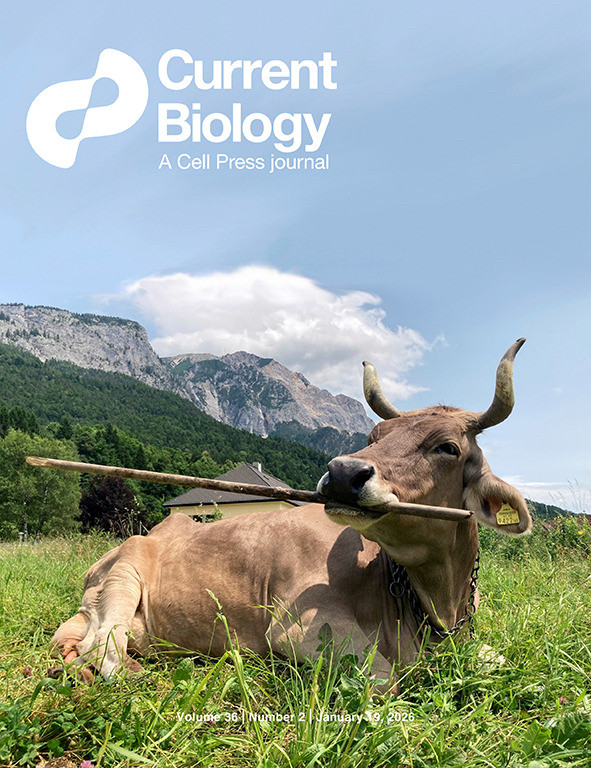
Hemos convivido con las vacas por cerca de 10.000 años.
Las criamos, las explotamos, y nos alimentamos de ellas.
Es ahora, solo ahora, cuando hemos descubierto que PUEDEN USAR HERRAMIENTAS
Os describo nuestro estudio, portada en @CurrentBiology
There is a WILD mismatch between the amount of money flowing into conservation journals (APCs, subscriptions, etc.) and the chronic underfunding of on-the-ground conservation.
In a field explicitly motivated by the goal of preventing biodiversity loss, this is structurally perverse.
I think we should return to not-for-profit publishing models run by universities, scholarly societies, and research organizations.
Surpluses should be reinvested into conservation: local NGOs, field programs,capacity building , long-term monitoring projects etc.
🐦⬛ ¿Ya descargaste la la 2.ª edición de la Guía de aves playeras del Pacífico?
🐦⬛No dejes de consultar esta herramienta hecha para quienes viven, estudian y protegen las aves playeras de nuestra costa Pacífica.
Encuéntrala aquí 👉 https://t.co/PYTqF6kj3a
#AvesColombia
For #COP30: @audubonsociety we assessed how climate change could reshape Latin America’s forest birds.
Birds tell us: 83% of threatened species could be climate vulnerable under 5°C, but only 33% if warming stays below 1.8°C.
More (EN/ES/BR): https://t.co/FNLpzDX94U
So I have been working on a textbook on theoretical ecology and modeling. #openaccess. Using @rstudio and #quarto for writing and @github for publishing. You can check it at https://t.co/Hy3HlmUcmW and follow my (slow) process. First two chapters mostly written, yeah!
Using miniaturized laboratory equipment and DNA barcoding to improve conservation genetics training and identify illegally traded species
https://t.co/lrrNhC2TVi
What started as a small acoustic monitoring pilot with 3 communities in Colombia is now going big! 🌱🎧 Thanks to @BezosEarthFund, we’re scaling up across South America to advance data-driven bird conservation. #AIForClimateandNature https://t.co/0aklU63Mkv
This Nature article shows that most Nobel Prize winners are part of one big, incestuous academic network.
Out of 736 Nobel laureates in science and economics, 702 are "part of the same academic family."
Only 32 researchers out of this network have won the Nobel Prize.
¡Felicitaciones a los ganadores de los Premios de fotografía Audubon de 2025! Por primera vez, los premios se han extendido a Chile y Colombia e incluyen categorías centradas en especies migratorias, sus hábitats y su conservación. https://t.co/9EQ1gTGAEP
Colecciones de Mamíferos de Am. del Sur. 141 colecciones y ∼746 000 especímenes. 4 desafíos: escasez de personal, infraestructura criogénica mínima, digitalización incompleta y problemas de sostenibilidad.
https://t.co/hsSlfWt64p
#ColeccionesBiológicas#CollectionsAreEssential
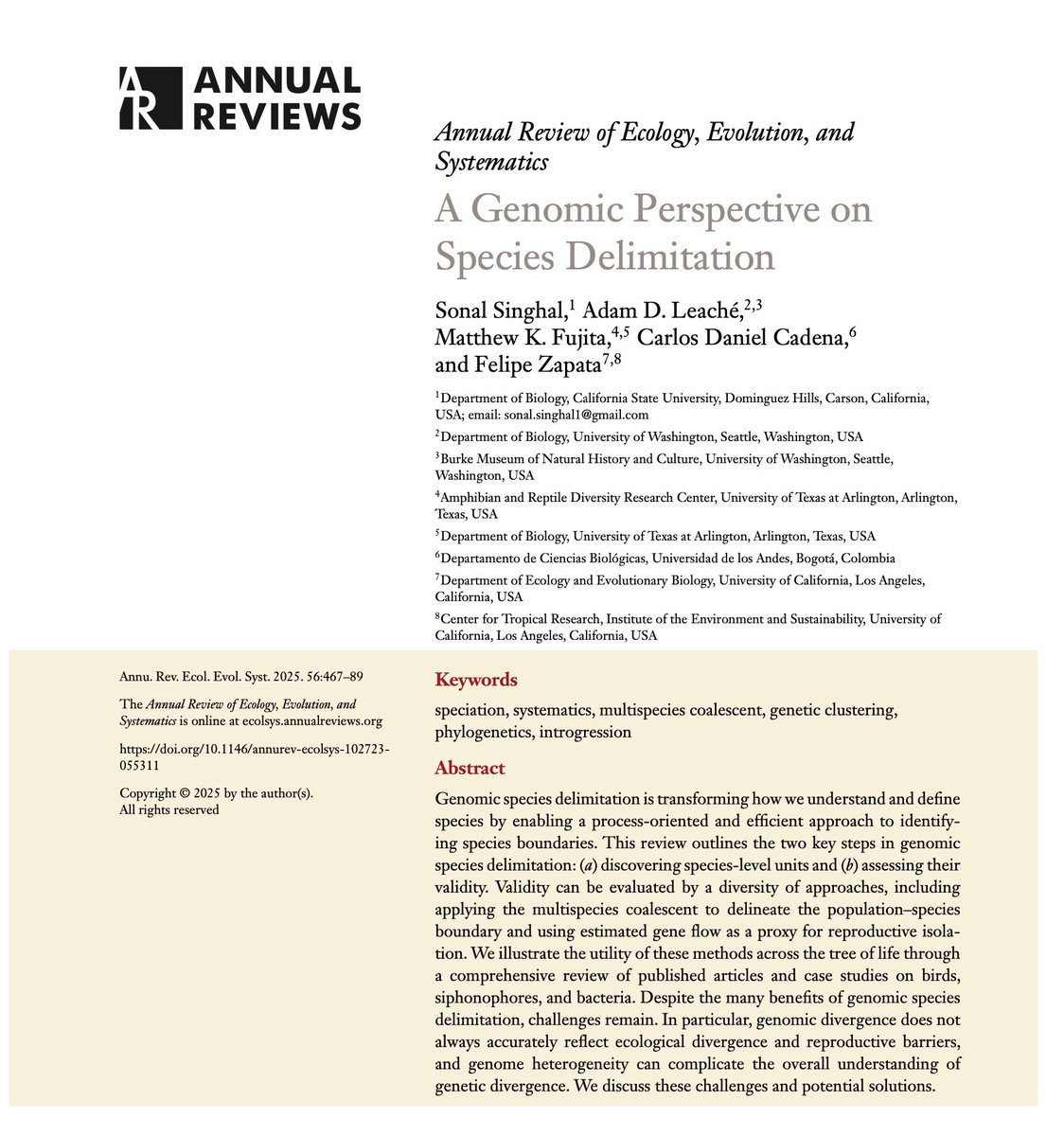
A Genomic Perspective on Species Delimitation | happy to share results of this collaboration with an awesome team! #cienciacriolla https://t.co/HaEodY9Fbo