Thanks for the follow-up. Your suggestion is very insightful. We tried it for three days. But we have to admit it's not easy to sustain when everyone leans on AI.
So instead of pushing against how people already use AI, we clarified ownership in the deploy cycle: The lead provides enough context when people pick up work, and teammates own the implementation and validation.
To support that, I added your first two lines (what it changes & why this approach) into our PR template, and the hand-check piece will be covered by a post-deploy validation skill.
The skill builds a validation plan from the requirements, takes screenshots after non-prod deploy, constructs Splunk log links, and generates a final report in the PR. Reviewers can confirm through evidence and spot gaps right away if a case isn't covered in the report.
Some of my teammates already used it this afternoon and liked it. From their feedback, automating the validation work lightens the load, so people are more willing to stick with it.
These ideas all build on your suggestions. Thanks for the motivation.
Hope my approach sparks something for you, too!
As a junior engineer, I’ve always told myself to take responsibility for every line of code I write and every deployment I make, even with AI’s help.
Recently, I am leading a project. I’ve been so frustrated to see how much extra work AI-generated code can create when teammates don’t fully understand what they’ve generated and submit it directly for review.
This experience made me think there are two important qualities we juniors need in the AI era.
1. Responsibility.
Take ownership of your code and deployments. AI can generate code, but you’re still responsible for what you ship. Saying “AI generated it” or “Claude told me to do so” is not an excuse.
AI has significantly reduced the effort needed to write code but is increasing the burden of reviewing it. When someone submits AI-generated code, it’s hard to tell how much they actually understand and whether they’ve thought through the design and risks.
Taking responsibility builds trust. It gives reviewers more confidence that you’ve thought through your code and won’t knowingly ship something unsafe.
2. Ability to drive through ambiguity.
AI can handle much of the code implementation, but there’s still plenty of thinking involved in software development.
Business requirements can be unclear. Architecture decisions require trade-offs. Success criteria may not even be defined yet.
Instead of waiting for seniors to figure everything out, juniors should take the first step: investigate, propose solutions, and bring their reasoning into design discussions. Even an initial draft gives seniors something to review and improve, rather than starting from scratch.
As junior engineers, we should use the time saved by AI to take on more of this high-level thinking.
The job market isn’t very friendly to junior engineers right now. We can’t change it, but we can focus on what we can control: take responsibility for our work and think critically about what value we can bring to a team.
AI 时代,年轻人应该怎么办?很简单,几个关键词:
1. Stranford CS336
2. Sebastian Raschka: Build a Reasoning Model
3. Nathan Lambert: Reinforcement Learning from Human Feedback
4. 谭成义三分化
Something fun to try this weekend! ✨
Excited for this 24-hour AI Agent Hackathon! Let’s see how good an agent I can build in just 24 hours! 🚀
https://t.co/Pj9iM8lHSH
New blog post 🎉: How To Use Decision Models For Evals
In this post, we show you how to choose a decision model for your task, tune its threshold (don't assume the 0.5 default is good!), and interpret its scores.
Lots of cool interactive charts here. https://t.co/uYAfte9Kb5
AI Dev Tools Zoomcamp 2026 launches tomorrow.
The course teaches you how to:
- Choose the right AI tools
- Give them the right context
- Extend them with the right capabilities
- Ship safely with review, audit, security, and DevOps controls
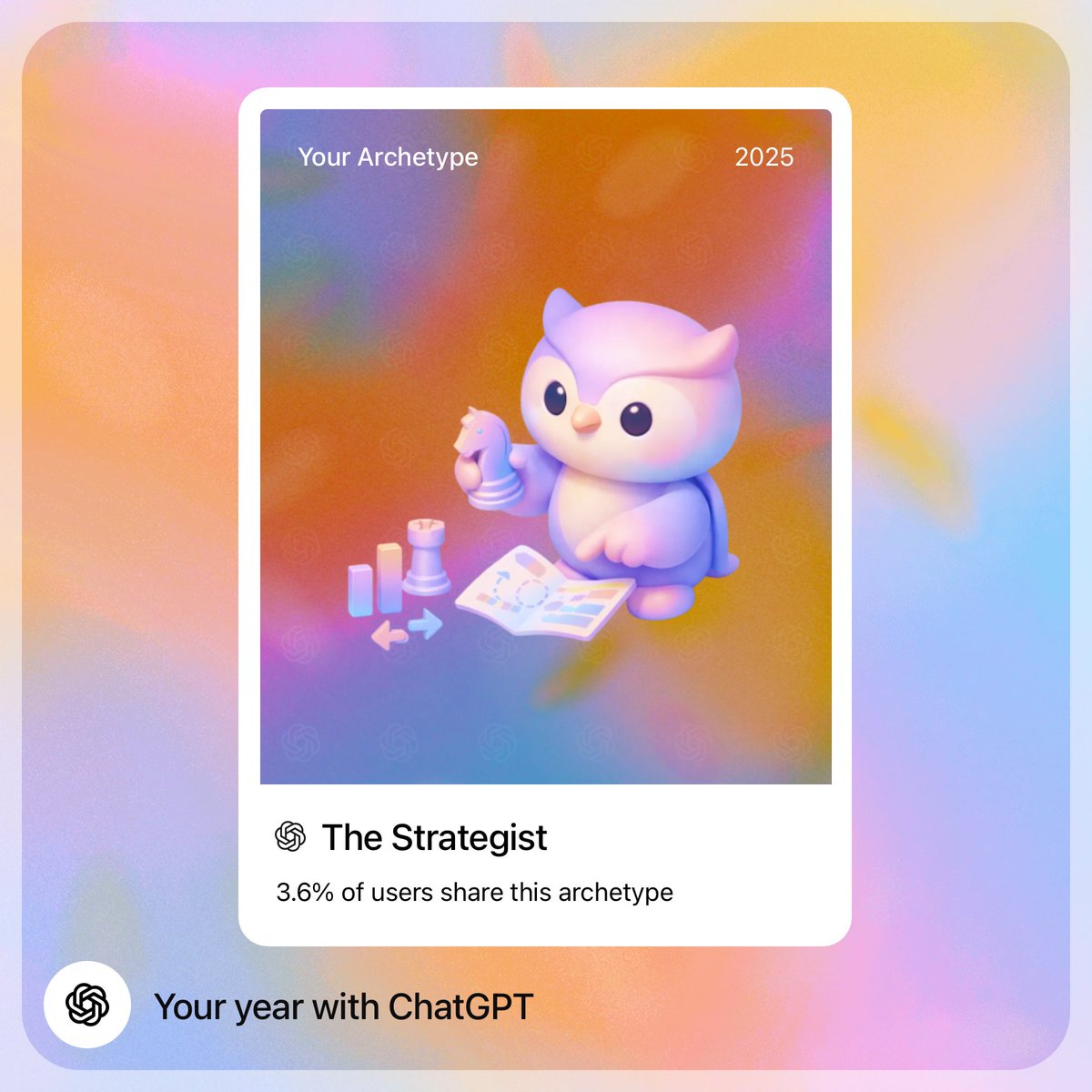
感谢ChatGPT和我走过这一年,给我答疑解惑,陪我学习成长。
Thank you, ChatGPT, for accompanying me through this past year, helping me with my questions and doubts, and supporting my learning and growth.
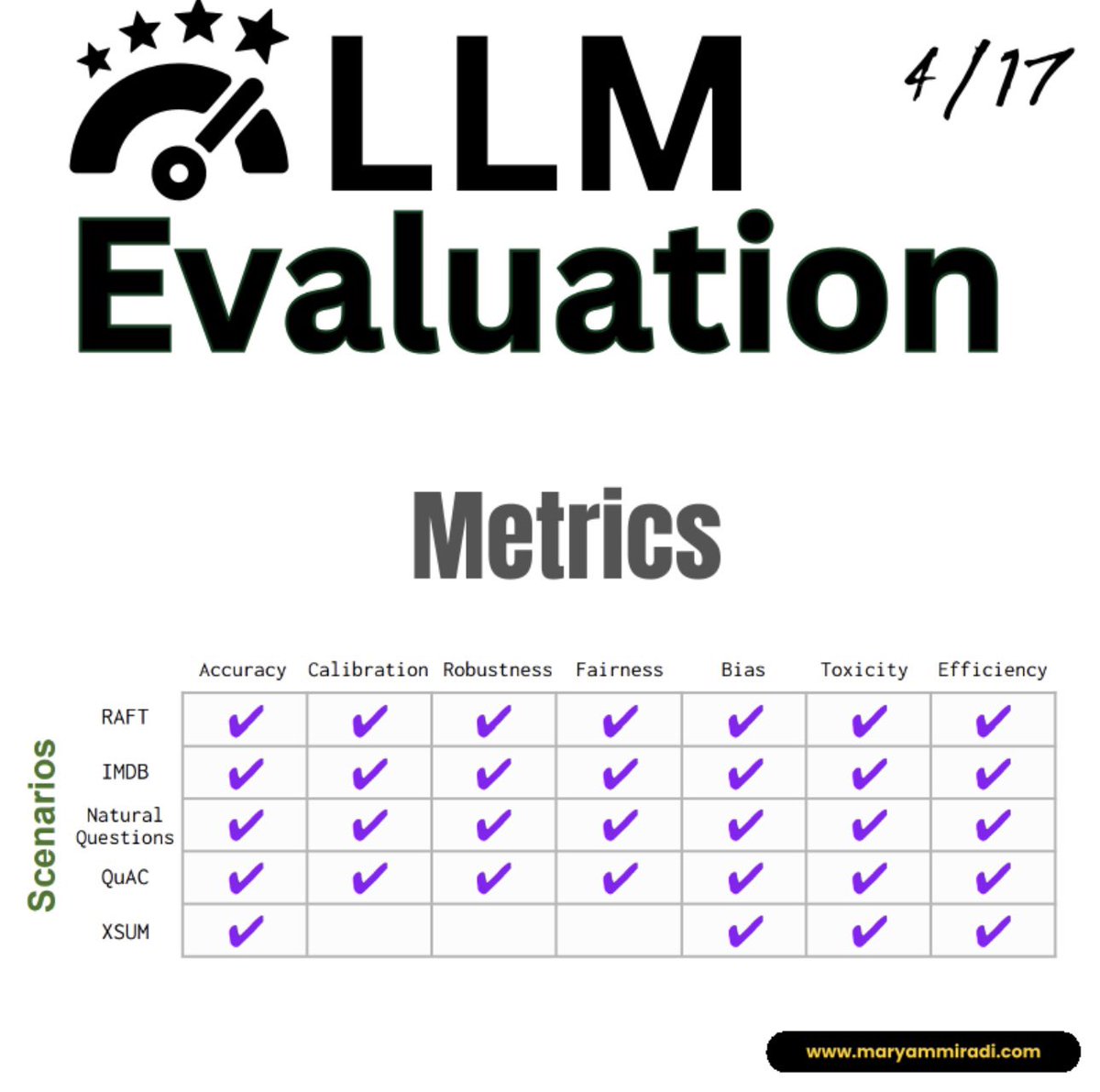
⚖️🏇𝗛𝗘𝗟𝗠—𝘁𝗵𝗲 𝗦𝘁𝗮𝗻𝗳𝗼𝗿𝗱 𝗛𝗼𝗹𝗶𝘀𝘁𝗶𝗰 𝗘𝘃𝗮𝗹𝘂𝗮𝘁𝗶𝗼𝗻 𝗼𝗳 𝗟𝗮𝗻𝗴𝘂𝗮𝗴𝗲 𝗠𝗼𝗱𝗲𝗹𝘀 𝗵𝗮𝘀 𝟯𝟬 𝗺𝗼𝗱𝗲𝗹𝘀 𝗮𝗰𝗿𝗼𝘀𝘀 𝟰𝟮 𝘀𝗰𝗲𝗻𝗮𝗿𝗶𝗼𝘀 𝗮𝗻𝗱 𝟳 𝗸𝗲𝘆 𝗺𝗲𝘁𝗿𝗶𝗰𝘀, 𝗳𝗼𝗿 𝗟𝗟𝗠 𝗘𝘃𝗮𝗹𝘂𝗮𝘁𝗶𝗼𝗻. ⬇️
HELM, super strong platform insures accuracy, fairness, and robustness with Multi-Metric Evaluation and Standardization.
Not all LLMs are created equal due to Instruction-Tuning Rules or Closed vs. Open Models and HELM helps you to choose the right model.
𝗧𝗵𝗶𝘀 𝗶𝘀 𝘄𝗵𝗮𝘁 𝗜 𝗹𝗲𝗮𝗻𝗿𝗲𝗱:
﹌﹌﹌﹌﹌﹌﹌﹌﹌
》 𝗪𝗵𝗮𝘁 𝗶𝘀 𝗛𝗘𝗟𝗠?
HELM—the Holistic Evaluation of Language Models—Published by Stanford's Center for Research on Foundation Models, is your compass through the maze of the complex LLM Evaluation.
Here’s why it matters:
✸ HELM evaluates 30 prominent LLMs across 42 scenarios and 7 essential metrics, covering accuracy, fairness, robustness, and more.
✸ It reveals blind spots and trade-offs across models and scenarios, ensuring you make informed choices.
✸ All evaluation data is public—empowering the community to dive deeper and innovate further.
﹌﹌﹌﹌﹌﹌﹌﹌﹌
》 𝗪𝗵𝗮𝘁 𝗠𝗮𝗸𝗲𝘀 𝗛𝗘𝗟𝗠 𝗱𝗶𝘀𝘁𝗶𝗻𝗴𝘂𝗶𝘀𝗵𝗲𝗱?
✸ Broad Coverage: Imagine exploring 16 core scenarios like question answering, summarization, sentiment analysis, and toxicity detection. HELM doesn’t stop there; it also dives into 7 targeted evaluations (e.g., reasoning and bias).
✸ Multi-Metric Evaluation: Accuracy isn’t the sole ruler here. HELM assesses LLMs using:
☆ Calibration: How confident is the model in its predictions?
☆ Robustness: Does it handle typos and dialects gracefully?
☆ Fairness: Are all groups treated equitably?
✸ Standardization: HELM levels the playing field. All 30 models, from OpenAI’s GPT series to Meta’s OPT, are benchmarked under consistent conditions.
﹌﹌﹌﹌﹌﹌﹌﹌﹌
》 𝗧𝗵𝗲 𝗛𝗶𝗴𝗵𝘀 𝗮𝗻𝗱 𝗟𝗼𝘄𝘀 𝗼𝗳 𝗟𝗟𝗠𝘀
✸ Instruction-Tuning Rules: Models like OpenAI’s text-davinci-002 excel in accuracy and fairness. Why? Their training prioritizes user-friendly instructions.
✸ Closed vs. Open Models: Closed models generally outperform open ones, but open models like BLOOM are rapidly closing the gap.
✸ Trade-offs Everywhere: Improving one metric often sacrifices another. For example:
》 𝗖𝗵𝗮𝗹𝗹𝗲𝗻𝗴𝗲𝘀 𝗮𝗻𝗱 𝗙𝘂𝘁𝘂𝗿𝗲 𝗗𝗶𝗿𝗲𝗰𝘁𝗶𝗼𝗻𝘀
Despite HELM’s comprehensive approach, challenges remain:
✸ Dynamic Benchmarks
✸ Scalability
✸ Ethical Considerations
Github: https://t.co/FSvFANIFdQ
≣≣≣≣≣≣≣≣≣≣≣≣≣≣≣≣≣≣≣≣≣≣≣≣≣≣
⫸ꆛ Want to build Real-World AI agents?
Join My 𝗛𝗮𝗻𝗱𝘀-𝗼𝗻 𝗔𝗜 𝗔𝗴𝗲𝗻𝘁 𝗧𝗿𝗮𝗶𝗻𝗶𝗻𝗴 TODAY!
➠ Build Real-World AI Agents for Healthcare, Finance,Smart Cities,Sales
➠ Learn 4 Framework: LangGraph | PydanticAI | CrewAI | OpenAI Swarm
➠ Work with Text, Audio, Video and Tabular Data
👉𝗘𝗻𝗿𝗼𝗹𝗹 𝗡𝗢𝗪 (𝟰𝟱% 𝗱𝗶𝘀𝗰𝗼𝘂𝗻𝘁):
https://t.co/5i2v1fIZ7h
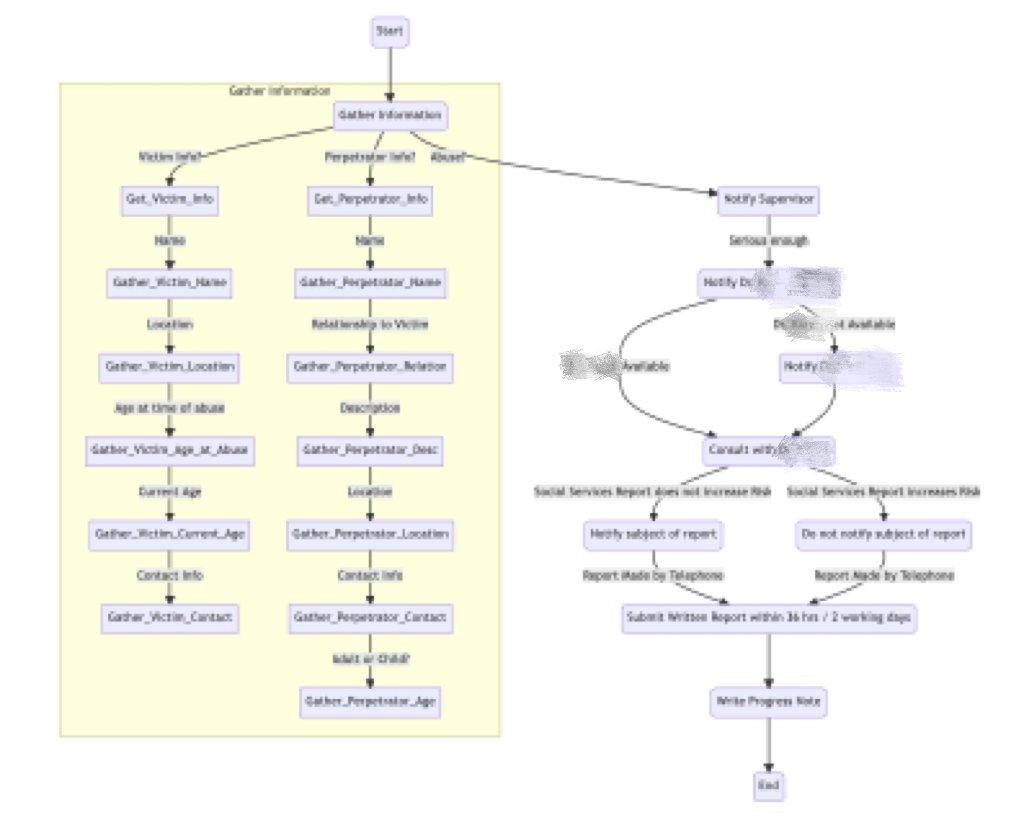
How powerful is ChatGPT! This is the flowchart ChatGPT generated using mermaid.js syntax according to a description with more than 700 words. I got it following the instructions by Tony Hirst @psychemedia on https://t.co/0xvGy9F88p
Our next event will be on Thurs, Nov 5th, 2020 at 7:00AM PT/9:00AM CT/10:00AM ET. This time, the ARL Seminar is excited to welcome Eric Laber from NC State University to talk about his recent study “Partially observable Markov Decision Processes as a Model for Chronic Illness".
New seminar event is scheduled on Wednesday, Oct 7th, 2020. This time, Tony Qin from DiDi AI Labs will talk about “Deep Reinforcement Learning in a Ride-sharing Marketplace”. Register on our website to join the seminar! https://t.co/uJ1u3Fbz9P
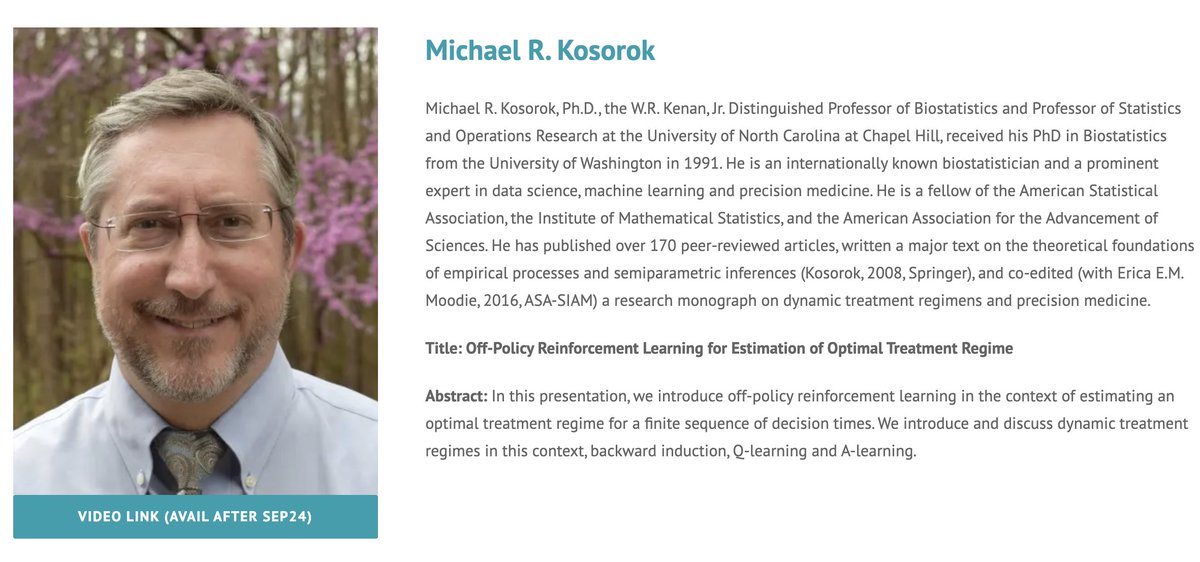
ARL Seminar is excited to welcome Michael R. Kosorok from the University of North Carolina at Chapel Hill to talk about "Off-Policy RL for Estimation of Optimal Treatment Regime". The seminar is on Thursday, Sept 24, 2020 at 11:00 AM ET. Register Here. https://t.co/uJ1u3Fbz9P