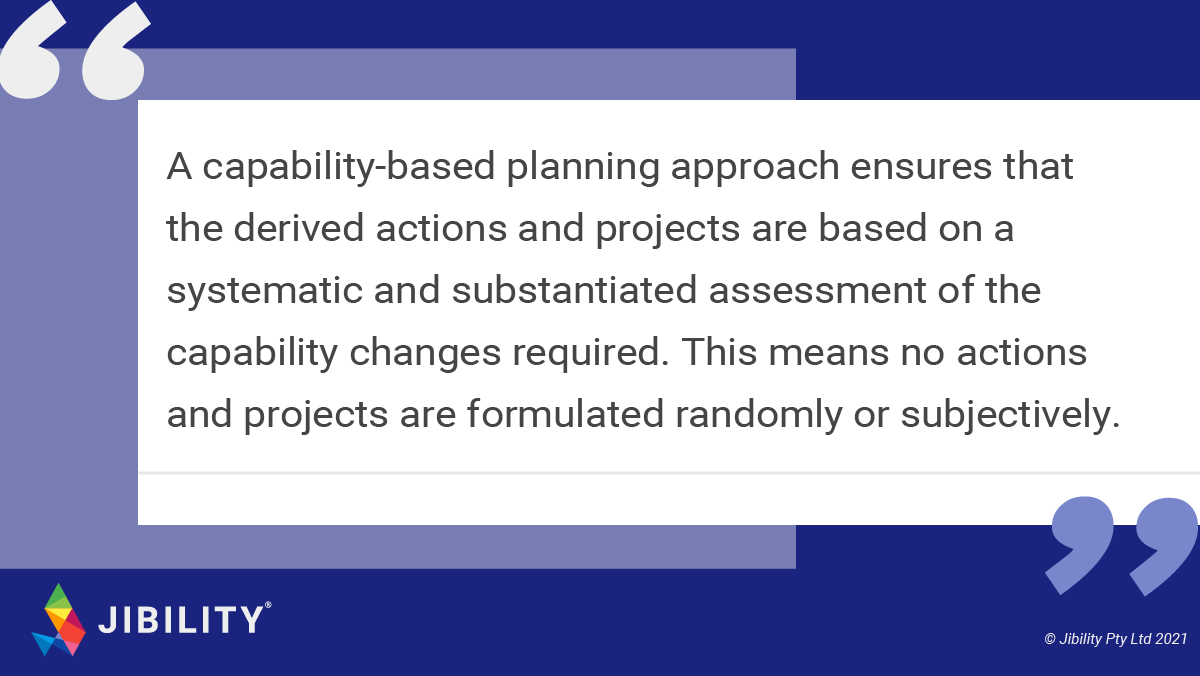
Did you know capability-based planning has its origins in defense and military planning?
Organizations with superior capability to execute strategy will win — whether they’re in the armed forces or not.
Do you agree?
A new Jibility blog is live! Ten Tips for Conducting a Successful Strategic Planning Workshop by guest blogger Shane Capper, a highly experienced strategy consultant: https://t.co/Nx2TwJB5eU
#strategicplanning#workshop#facilitation
If you missed Jibility co-founder Chuen Seet’s recent talk for the Business, Innovation, Leadership & Technology (BIL-T) Conference Series, the recording is now live on the @iasaGlobal YouTube channel: https://t.co/rmic6cDLAx
#entarch#conference#enterprisearchitecture
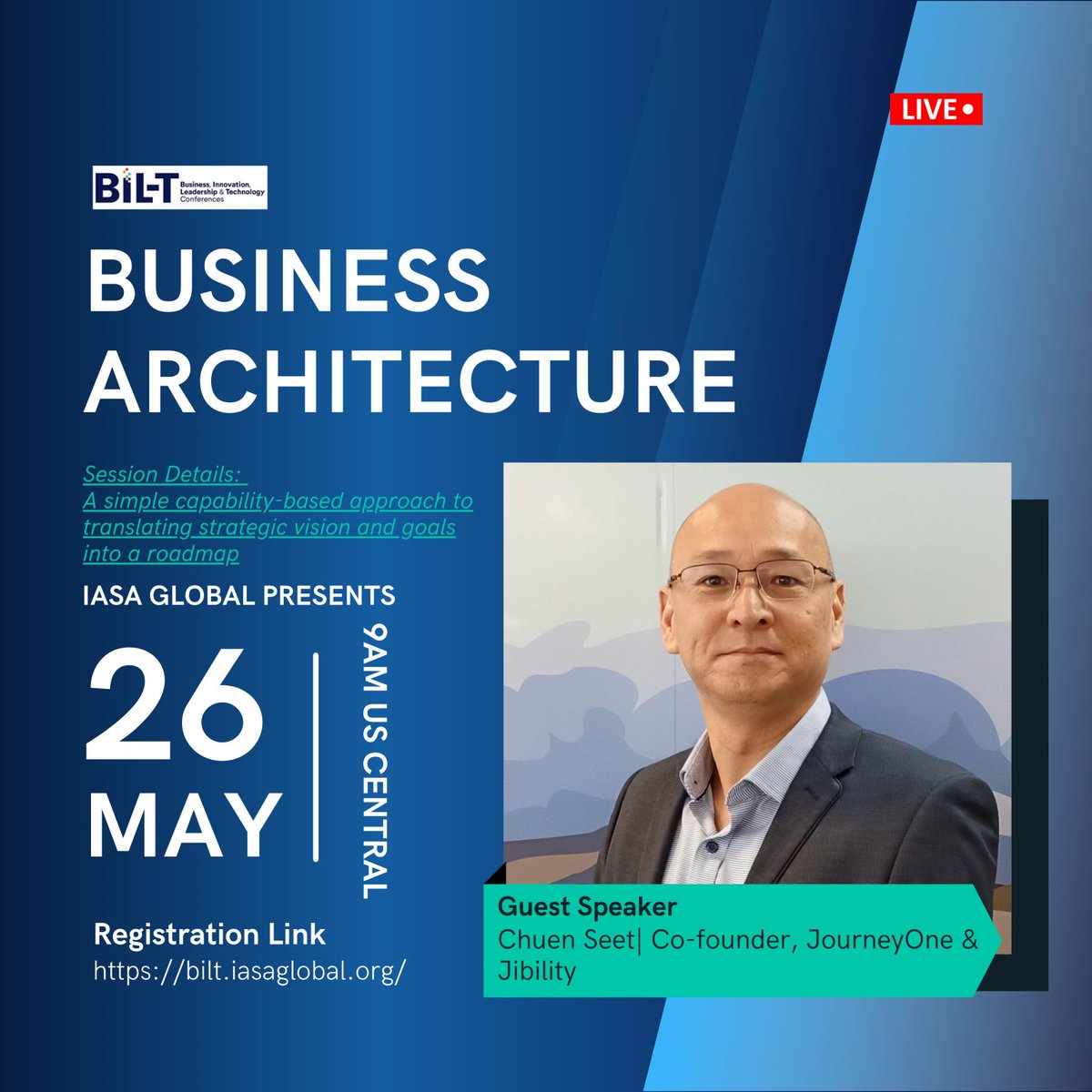
Our co-founder Chuen Seet will be speaking at the BIL-T Business Architecture virtual conference at 11pm CST today, 26 May (or 2pm AEST, 27 May). Find out more and register for the link here: https://t.co/7sRBaAe9vk
We have always taken the security of our customers' information seriously, but we have now introduced even more security options for enterprises: https://t.co/VXMBINEqwN
#businesstools#enterprisesoftware
We're excited to announce that Jibility now supports multi-user collaboration, as well as the ability to share your roadmap via email and set permissions from your dashboard!
Find out more: https://t.co/wrjKrZuvkj
#strategicplanning#businesstools
This is why we love capability-based planning so much: it provides a consistent, objective and substantiated approach when making key decisions about the capabilities needed for achieving strategic objectives. Find out more in our latest blog: https://t.co/FvXoiR9u6y
#strategy
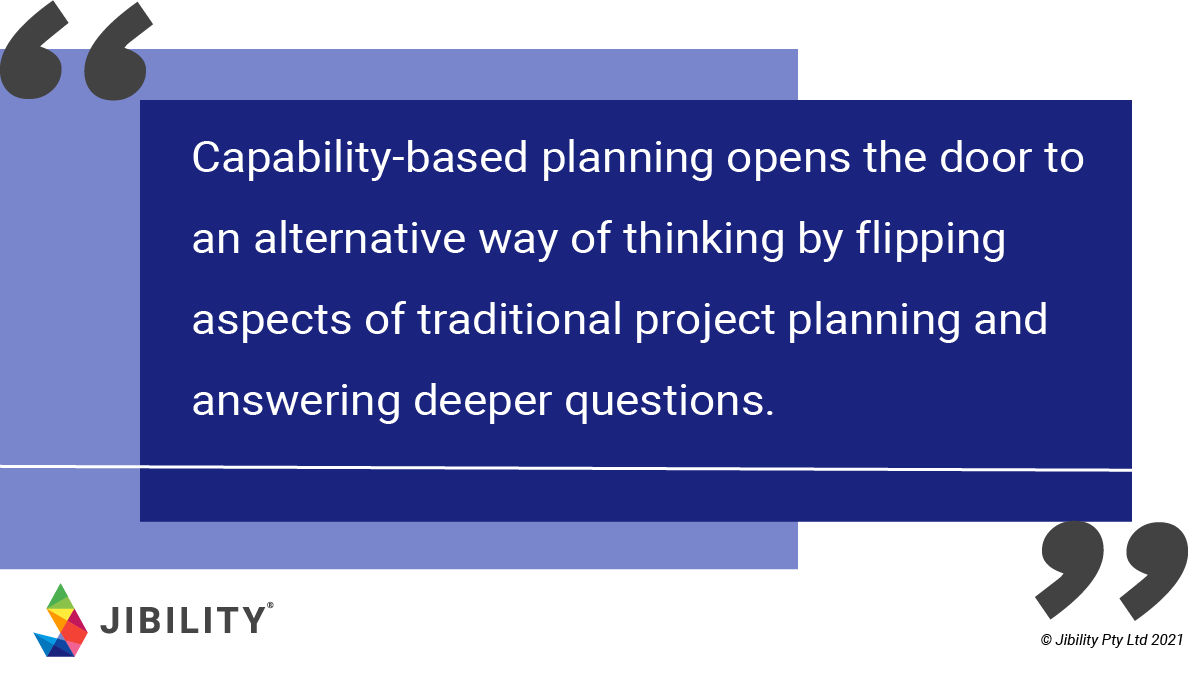
Capability-based planning has 3 key differentiators from traditional program/project planning. While this gives it some advantages, the two approaches can also work together in a powerful hybrid form. Find out more in our latest blog: https://t.co/bqLV5I9EPY
#strategicplanning
New blog alert! The most recent article from our co-founder tackles the distinction between a traditional program/project planning approach and capability-based planning.
Read the blog here: https://t.co/lLeSQU6CcD
#projectplanning#capabilityplanning#strategicplanning
@lumsdend Of course, feedback from our users is most welcome! I'll pass your suggestion on to our dev team. If at any point you're interested in a demo of the tool with our product owner, then let me know and I'll put him in touch with you.
@lumsdend Hi Dominic, apologies for the delayed response. All stages of the roadmap can be printed via the Publish section (https://t.co/1TT6WFMkCY), but each stage needs to be printed separately – the tool currently does not support the ability to print everything as one document.
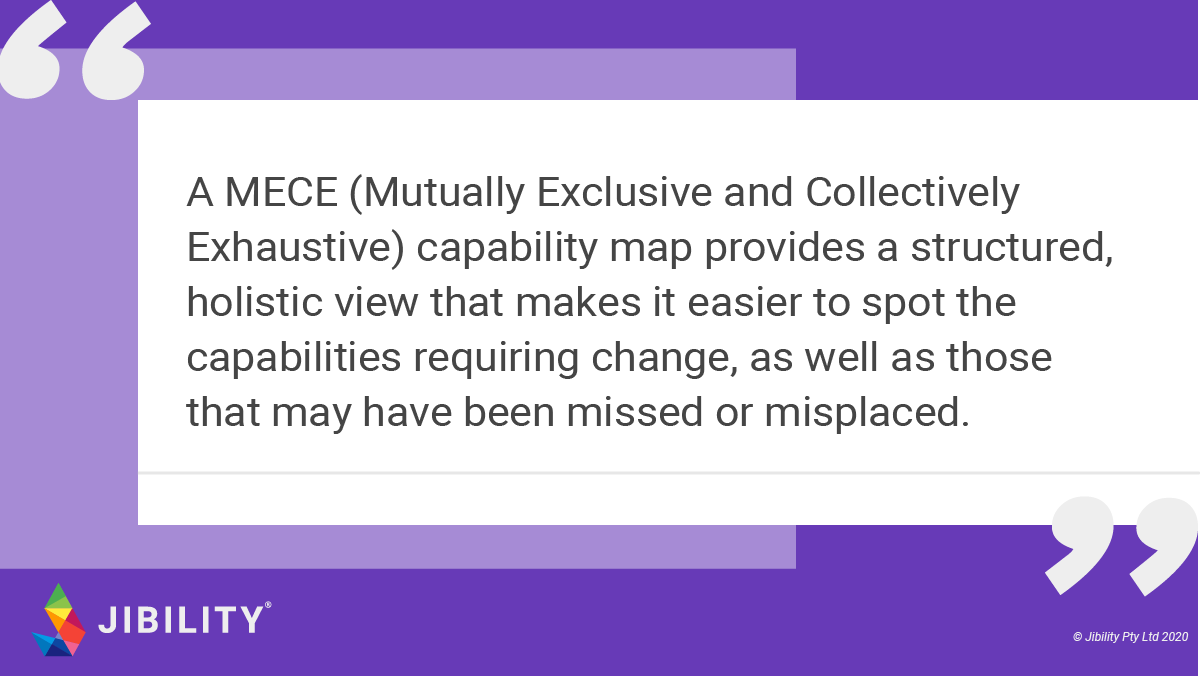
Deriving capabilities from your business's end-to-end value stream helps ensure your capability map adheres to the MECE principle. Find out more in our latest blog: https://t.co/7HXj9PCAWr
#Capabilities#CapabilityMapping#Strategy
Business capability mapping is an integral part of any capability-based planning approach, as it helps you to identify what needs to change and to what degree. Read more: https://t.co/OciLoAIjUg
#Capabilities#CapabilityMapping#StrategicPlanning
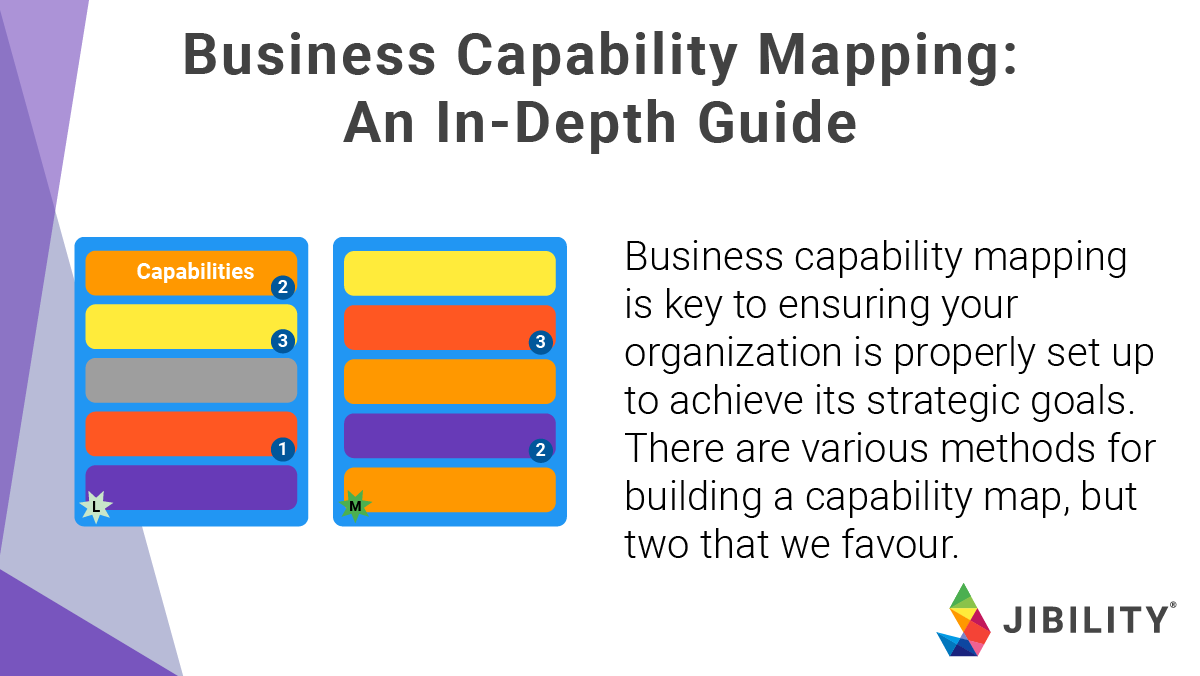
Our latest blog from capability-based planning expert Chuen Seet is now live – an in-depth guide to creating capability maps: https://t.co/IhBIaECgAA
#CapabilityMapping#Capabilities#Strategy
Cadence is important for your strategic planning to keep your organization nimble. Reviewing your strategic roadmap by means of a drumbeat sprint every 3-4 months is ideal. Learn more about strategic planning drumbeats: https://t.co/qUXNpGUsLk
#strategy#strategicplanning
Establishing a cadence for your strategic planning is essential – the practice needs to be embedded within your organization so that you're always prepared to adapt to change. This is why and how: https://t.co/OGilDG0iOg
#strategy#strategicplanning#businessstrategy