I feel sorry for the little girl that she is born to parents who allow and encourage her to do this
This is not the age for such moves or expressions
Sad there is no one to tell her so
INSTEAD OF WATCHING NETFLIX TONIGHT. Spend 2 hour with this. Claude AI FULL COURSE that teaches you how to BUILD and AUTOMATE anything. The people who watch this tonight will wake up tomorrow with a new skill. Watch it and Bookmark it now.
🔥 Spring Boot looks simple… until the interviewer goes deep.
Here are **real Spring Boot internals questions** asked in recent interviews 👇
1. How does Spring Boot decide which **auto-configuration** to apply?
2. What happens internally when you add `spring-boot-starter-web`?
3. Why does Spring Boot prefer **convention over configuration**?
4. How does Spring Boot load `application[dot]properties` internally?
5. Exact **startup flow** of a Spring Boot application.
6. Difference between `@ComponentScan` and `@SpringBootApplication`.
7. How does Spring Boot detect **embedded Tomcat** and configure it?
8. What happens if two beans of the same type exist without `@Qualifier`?
9. How does Spring Boot handle **profile-specific configuration**?
10. What is the role of `SpringFactoriesLoader` under the hood?
11. Difference between `@RestController` and `@Controller` internally.
12. How does Spring Boot manage **dependency versions automatically**?
13. Lifecycle of a Spring Bean in Spring Boot.
14. How does Spring Boot handle **externalized configuration**?
15. Fat jar vs normal jar — internal difference.
16. How Spring Boot decides **server port priority**.
17. What happens internally when you hit a **REST endpoint**.
18. How Spring Boot integrates with **Actuator** internally.
19. How exception translation works in Spring Boot.
20. Common performance mistakes in Spring Boot applications.
💡 **Pro Tip:**
Knowing **internals** is what separates average from strong candidates.
If you can explain 10–15 of these confidently, you’re already ahead of 90% of Spring Boot developers.
📌 Save this for interviews
Before you learn Kubernetes, understand why to learn Kubernetes. Or should you?
25 years back, if you wanted to run an application, you bought a $50,000 physical server. You did the cabling. Installed an OS. Configured everything. Then run your app.
Need another app? Buy another $50,000 machine.
Only banks and big companies could afford this. It was expensive and painful.
Then came virtualization. You could take 10 physical servers and split them into 50 or 100 virtual machines. Better, but you still had to buy and maintain all that hardware.
Around 2005, Amazon had a brilliant idea. They had data centers worldwide but weren't using full capacity. So they decided to rent it out.
For startups, this changed everything. Launch without buying a single server. Pay only for what you use. Scale when you grow.
Netflix was one of the first to jump on this.
But this solved only the server problem.
But "How do people build applications?" was still broken.
In the early days, companies built one big application that did everything. Netflix had user accounts, video player, recommendations, and payments all in one codebase.
Simple to build. Easy to deploy. But it didn't scale well.
In 2008, Netflix had a major outage. They realized if they were getting downtime with just US users, how would they scale worldwide?
So they broke their monolith into hundreds of smaller services. User accounts, separate. Video player, separate. Recommendations, separate.
They called it microservices.
Other companies started copying this approach. Even when they didn't really need it.
But microservices created a massive headache. Every service needed different dependencies. Python version 2.7 for one service. Python 3.6 for another. Different libraries. Different configs.
Setting up a new developer's machine took days. Install this database version. That Python version. These specific libraries. Configure environment variables.
And then came the most frustrating phrase in software development: "But it works on my machine."
A developer would test their code locally. Everything worked perfectly. They'd deploy to staging. Boom. Application crashed. Why? Different OS version. Missing dependency. Wrong configuration.
Teams spent hours debugging environment issues instead of building features.
Then Docker came along in 2012.
Google had been using containers for years with their Borg system. But only top Google engineers could use it, too complex for normal developers.
Docker made containers accessible to everyone. Package your app with all dependencies in one container. The exact Python version. The exact libraries. The exact configuration.
Run it on your laptop. Works. Run it on staging. Works. Run it in production. Still works.
No more "works on my machine" problems. No more spending days setting up environments.
By 2014, millions of developers were running Docker containers.
But running one container is easy. Running 10,000 containers? That's a nightmare.
Microservices meant managing 50+ services manually. Services kept crashing with no auto-restart. Scaling was difficult. Services couldn't find each other when IPs changed.
People used custom shell scripts. It was error-prone and painful. Everyone struggled with the same problems. Auto-restart, auto-scaling, service discovery, load balancing.
AWS launched ECS to help. But managing 100+ microservices at scale was still a pain.
This is exactly what Kubernetes solved.
Google saw an opportunity. They were already running millions of containers using Borg. In 2014, they rebuilt it as Kubernetes and open-sourced it.
But here's the smart move. They also launched GKE, a managed service that made running Kubernetes so easy that companies started choosing Google Cloud just for it.
AWS and Azure panicked. They quickly built EKS and AKS. People jumped ship, moving from running k8s clusters on-prem to managed kubernetes on the cloud.
12 years later, Kubernetes runs 90% of production infrastructure. Netflix, Uber, OpenAI, Medium, they all run on it.
Now advanced Kubernetes skills pay big bucks.
Why did Kubernetes win?
Perfect timing.
Docker has made containers popular. Netflix made microservices popular. Millions of people needed a solution to manage these complex microservices at scale.
Kubernetes solved that exact problem.
It handles everything. Deploying services, auto-healing when things crash, auto-scaling based on traffic, service discovery, health monitoring, and load balancing.
Then AI happened. And Kubernetes became even more critical.
AI startups need to run thousands of ML training jobs simultaneously. They need GPU scheduling. They need to scale inference workloads based on demand.
Companies like OpenAI, Hugging Face, and Anthropic run their AI infrastructure on Kubernetes. Training models, running inference APIs, orchestrating AI agents, all on K8s.
The AI boom made Kubernetes essential. Not just for traditional web apps, but for all AI/ML workloads.
Understanding this story is more important than memorizing kubectl commands.
Now go learn Kubernetes already.
Don't take people who write "Kubernetes is dead" articles are just doing it for views/clicks. They might have never used k8s.
🚨Hindu Undivided Family(HUF)- A mechanism to save Tax?
Hindu Undivided Family(HUF) is a good option that is available for all married persons to save tax
What is HUF? How to create it?
A thread🧵on HUF,how to create HUF and its benefits?
Lets go👇
A Salary Doesn’t make Anyone Rich
I have Created a list of
- 46 Passive Income Ideas for 2024
Just need
- Mobile / Pc
- Internet
- 2 to 4 hours a day
To get for free , Just
Retweet and reply “ Money ”
[ Must be following ]
A Salary Doesn’t make Anyone Rich
I have Created a list of
- 46 Passive Income Ideas for 2024
Just need
- Mobile / Pc
- Internet
- 2 to 4 hours a day
To get for free , Just
Retweet and reply “ Money ”
[ Must be following ]
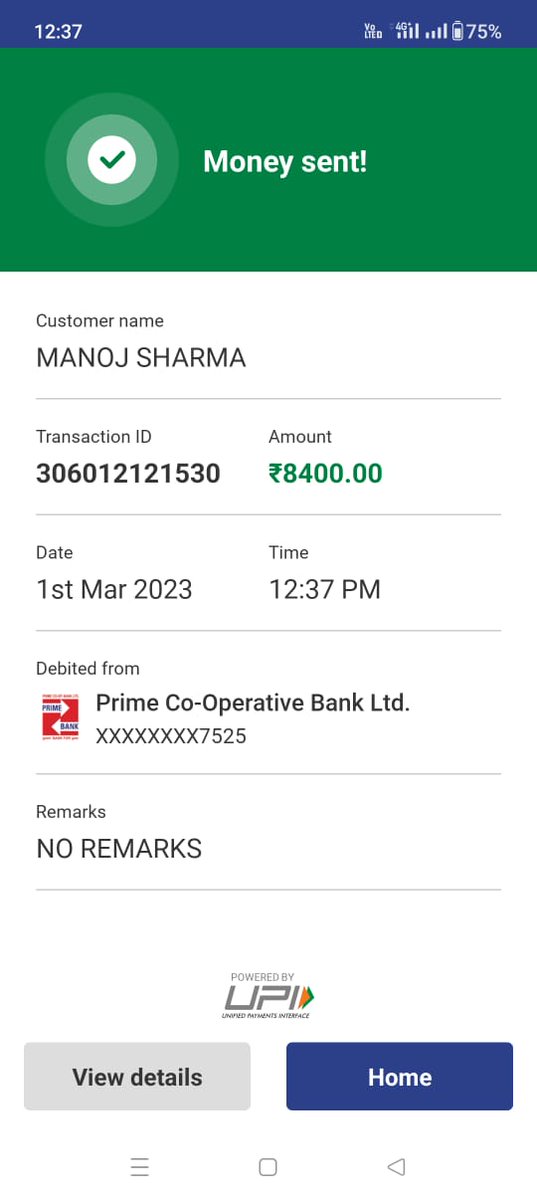
Hi @sanghaviharsh@CyberGujarat My wife got duped by scamster with 28000 Rupees. He has identified himself as Army person from Pune and he is selling home stuff. Eventually we know its's a scam and we need help from Cyber Crime Gujarat.
#cyberscam#financialfraud#Cybercrime
Hi @sanghaviharsh@CyberGujarat My wife got duped by scamster with 28000 Rupees. He has identified himself as Army person from Pune and he is selling home stuff. Eventually we know its's a scam and we need help from Cyber Crime Gujarat.
#cyberscam#financialfraud#Cybercrime
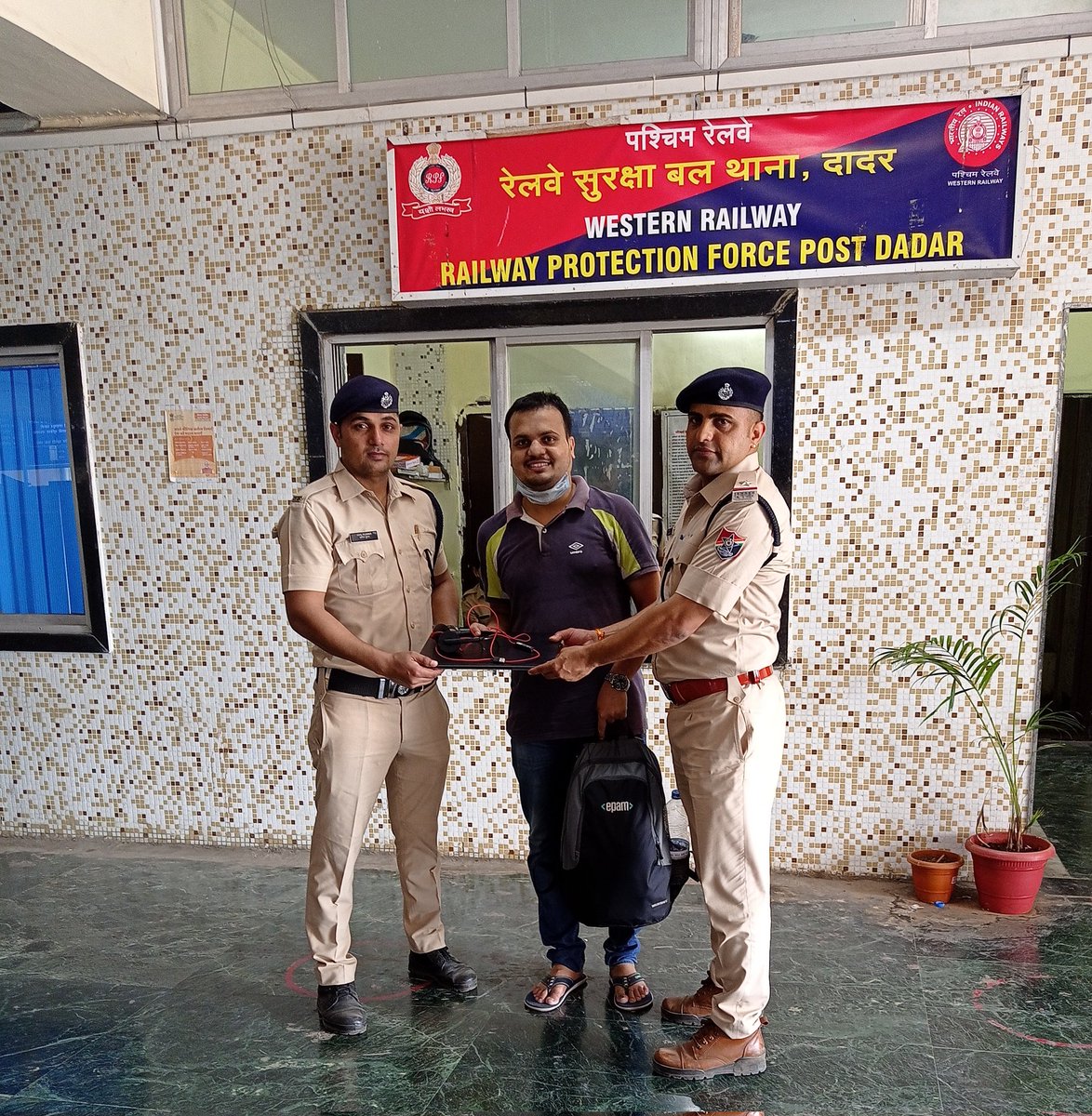
Bag has laptop worth 1,25,000 Rs and Headphone of 3500 Rs. I got all my belongings back. Thank you so much Team RPF Dadar and Boriwali and Special Thanks to Officer Anil Kumar and Man Singh. Kudos Sir.. Keep the Work Same as High. 👏👏😊👍(3/3)
@WesternRly#Thanks#139helpline
I was travelling to Mumbai and in Train No. 20908. While de-boarding at Boriwali station in hussle bussle I miss my one of backpack with office laptop and headphone. Immediately I went to RPF thana and reported the incident. Train was yet to reach Dadar. @WesternRly
So RPF officer immediately inform Dadar thana and also I have reported via 139 helpline number. Within 5 minutes I got call from control room to collect all information. RPF Dadar officers have taken prompt action and collect my bag immediately when train reach to Dadar. (2/3)