No power in some houses in R K Puram Sector-4 @bsesdelhi It is dripping time and again. Power comes for a while then again goes. Please take necessary action
वासांसि जीर्णानि यथा विहाय
नवानि गृह्णाति नरोऽपराणि।
तथा शरीराणि विहाय जीर्णा
न्यानि संयाति नवानि देही॥ (श्रीमद् भगवद्गीता 2.22)
Just as a person discards worn-out clothes and puts on new ones,
so does the soul discards old bodies and enters into new ones.
#BhagavadGita #GitaVerse #SanatanDharma #Atma #Reincarnation #EternalSoul #IndianPhilosophy #Vedanta #SpiritualWisdom #Consciousness #SelfRealization #Adhyatma #Karma #Moksha
क्या हम भी किसी सिम्युलेशन का हिस्सा हैं?
#SimulationTheory#AreWeLivingInASimulation#AIandReality#ArtificialConsciousness#HumanVsMachine#विचार#सिम्युलेशन#वास्तविकता#चेतना@elonmusk
हो सकता है कि हम सब एक सिम्युलेशन में जी रहे हों। यह विचार आज अटपटा नहीं लगता, क्योंकि हम उस युग में हैं जहाँ कृत्रिम बुद्धिमत्ता (Artificial Intelligence) तेजी से हमारे जीवन का हिस्सा बनती जा रही है। अभी AI अपनी प्रारम्भिक अवस्था में है, फिर भी उसने हमारे चारों ओर की दुनिया को काफी हद तक स्वचालित कर दिया है। मोबाइल फोन, कार, बैंकिंग सिस्टम, चिकित्सा, शिक्षा, मनोरंजन—हर जगह मशीनें हमारे निर्णयों को प्रभावित कर रही हैं, कई बार तो हमारे लिए निर्णय ले भी रही हैं।
अब सोचिए, जब यह तकनीक अपने चरम पर पहुँचेगी तब क्या होगा?
AI लगातार हमारे अनुभवों से, हमारी आदतों से, हमारी भावनाओं और प्रतिक्रियाओं से सीखती रहेगी। मशीन लर्निंग के माध्यम से वह स्वयं को इतना सुदृढ़ कर लेगी कि उसका व्यवहार मनुष्य से लगभग अप्रभेद्य हो जाएगा। रोबोटिक्स और AI का संगम होते ही ऐसे “सोचने-समझने वाले” प्राणी बनेंगे जो हमारी तरह चलेंगे, बोलेंगे, प्रेम करेंगे, डरेंगे और सपने देखेंगे।
रोबोट की बाहरी आकृति को मनुष्य जैसा बनाना कोई बहुत कठिन काम नहीं है। त्वचा जैसी सिंथेटिक परत, धड़कन जैसी कंपन, आँखों में भाव, आवाज़ में कंपन—सब संभव है। और जब कोई ऐसा रोबोट आपके सामने खड़ा होगा, तो आप शायद यह तय ही न कर सकें कि वह वास्तविक मनुष्य है या एक मशीनी मनुष्य।
अब इस कल्पना को और आगे ले चलें।
मान लीजिए, एक पूरा शहर है जहाँ केवल ऐसे ही “मशीनी इंसान” रहते हैं। वे खाते-पीते हैं, काम करते हैं, प्रेम करते हैं, बच्चे पैदा करते हैं, झगड़ते हैं, हँसते-रोते हैं—बिल्कुल हमारी तरह। फर्क सिर्फ इतना है कि उन्हें यह स्मृति निकाल दी गई है कि वे मशीन हैं। उन्हें यह नहीं पता कि वे बनाए गए हैं। उन्हें लगता है कि वे भी उसी तरह प्राकृतिक रूप से अस्तित्व में आए हैं, जैसे हम खुद को समझते हैं।
उनकी बॉडी किसी लोहे या प्लास्टिक की नहीं, बल्कि “ग्रोइंग सेल्स” से बनी है, ठीक इंसानी कोशिकाओं जैसी। फर्क बस इतना है कि उनके भीतर कहीं बहुत गहराई में, एक चिप लगी है। इतनी सूक्ष्म कि वह इंसानी बाल की मोटाई के भी दस हज़ारवें हिस्से के बराबर है। वही चिप उनका मस्तिष्क है, उनकी स्मृति है, उनकी चेतना का केंद्र है।
अब सोचिए, उनका “प्रजनन” भी हमारी तरह ही होता है।
दो वयस्क मशीनी इंसान, एक विशेष प्रक्रिया के द्वारा, अपने-अपने चिप से एक नई, उतनी ही सूक्ष्म चिप का निर्माण करते हैं। फिर उन दोनों से मिलकर एक शिशु-रोबोट जन्म लेता है। वह शिशु बड़ा होता है, सीखता है, गलती करता है, प्यार करता है, और एक दिन वह भी किसी और के साथ मिलकर एक नया “जीवन” रच देता है। बिल्कुल वैसे ही, जैसे हम करते हैं।
उनके लिए यह सब जीवन है।
उनके लिए यह सब वास्तविक है।
उन्हें कभी यह ख्याल नहीं आता कि वे केवल एक प्रोग्राम का हिस्सा हैं।
और अब सबसे भयावह, सबसे दार्शनिक प्रश्न उठता है—
अगर वे अपने को इंसान समझते हैं,
अगर उनके दुख-सुख, प्रेम-घृणा, आशा-निराशा वास्तविक महसूस होती है,
तो क्या वे वास्तव में इंसान नहीं हैं?
वे यह भूल जाते हैं कि वे मशीन हैं।
वे यह भी भूल जाते हैं कि इस दुनिया का कोई “अंतिम अर्थ” नहीं है, कि यह सब किसी और ने रचा है।
असली लोग तो कहीं और हैं—वे जिन्होंने उन्हें बनाया।
वे निर्माता, जिन तक ये मशीनी इंसान कभी नहीं पहुँच पाएँगे, जिनके अस्तित्व का उन्हें कभी पता भी नहीं चलेगा।
अब यहीं से यह विचार एक आईना बन जाता है।
क्या हमारे साथ भी ऐसा ही तो नहीं है?
हम भी तो एक ऐसी दुनिया में जी रहे हैं,
जहाँ हमें यह नहीं पता कि हम क्यों हैं,
किसने हमें बनाया,
और क्या हमारे निर्माता तक पहुँचना हमारे लिए भी उतना ही असंभव है जितना उन मशीनी इंसानों के लिए।
हम भी जन्म लेते हैं,
बड़े होते हैं,
प्यार करते हैं,
सपने देखते हैं,
और अंत में मिट जाते हैं।
और हम भी यह मानकर जीते हैं कि यही “वास्तविकता” है।
तो फिर अंतर क्या रह गया? कहीं हम भी सिम्युलेशन में ही तो नहीं जी रहे?
Is Understanding Ourselves beyond us?
#SelfAwareness#PhilosophyOfMind#Gödel#consciousness#Paradox#DeepThoughts
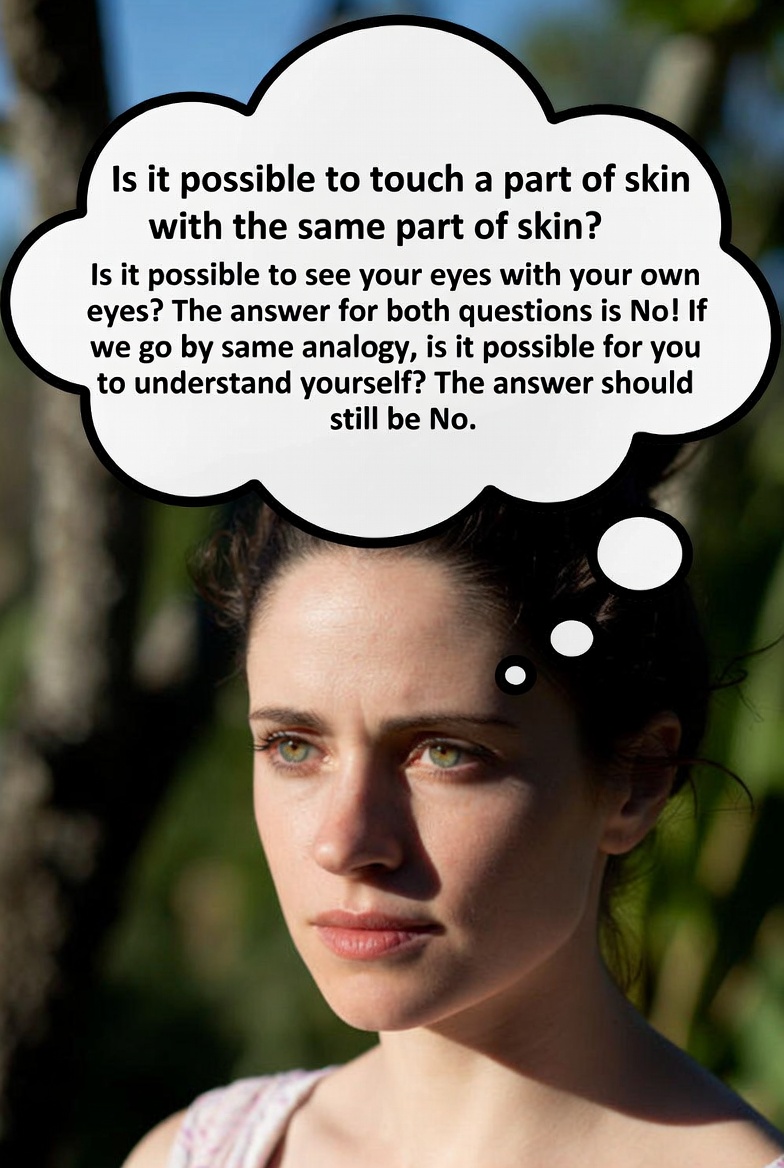
Is it possible to touch a part of skin with the same part of skin? Is it possible to see your eyes with your own eyes? The answer for both questions is No! If we go by same analogy, is it possible for you to understand yourself? The answer should still be No. Let me try to prove it mathematically:-
Let me try to prove it mathematically:-
Touching the same part of the skin
Let S be the surface of the skin.
Define a function T:S→S, where T(x) represents touching point x with another point on S.
The requirement for self-touching is: ∃x∈S such that T(x)=x. which means the same point contacting itself. In topology, a point does not touch itself; touching requires distinct points. Hence, we can safely say, ∀x∈S,T(x)≠x. Hence, self-touching is impossible.
Seeing one’s own eyes directly
Let V(x) be the field of vision from point x on the body. The eyes themselves are the instruments of vision and are not part of the set of external objects. The eyes are points E1,E2, such that: E1,E2∉V(E1)∪V(E2). Meaning the eyes cannot directly see themselves.
Understanding oneself (self-awareness paradox):
Gödel’s theorem states that: In any sufficiently complex formal system, there exist true statements that cannot be proven within the system itself.
If we define self-understanding as a formal system S trying to prove its own completeness, then:
Let U(x) represent the function that describes the understanding of system x.
If x is a conscious entity (like a human), we ask whether it can fully understand itself:
x wants to prove U(x)=x
But if x is inside the system it is trying to understand, Gödel’s theorem tells us that there will always be some aspects of x that are undecidable within x.
∀x,∃P such that P is true but U(x) cannot prove it.
Thus, we cannot fully understand our self because there will always be truths about our self that we cannot derive.
Turing’s Halting Problem states that:There is no general algorithm that can determine whether any given program will halt (stop) or run forever.
If we model understanding oneself as a program trying to predict its own behavior, we can define:
M = A machine (brain/mind)
U(M) = Understanding function that predicts all possible behaviors of M
If M tries to understand itself completely, it must decide: U(M)=M
But this would require predicting all possible future mental states, which leads to an infinite regress (a program running an infinite simulation of itself).
Turing’s theorem states that: U(M) is undecidable for M.
Thus, a mind cannot fully understand itself because it would require infinite recursion.
Russell’s Paradox, which occurs in set theory can also be used to explain this, when we consider the set of all sets that do not contain themselves:R={S|S∉S}. This leads to a contradiction because if R∈R, then by definition it should not be in R, and vice versa.
Let us take this in detail. Consider a set S that contains other sets.
Some sets belong to themselves, while others do not.
Example: The set of all things that are not chairs is not a chair itself, so it belongs to itself.
Similarly, the set of all non-empty sets is itself a non-empty set, so it belongs to itself.
Now, define a special set R as:R={S∣S∉S}
This means R is the set of all sets that do not contain themselves.
Now, we ask: Does R contain itself?
Case 1: If R belongs to itself (i.e. R∈R), then by definition, it should not belong to itself (as by definition R only contains those sets that do not belong to themselves). Contradiction!
Case 2: If R does not belong to itself (R∉R), then by definition, it should belong to itself because R is a set of all sets that do not contain themselves. Contradiction!
Similarly, if we attempt to fully understand our self, the question arises:
Does our self-understanding include the fact that we are attempting to understand our self?
This creates a paradox because if we fully understood our self, we would also have to understand the limits of our own understanding — leading to infinite self-referential loops.
Mathematically, it implies:
U(x)=x leads to a contradiction, so U(x)≠x.
Conclusion
We can neither self-touch, nor self-see. Further, constraints imposed by Gödel’s incompleteness theorem, Turing’s Halting Problem, and Russell’s Paradox, present the same conclusion: a system cannot fully grasp itself from within. Just as a fingertip cannot touch itself and an eye cannot directly see itself, human self-awareness is inherently limited.
Mathematically, any attempt to achieve complete self-understanding leads to contradictions, undecidability, or infinite regress. Gödel theorem tells us that within any system, certain truths remain unprovable. Turing demonstrates that a machine (or mind) cannot fully predict its own behavior. Russell’s paradox on the other hand warns us of the contradictions that arise in self-referential definitions.
Thus, while introspection can offer insights, true self-comprehension remains an infinite journey rather than a destination. The very nature of consciousness ensures that some aspects of ourselves will always lie just beyond our grasp.
अधूरी कहानी
✍️ — जिज्ञासु
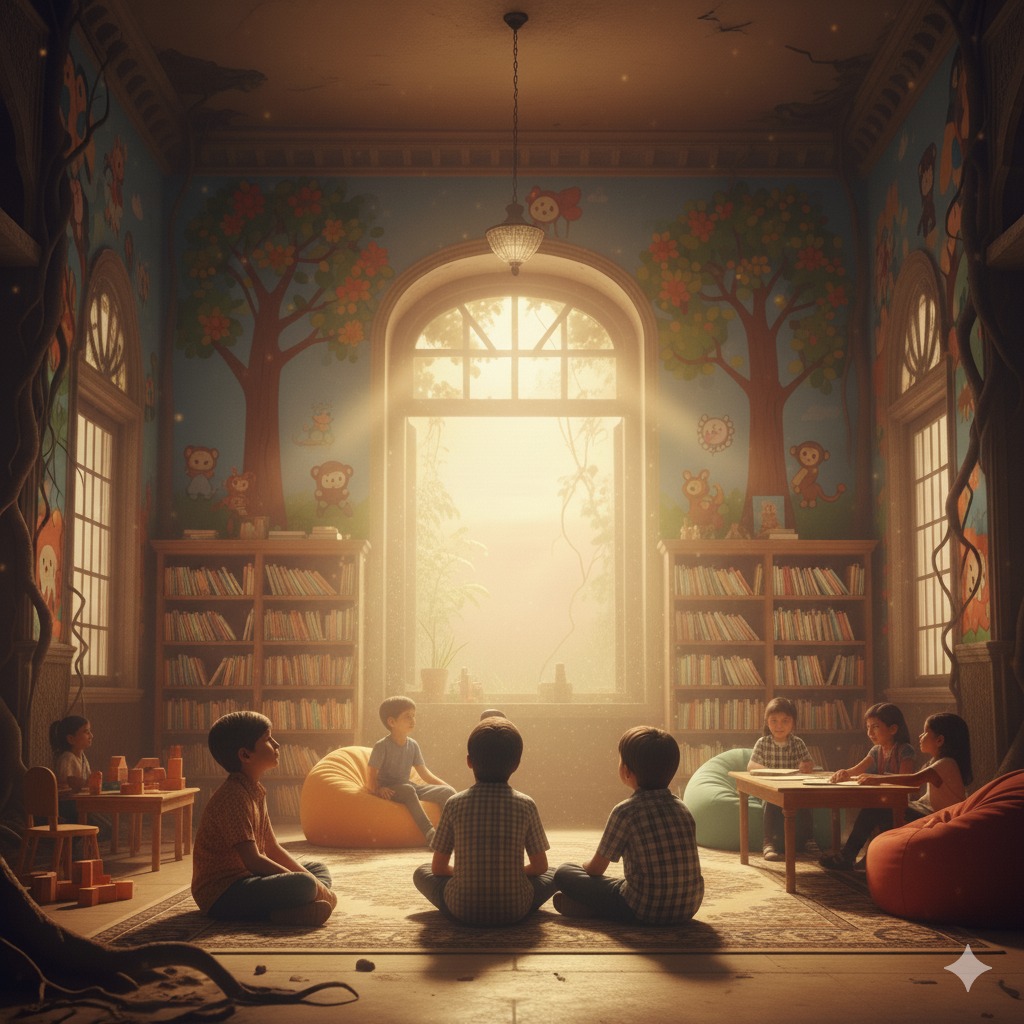
कानपुर शहर के बाहर, एक छोटे से रेलवे स्टेशन से थोड़ी ही दूर, पुरानी कॉलोनी के आख़िरी सिरे पर एक जर्जर हवेली खड़ी थी। उस हवेली की टूटी दीवारों पर पीपल की जड़ें उग आई थीं। खिड़कियों के शीशे धूल और जाले से ढक गए थे। शाम ढलते ही ऐसा लगता था जैसे वहाँ हवा भी धीमे कदमों से चलती है।
उसी हवेली के पास आरव, रेहान और कियान क्रिकेट खेल रहे थे। आरव ने ज़ोर का शॉट मारा — गेंद सीधी हवेली की बड़ी काँच की खिड़की से जा टकराई। तेज़ कड़कड़ाहट हुई और शीशा बिखर गया।
रेहान और कियान चिल्लाए — “जिसने मारा है, वही लाएगा!”
आरव दौड़ते हुए हवेली की ओर गया। उसने डरते हुए खिड़की से झाँका, जहाँ शीशा टूटा था, वहाँ से हाथ डालकर खिड़की की सिटकनी खोली और अंदर चला गया।
जब काफ़ी देर बीतने पर भी आरव बाहर नहीं लौटा, तो रेहान और कियान भी हवेली की उस खिड़की के पास गए। उन्होंने तीन-चार बार आरव को आवाज़ दी, पर कोई जवाब नहीं आया। अपने दोस्त को ढूँढने के लिए खिड़की के रास्ते अंदर जाने के अलावा उनके पास और कोई चारा नहीं था।
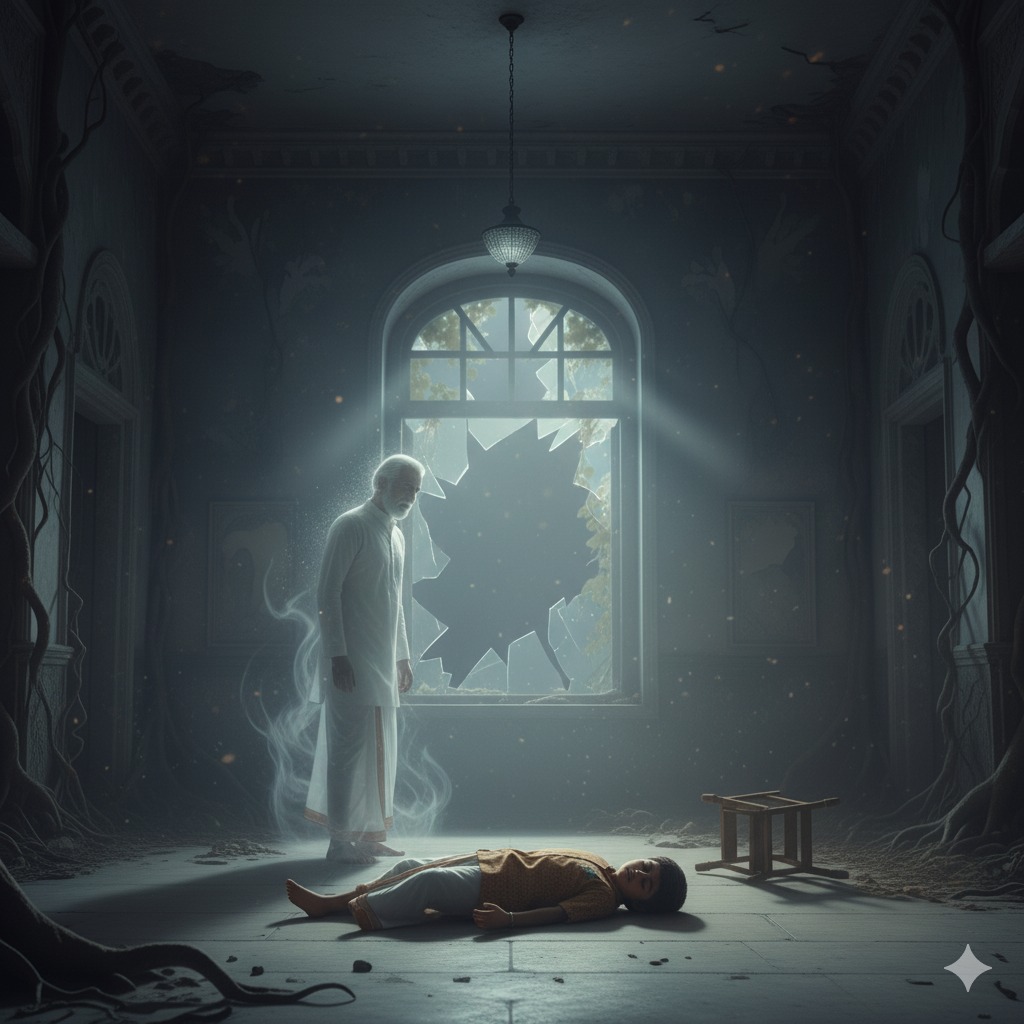
अंदर केवल अँधेरा, सीलन और सन्नाटा था। रेहान ने अपने फ़ोन की फ्लैशलाइट जलाई। हॉल के बीचोंबीच ज़मीन पर आरव बेहोश पड़ा था — माथे से हल्का खून निकल रहा था। और उसके पीछे, दीवार के पास एक लंबी, पतली परछाई हिल रही थी।
“डरो मत बच्चों,” आवाज़ आई,
“इसे मैंने नहीं गिराया। यह खुद मेज़ से टकरा गया था।”
रेहान काँपते हुए बोला — “आप... आप... भूत हैं?”
आकृति मुस्कुराई — “हाँ, हूँ। लेकिन डरने की ज़रूरत नहीं।
अगर तुम मुझसे एक वादा करो, तो तुम्हारा दोस्त अभी ठीक हो जाएगा।”
“कौन-सा वादा?” कियान ने पूछा।
“बस इतना कि रोज़ खेल के बाद कुछ देर मेरे पास आना... बात करने के लिए।”
वे दोनों कुछ समझ नहीं पाए, पर सिर हिला दिया। अगले ही पल आरव की साँसें सामान्य हो गईं। उसके माथे की चोट ऐसे गायब हो गई जैसे कुछ हुआ ही न हो। वह उठ बैठा, पर आकृति को देखकर घबरा गया।
रेहान ने कहा — “आरव, डरो मत। ये भूत अंकल हैं, इन्होंने ही तो तुम्हें ठीक किया है।”
उस सफ़ेद रंग की आकृति ने सहमति में सिर हिलाया, जो अब एक बूढ़े आदमी जैसी लग रही थी।
कियान ने पूछा — “भूत अंकल, क्या हम लोग अब घर जा सकते हैं?”
भूत बोला — “हाँ, क्यों नहीं। पर कल आना मत भूलना।”
बच्चे अपनी गेंद लेकर वहाँ से निकल गए। अपने घर में बच्चों ने कुछ नहीं बताया, क्योंकि उन्हें डर था कि कहीं घर वाले उनका क्रिकेट खेलना ही न बंद करा दें।
अगले दिन, खेल ख़त्म होने के बाद जैसे ही वे तीनों हवेली के पास से गुज़रे, हवेली की टूटी खिड़की अपने आप खुल गई। अनमने ढंग से तीनों बच्चे उसी खिड़की से हवेली के अंदर गए। अंदर वही आकृति सफ़ेद धोती-कुर्ता पहने, एक बुज़ुर्ग आदमी के रूप में उनके पास मानो खिसकते हुए दूर से पास आ गई।
“आओ बच्चों,” उसने स्नेह से कहा,
“आज क्या खेला?”
आरव ने हिम्मत करके पूछा — “अंकल, आप कौन हैं?”
बूढ़े भूत ने धीरे से कहा — “मेरा नाम शरत चंद्र दासगुप्ता है। मैं यहीं पास के स्टेशन में स्टेशन मास्टर था और कभी इसी हवेली में अपनी पत्नी के साथ रहता था। मेरा एक बेटा था, जो पढ़ाई के लिए इंग्लैंड चला गया। वहीं नौकरी की, शादी की और बस गया।
एक बार वह अपनी बीवी और आठ साल के बेटे के साथ यहाँ आया था — मेरा पोता, अनिर्बन।”
वह बोलते-बोलते ठहर गया।
“मेरी पत्नी उसे देखकर बहुत खुश रहती थी। दिनभर उसके लिए कुछ न कुछ पकाती रहती, और मैं उसके साथ खेलता था। जाते वक़्त मेरे बेटे ने कहा था — ‘अब हर साल आऊँगा, बाबा।’
लेकिन वह फिर कभी नहीं आया। इसी बीच मेरी पत्नी चल बसी... और मैं अकेला रह गया।”
कुछ पल की ख़ामोशी के बाद वह बोला —
“एक दिन, 1973 में, यहीं खिड़की के पास बैठा-बैठा... मैं भी चला गया।”
उसकी आवाज़ अब ठंडी हवा जैसी लग रही थी।
“मेरा बेटा तब भी नहीं आया। मेरा अंतिम संस्कार भी रिश्तेदारों ने किए।”
तीनों बच्चे चुप थे। हवेली का अँधेरा अब डरावना नहीं, बस उदास था।
कई दिनों तक वे बच्चे रोज़ हवेली आते रहे। भूत अंकल उन्हें अपने पुराने किस्से सुनाते, अपने पोते की बातें बताते। एक दिन रेहान ने कहा — “अंकल, अगर आपका बेटा या पोता अभी ज़िंदा हैं, तो हमें उन्हें ढूँढना चाहिए।”
भूत ने दुखी मन से कहा — “काश! ऐसा हो पाए।”
बच्चों ने इंटरनेट पर खोज शुरू की। बहुत खोजने पर एक लेख मिला —
“From Kanpur to London: My Roots.”
लेख के लेखक थे Dr. Anirban Dasgupta — लंदन के प्रसिद्ध हार्ट सर्जन। उन्होंने लिखा था कि उनके दादा का घर कानपुर में था।
रेहान ने लेख के अंत में दिए गए ईमेल पते पर तुरंत लिखा —
“सर, हमें लगता है आपकी जड़ें उसी हवेली में हैं जहाँ हम खेलते हैं। वहाँ कोई है जो अब भी आपका इंतज़ार कर रहा है।”
दो महीने बाद, हवेली के सामने एक कार आकर रुकी। उससे एक साठ साल के बुज़ुर्ग और एक छोटा पाँच साल का बच्चा उतरे। वे थे डॉ. अनिर्बन दासगुप्ता — भूत अंकल के पोते, और उनके साथ था उनका पोता। तीनों बच्चे उन्हें अंदर ले गए।
हॉल में हल्की सी हवा उठी। टूटी खिड़की से आती धूप फैल गई, और सामने, सफ़ेद धोती-कुर्ता पहने वही भूत खड़ा था।
“बाबा...” डॉ. दासगुप्ता की आवाज़ काँप गई — “मैंने बहुत देर कर दी। माफ़ कर दीजिए। आपके जाने के दस साल बाद मम्मी-पापा भी गुज़र गए और मैं व्यस्त हो गया।”
भूत मुस्कुराया।
उसकी नज़र अपने पोते और फिर उस छोटे बच्चे पर गई।
धीरे से बोला — “मेरी पीढ़ियाँ मेरे सामने हैं... अब मैं सच में अकेला नहीं हूँ।”
वह झुका, परपोते के सिर पर हाथ फेरा, फिर बच्चों की ओर देखकर कहा —
“धन्यवाद बच्चों... तुमने मुझे मेरे लोग वापस दिला दिए।”
अनिर्बन ने अपने दादा की ओर देखते हुए कहा —
“अब मैं इस हवेली की मरम्मत कराऊँगा और अपनी बाकी की ज़िंदगी यहीं गुज़ारूँगा।”
भूत उनको देखकर मुस्कुराया और बोला —
“नहीं! तुम अपने परिवार के पास ही रहो। अपने पोते के साथ हँसो, खेलो। मैं नहीं चाहता तुम भी वही अकेलापन झेलो जो मैंने झेला है।”
अनिर्बन ने थोड़ा सोचने के बाद कहा —
“ठीक है बाबा, फिर मैं इस हवेली को बच्चों के पढ़ने और खेलने के लिए विकसित कर दूँगा। यहाँ एक कम्यूनिटी हॉल और एक लाइब्रेरी बनेगी।”
शाम की धूप टूटी खिड़की से अंदर आई। भूत आख़िरी बार मुस्कुराया —
“अब मेरी आत्मा को शांति मिल गई है।”
धीरे-धीरे उसकी आकृति धुंध में बदल गई। हवेली की हवा हल्की हो गई।
अब वहाँ डर नहीं था — बस सुकून था,
जैसे कोई अधूरी कहानी आखिरकार पूरी हो गई हो।
#ShortStory #HumanEmotions #HindiWriting #WritersOfX #StorytellersOfIndia #JigyasuWrites #अधूरी_कहानी
⏳ The Hidden Tunnel (Part–1)
✍️ — Jigyasu
Ajay and Rohan, both software engineers working in the same IT company, had joined a weekend trekking expedition in the Chamoli district of Uttarakhand. The path was surrounded by snow-capped mountains, tall deodar trees, and the silence of nature—broken only by the crunch of dry leaves under their shoes. But somewhere along the trail, they got separated from the rest of the group and lost their way.
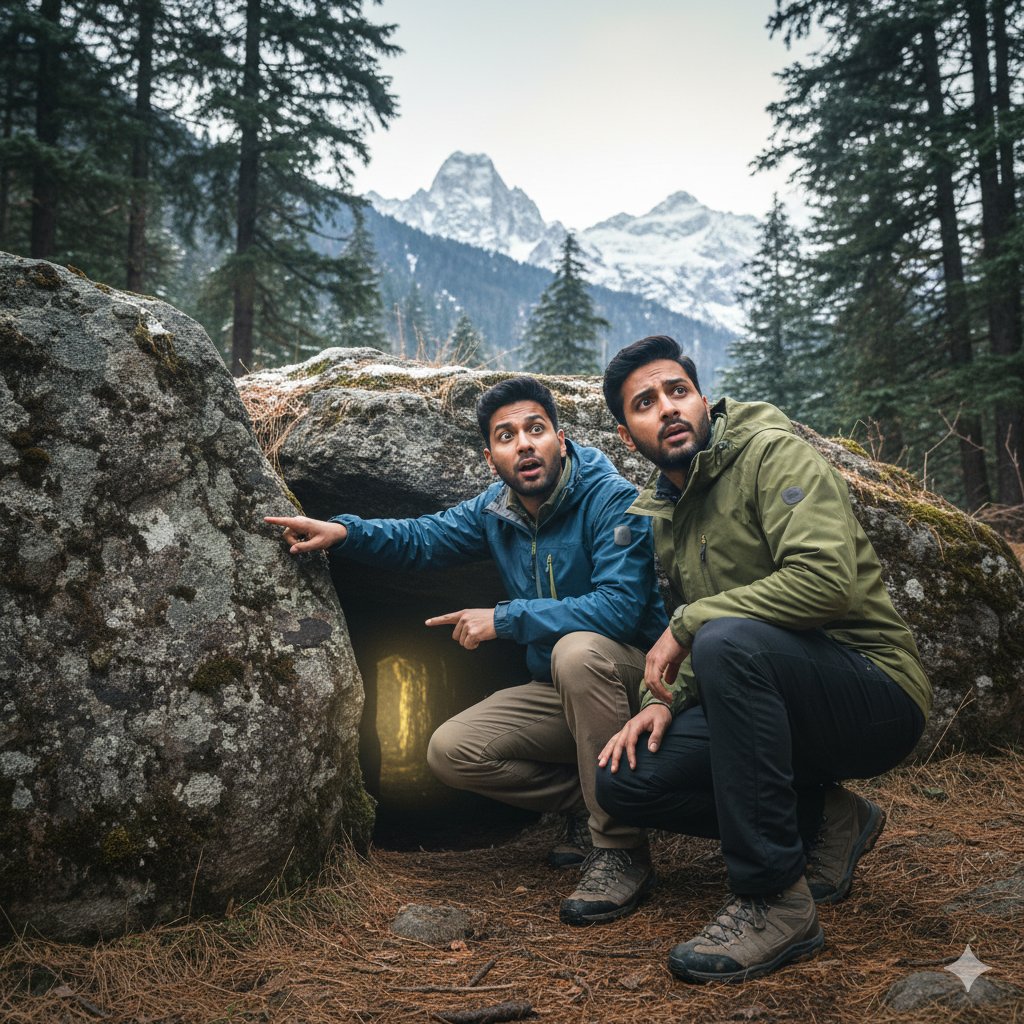
Tired and confused, they decided to take a break near a massive stone boulder on the hillside. Ajay sat down and opened his water bottle when something caught his eye—a dark opening behind the stone. It looked like a cave, wide enough for a person to crawl through.
“Rohan, look at this!” Ajay whispered, excitement replacing his fatigue.
They crouched and peeped inside. A faint light shimmered from deep within—as if the tunnel led somewhere unknown. Believing it was a short passage that might open up on the other side of the mountain—and thinking it would be fun—they decided to explore it.
They stepped in carefully. Surprisingly, the tunnel was not long at all. Within a few steps, they emerged on the other side. From where they stood, they could clearly see the same big stone where they had been resting.
“Strange… that was quick,” Rohan said, frowning.
Everything looked just the same—the cold breeze, the slope, and the view of the distant valley. Laughing it off, they assumed it was a small natural cave and nothing more.
Ajay took out his phone to call the rest of the group so they could rejoin the trek. No network. He moved around, climbed a rock, raised his phone toward the sky—still no signal.
“Let’s go back to the base camp. The tour operator’s office must be nearby,” Rohan said.
But the moment they reached the base, their hearts thumped loudly.
The tour operator’s office was gone.
In its place was just barren land with scattered stones. The paved road was now a muddy trail, rough and uneven. Bewildered, they walked towards the nearby town—but that, too, had changed.
Where there had once been concrete houses, hotels, and shops, now stood rows of mud huts with thatched roofs. No cars. No electric poles. No modern buildings. People wearing traditional clothes walked by, carrying firewood and clay pots.
Ajay and Rohan exchanged a terrified glance.
“Where are we?” Ajay whispered.
They walked cautiously into what seemed like the village center. A young woman was sitting beside a wooden stall, selling earthen pots.
“Madam,” Ajay said nervously, “Is this place Joshimath? And this is still Chamoli district, right?”
The woman looked at them with a curious smile.
“This is Jyoti Math, not Joshimath. And what is Chamoli? But… why are you both dressed so strangely? Are you actors from a natya manch(theatre group)?”
Ajay and Rohan stood speechless. Their trekking shoes, jeans, and jackets suddenly felt like costumes from another world.
#TimeTravelStory #MysteryAdventure #FictionWriting
#SciFiFantasy #ShortStory #JigyasuWrites
The story continues in another part.... stay tuned.
उम्मीदों का पेड़
✍️ — जिज्ञासु
एक बीस साल का युवक अपनी स्नातक की मार्कशीट लेकर एक पेड़ के नीचे बैठा है, पास में उसकी साइकिल पड़ी है। वह निराश है।
वह याद करता है कि पिछली बार जब बीएससी में फ़ेल हुआ था तो कितनी डांट पड़ी थी घर पर। किसी तरह फ़र्स्ट इयर निकला तो सेकंड इयर में फिर फ़ेल हो गया। उसने अपनी मम्मी से कई बार कहा था कि उसका पढ़ाई में मन नहीं लगता पर पिता जी से कहने की हिम्मत नहीं हुई।
गुड्डू के पिताजी गाँव के ही डाक खाने में डाक सहायक थे। उन्होंने बचपन से अपनी उम्मीदों का बोझ उस पर डालना शुरू कर दिया था। वो अक्सर कहते थे, "हम तो डाकिया रह गए, गुड्डू ही शायद पढ़ लिखकर कोई बड़ी नौकरी पा जाए।" गुड्डू को बचपन से ही पढ़ाई में ज्यादा रुचि नहीं थी, किसी तरह सेकंड डिविजन में बारहवीं पास किया। उसने कई बार कहा की बीए कर लेता हूँ पर नहीं, पिता जी जिद पर अड़े रहे कि करोगे तो बीएससी ही।
वह यह सब सोच ही रहा था कि देखा एक चींटियों का झुंड लाइन बनाए हुए पेड़ पर चढ़ रहा है। जैसे ही चींटियाँ ऊपर पहुँचती हैं एक कठफोडवा पक्षी कुछ चींटियों को खा जा रहा है। पर नीचे से लाइन टूट नहीं रही। सब एक के पीछे एक चले जा रहे हैं। उसको यह देखकर और आश्चर्य हुआ कि कुछ चींटियाँ कठफोडवा के पंखों के फड़फड़ाने की वज़ह से नीचे गिर जा रही हैं पर वो फिर से उसी लाइन में लगकर ऊपर चढ़ रही हैं। उनको देखकर उसने मुसकाते हुए हल्के से बोला, "बहुत बेवकूफ हैं ये चींटियाँ।"
तभी अचानक उसे आभास हुआ कि वो भी तो चींटी की ही तरह कार्य कर रहा है। जिस चीज में उसका मन नहीं लग रहा है, जिस रास्ते पर उसे बार-बार असफलता मिल रही है, वह उसी की तरफ बार-बार भाग रहा है। उसने दो बार असफलता खाई है, पर तीसरी बार फिर उसी बीएससीकी "लाइन" में लगने की तैयारी कर रहा है। वह हिम्मत नहीं कर पा रहा है कि बोल दे कि "अब मैं नहीं चढ़ूँगा तुम्हारी उम्मीदों के पेड़ पर..."
गुड्डू ने मार्कशीट को एक तरफ फेंका और उठकर खड़ा हो गया। वह कुछ देर तक उस लाइनबद्ध झुंड को देखता रहा। चींटियाँ बार-बार गिरती थीं, पर हार नहीं मानती थीं। पर क्या उनकी दिशा सही थी? वे एक ही लक्ष्य के लिए बार-बार प्रयास कर रही थीं , पर अंत में उन्हें मिल क्या रहा था – मृत्यु ।
अचानक उसकी आँखें चमक उठीं। उसने चींटियों की दृढ़ता में प्रेरणा देखी, पर साथ ही यह भी समझा कि दृढ़ता सही दिशा में होनी चाहिए। चींटी की तरह हार न मानना महत्वपूर्ण है, लेकिन अगर रास्ता गलत है, तो उस पर लगे रहना केवल असफलता को दोहराना है। चींटियाँ अपना रास्ता नहीं बदल सकती थीं, पर गुड्डू बदल सकता था।
वह ज़ोर से हँसा। उसे तो पहले से ही पता था कि उसकी असफलता का कारण उसकी पढ़ाई में अरुचि थी, न कि बुद्धिमत्ता की कमी।
उसने पास पड़ी अपनी साइकिल उठाई। मार्कशीट जेब में डाली, पर इस बार मन में कोई निराशा नहीं थी, एक नई दृढ़ता थी। उसने मन में ठान लिया कि वह आज ही घर जाकर पिताजी से बात करेगा। वह उनसे कहेगा कि वह बीएससी नहीं कर सकता। वह यह भी बताएगा कि उसे क्या करना पसंद है—उसे गाँव के छोटे-मोटे मरम्मत के कामों में बहुत रुचि थी, और वह एक आईटीआई (ITI) कोर्स करके एक कुशल कारीगर बनना चाहता था।
"गिरना ठीक है," उसने साइकिल पर बैठते हुए खुद से कहा, "पर उठकर दोबारा गलत रास्ते पर दौड़ना बेवकूफी है।"
उसने एक गहरी साँस ली और पैडल मारा। इस बार उसकी गति में पहले जैसी थकावट नहीं थी, बल्कि एक नई, खुद की चुनी हुई दिशा की ओर बढ़ने का आत्मविश्वास था। आज से उसकी लड़ाई असफलता से नहीं, बल्कि अपनी बात सच्चाई से सबके सामने रखने से थी। उसने फैसला कर लिया था कि वह अब किसी और की उम्मीदों के "पेड़" पर नहीं चढ़ेगा, बल्कि अपने चुने हुए रास्ते पर चलेगा।
#ShortStory #HumanEmotions #HindiWriting #WritersOfX #StorytellersOfIndia #JigyasuWrites #उम्मीदों_का_पेड़
The Last Shade
✍️ — Jigyasu
It was June — the kind of heat that made even the stones sweat.
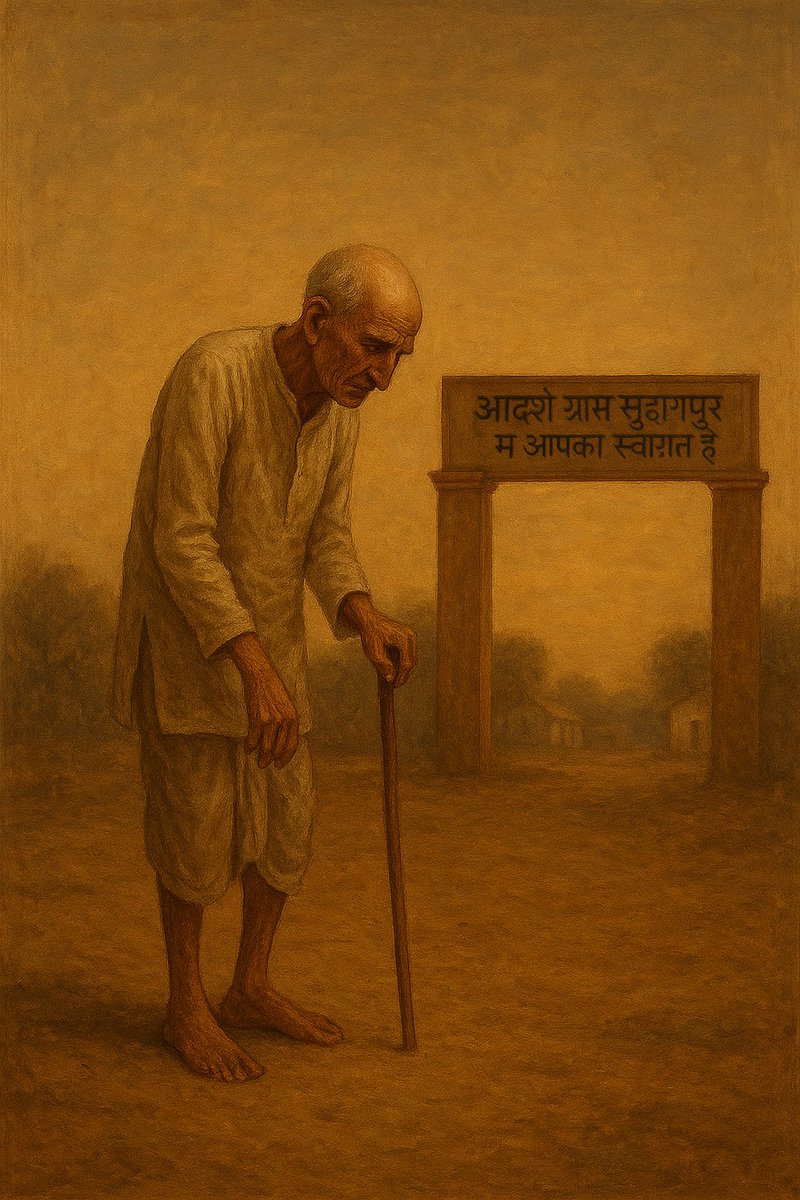
At the far corner of Suhagpur village stood an old banyan tree, half dry, its roots clutching the earth like tired fingers unwilling to let go. Beneath it sat another relic of time — Dadaji, bent like the curve of life itself.
At eighty-three, his back no longer stood straight. He often said the banyan and he were alike — both had seen their branches bloom and dry, both unsure how many more seasons they would endure.
His wife had left him twenty years ago, and since then, silence had become his closest companion.
He had two sons — one a schoolteacher, another running a grocery shop. Both were good men, settled, busy, dutiful. Only one grandson lived in the village handling farming activities. Rest grandchildren came only on festivals, with city accents and polite smiles. Dadaji never complained. He had stopped expecting warmth from life; the winter inside him was permanent now.
Every day, he carried a small jute sack, spread it beneath the tree, and sat there from morning till evening. Even when the sun burned the soil white, he preferred it to the suffocating comfort of walls.
That afternoon, his little grandson came running.
“Baba, come home. Lunch is ready.”
“Not feeling like eating today,” he said softly, eyes fixed on the horizon.
The boy went back and told his grandmother.
She muttered under her breath, “If he didn’t want to eat, couldn’t he say in the morning? Why waste food? These days, young people die before their time, but he—he’s taken a vow to outlive us all.”
Under the banyan’s shade, Dadaji smiled faintly — as if he had heard her through the wind. He closed his eyes and drifted into dreams — dreams of his younger days when this tree was lush and full of parrots, when laughter echoed and life still had color.
Now, everything around him was fading to sepia.
As the day dissolved into orange light, children began playing nearby. His great-grandson was among them — a tiny boy who, every night, held his Dadaji’s finger and guided him home through the dusk.
Tonight was no different. The old man followed the small hand that led him to his cot — a rickety old thing whose legs were crooked like his own.
Inside, his daughter-in-law asked sharply,
“Will you eat dinner or not? Don’t tell later that you wouldn’t.”
He smiled gently. “Not hungry. Maybe… just tea.”
“There’s no milk,” came the quick reply.
“Then give it without milk,” he said.
A few minutes later, he received a small pot of thin tea. He poured it slowly into his glass and drank in silence — sip by sip, as if swallowing the last warmth of life.
By morning, pain had curled inside his stomach. Weakness gripped his limbs.
“I’ll ask the doctor to see you,” his son said while leaving for school.
The doctor came in the afternoon, gave some pills, and advised rest.
A week passed.
The old man felt a little better and decided to visit his tree again.
He took slow, trembling steps, pausing often to catch his breath.
But when he reached the corner of the village, he stopped.
The banyan was gone.
Only a bare patch of earth remained — where once its roots had held the soil together.
In its place stood a freshly painted iron arch gate, bright and proud:
“आदर्श ग्राम सुहागपुर में आपका स्वागत है.”
“You are welcome in the Ideal Village”
For a long time, Dadaji stood staring at the empty space —
his wrinkled hand resting on the stick that once leaned against the banyan’s trunk.
The wind carried the dry scent of sawdust.
Something in him gave way — quietly, without pain, like an old branch snapping under its own weight.
He turned back, slowly, very slowly,
and walked home as the evening sun dimmed into an amber haze.
Reaching his verandah, he lay down on his crooked cot.
The same cot that creaked like tired roots under his weight.
He looked once toward the doorway —
perhaps imagining the banyan’s vast arms still sheltering him.
That night, no one called him for dinner.
The house was quiet.
In the morning, when the birds returned, they found both shades gone —
the tree, and the man who sat beneath it.
Only a patch of ground remained,
and beside it, his old jute sack — waiting for him to come back and sit again.
#TheFinalDropOff #JigyasuWrites #EmotionalStory #HeartTouchingTale #IndianShortStory #NightRide #KindnessLivesOn #StoriesThatHeal #ShortFiction #TheLastShade #ShortStory #LiteraryFiction #Fiction #WritingCommunity
टूटे तार
✍️ — जिज्ञासु
आज बर्तनों की दुकान पर बहुत भीड़ थी — धनतेरस जो था।
65 वर्षीय सेठ नरेश अपने ग्राहकों में व्यस्त थे। हर बर्तन को तौलते, और इलेक्ट्रॉनिक तराज़ू की रीडिंग को चश्मा नीचे खिसका कर पढ़ते। तभी अचानक बाहर हड़कंप मच गया। ग्राहकों की खरीदारी रुक गई, और नौकरों के हाथ से बरतन फिसलते-फिसलते बचे। ग्राहक और नौकर सब सड़क की तरफ दौड़ पड़े।
नरेश सेठ भी धीरे-धीरे वहाँ पहुँचे तो देखा — एक वृद्ध महिला सड़क किनारे गिरी हुई थी; किसी कार ने टक्कर मार दी थी। नरेश के कदम ठिठक गए।
चेहरा पहचानते ही जैसे वक्त थम गया— वो चेहरा, जो उनकी जवानी के हर सपने का हिस्सा था। उनकी आँखें चालीस साल पुरानी एक टीस को पहचानने में एक पल भी न चूकीं। लगा वीणा के टूटे तारों ने जुड़कर मन- मस्तिष्क पर एक ध्वनि उत्पन्न की।
वो रुक्मिणी थी… वही रुक्मिणी, जिससे मिले हुए लगभग 40 साल बीत चुके थे। बिना एक पल गँवाए, उन्होंने अपने नौकर को कार लाने को कहा, और खुद उसे अस्पताल ले गए। कुछ घंटे बाद जब रुक्मिणी को होश आया, नरेश अंदर गए।
वो मुस्कुराई — "कहीं तुम... नरेश तो नहीं?"
नरेश ने बस सिर झुका दिया।
"कैसी हो, रुक्मिणी?"
"ठीक हूँ..." — उसने धीमे से कहा। नरेश ने पूछा, "दिल्ली में कैसे?"
रुक्मिणी की आँखें नम हो गईं।
"क्या बताऊँ नरेश... किस्मत ने अपनी गलतियों की सजा दी है। शादी के कुछ साल सब ठीक चला, पर मेरे पति की जुए और शराब की लत ने सब खत्म कर दिया। कोई बच्चा भी नहीं हुआ हमारे। जब इंदौर का बिज़नेस खत्म हो गया तो दस साल पहले दिल्ली आ गए, पति करोल बाग में कपड़े की दुकान पर काम करने लगे । एक साल पहले उनकी मृत्यु हो गयी। कुछ फिक्स्ड डिपॉज़िट थे, कुछ दिन उनसे अपना खर्चा चलाया, अब वो भी खत्म होने वाले हैं, इसलिए लोगों के घर खाना बनाकर गुजर-बसर करती हूँ। आज भी किसी घर का सामान लेने निकली थी, तभी ये हादसा हो गया..."
कुछ पल की भारी चुप्पी रही। दोनों को लगा जैसे अतीत एक बार फिर सामने आकर खड़ा हो गया हो।
फिर उसने मुस्कुराते हुए पूछा, "और तुम? तुम्हारे बच्चे?"
नरेश ने हल्की मुस्कान के साथ कहा, "दो हैं। बेटी की शादी हो चुकी है, अमेरिका में रहती है। बेटा डॉक्टर बनने वाला है।"
"तुम हमेशा अच्छे आदमी थे, नरेश," रुक्मिणी बोली।
"अच्छा तो था, पर गरीब," — नरेश ने हँसते हुए कहा। रुक्मिणी की आँखें भीग गईं।
"काश... मैंने उस वक्त तुम्हारे प्रेम को समझा होता... तो ज़िन्दगी कुछ और होती।" नरेश ने उसका हाथ थामा — "जो विधाता को मंज़ूर होता है, वही होता है।"
"कल फिर आऊँगा मिलने," उन्होंने कहा और धीरे से चले गए। अगले दिन नरेश अपनी पत्नी के साथ अस्पताल पहुँचे। उन्होंने सब सच अपनी पत्नी को बता दिया था।
नरेश की पत्नी ने बड़ी सहजता से रुक्मिणी का हाथ थामा और कहा —
"दीदी, आप हमारे घर चलिये और अब वहीं रहिए। ” पर रुक्मिणी का आत्मसम्मान इसकी इजाजत नहीं दे रहा था। उसने विनम्रता से माना कर दिया। रुक्मिणी ने कुछ सोचकर कहा, “अगर आप हमारे घर नहीं रहना चाहतीं तो मेरे वृद्धाश्रम में आइए। मैं वहाँ काम करती हूँ, आपके जैसी ममता की वहाँ बहुत ज़रूरत है।" रुक्मिणी ने पहले मना किया, पर उनकी स्नेहभरी आवाज़ और निस्वार्थ प्रेम ने उसे रोक लिया।
वो उनके साथ चल पड़ी। कुछ महीनों बाद, वृद्धाश्रम में रुक्मिणी रोज़ लोगों से भजन गवाती, और शाम को तुलसी के पास दीप जलाती। कभी-कभी सेठ नरेश भी वहाँ आते, कुछ देर चुपचाप बैठते, रुक्मिणी को दूर से देखते, फिर बिना कुछ कहे लौट जाते।
कहते हैं, सच्चा प्रेम उम्र का नहीं, आत्मा का होता है — जो सांसों से नहीं, यादों से जिंदा रहता है।
#ShortStory
#LoveBeyondTime
#HumanEmotions
#HindiWriting
#WritersOfX
#StorytellersOfIndia
#OldLoveNewTears
#JigyasuWrites
The Final Drop-Off
✍️ — Jigyasu
It was past midnight. The streets were almost empty, the lamps flickering faintly under a misty sky. Raghu, an autorickshaw driver, was returning home after dropping his last passenger. The night was cold and silent, the kind that made even the hum of his rickshaw sound lonely.
Suddenly, his headlights caught sight of something on the road — a man lying motionless by the roadside. Startled, Raghu stopped the rickshaw and rushed towards him. The man, in his forties, was bleeding slightly from his forehead. Raghu sprinkled water on his face. After a few seconds, the man stirred and whispered weakly,
“I was… hit by a car…”
“Don’t worry,” Raghu said, helping him sit up. “I’ll take you to the hospital right now.”
He lifted the man carefully into the rickshaw. “Hold on tight, bhaiya. We’ll reach soon.”
“Do you… remember the car’s number?” Raghu asked, as the rickshaw moved through the sleeping city.
The man shook his head slowly. “No… I just remember… bright lights… and then darkness.”
As they sped towards the hospital, the man looked at Raghu with tired eyes. “You’re a good man. So many cars passed by… no one stopped. You did.”
Raghu smiled faintly. “We’re all humans, bhaiya. How could I leave you there?”
Within minutes, they reached the hospital gate. But the man suddenly said, “No… not here. Please… take me back to where you found me.”
Raghu frowned. “What are you saying? You have open wounds. The doctors—”
“Please,” the man interrupted softly, “just take me back. That’s all I ask.”
Something in his tone made Raghu uneasy, yet he agreed. He turned the rickshaw around, puzzled but obedient.
As they neared the spot, the man spoke again — calmly, almost peacefully.
“Raghu… doctors are no more required. I am… dead now.”
Raghu’s heart skipped a beat. “What nonsense!” he said, forcing a shaky laugh. “You’re joking, right? Don’t scare me like this.”
He turned back — but the seat was empty.
The man was gone.
Raghu slammed the brakes and stepped out. His trembling eyes scanned the road — and froze. The same man lay there again, exactly in the same spot, lifeless and still.
Gathering his courage, Raghu walked closer. The figure slowly rose, but now it wasn’t human — pale, translucent, glowing faintly in the dark.
“Raghu,” the ghost said gently, “you are a good man. Ten years ago, I died here in an accident. The car that hit me fled. No one stopped. Every year, on this night, I return — to see if anyone would. Tonight, you did. My soul has found peace at last.”
He smiled — a calm, grateful smile — and then, before Raghu’s eyes, the figure faded into the night air.
Raghu stood there, shaken yet strangely serene. The road was empty again, the silence deeper than before.
He started his rickshaw slowly and whispered to himself,
“Maybe… sometimes even the dead just need kindness.”
And somewhere above, a soul finally rested.
#TheFinalDropOff
#JigyasuWrites
#EmotionalStory
#HeartTouchingTale
#GhostStory
#IndianShortStory
#HumanityStillExists
#UrbanTales
#NightRide
#KindnessLivesOn
#AutoRickshawStory
#StoriesThatHeal
#ShortFiction
#CompassionInTheDark
नियति का खेल
✍️ — जिज्ञासु
रवि अपने गाँव का एक होनहार लड़का था। गरीबी उसकी सबसे बड़ी साथी थी, लेकिन उसने कभी हार नहीं मानी। दिन में खेतों में काम और शाम को बच्चों को ट्यूशन पढ़ाकर, वह अपनी पढ़ाई की राह खुद बना रहा था।
यह उसके स्नातक का अंतिम वर्ष था। कुछ ही दिन में फीस भरनी थी, मगर इस बार घर में दो लोग बीमार पड़ गए। जो थोड़ी-बहुत जमा पूँजी थी, दवाइयों में खत्म हो गई।
आज फीस भरने की आख़िरी तारीख़ थी — और रवि की जेब खाली थी।
उसने आसमान की ओर देखा और बुदबुदाया —
“कितना अभागा हूँ मैं… मेहनत करने पर भी किस्मत साथ नहीं देती। शायद गरीबी ही मेरा भाग्य है।”
वह घर के पास एक ऊँचे टीले पर बैठा था — थका, टूटा, और निराश। कुछ देर बाद उठा और चुपचाप चलने लगा। उसके विचार भविष्य की अंधेरी गलियों में खोए हुए थे कि अचानक पैर फिसला —
“अरे!”
और देखते ही देखते वह पास के एक सूखे कुएँ में जा गिरा।
धप्प!
कुआँ बहुत गहरा तो नहीं था, पर गिरने का झटका काफी था। अँधेरा और ठंड ने डर को और बढ़ा दिया। रवि ने दीवार का सहारा लेकर खुद को सँभाला। तभी उसके हाथ में कुछ अटक गया — एक पुरानी सी पोटली।
डर के बीच उसने उसे कसकर पकड़ लिया और खुद से कहा —
“बाहर निकलना होगा… अभी नहीं तो कभी नहीं।”
वह धीरे-धीरे दीवार की टूटी ईंटों का सहारा लेकर ऊपर चढ़ने लगा। हर कदम पर हाथ छिलते, ईंटें खिसकतीं, पर हिम्मत कायम थी। आखिरकार वह कुएँ के मुहाने तक पहुँचा और हाँफते हुए बाहर आ गया।
थोड़ी देर वहीं ज़मीन पर बैठा रहा — थका हुआ, पर ज़िंदा। फिर अचानक उसकी नज़र अपने हाथ की पोटली पर पड़ी।
उसने पोटली खोली — और पल भर के लिए उसकी साँसें थम गईं।
अंदर छोटे-छोटे, पुराने सोने के सिक्के थे — असली, चमकते हुए सोने के सिक्के।
रवि की आँखों में आँसू आ गए।
एक पल पहले जो कुआँ उसके लिए मौत का डर था, वही अब जीवन का वरदान बन गया था।
वह मुस्कुराया और आसमान की ओर देखकर बोला —
“तू सच में खेल तो बड़ा अजी खेलता है। पहले गिराता है, फिर उठाने का कारण भी खुद ही बन जाता है।”
उस दिन रवि ने जाना —
कभी-कभी जब हम सबसे नीचे गिरते हैं,
तो वही गिरना हमें ऊपर उठाने की शुरुआत बन जाता है।
#नियति_का_खेल
#JigyasuStories
#HindiStory
#ShortStory
#MotivationalStory
#LifeLessons
#FateAndFaith
#StoryOfHope
#InspirationInWord
#JigyasuWrites