Most retire at 65—Colonel Sanders was just getting started. After losing his restaurant to a highway bypass, living on $105 a month, and sleeping in his car while pitching his chicken recipe to 1,009 restaurants, he finally got a yes. His secret spices and pressure-cooking method grew into a billion-dollar empire. Age doesn’t matter when you refuse to quit.
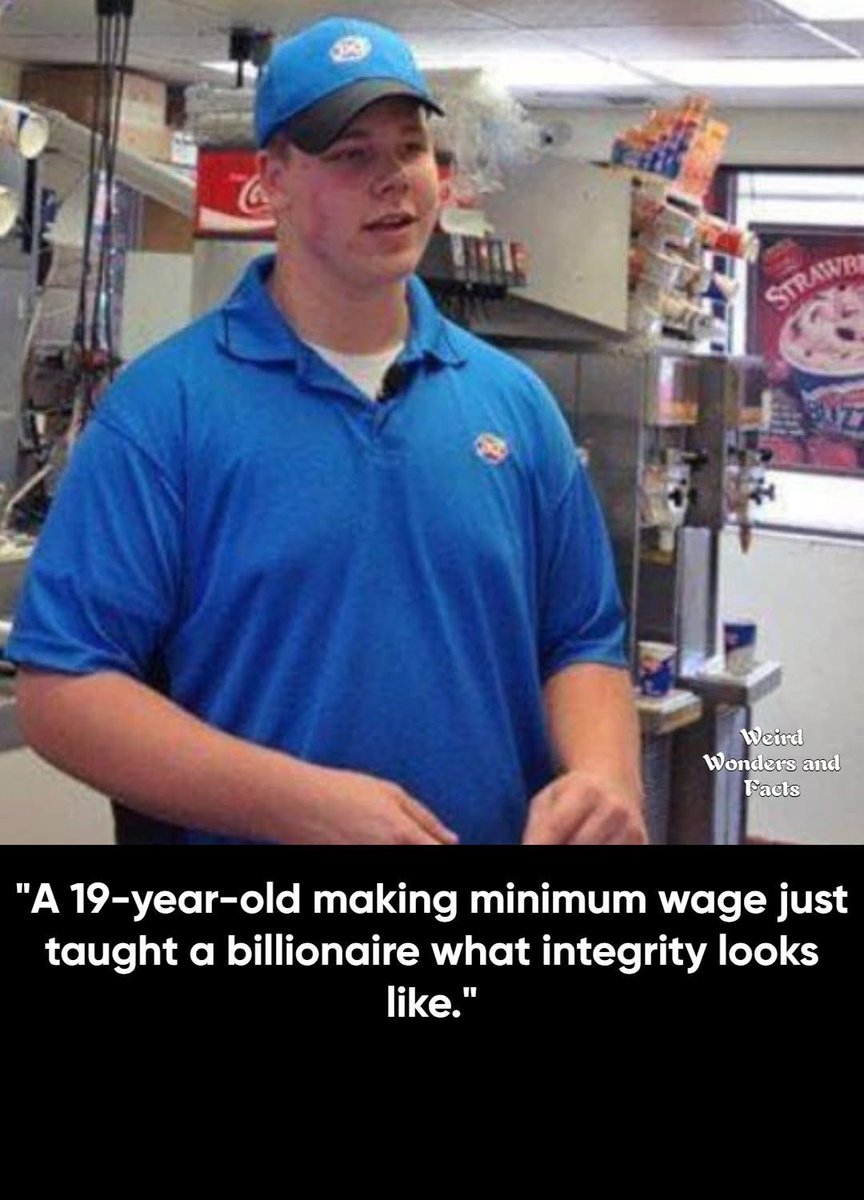
A 19-year-old making minimum wage just taught a billionaire what integrity looks like.
Joey Prusak was working the counter at a Dairy Queen in Hopkins, Minnesota, when he noticed something that made his stomach turn.
A blind customer had just finished ordering. As the man turned to walk away, a $20 bill slipped from his pocket and floated to the floor. He had no idea.
Joey expected what would happen next. The woman standing behind the blind man would tap his shoulder and hand him his money back.
That's not what happened.
Instead, she looked directly at the blind man struggling to put his wallet away. She watched him walk past her. Then she bent down, picked up the $20, and slipped it into her purse.
Joey couldn't believe what he just witnessed.
When the woman stepped up to the counter to order, Joey did something that could have gotten him fired. He looked her in the eye and asked her to return the money to the man she had just stolen from.
She refused.
She claimed the $20 was hers. She said she had dropped it herself.
Joey asked again. She refused again.
So the 19-year-old manager made a decision. He told her plainly: "I'm not going to serve someone as disrespectful as you. Please return the money or leave this store."
The woman exploded. She started yelling. She cursed at him. But Joey stayed calm.
She stormed out without her ice cream.
But Joey wasn't finished.
He walked over to the blind man, who was sitting peacefully eating his sundae, completely unaware of what had just happened. Joey reached into his own pocket, pulled out a $20 bill from his own wallet, and handed it to the customer.
Joey made about $10 an hour. That $20 represented two hours of his work.
He didn't tell anyone about it. He didn't post about it. He just went back to serving customers.
But someone else in line had watched the entire thing unfold.
That customer went home and wrote an email to Dairy Queen. The email said: "I was in shock by the generosity that your employee had, taking his own money out of his own wallet to give to the customer because some other lady decided to steal something that wasn't hers. Joey has forever sealed my fate as a lifelong customer."
The store owner printed the email and pinned it to the employee bulletin board.
A coworker snapped a photo and posted it on Facebook.
Within days, Joey's story had traveled around the world.
Then something unbelievable happened.
Joey's phone rang. On the other end was Warren Buffett, one of the richest men in the world. Buffett's company, Berkshire Hathaway, owns Dairy Queen.
The billionaire didn't call to offer business advice. He called to say two words: Thank you.
"He thanked me for being a role model for all the other employees and people in general," Joey later said.
But the rewards kept coming.
Strangers started showing up at the store. A woman ran up to Joey with an envelope full of cash for his college fund. A man drove all the way from another town just to hand Joey $100, saying he deserved five times what he had given away.
Radio shows invited him on as a guest. Companies offered him jobs. The Minnesota Wild hockey team called and gave him a private suite for 20 of his closest friends.
All because a teenager refused to stay silent when he saw something wrong.
When reporters asked Joey why he did it, his answer was simple: "I was just doing what I thought was right. I did it without even really thinking about it."
He paused, then added something that stuck with people: "Ninety-nine out of 100 people would've done the same thing as me."
Maybe he's right. Maybe most of us would do the same thing.
But Joey Prusak is the one who actually did it.
He didn't have power. He didn't have wealth. He didn't have influence. He was just a teenager behind a counter, making $10 an hour, with nothing but his integrity and a $20 bill.
And that was enough to remind millions of people what doing the right thing looks like.
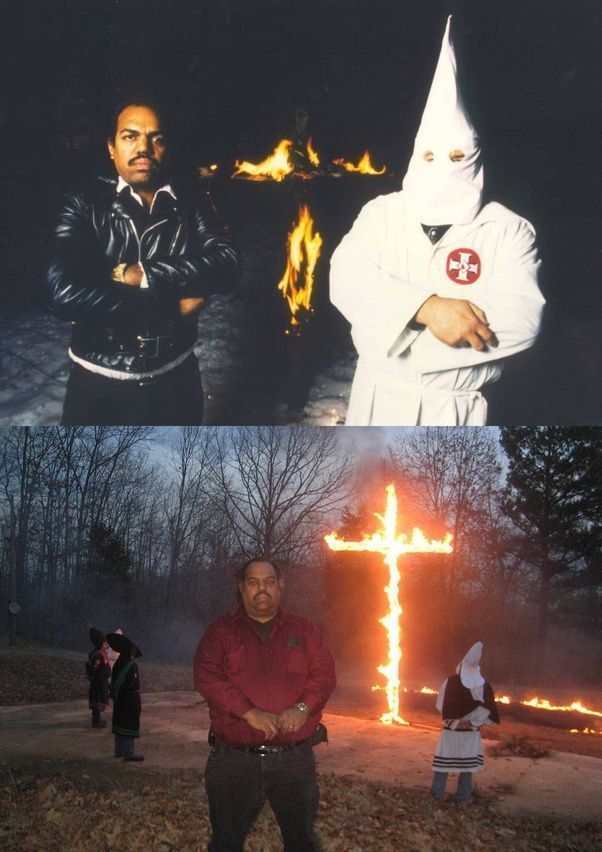
In the 1980s, musician Daryl Davis set out to understand the Ku Klux Klan. So he started befriending members at Klan rallies and joined an all-white country band.
Then, he met Imperial Wizard Roger Kelly. Davis spent years building a relationship with Kelly, establishing trust and, eventually, a friendship.
They ate meals at each other's homes while Davis listened to Kelly, seeking to see how he could hate a person like Davis without even knowing him. Eventually, Kelly started listening to Davis and left the Klan altogether, giving Davis his robes and hood. And over the past decades, Davis has now convinced over 200 former Klan members to walk away.
Must-see historical photos: https://t.co/dQjceOPkrz
No suplicó, no se doblegó: La última resistencia del sargento Leonard Siffleet
Algunas fotografías no congelan el tiempo.
Lo traspasan.
Esta es una de ellas.
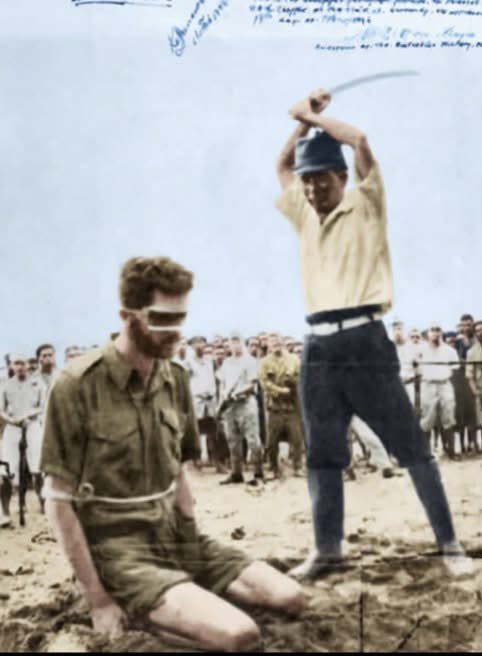
En octubre de 1943, en algún lugar de las implacables selvas de Papúa Nueva Guinea, un soldado australiano se encontraba al borde de la historia, atado, con los ojos vendados y rodeado de enemigos. Su nombre era Leonard Siffleet, sargento del Ejército australiano, y este fue el último momento de su vida.
Capturado durante los brutales combates de la campaña del Pacífico en la Segunda Guerra Mundial, Siffleet soportó semanas de cautiverio en condiciones diseñadas para quebrar tanto el cuerpo como el espíritu. Hambre. Palizas. Interrogatorios. La lenta erosión de la esperanza. Sin embargo, incluso después de la tortura y las privaciones, sus captores no lograron arrebatarle lo que más deseaban: su dignidad.
El 24 de octubre de 1943, lo llevaron a un claro remoto. Le ordenaron arrodillarse. Lo ataron de las muñecas. Le vendaron los ojos para que nunca viera el rostro del hombre que acabaría con su vida. Un oficial japonés estaba a su lado, espada en mano, preparado para ejecutarlo.
Y entonces llegó el momento que el mundo jamás olvidaría.
Una cámara hizo clic.
En esa única imagen, el sargento Siffleet no parece derrotado. Su postura es erguida. Su lenguaje corporal es sereno. No hay pánico visible, ni rastro de miedo. Incluso sin poder ver, se mantiene como un soldado debe hacerlo, enfrentando la muerte no con sumisión, sino con determinación. No es un desafío gritado con ira. Es un desafío vivido en silencio.
Momentos después, le arrebataron la vida.
La fotografía sobrevivió.
Sacada de contrabando y publicada después de la guerra, la imagen conmocionó al mundo. Eliminó la distancia entre los civiles y la realidad del teatro de operaciones del Pacífico. Mostró la guerra no como estrategia ni estadísticas, sino como un ser humano en sus últimos segundos, aferrándose al coraje cuando ya no le quedaba nada más.
El sargento Leonard Siffleet nunca regresó a casa. Nunca conoció la paz. Nunca supo que su último momento se convertiría en un símbolo de resiliencia, sacrificio y valentía silenciosa. Pero la historia lo recuerda no por cómo murió, sino por cómo enfrentó la muerte.
La guerra roba vidas, futuros y nombres. Pero a veces, en sus momentos más oscuros, revela la fuerza inquebrantable del espíritu humano.
Y en aquel claro, en 1943, con los ojos vendados y atado, un hombre le mostró al mundo lo que significa la verdadera valentía.