A Memory That Stayed with Me
A few years ago, a good friend of mine lost his wife. I remember one conversation with him. He was deeply upset because he was beginning to forget what her voice sounded like, and he had no recording of it. Those words stayed with me.
My friend has since died, but I have never forgotten what he said. At the time, I did not think his experience would apply to me. For many years, my wife and I went on two holidays each year, and I took plenty of photographs and recorded many videos. I assumed that would always be enough.
Sadly, my wife is now ill. She has been living with dementia for the past five years, and her ability to think and speak has changed drastically. I decided to go back through our old holiday recordings to hear her voice again. I was shocked to discover that, although I had hundreds of videos, most of them contained little or no conversation. I did manage to find a few short recordings of us speaking together, and they have meant a great deal to me.
Why I Am Writing This
The reason I am writing this is simple: do not wait until it is too late. If you have a loved one, record their voice. Have a real conversation with them, whether that is a short exchange, a longer discussion, or anything else that feels natural. Photographs matter, and videos matter too, but sometimes they are not enough. Hearing the voice of someone you love can bring them back in a way that pictures alone cannot.
Responding to Unexplained Noises at Home
What Should You Do If You Hear a Noise?
Imagine the scenario: you are home alone and suddenly hear a noise that seems to be coming from inside your home. In such circumstances, it can be difficult to know how to respond appropriately.
Assessing the Situation
While calling the police may seem like the obvious choice, it is not always practical. The police will likely require more information and may even expect you to investigate further before attending. It is not reasonable to expect them to respond if you are unsure of what you heard or if it could simply be an object that has fallen over. So, what should you do?
Involving a Friend or Family Member
One sensible option is to contact a family member or friend and keep them on the line as you investigate the source of the noise. Should you discover evidence of a burglary, you can then instruct your friend or family member to contact the police on your behalf. However, this approach is not without its challenges. You will naturally want to avoid alerting a potential intruder to your actions, so you will not be able to hold a conversation with your friend as you investigate the noise. If you confirm that someone is indeed in your home, you might say, "Call the police," but doing so increases the likelihood of being overheard by the intruder.
Using Pre-Agreed Colour Codes
A safer and more discreet method is to establish a set of pre-agreed colours as codes with your friend or family member.
For example:
Green: Everything is OK.
Amber: You are unsure but can hear something suspicious.
Red: Instruct your contact to call the police immediately.
Implementing the Colour Code System
As you investigate, you can periodically whisper "green" to your friend, who repeats the colour back to you for reassurance. If you hear another noise and become uncertain, you can whisper "amber" while your friend confirms the colour. If at any point you become convinced there is a burglar present, you whisper "red," prompting your friend to confirm that they are calling the police. If possible, your friend should use a separate phone to contact the authorities while keeping the line open to you, enabling continued communication.
Advantages of the Colour Code Approach
This system allows you to communicate your situation discreetly and efficiently. With just a single word, your contact knows exactly what action to take, minimising the risk of alerting a potential intruder. In contrast, calling the police yourself would involve making the call, answering numerous questions about what you have heard and giving your address, potentially increasing your exposure to risk.
Snatch and Run Crimes
Understanding, Prevention, and Advice
What Is a Snatch and Run?
Snatch-and-run crimes have affected many people, often as they go about their daily lives. These incidents typically occur when a person is walking to work or heading to a shop, and suddenly, seemingly out of nowhere, an individual appears, grabs their bag, and disappears within seconds.
How Snatch and Run Differs from Armed Robbery
It is important to distinguish snatch-and-run offences from armed robberies. In the case of a snatch and run, the perpetrator does not use a weapon to threaten the victim or force them to hand over their belongings. Instead, the thief relies on surprise and speed, often already running as they pass the victim or breaking into a sprint the moment they seize the bag. The element of surprise gives them a significant advantage.
Advice for Reducing Risk
There is a wide range of advice on how to protect yourself from snatch-and-run crimes. Suggestions include carrying your bag in front of you, letting the thief take the bag to avoid being pulled over during the robbery, and using a bag with a strong strap.
Possible Prevention Methods
While there is no guaranteed way to prevent a snatch-and-grab, certain strategies can lower the likelihood of falling victim to such a crime. For example, placing your bag between yourself and an obstacle, such as a wall, railing, or even a companion, can make it more difficult for a thief to access your bag. By positioning your bag as the 'filler' in the sandwich, you reduce its vulnerability.
Impact of Prevention Methods on the Thief
This approach means the thief would need to stop, grab the bag, and potentially engage in a tug-of-war. The perpetrator would have to snatch the bag, turn around, and run. He could not be certain who might be behind him, and if there were witnesses, they would have seen his actions. The thief would then have to escape towards these onlookers, which could discourage him from attempting the crime.
Why Snatch and Run Occurs
Bag snatching tends to be a matter of chance, as the thief usually has no knowledge of the bag’s contents. It is easier for a thief to follow a victim during their normal routine, then run past and grab the bag as they go.
No Set Rules, Only Principles
There are no definitive rules when it comes to bag snatching. The principle to remember is that a bag surrounded by open space is much easier to steal than one placed between a person and a wall.
Proving Residency: Quick Methods for Remote Verification
Proving Where You Live
The Challenge of Remote Address Verification
With the prevalence of scams and fraud in today’s society, verifying one’s identity and address when purchasing items online and arranging postal delivery has become increasingly difficult. Establishing genuine residency is often the most important step, yet it can be hard to do so quickly and reliably for someone in another city or country.
Example Scenario: Rose and Susan
Consider the case of Rose, who needs to prove to Susan at Susan’s Bangles that the address she provided is her true residence. To facilitate this, Rose asks Susan to pick a random letter and number. Susan selects ‘H’ and ‘7’.
Within a minute, Rose responds by sending Susan a photograph showing a woman standing inside a house, holding the chosen letter and number, ‘H’ and ‘7’. This demonstrates Rose’s access to the property and provides immediate visual confirmation.
Verifying the Address
To further validate the address, Susan uses Google Street View to compare the house in the photo with the one at the address Rose gave. If the features match, Susan can be reasonably sure that Rose is at the correct location.
Enhanced Verification: Live Streaming
For additional assurance, Rose could live-stream herself at the house as she speaks with Susan. This real-time interaction offers even greater confidence that Rose genuinely resides at the given address.
Conclusion
If Rose can demonstrate access to the property, and Susan confirms that the house matches the provided address using Google Street View, it is highly likely that Rose lives there.
SOMETHING HITS YOUR CAR
Scenario: An Unexpected Incident
Imagine you are driving alone at night. Suddenly, you hear a loud bang—something has struck your car. Concerned, you look for a safe place to pull over and check for damage. Conveniently, there is a parking space just ahead that seems suitable for stopping.
Assessing the Situation
You exit your vehicle, perhaps using your mobile phone as a torch, and begin inspecting your car for any signs of damage. It soon appears that something has been thrown at your vehicle, as there is damage.
The Hidden Danger
What you do not realise is that this situation may be a deliberate setup. Someone has intentionally thrown an object at your car, hoping you will stop in the nearby parking space. This location may have been chosen specifically, with accomplices waiting nearby to commit a crime, such as stealing your car.
Deciding What to Do Next
Faced with this scenario, you may wonder whether to continue driving or stop immediately. It is possible that there is genuine damage to your car, which could make it unsafe to drive further.
Staying Safe
In such circumstances, it is advisable to slow down and remain vigilant. Rather than stopping in the first available space, drive carefully to a well-lit area, such as a fuel station or shopping complex. Avoid stopping in the convenient space ahead, which may have been chosen by those intending to commit a crime.
Precautions When Stopping
Wherever you decide to stop, do not simply unlock your car and get out. Ensure you are not blocked in and that you can leave quickly if needed. Before exiting your car, observe the traffic around you. Has another car pulled in nearby? Who is driving it? Do you feel comfortable getting out of your vehicle?
Conclusion
Remain cautious, as some individuals deliberately throw objects at cars to make drivers stop at a location of their choosing, enabling them to commit unlawful acts. Always prioritise your safety and remain aware of your surroundings when faced with such situations.
Be Aware of Scammers
Online Shopping and Security Procedures
In the modern world, many people make purchases online. The usual process involves signing in with a username, followed by one of two security options: either entering a password or receiving a security code on your mobile phone, which you then input into the online form to verify your identity.
How Scammers Gather Information
Some scammers can obtain users’ personal details, such as their name or email address. They may also acquire the user’s phone number, which can be easily collected from something as simple as a business card or through a legitimate transaction. In addition, scammers sometimes obtain credit or debit card details from past transactions.
Limitations for Scammers
However, having this information alone does not enable scammers to bypass security, as the security code for transactions is always sent directly to the genuine user’s mobile phone.
The Scam Explained
Despite these security measures, fraud still occurs, often through a calculated gamble. The scammer initiates a purchase—typically for several hundred dollars—using the stolen username. When prompted to send a security code, the scammer pauses and does not proceed immediately.
The Phone Call Deception
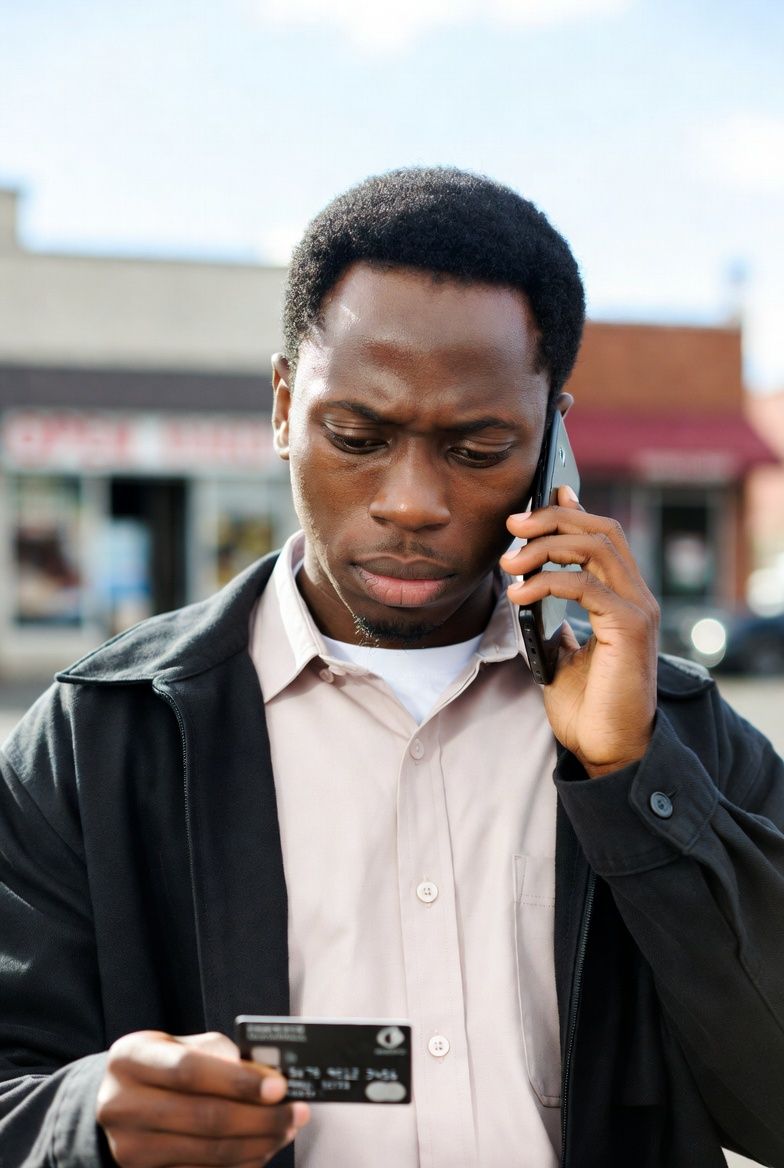
At this point, the scammer telephones the intended victim, claiming to be from the card company and asks to verify a suspicious transaction that is supposedly on hold. The scammer addresses the victim by name, which they have obtained from previous transactions or card details. They ask if, at a specific time that day, the victim attempted to purchase jewellery or another expensive item. When the victim denies making such a purchase, the scammer reassures them that the transaction has not gone through and requests further confirmation of their identity. The scammer then states that a code will be sent to the victim’s phone and asks the victim to read it aloud for verification.
Completing the Fraud
The scammer now returns to the shopping website and selects the option to send the security code. The genuine bank sends the code to the victim’s phone, which the victim, believing they are speaking to their bank, reads out to the scammer. The scammer then enters this code online and completes the fraudulent purchase.
Important Warnings
The bank's text message clearly states that the code should not be given to anyone. However, in the heat of the moment and concerned about potentially losing money, many users overlook this warning and provide the number, thus enabling the scam to succeed.
Why Not Give a Burglar the Keys to Your Home?
At first glance, the idea of handing a burglar your front door key seems absurd. Who would deliberately leave their keys for a burglar, or even place them under a mat or in a flowerpot? Such actions are almost an open invitation for a break-in. However, many homeowners unwittingly make it easier for burglars by failing to secure their property properly.
Some might argue, “If I’m not at home, how could I possibly be helping a burglar break in?” Unfortunately, this is a common misconception. In reality, many people have unknowingly helped burglars gain access to their homes by being careless or overlooking potential risks.
No one in their right mind would hand their keys to a burglar, as that would make things far too easy. But it’s worth considering what else might be left around the property that could help a burglar break in. For example, an unsecured item, such as a ladder or even an open window on the first floor, can be just as helpful to an intruder as a set of keys.
Even everyday items, such as a large refuse bin, can be used to help a burglar reach a roof or an upper window. A spade or garden fork left lying around could serve as a lever to force open doors, particularly patio doors, which are often less secure. A lump of concrete, paving slab, or loose brick can easily be used as a ram to smash windows or doors.
Sheds full of tools, especially those left unlocked, also present an opportunity for burglars. Homeowners often focus on securing the house itself but forget about gardens, pathways, and outdoor tools, all of which can inadvertently aid a break-in.
Gardens can offer burglars useful tools, but they can also be cleverly designed to deter intruders. Strategic use of plants—such as placing large, heavy planters or spiky shrubs below accessible windows—can make it more difficult for burglars to approach. These obstacles can force would-be criminals to take a more difficult route or even abandon their attempt.
Other deterrents include CCTV cameras or automated garden lights, which can make it much harder for a burglar to approach the house unseen or unheard.
There have been real-world examples of simple items being used in unexpected ways. On one occasion, a neat pile of sand in a garage turned out to be from a bag once empty was used to carry stolen tools. In another case, a loose stone from a garden wall was used repeatedly to ram doors and windows. Just last week, a homeowner recounted how a burglar used a lump of concrete from the garden to break in.
Even partially open windows can pose a risk. For instance, one client slept with her kitchen window open during hot weather, believing it was too small for a burglar to fit through. While she was correct in that regard, his son was able to climb through, demonstrating that even small openings can be exploited.
In this case, the homeowner had wisely deadlocked the front door, meaning a key was needed to open it from the inside. This prevented the burglar's son from letting his father in, forcing the father to break down the door to retrieve his child and to leave empty-handed as soon as he had retrieved his son.
Ultimately, people do not knowingly give burglars the means to rob them. However, homeowners often inadvertently help burglars by leaving their property vulnerable, underscoring the importance of vigilance against both obvious and subtle security risks.
Ditching a Date
When You Realise, He's Not the One
Imagine you're out in the evening with a group of friends and you meet a charming guy. After a bit of conversation and a few drinks, the two of you sit together to talk. However, it soon becomes clear that he's not the right one for you. So, what should you do in this situation?
Handling the Situation
You might feel confident enough to tell him directly that he's not for you and walk away, leaving him at the table. However, this can be easier said than done, especially if you're not comfortable with confrontation. Thankfully, there's an alternative approach.
Preparing Your Exit
Start by preparing in advance. Stick a label on the back of your mobile phone with your name and a fake telephone number. It’s important to make sure all your friends are in on the plan and know that Maria (or whichever name you've chosen) is not a real person.
Coordinating with Friends
If one of your friends is nearby, or even if not, you can wave your arm to signal for assistance. When a friend comes over, ask, “Is Maria feeling any better?”
This question acts as a signal to your friend, who will likely respond with something like, “No, she’s in the restroom and asked for you, but we didn’t want to disturb you.”
Making Your Exit
At this point, you can apologise to the man, explaining that you need to check on your friend and that you'll be back shortly. You and your friend then head to the restroom, where you switch off your phone. This gives you some breathing room to talk things through with your friends and decide what to do next—at least you've managed to get away from him for now.
Deciding What to Do Next
You might choose to move on to another venue, avoid returning to your original table, or come back and tell the man that you’re taking Maria home or that you’ll be in the restroom for a long time.
Getting Out Gracefully
The aim is to give yourself space to think and decide your next move. If you decide to say goodbye, the man may ask for your phone number. When this happens, you pull out your phone, which is switched off, and explain that you can never remember your number. Tap the screen—it doesn’t respond—apologise, and then have a Eureka moment, remembering that your name and number are on the back of your phone. You show this to the man, who sees your name and the fake number and writes them down. After this, you say goodbye and leave.
Fire Safety: The Importance of Staying Out
FIRE. WHEN OUT, STAY OUT.
The Dangers of Fire in the Home
Fire is a devastating event, and when it occurs in the home, the consequences are often tragic. Too many lives are lost simply because people do not leave the building immediately, or worse, they attempt to return after having escaped. Unfortunately, many fatalities occur either from people trying to tackle the blaze themselves or from re-entering the property after initially making it to safety.
Firefighting Equipment and Human Behaviour
In England, a government authority once decided to remove all fire extinguishers from the stairwells and landings of their apartment buildings. This sparked public outcry, resulting in their reinstatement. Some believed the removal was due to the cost of replacing extinguishers following acts of vandalism. However, the official explanation was that eliminating firefighting equipment would discourage residents from returning to apartments that were burning. Research has shown that the natural reaction when a fire is discovered is to evacuate, but the presence of extinguishers sometimes prompts people to re-enter and attempt to fight the flames—an action the authority sought to prevent.
The False Sense of Security and Its Consequences
While many people instinctively flee from danger, panic can lead to the right action—escaping the building. Yet, it is common for individuals to return, hoping to retrieve possessions such as pets or car keys. They mistakenly assume that the environment inside is unchanged, not realising that conditions can deteriorate rapidly. Upon re-entry, people often face deadly hazards like toxic smoke and superheated gases, which can prove fatal in moments.
The Risks of Trying to Save Property
It must be stressed that this advice does not suggest abandoning loved ones in a fire. The concern is for those who lose their lives attempting to save material belongings. For example, there was a case involving a young man who tried to put out a fire by soaking curtains and beating at the flames. Tragically, it was not the fire that killed him, but the fumes present in the room. In fact, he died in the kitchen, soaking the curtains in the sink; the kitchen was not burning at the time, demonstrating the lethal risk posed by smoke and gases.
A Simple but Vital Message
This article does not set out to provide detailed guidance on how to escape a fire, such as crawling low to the ground or closing doors behind you. Instead, it serves as a vital reminder: the building you leave during a fire will not be the same if you go back in. You will face more heat, more toxic gases, and more smoke. The most important point to remember is—once you are out, stay out.
Do You Ever Get That Sinking Feeling?
The Problem with Sinking Office Chairs
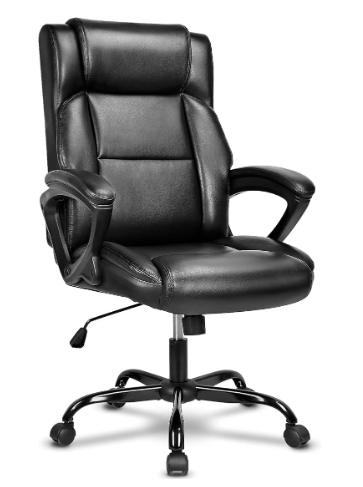
Many people are familiar with the frustration of sitting in an office chair that slowly sinks or lowers itself without warning. This common annoyance is typically caused by a failing gas strut in the chair’s mechanism.
How Adjustable Office Chairs Work
All office swivel chairs are equipped with an adjustable gas strut that allows the user to set the chair to their preferred height. To raise the chair, the user lifts their weight off the seat and pulls the lever located under one side of the chair, causing it to rise quickly. Conversely, pulling the same lever while seated lowers the chair.
Why Gas Struts Fail
Unfortunately, gas struts are not designed to last indefinitely. Over time, many people experience the infamous sinking feeling as the chair gradually drops as they sit. Often, the only temporary solution is to pull the lever and raise the chair again, only for it to sink once more. Eventually, this becomes a persistent problem, signalling that the gas strut needs to be replaced.
Fortunately, replacing the gas strut is a straightforward process that requires a hammer and a new gas strut.
Shared Chairs and Height Adjustment
Another source of frustration is when someone else uses your chair and adjusts its height to suit their needs. After you have carefully set the height for your comfort, you may return to find it changed, requiring you to readjust it again. While this is a quick fix, it can still be rather irritating.
Dedicated Chairs and Height Stability
If the chair is solely for your use, and not shared with others, you can set the height once and expect not to have to change it again. This is particularly the case for adults, as their height will not change over time.
Solutions for Sinking Chairs
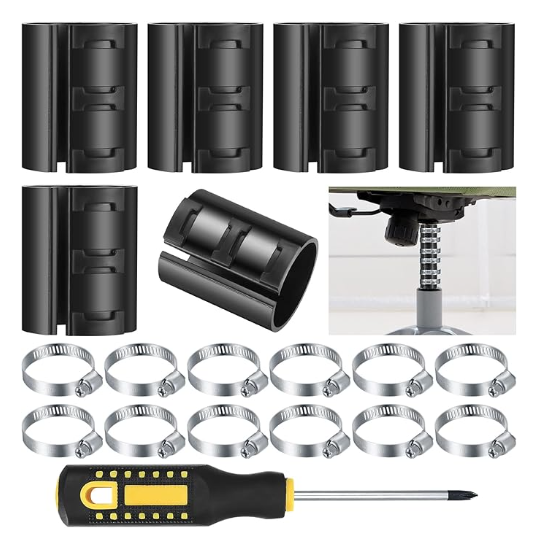
There are products available to help address the issue of sinking chairs. For example, Amazon offers a collar kit for around $8 that comes with a screwdriver and can be used on several chairs, depending on the number and size of the included collars.
How the Collar Kit Works
The kit contains black collars that can be cut to size if required, along with screw clips to secure them. The user sets the chair at the desired height, fits the collars around the upper part of the gas strut, and secures them with the provided clips. The chair can still be adjusted upward, but it will not be lowered below the position set by the collars. Even if the gas strut fails, the chair will remain supported by the collars and will not sink further.
My Approach to Stuffing a Chicken
Cooking Background
I run a security company and make no claims to be an exceptional chef. However, I am comfortable in the kitchen. My cooking style tends to be resourceful—more about making use of what is already in the cupboard rather than buying specific ingredients for each meal.
Rethinking Traditional Stuffing Methods
One aspect of cooking that has always puzzled me is the conventional method of stuffing a chicken. I have researched various techniques online, and most people appear to follow a similar process: they prepare the stuffing and then fill the chicken with it. I, however, prefer to do things differently and genuinely believe my approach yields better results.
Problems with the Traditional Method
When it comes to the standard way of adding water to stuffing mix and then pushing this wet, gooey mixture inside the chicken or turkey, a couple of issues arise. Firstly, you are essentially trying to force a paste into a cavity, but if you apply too much pressure, the stuffing oozes back out. Another challenge is that because I typically buy small chickens—just enough for my wife and me, plus two extra meals that I freeze, with any leftovers going to the cats—there isn’t much space to work with. These smaller birds often look a bit sad and unimpressive, as you can see in the photographs provided.
My Stuffing Technique
Here’s how I go about stuffing a chicken. I start by pouring boiling water into a jug and placing dry stuffing mix into another jug or jar—the vessel doesn’t matter.
Next, I pour the dry stuffing into the chicken until it is just over halfway full. Then, I add boiling water. At this stage, the water does not reach the bottom of the chicken, so the stuffing remains dry at the base. I use a flat knife to push into the chicken, encountering a crunchiness that feels like broken glass. As I add more water and continue using the knife, the dry crunching sound gradually stops as the water seeps down, indicating the stuffing is absorbing the moisture.
I repeat this process: add more stuffing, then more water, and continue poking with the knife until the crunchiness disappears. During this method, the chicken expands, creating more space for the stuffing.
Afterwards, I add more dry stuffing without additional water, pressing it firmly down with the flat knife. It appears the stuffing keeps disappearing, but what is really happening is that the chicken continues to expand, making room for more. Eventually, it becomes difficult to push any more stuffing in. At that point, I add a little more water—just enough to keep the stuffing moist but not soggy—then check with a knife to ensure there is no dry crunch left. Finally, I add one last thin layer of stuffing and compress it so that the finished stuffing is moist but not overly wet.
Securing and Cooking the Bird
While many professional cooks tie the chicken legs together with a string, I find this method problematic because it forces the thighs to rest on the chicken breast, resulting in uneven cooking. Instead, I use cocktail sticks to stitch the cavity closed or leave it partially open, which works perfectly well.
I roast the chicken in the usual manner. What I end up with is a bird generously filled with stuffing—much more than you would expect. In fact, there is often enough stuffing for a family of four or even five.
Presentation
Perhaps most importantly, when served at the table, the once-sad-looking bird now appears plump and impressive, as shown in the photographs. It looks much larger than it would if traditionally stuffed and makes for a much more attractive presentation.
Changing a Tyre Can Cost You Your Life
The Hidden Dangers of Changing a Tyre
Changing a tyre can be a perilous task, particularly if you find yourself in heavy traffic or on a dark road. While some drivers are fortunate enough to call a breakdown service for assistance, many are not so lucky and must tackle the job themselves.
There are no official statistics detailing injuries or fatalities that occur while changing tyres. In fact, some countries record these tragic incidents as pedestrian accidents. The risk increases significantly in hazardous conditions, such as heavy traffic, darkness, or when the flat tyre is on the side of the vehicle exposed to passing cars. These factors can make changing a tyre much more dangerous.
Safety Measures and Alternatives
If circumstances allow, a driver might attempt to slowly move the vehicle off-road before changing the flat tyre. However, this solution is not always feasible, as driving on a flat tyre is generally ill-advised and could worsen the situation.
Another Way
An affordable and potentially life-saving alternative is a temporary tyre inflator. This device typically consists of a can of compressed foam, a tyre tube, and a nozzle. Specific models require the user to keep a finger on the valve during inflation, a process that takes about a minute. However, even a minute can be too long if you are in a hazardous location. The example (Photo) shown is from a company called HOLTS; though there is no preference for this brand, the inflation process is straightforward and safe.
The user turns the valve at the top of the can, steps away from danger, and then, once the tyre is inflated, turns off the valve and removes the device. This procedure keeps exposure to risk to a minimum.
Price and Use.
The cost of these inflators varies, but around $10 is a reasonable estimate. Manufacturers claim you can drive at speeds up to 50 mph and for distances ranging from 50 to 100 miles after inflation. All users need to read and follow the instructions provided with the product.
An Unexpected Downside
One thing that suppliers do not mention is the reaction of the tyre fitter who must replace your tyre after you have used the foam. The fitter will need to remove all the foam from the wheel, a task that is unlikely to impress them.
Considerations for Men: Minimising Fear for Women in Public Spaces
Differences in Everyday Experiences
As a man, daily activities such as going to work, shopping, or simply moving about in public can typically be done with relatively little apprehension. While it is essential for everyone, including men, to remain aware of their surroundings and to take precautions against crime, the likelihood of a man being sexually assaulted by a woman is statistically low. For instance, in the United States in 2019, there were 6,920 female offenders of rape compared to 105,030 male offenders. This means that for every one female offender, there were approximately fifteen male offenders.
Women's Concerns in Public Spaces
Sadly, for a woman alone, particularly at night or in isolated areas, there is often a justified sense of apprehension regarding men in the vicinity. This concern is shaped by both personal experience and widely reported statistics.
The Role of Consideration
Of course, men have every right to occupy public spaces, such as streets and bus stops—there are no designated areas exclusive to men. However, the way men conduct themselves in these environments can have a significant impact on women’s feelings of safety.
Practical Suggestions for Considerate Behaviour
· At a bank cashpoint, if a woman is on her own, men need not queue directly behind her. Creating a respectful distance can help her feel more secure.
· When waiting at a bus stop with an isolated woman, a man could choose to wait outside the immediate shelter rather than standing right next to her.
· If walking on the same pavement behind a woman, it might be more considerate for a man to cross to the other side of the road or to overtake and walk ahead.
· In a multi-storey car park, if a group of young men approaches an elevator where a single woman is waiting, they could opt to take the next elevator instead of crowding in with her.
· Should a man wish to inform a woman driver about a faulty taillight, stepping away from her car window as she lowers it can help minimise her discomfort.
· Similarly, if calling at a home and a single woman answers the door, standing back from the entrance can be more reassuring.
Understanding Perspectives
It is important to remember that not all women feel fearful in these situations; some may be pretty comfortable, even engaging in conversation. However, men cannot always know who feels safe and who does not. Therefore, considering these situations from a woman’s perspective, rather than solely from a man’s, is a thoughtful way to help everyone feel more secure in public spaces.
Personal Safety and Self-Defence Strategies
Understanding the Risks
We live in an unfortunate society where, often, men target and assault younger women. Although this is not always the case—since both the perpetrator and the victim can vary—this is generally the situation encountered. There are instances where the victim receives no warning at all. For example, a woman might be walking down a dimly lit street on her way to her car when someone suddenly appears in the shadows.
However, not every attack follows this pattern. Frequently, the assailant is someone the victim knows, or perhaps someone who accompanies her and is regarded as little more than a nuisance—someone who seems harmless enough. The crucial issue is that, on certain occasions, the victim feels uneasy but is unsure how to proceed, especially when the aggressor is persistent and refuses to leave, even after being told to go away.
Practical Self-Defence Measures
In many situations, a female victim may carry perfume, which can serve as a makeshift self-defence tool. Medical guidance indicates that if perfume is accidentally sprayed into the eyes, they should be rinsed with room-temperature water for twenty minutes. A shower is preferable to a glass of water, as a continuous flow of warm water is recommended. Although spraying perfume in the eyes will sting, it is generally not expected to cause lasting damage, as some individuals might fear.
Therefore, if a woman feels threatened and is unable to convince a persistent male assailant to leave her alone, she can remain prepared by holding a bottle of spray perfume in her hand, ready to use it as a means of defence should the need arise. While this method cannot guarantee the prevention of all attacks, it is a straightforward form of self-defence that may give the victim enough time to escape.
Preparation and Legal Considerations
In preparation for the unlikely event that a perfume bottle might be needed as a defensive measure, it should not be buried at the bottom of a bag where it would be difficult to retrieve. Instead, while walking home or to a car, the perfume could be kept readily accessible, perhaps carried in hand just in case.
In some countries, it is legal to carry defensive sprays such as Mace or coloured foam. However, in many places, these items are not permitted by law and cannot therefore be used.
How Scammers Use Portable Card Machines
Understanding the Scam
Imagine someone claims they could scam you out of $100. You might think it’s impossible or that you’re too clever or experienced to fall victim. However, it’s worth understanding how such a scam can be carried out, so you can protect yourself.
Step-by-Step Breakdown of the Scam
Setting Up:
The scammer begins by creating a bank account, aware that it will be closed within a few weeks due to fraudulent activity. No overdraft facility is requested. An initial deposit of $1,000 is made into the account.
Acquiring the Equipment:
A card reader, costing around $30, is purchased. The relevant app for the card reader is installed on the scammer’s mobile phone.
Preparing Evidence:
The scammer enters various small amounts, such as $10, $25, or $50, into the app and takes screenshots of these amounts.
Finding Victims:
Next, the scammer goes door-to-door with different stories—claiming to be a roofer, plumber, electrician, or seller. The service or goods offered appear inexpensive and are presented as a bargain. The scammer dresses the part, matching the role they are pretending to be.
Persuading Payment:
The scammer invents a problem or reason for their services, such as needing to mow the lawn or fix the roof and persuades the homeowner to pay a small fee. The agreed-upon work is done genuinely.
Executing the Scam:
Using the mobile app, the scammer shows the customer one of the screenshots—for example, $25—making it appear as if that amount has been entered into the app. However, a much larger amount is entered. The scammer explains that, due to previous fraud involving dishonest staff, cash payments are not accepted. Only card payments are allowed, and swipe cards cannot be used. Customers must insert their card and enter their PIN to “prevent fraud”. (In fact, there is a limit for swipe card transactions, which the scammer wants to avoid.) The customer sees $25 (screenshot) entered on the phone app.
The Hide
To maintain the illusion of security and prevent the customer from seeing the actual transaction amount, the scammer holds the machine and turns away, covering the amount at the top of the machine's display with their thumb. The customer, reassured by the screenshot, inserts their card and enters their PIN, unaware that the actual amount entered is much higher than $25, possibly thousands of dollars. The scam is then complete.
How to Protect Yourself
· Offer to pay small amounts in cash whenever possible.
· Be wary if you are told you cannot swipe your card and must insert it with your PIN.
· Never allow any part of the card reader screen to be hidden; always check the amount displayed before entering your PIN.
Protecting Your Home: Disposing of Electrical Appliance Packaging Safely
The Risks of Displaying Valuable Items
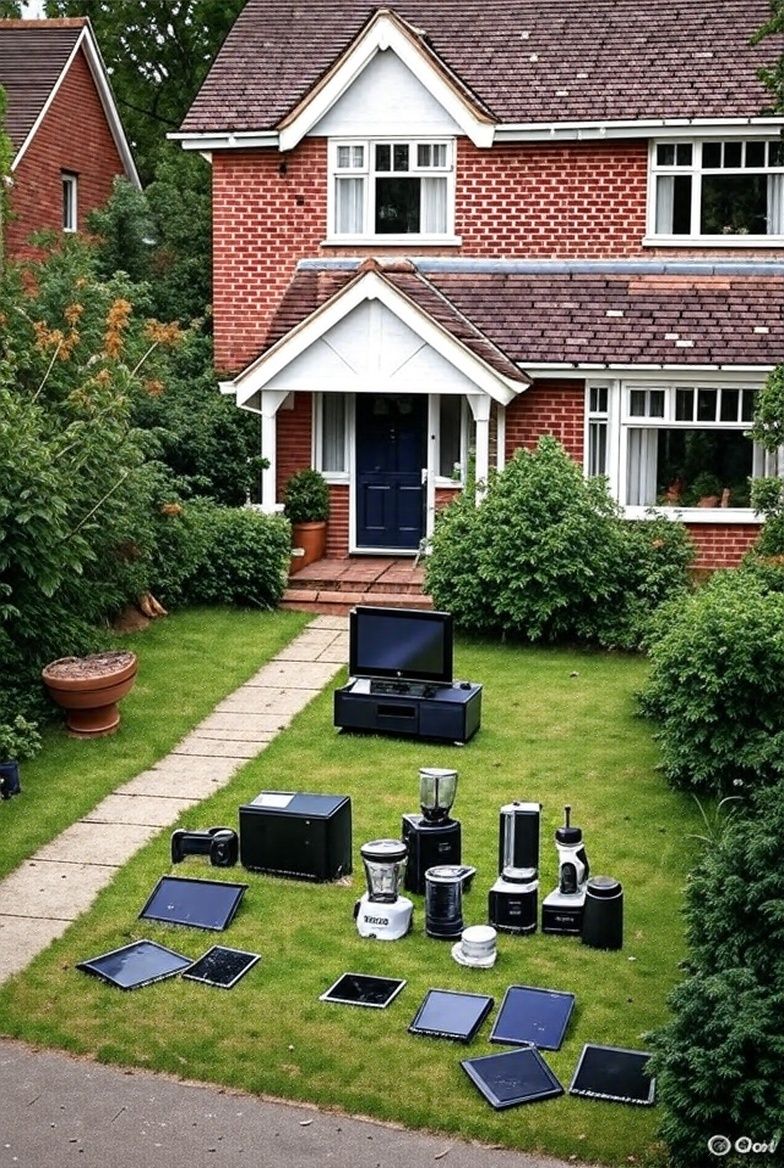
Would you display all your valuable electrical items at the front of your home? Especially new devices that you’ve just bought or received as a gift. Clearly, no sensible person would do this, as it effectively becomes an advertisement to burglars. It suggests there is something inside your house worth stealing.
How Packaging Advertises Your Possessions
Unfortunately, many people inadvertently advertise their new electrical appliances by the way they dispose of the packaging. Sometimes, after buying an item, the box is left outside with the rubbish bin. During holiday periods, such as Christmas or birthdays, multiple wrappers and boxes might be placed out together, revealing what is inside your home to anyone passing by.
Disposing of Large Boxes Discreetly
You might wonder how best to get rid of a large cardboard box, such as the one from a new television. This is a valid concern because the box itself can act as an advert for its contents. However, the print that identifies the item is only on the outside of the box. To address this, you can turn the box inside out; you may need to cut along one edge to accomplish this. In doing so, to any passers-by, it will appear as an unremarkable piece of cardboard rather than evidence of a valuable new item inside your home.
Why Burglars Target Certain Homes
Burglars may sometimes pick a property at random, but more often they choose a house because they have information about it, insider knowledge, or noticed something of interest. For example, if they see a large box for a new smart television at the front of a house waiting to be discarded, they may decide to target that property.
Key Advice When Purchasing Valuables
It is essential to be cautious when purchasing valuable electrical appliances. Always ensure that you dispose of their packaging discreetly, so as not to draw unwanted attention to your home or possessions.
The Case for Creating a Digital Twin
Introducing Your Digital Twin
Have you ever considered creating a twin of yourself? At first glance, it might seem like an odd suggestion, but this is not about finding a long-lost sibling. Instead, it's about inventing a fictional twin—someone with a name like yours, a birthday close to your own, and, most importantly, their own email address. This is not an invitation to break any laws or to act with criminal intent. In fact, any deceptive behaviour could easily be traced back to you. It’s essential to respect all legal boundaries in your country.
Building the Persona
The idea is to craft a character: select a memorable name, choose a birth date that is just one day, one month, and one year older than your own, and set up a dedicated email address for this persona. There are countless services available to help you create a new email account, which you can link back to yourself if needed. The aim here is not to conceal your identity, but to have an extra email that doesn't directly reveal your real name—a backup email address.
Why Create a Digital Twin?
What’s the point of this exercise? It’s a reflection on our modern lives, where fraud and dishonesty are rampant. It’s natural to question the motives of others. Consider what happens when you enter a bar or restaurant and are offered free Wi-Fi. You’re often prompted to provide your name, date of birth, and email address. But why do they need this information, and what will they do with it? Nevertheless, in exchange for internet access, most people hand over their details without a second thought.
The same thing happens when you plan a holiday and request a brochure online. Before long, you’re inundated with holiday offers from various companies and find yourself added to marketing lists.
Even a simple phone call to enquire about a product often results in requests for your name and email. To receive a brochure or more information, you must hand over your personal email address. From that moment on, your genuine email address may be used for ongoing marketing—and possibly sold to others. While you could block unwanted senders, most people don’t and soon find themselves overwhelmed by junk emails.
The Benefits of a Digital Twin
By providing the details of your invented twin—a real email address and an easy-to-remember, similar birthday—you establish a persona. Over time, you’ll observe a steady stream of emails, offers, and promotional messages addressed to your non-existent twin. You’ll quickly recognise that these communications are marketing efforts—sales pitches, advertisements, or special offers. This allows you to manage them as you wish and immediately identify them as non-personal or unimportant.
Similarly, when you’re asked by an app for your details at a restaurant or bar, you can give your twin’s information, knowing that it’s likely to be sold or used for marketing. It doesn’t matter—any contact received can be instantly recognised for what it is: a sales pitch or an advert.
Practical Experience
For more than 15 years, I have used a fake name, email address, and birth date. I have received emails referencing phone conversations with my fictional twin, invitations to events he supposedly requested, and even correspondence from the UK government offering retirement advice. Initially, I forwarded these emails to my real inbox, but they soon became so numerous that I now let them go straight to junk.
I signed up for a free Formula 1 app with my twin’s details. Years later, when the app required me to sign in again, I had no trouble because I knew my twin’s name, birth date, and email address.
Conclusion: Protecting Your Personal Information
If you continue to share your real name, birth date, and email address for every service or offer, you can expect to be bombarded by junk emails. Creating a digital twin is a simple and effective way to shield your personal information and manage marketing communications more easily. So, why not consider making a twin?
Driving in Fog: The Benefits of Satellite Navigation
How to Drive Safely in Fog Using Satellite Navigation
When faced with driving in thick fog, you might be tempted to rely solely on your knowledge of a familiar road. However, limited visibility means you are unlikely to spot upcoming junctions where vehicles could emerge from either side, nor will you easily detect bends or their sharpness in time to react safely.
The Importance of Satellite Navigation
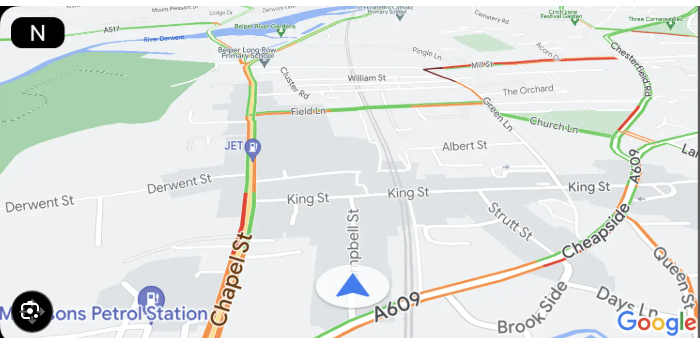
Even on roads you know well, satellite navigation can be beneficial in foggy conditions. It can alert you to upcoming junctions where you may need to stop or give way, and it helps highlight necessary signals or warnings that might otherwise be missed. Whether you have priority or must give way, your usual sat nav can provide crucial support for safe driving decisions.
Maximising Sat Nav Features
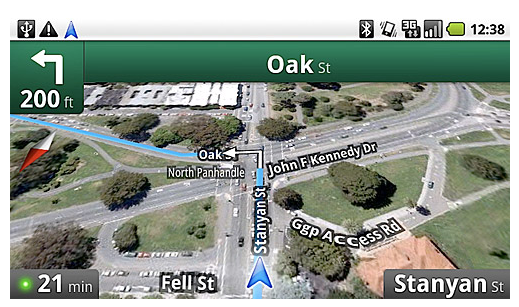
Many drivers are unaware that they can adjust their sat nav settings to access features like Street View. When enabled, Street View offers a realistic depiction of your surroundings, including fields, hedges, and bodies of water that are visible along your route, enhancing your awareness of the road environment even when actual visibility is reduced.
Enhancing Clarity with Street View
Using your sat nav’s Street View mode while driving in fog can make the environment much clearer, compensating for what you cannot see out of the window. This added virtual perspective increases your confidence and situational awareness, helping you anticipate turns, junctions, and other features.
Making Sat Nav Part of Your Routine
Whether you believe you need satellite navigation or not, it is advisable to switch it on and try using Street View whenever you are driving in fog. Although Street View may feel unusual initially, you will soon become accustomed to it and the extra guidance and reassurance it provides.
REMEMBERING A PASSWORD
Unfortunately, today, passwords must be very secure. Most banks and financial institutions won’t even allow you to use a simple password; instead, they require a second form of verification, such as a digital device or a code generated by an app on your mobile phone.
If you are allowed to use a password, it should be 12-15 characters for security reasons. It should include uppercase and lowercase letters, numbers, and special characters. You might feel like you'll have to write the password on a Post-it note and stick it on your forehead because it’s so hard to remember a complicated password.
There’s an easier way to create a personal, memorable password, based on a phrase or sentence. Let me illustrate. In the alphabet, some letters can stand for words, such as A, B, C, I, O, P, R, T, U, and Y. For example, R U could mean "are you".
O I c 1 p # u. O I c 1 p # u. At first, it looks like a very complicated sixteen-digit password, but it’s just an abbreviated sentence repeated.
Oh I see one pee hash you. Oh I see one pee hash you.
If your memory allows, you can add two different phrases.
O I c 1 p # u. Y r u a b?
Why are you a bee? For those not following.
Using letters instead of words might not win the author a Booker Prize for Literature, and different organisations have varying rules on what can be used in passwords. Likely, though, you’ll find it easier to remember two phrases than a long, complicated password.