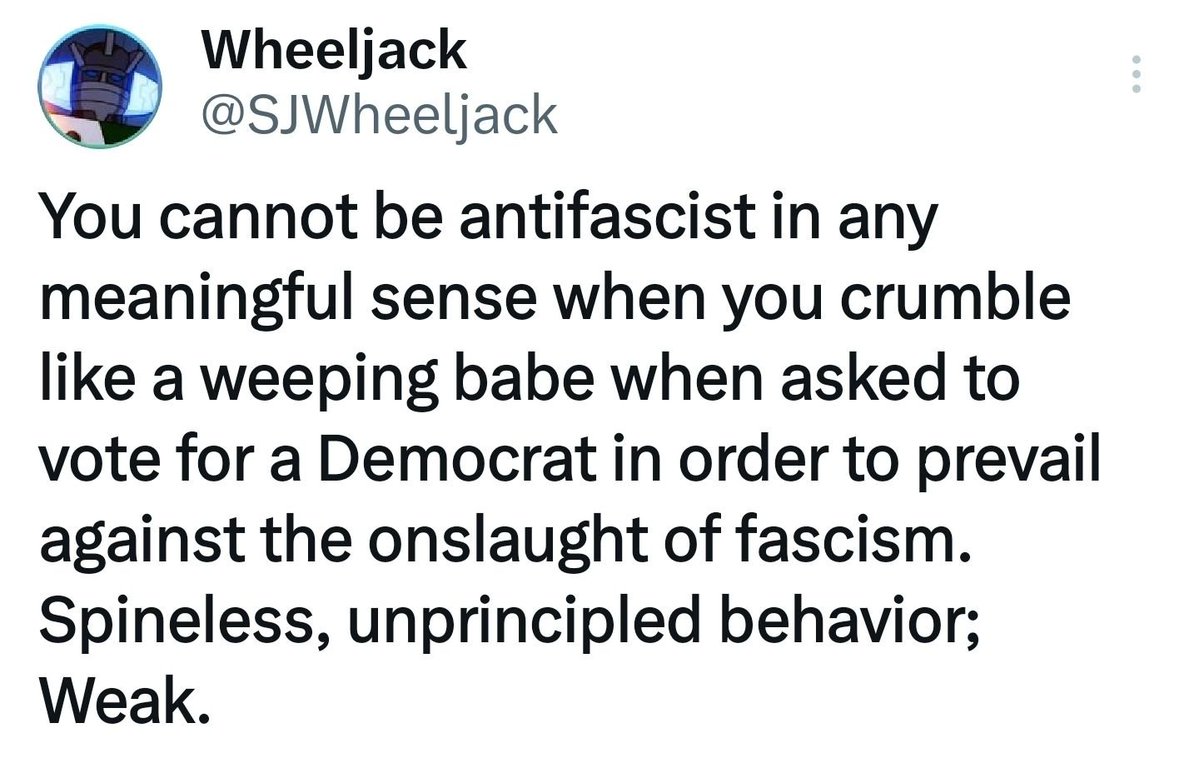
literally the mirror image of the faction of the uncommitted people that refused to vote for kamala during the general. moderates (correctly!) got angry about. let the fascists win because the Democrat isn't your ideal choice. stupid
Is it environmentalist to delay and oppose transit in dense American cities? This depends on whether by environmentalist you mean 'committed to conserving our planet' or 'passionately opposed to all human activity'. Unfortunately the Center for Biological Diversity is the latter.
Stevens: Endorses Abdul
Slotkin: Endorses Abdul
Nessel: Endorses Abdul
Peters: Endorses Abdul
Whitmer: Endorses Abdul
Harris: Endorses Abdul
DSCC: $30M helping Abdul
Obama: Endorses Abdul
Progressives: "WHY ARE CENTRISTS TRYING TO MAKE ABDUL LOSE???"
https://t.co/vVfGgRkKTe
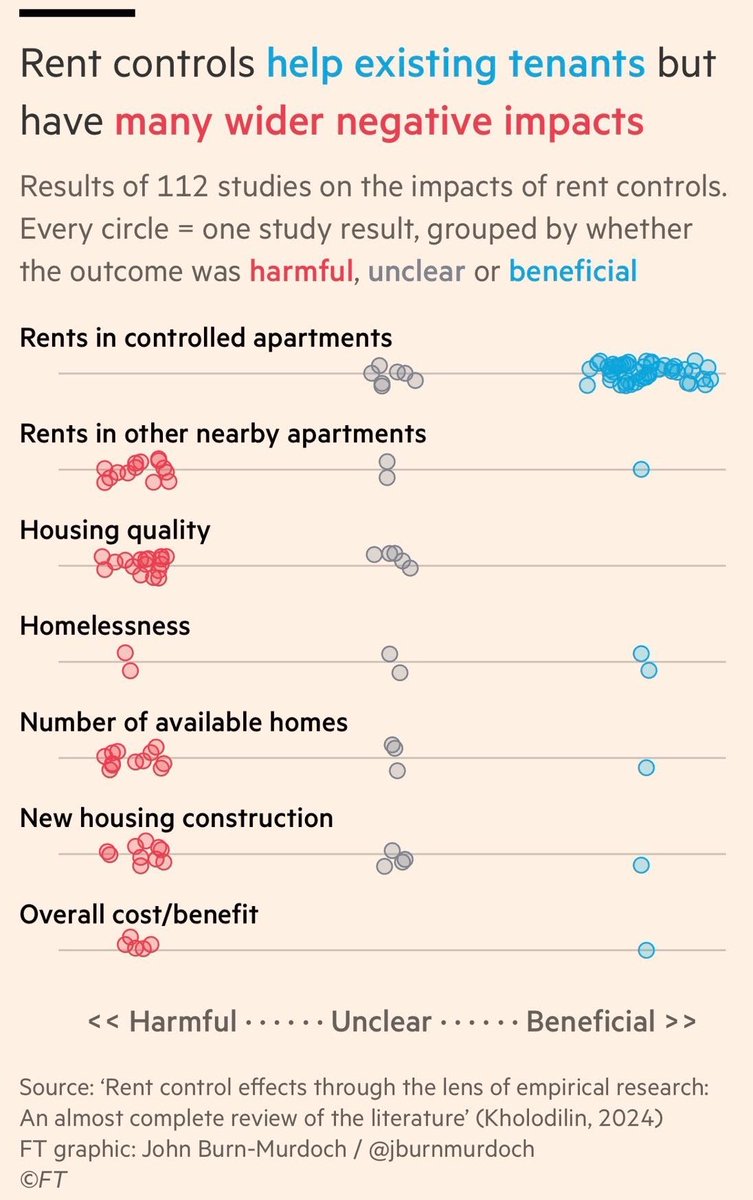
What’s the evidence on rent control?
I charted the findings from 112 studies:
Great for rent-controlled tenants ✅
But:
Pushes up rents for other people ❌
Pushes down new housing construction ❌
Pushes down building quality ❌
Perhaps because Sarah Longwell doesn’t think twice about voting for Democrats and genuinely trying to get them elected, even when she disagrees with them on some things. This is not something that progressives consistently do. @WajahatAli
We need to bring back intellectual elitism.
Sorry, but a virologist will always know more about vaccines than a yoga mommy blogger with a chat gpt AI subscription.
I might be a little less distrustful of AI if the dudes promoting it, supporting it, insisting on it, and advocating for it weren’t the worst fucking people on the planet.
idk I think this song is actually corny and unpleasant on the ear but it matters less when she was just a pop star and when people weren’t trying to pass her off as a Master of American Arts and Letters
On some level, abolition is a vision of the world not without police, but where everyone is asked to be police, all the time.
Your time constantly occupied with monitoring your neighbors, “holding them accountable,” counseling them, “educating” them, shaming them, and punishing them.
I’m not interested in that work or in that world. I do not think the best vision of life is where we’re all constantly enmeshed that deeply in an interminable act of mutual “accountability.” Most of the time, I want to leave my neighbors alone; I want them to leave me alone. I want to have a place that is a refuge from “the community,” because “the community” is often (usually?) just the self-appointed individuals who claim to speak on its behalf, and who have the sociopathic ambitions required to defeat other challengers and scare off dissent.
In other words, while capitalist atomization has robbed us of many positive social bonds, it has in fact liberated us from many negative ones. The work of a socialist project should certainly involve trying to revive or renew positive sociality, but I do not actually want to return to the “community” dynamics of a medieval peasant village, or a nomadic band on the steppe.
I would like *some* measure of privacy and autonomy, and I do not want to be police. I do not want to live under the totalitarian thumb of “the community” any more than I want to live under the totalitarian thumb of capital.
And so I am not an abolitionist, because that is what abolition actually offers.
One thing that turned me against the vision of prison/police abolition was realizing it would be this type of person who would be, in the main, taking their place as administrators of “community justice,” “accountability circles,” and so on.
That, in fact, it would be a different flavor of cop, but ultimately would still attract people with many of the same pathologies common among police (desire for domination, power, authority, status; sadism; etc). The methods and culture would be different but, ultimately, still populated by people I simply do not trust with such responsibilities.
Given this reality, finding ways to reform or remake the institutions of formal, bureaucratic justice—to empower the institutions and rules and disempower the arbitrary authority of the sort of individual drawn to such work—seemed like a better strategy than simply trading one kind of cop for another.
I suppose this is the crux of it; some people see the bureaucracy and the institution as the problem. I don’t. I see the failure of bureaucracy to assert itself above the individual, arbitrary wills of People With Cop Brain as the problem. I want a justice system even more impersonal and rule-bound, one which properly restrains the antisocial and hostile impulses of the people who tend to, given the chance, volunteer for the work of regulating “the community.”
The abolitionist vision is one without formal institutions and bureaucracies which can subdue these impulses and this kind of person drawn to the work of policing/regulating/controlling. Therefore, I don’t see it succeeding at much beyond trading one kind of police for another, less constrained, more arbitrary kind of police.