The secret recipe of India’s Got Latent was that it was a show of losers.
Contestants so bad at their craft or so egoistic, that nobody felt bad roasting them, judges were struggling people who were also funny, weirdos you could make fun of. It was a pretty irreverent vibe.
Then Netflix came onboard, and probably the makers of this thought of making this India’s got Talent. And it started inviting winners. High profile celebs, with a carefully curated image. Even the contestants were picked who could sing well, do stuff well. People with already a large fan following on Instagram. People who were self aware. Then it became difficult to make fun of this ensemble. It started getting awkward.
High profile celebs need tutoring to be funny, they need jokes fed to them, so they roast Samay with an FIR/Supreme court/Kashmiri Pandit joke almost as a gag reflex. It stopped being funny one season ago.
The show still survives due to the quick wit of Samay Raina. Everything else is dragging it down.
For twenty five years I have sat across from students preparing for their postgraduate entrance, and in that time I have watched the same quiet mistake repeat itself in room after room. A bright student, sincere, hardworking, spends months collecting facts and still walks out of the exam feeling that the paper asked for something they never practiced. The facts were there. The thinking was not.
As one of the people who introduced MCQ based teaching in India, I have spent a long time asking why this happens. The answer is almost always the same. Students try to memorize when they should be learning to anchor.
What anchoring means
Anchoring is a simple idea that changes everything once you take it seriously. You do not learn a new fact by itself. You learn it by attaching it to something you already know and understand.
In Hindi we have a word for the other approach. Ratta. Pure rote. You repeat a fact until it sits loosely in your memory with nothing holding it in place, and on the day it matters most, it slips away exactly when you reach for it. A memorized fact is a stone balanced on nothing. An anchored fact is a stone tied to a rope you already hold.
The known idea is your hook. The new information hangs on it and stays. This is not a study trick. It is the way the strongest clinicians have always thought, and it is the way the new pattern of exams now rewards.
The three layers
Once you decide to anchor rather than memorize, you need a structure to anchor onto. I teach every concept in three layers, and the order never changes.
Layer one: Why is this happening
Start with the pathophysiology. Before anything else, ask why the disease is occurring at all. This is the layer where you should spend your real time, because everything above it depends on it.
Take a patient with pain in the abdomen from appendicitis. Do not rush to the label. Ask the questions underneath it. Why is the pain happening? What does the pathology book say about the obstructed lumen and the inflammation that follows? What is the physiology behind the referred pain that so often begins around the umbilicus before it settles in the right iliac fossa? Where anatomy or embryology explains a finding, keep pulling that thread until it makes sense.
When the why is solid, the rest of the concept has something to rest on. When the why is missing, no amount of memorizing above it will hold.
Layer two: How would you diagnose it
Once you understand why, you move to how you would find it. The diagnostic arm of medicine is radiology and pathology, and both matter far more in the new pattern than students expect.
Here I want to correct something that costs aspirants marks every year. Many treat radiology as a short subject, something to skim near the end. That is a mistake. Radiology is not a short subject at all. It is a part of every subject, sitting inside each one as its diagnostic arm.
Think about the natural order in real practice. Radiology is usually the noninvasive investigation, and it is usually the first thing you do. Pathology tends to be the confirmatory step that comes later. Both have their own clear role, and both carry the weight of the visual integrated questions that define the new pattern. If you have neglected radiology, you have quietly neglected a piece of every subject you study.
Layer three: How would you manage it
Only after why and how to diagnose do you arrive at management, and here you should think the way a patient would want you to think.
In most conditions, medical management comes first. Then there is a threshold, a cutoff, beyond which you reach for the scalpel. Learning where that line sits is one of the most testable skills in the entire pattern. When do you operate. When do you treat medically. And the option that students forget most often, when do you do nothing at all, because watchful waiting is itself a decision.
Then comes the final layer of maturity. Ask what complications the treatment itself can create. A clinician who only knows the cure and not the cost of the cure is not yet finished thinking.
Why this matters more than ever
Put the three layers together and you have a single line of thought. Understand why it is happening. Work out how you would diagnose it. Decide how you would manage it, from medical management to the surgical cutoff to doing nothing, and stay alert to the complications of treatment.
This is not a longer way to study. It is a faster way to become unshakeable. A student who thinks in these three layers does not panic when a question is framed in a way they have never seen, because they are not searching their memory for a matching fact. They are reasoning from the why upward, and the answer reveals itself.
The new pattern is built to reward exactly this kind of thinking. It is integrated. It is visual. It refuses to hand marks to anyone who only memorized. So stop trying to hold a thousand loose facts in your head. Build the hooks instead. Anchor everything you learn onto the why beneath it, and trust that structure to carry you.
Understand it, diagnose it, manage it. That sequence is how you think now. #MBBS #NEETPG #NEETPG2026 #Learningapproach #MedX #MedTwitter
Can’t thank my stars enough that I gave all my entrances and counselling over 12 years without any iota of hiccups/controversies/delay/cancellation/postponement etc etc.
There's a physicist at Stanford named Safi Bahcall who modeled this exact principle and the math is wild.
He calls it "phase transitions in human networks." When you're stationary, your probability of a lucky event is limited to your existing surface area: the people you already know, the places you already go, the ideas you've already been exposed to. Your opportunity window is fixed.
When you move, your collision rate with new nodes in a network increases nonlinearly. Double your movement (new conversations, new cities, new projects) and your probability of a serendipitous encounter doesn't double. It roughly quadruples. Because each new node connects you to their entire network, not just to them.
Richard Wiseman ran a 10-year study at the University of Hertfordshire tracking self-described "lucky" and "unlucky" people. The single biggest differentiator wasn't IQ, education, or family money. Lucky people scored significantly higher on one trait: openness to experience. They talked to strangers more, varied their routines more, and said yes to invitations at nearly twice the rate.
The "unlucky" group followed the same routes, ate at the same restaurants, and talked to the same 5 people. Their networks were closed loops. No new inputs, no new collisions.
Luck isn't random. Luck is surface area. And surface area is a function of movement.
The lobster emoji is doing more work than most people realize. Lobsters grow by shedding their shell when it gets too tight. The growth requires a period of total vulnerability. No protection, no armor, soft body exposed to the ocean.
That's the cost of movement nobody posts about. You have to be uncomfortable first. The new shell only hardens after you've already moved.
If you keep outgrowing the people around you but feel guilty about it, this one's for you.
My "Cost of Growth" series gives you perspective and teaches you how to set boundaries so you can keep your momentum going.
Read about how I continue to be a high performer every day:
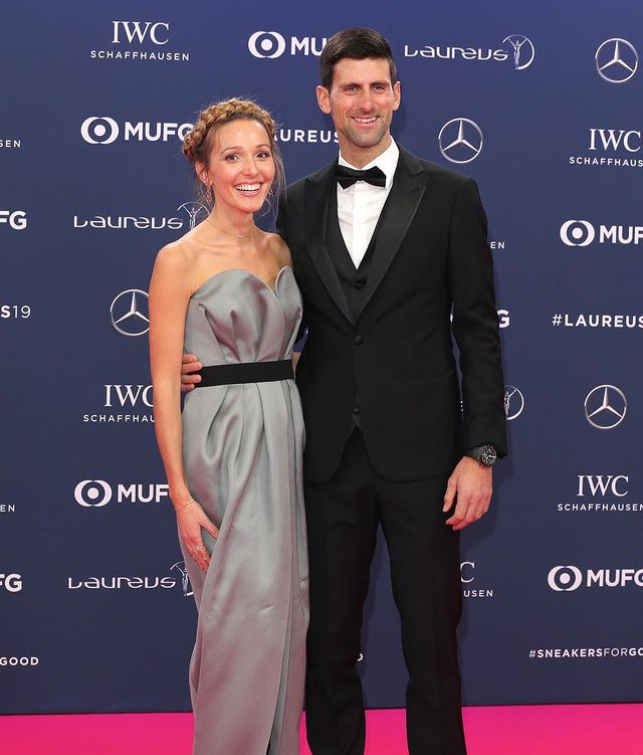
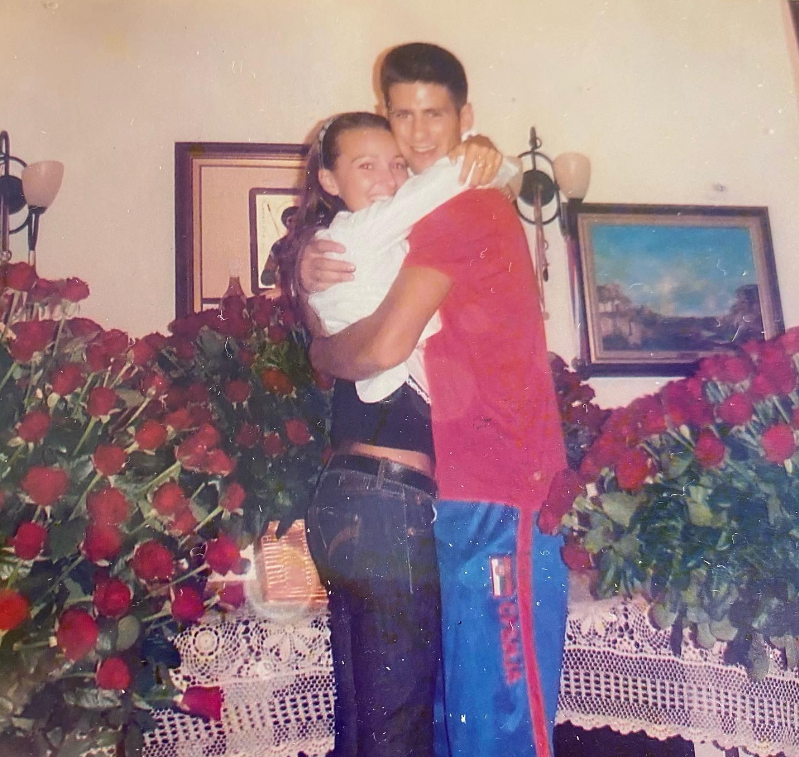
Novak Djokovic’s Dating History:
2000 — Jelena (14 yo) Crush
2001 — Jelena (15 yo) Crush
2002 — Jelena (16 yo) Crush
2003 — Jelena (17 yo) Friend
2004 — Jelena (18 yo) Friend
2005 — Jelena (19 yo) Dating
2006 — Jelena (20 yo) Girl Friend
2007 — Jelena (21 yo) Girl Friend
2008 — Jelena (22 yo) Girl Friend
2009 — Jelena (23 yo) Girl Friend
2010 — Jelena (24 yo) Girl Friend
2011 — Jelena (25 yo) Girl Friend
2012 — Jelena (26 yo) Engaged
2013 — Jelena (27 yo) Fiancee
2014 — Jelena (28 yo) Marriage
2014 — Jelena (28 yo) 1st Child
2017 — Jelena (31yo) 2nd Child
2024 — Jelena (38yo) 10 year Anniversary
2026 — Jelena (40yo) Love & Counting
One Love for life.....Women behind all his success, True Love of the 🐐
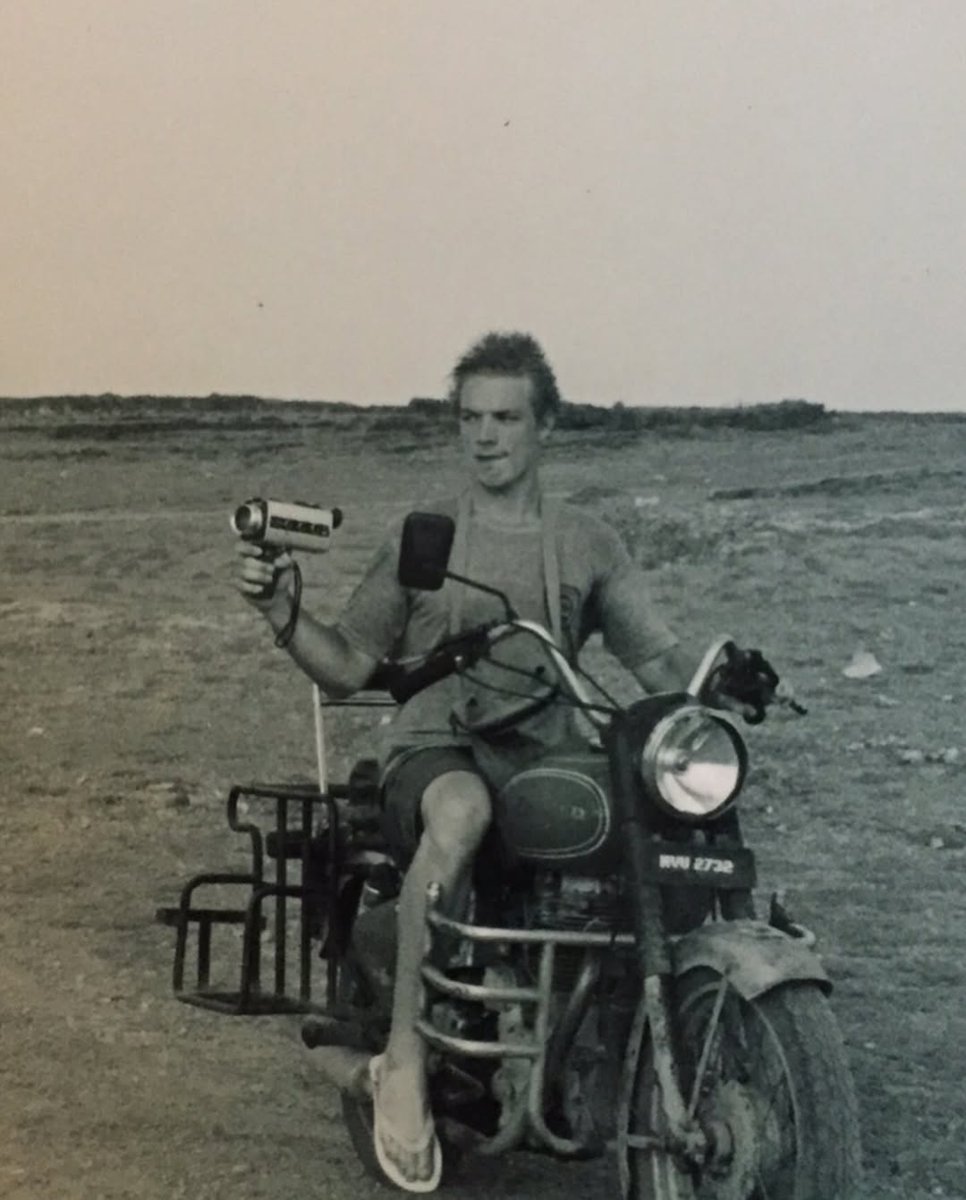
I was 20 when I first came to India with nothing but a restless mind and an old Enfield I bought from a friend in Delhi who taught me to ride in one dusty afternoon. He took my money, flew back to Florida, and left me with one rule: don’t hit a cow, and only ride between 2–6 a.m. if you want to survive the heat and smog. Somehow, that became a philosophy for everything that followed.
I crossed the country like a kid inside a dream — Calcutta to Delhi to Rishikesh — sleeping on the bike when I had to, chasing chai stalls to stay awake, tossing the bike on trains when I could afford it. I swam in the Ganges, did yoga with elders who moved like water, bought vinyl in back-alley shops, fell in love the way only your twenties let you, and wrote long confusing emails to my mom from glowing village internet cafés.
In Gujarat I stopped long enough to help with earthquake relief, eat thalis in strangers’ homes, and learn “Kem Cho” and “Majama.” India didn’t just teach me independence — it cracked me open creatively. It showed me how improvisation is its own kind of discipline, how getting lost is a form of education.
I never imagined I’d be invited back years later to collaborate with artists I once watched on café computers — working with actors like SRK, making videos like “Lean On” that crossed billions of views, nearly dying during spiritual side quests in Leh and Varanasi, falling for Bollywood sweethearts, and still believing every strange turn meant something.
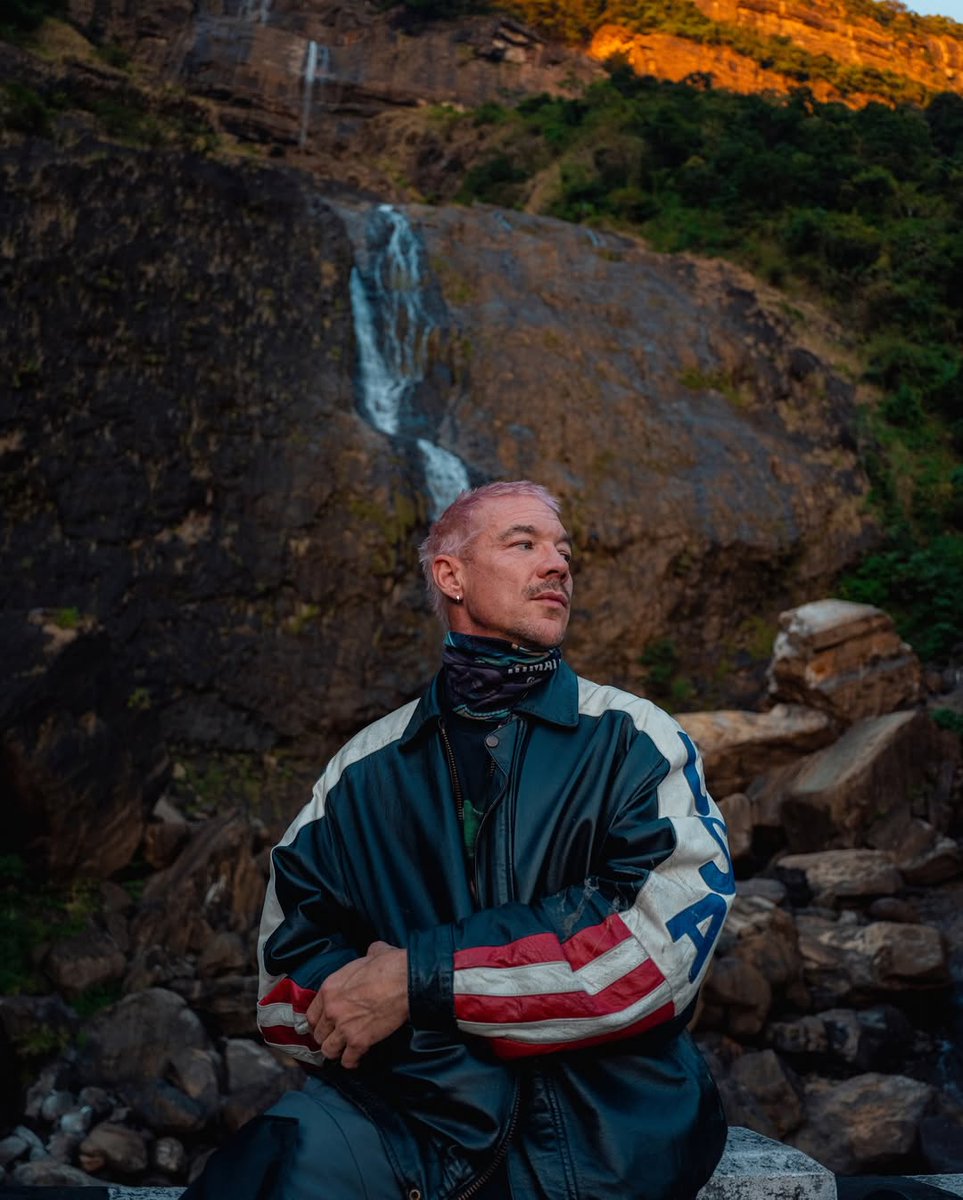
Twenty-five years later I returned to these roads, riding nine hours a day across the Himalayas on a much newer Enfield. And then — perfectly — I ended up performing at a massive Enfield festival in Goa and celebrating afterward in a motorcycle garage, as if time folded back on itself.
Two decades have changed India and me both. But every time I come back, I feel the same truth: growth happens when you surrender to the unknown, when the road teaches you more than any classroom could.
India was my beginning. And somehow, it still is.
🎤JIPMER Literary & Debating Society presents Anti-Ragging Debate
📅 18 Aug | 🕔 5 PM | 📍Lecture Hall-3
Motion: “Anti-ragging policies made campus culture more isolated & disconnected?”
Eligibility: UG students | ⏱️3 min/speaker
🏆 Prizes await!
#JIPMER#AntiRaggingWeek#Debate