Full Stack Developer (MERN) | Building scalable web apps & sharing what I build & break | GitHub + Blogs as proof | Simplicity is my superpower | GLAU '27
Day 57 - Today, I learned the basics of NumPy, focusing on:
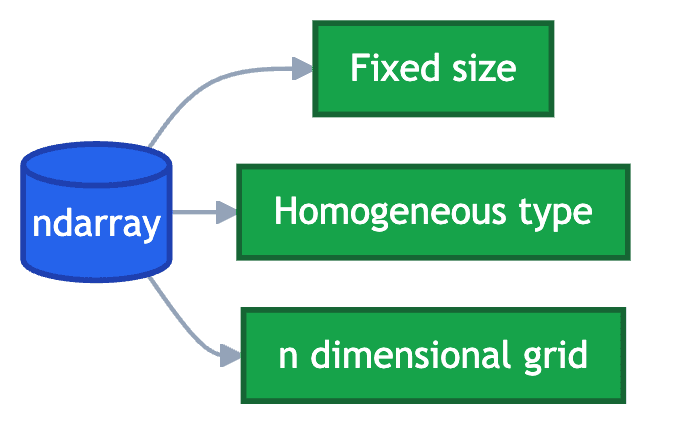
ndarray - understanding NumPy's core array object.
Array Creation - learning different ways to create NumPy arrays.
Day 56 : NumPy & Pandas for AI/ML Engineers
Python lists offer flexibility. NumPy arrays bring efficient numerical computing through vectorization.
Learning the foundations behind AI, one concept at a time.
More tomorrow.
#Python#NumPy
Day 55
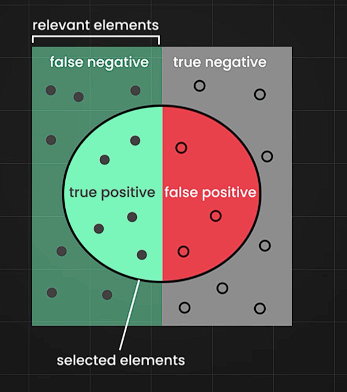
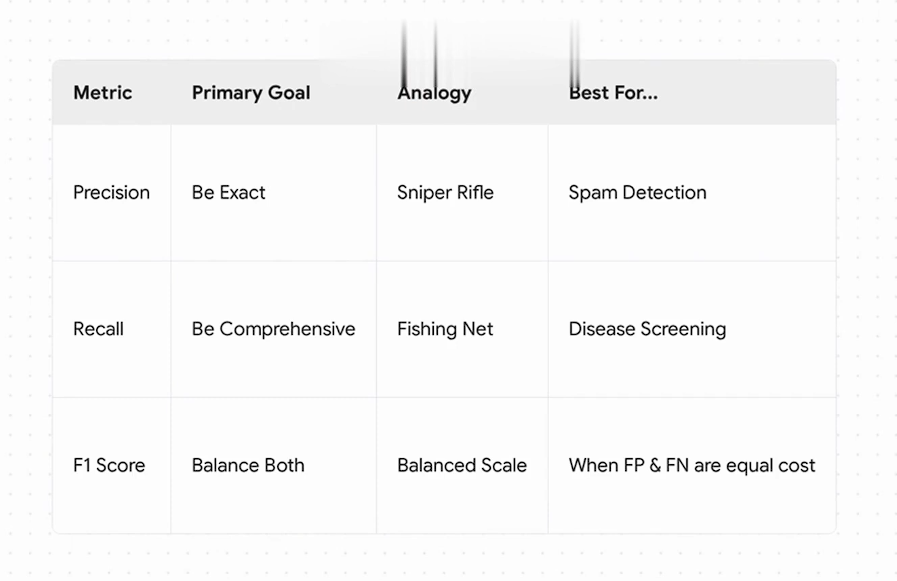
Accuracy: Overall correct predictions.
Precision@K: Relevant results among the top K.
Recall@K: Relevant results retrieved in the top K.
MRR: Rank of the first relevant result.
MAP: Average precision across queries.
NDCG: Quality of ranked results.
Day 53
Learned something fascinating about Product Quantization (PQ) today
8 subvectors × 256 centroids = (2^{64}) possible combinations using just 8 bytes per vector.
Small codebooks, massive possibilities, efficient vector search.
#AI#MachineLearning
Day 52 - Learning Probability Distributions for AI
Embeddings → Represent data as vectors
Gaussian Distribution → Model data patterns
Distance Concentration → Distances become more similar in high dimensions
Real Use → Faster vector search & AI retrieval
#AIEngineering
Day 51 - Today I Learned: Probability Distributions in ANN
Distance concentration in high dimensions
Gaussian distributions and embeddings
Recall@K and search accuracy
How data distribution impacts ANN performance
#MachineLearning#AI
Day 50 - Hashing
LSH → Find similar vectors faster
MinHash & SimHash → Detect similar sets and documents
Hamming Distance → Compare binary hash codes
Real Use → Similarity search & duplicate detection
#AIEngineering#MachineLearning
Day 49 - Today, I learned about Random Projections in Machine Learning.
Dimensionality reduction
Johnson–Lindenstrauss Lemma
Random Projection vs. PCA
Faster similarity search and document retrieval
#MachineLearning#AI
Day 48 - Learned about Space Partitioning for faster Nearest Neighbor Search
KD-Tree: divide a city into areas and search nearby ones.
Ball Tree: group nearby places into zones.
Pruning: skip regions that are clearly too far.
High dimensions: these methods become less effective
Day 47
Explored Minkowski Distance, Jaccard Similarity & Hamming Distance and their real-world use in KNN, recommendations, similarity search & duplicate detection.
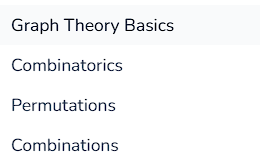
Day 46 - Graph Theory & Combinatorics
Graphs → Model connections like users & networks
Combinatorics → Count possible choices
Permutations → Arrange things where order matters
Combinations → Select things where order doesn’t matter
#AIEngineering
Day 45 - Functions in AI
Functions → Map inputs to outputs
Injective / Surjective / Bijective → Different types of mappings
Composition → Connect multiple functions
Real Use: Neural network layers are functions that transform data.
Day 44- Sets & Relations
Sets → Organize data into groups
Set Operations → Find common or unique data
Relations → Connect different data sets
Real Use → Databases, users, orders & products
Example → Users <-> Orders
#AIEngineering#MachineLearning
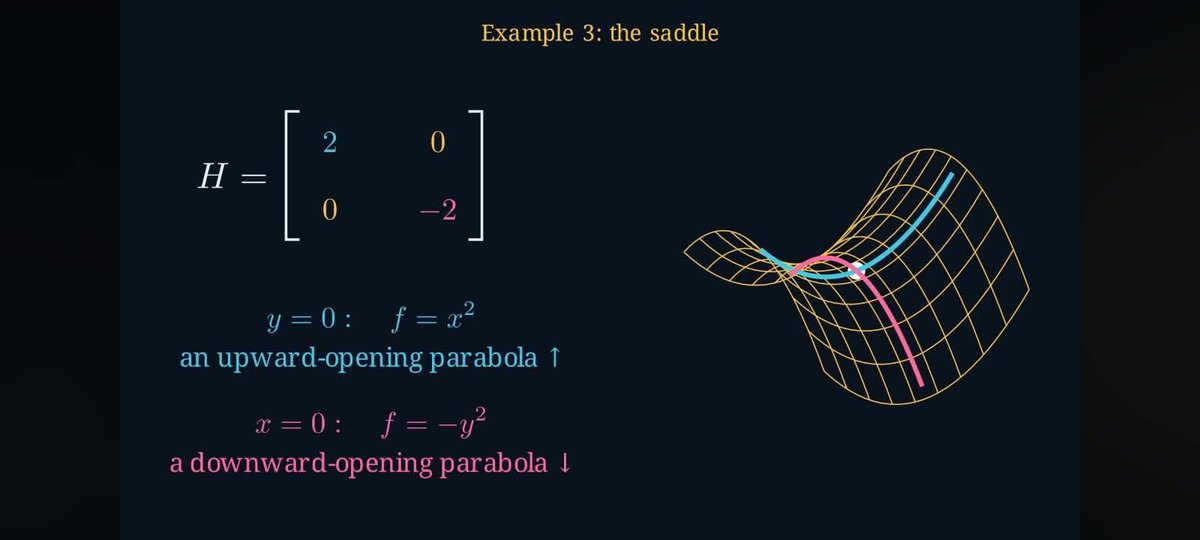
Day 43 - Multivariable Calculus for AI
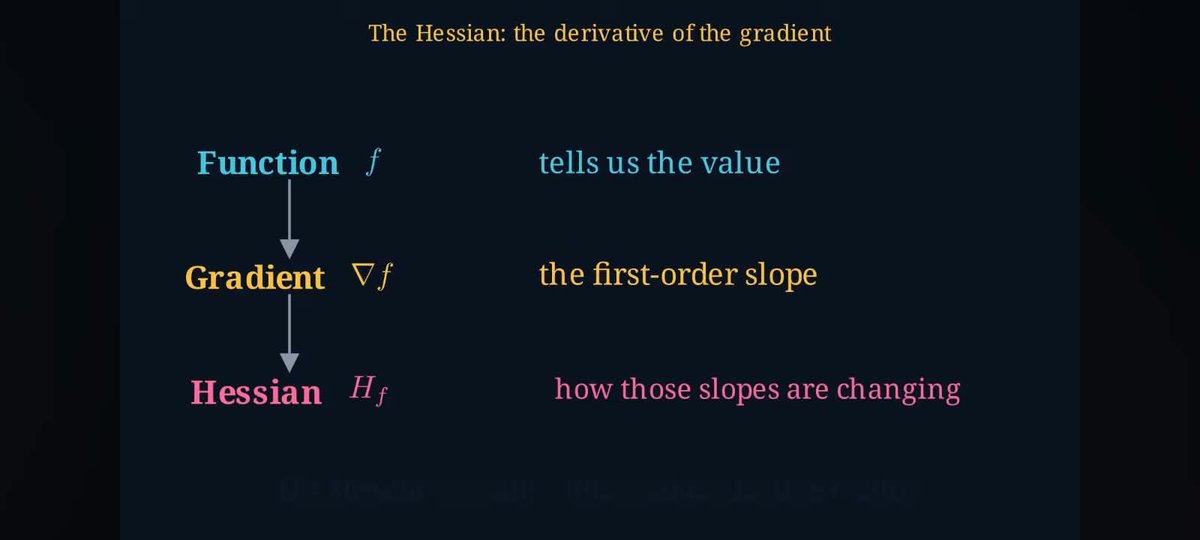
Partial Derivatives - Understand individual variable impact
Chain Rule -Track changes through multiple layers
Gradient -Find the direction to improve
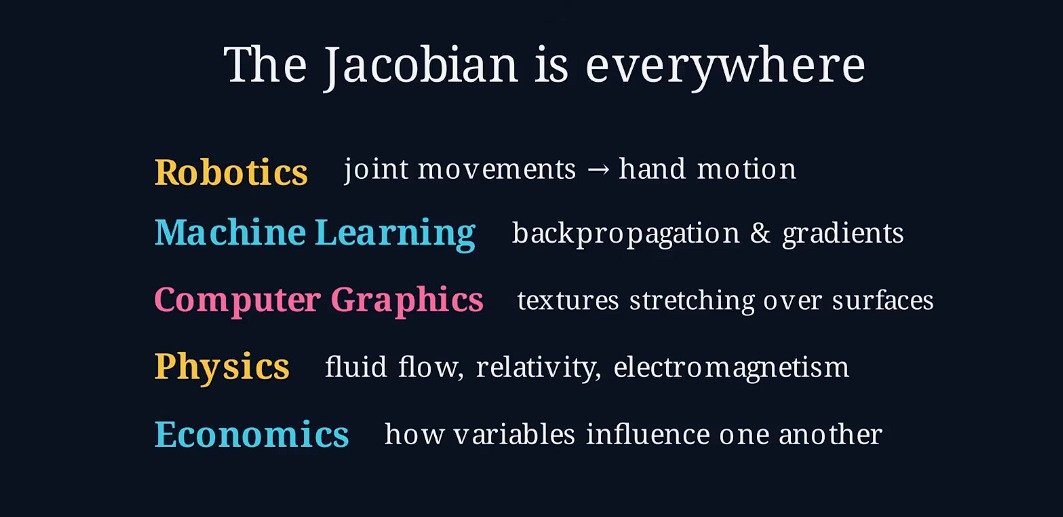
Jacobian -Track multiple inputs & outputs
Hessian -Understand the shape of optimization
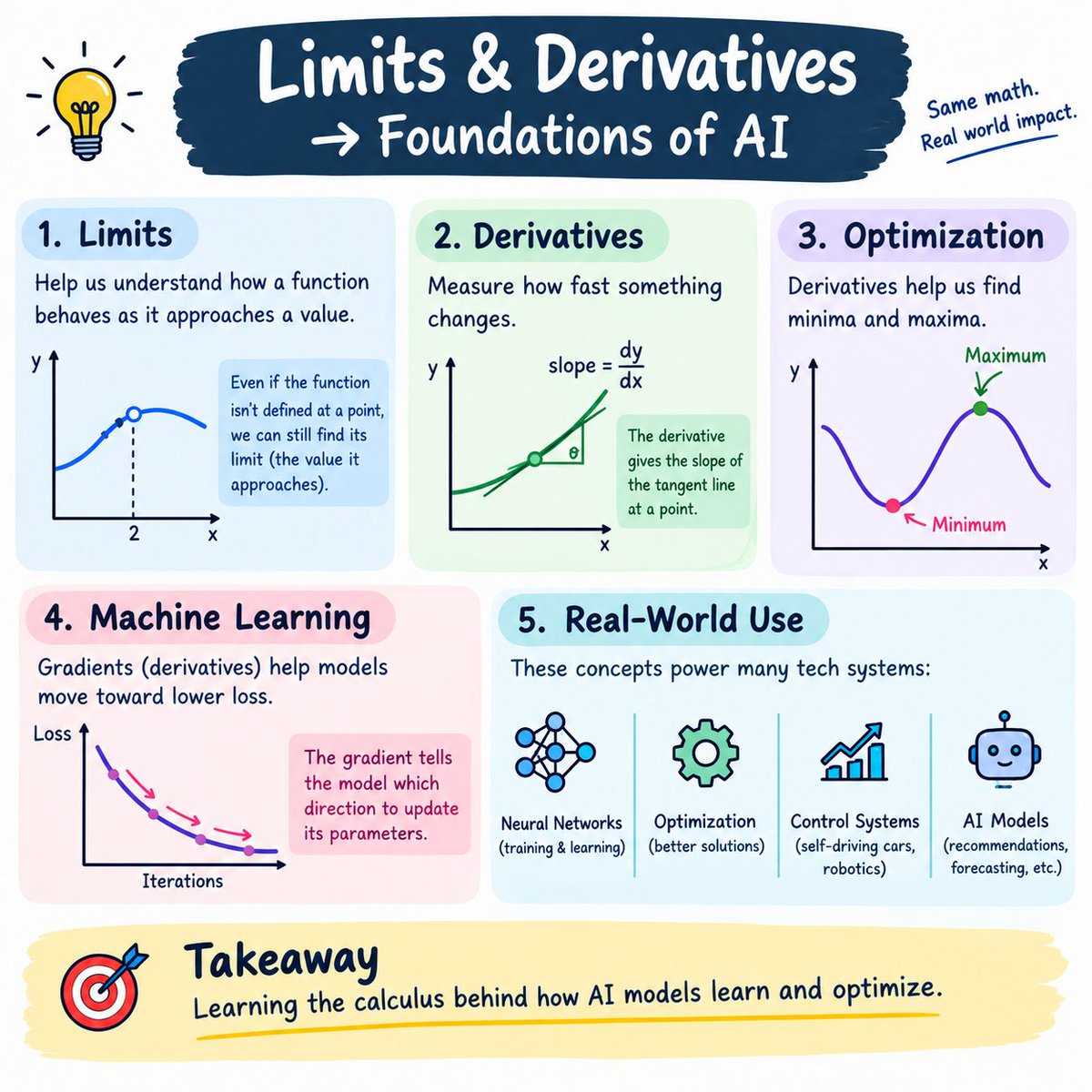
Day 42- Limits & Derivatives
Limits → How values behave near a point
Derivatives → Measure how things change
ML → Gradients help reduce model loss
Real Use → Neural networks & optimization
Day 41 - Learning Rate & Minima
Learning Rate → Controls the step size
Small Rate → Slower but safer
Large Rate → Faster but may overshoot
Local Minimum → Best point in a local region
Global Minimum → Lowest point overall
#AIEngineering#MachineLearning
Day 40 - Gradient Descent → Finding the Best Solution
Gradient Descent → Move toward lower loss
Learning Rate → Controls the step size
SGD → Updates using smaller data samples
Real Use → Training ML models
#AIEngineering#MachineLearning
Day 39
Loss Function → Measures how wrong a model’s predictions are.
Convex vs Non-Convex Functions → Describes the shape of a function and how easy it is to optimize.
#AIEngineering#MachineLearning
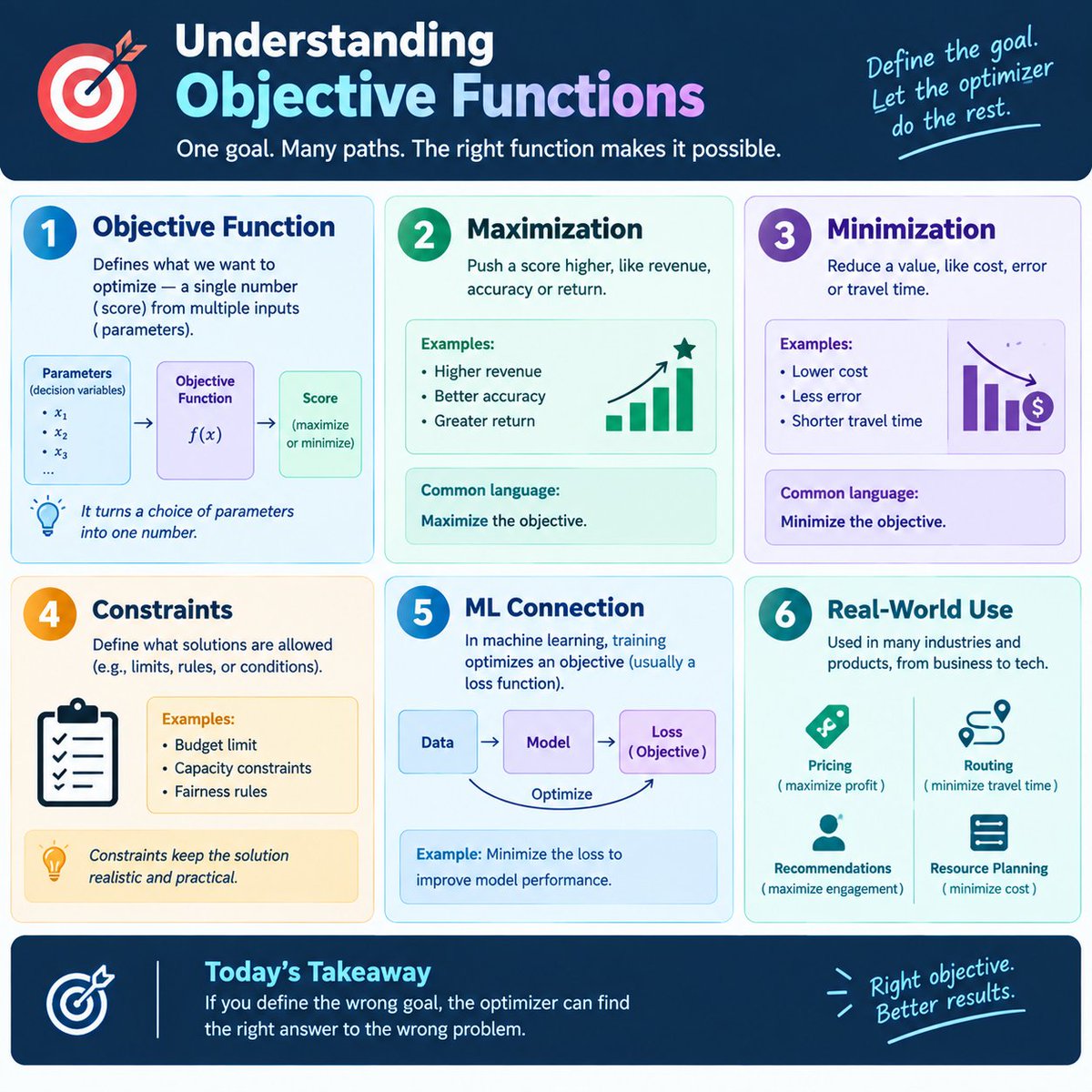
Day 38 - Understanding Objective Functions
Objective Function → Defines what to optimize
Maximization → Increase revenue or accuracy
Minimization → Reduce cost or error
Constraints → Define what’s allowed
ML → Training optimizes the objective
#AIEngineering