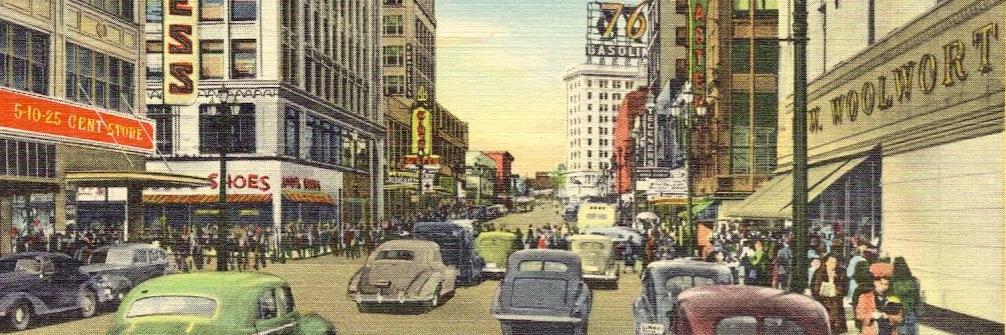
I always seem to have Walker Percy on my mind—sometimes in Broca’s Area, sometimes in Wernicke’s Area, and of course always in the Parietal Lobe.
The plan here is to connect whatever I’m reading to Percy: the everydayness, the search, the rotations and repetitions. Of course there is also the good, the bad and the ugly of being Catholic—and once in a while, the beauty of it all, which will never let you go.
Right now that means my Lenten reading project: Jean-Luc Marion’s 𝘐𝘯 𝘵𝘩𝘦 𝘚𝘦𝘭𝘧’𝘴 𝘗𝘭𝘢𝘤𝘦, a book I’m convinced Percy would have very much appreciated.
An intellectually deep and beautifully written essay on consciousness and AI, by neuroscientist Anil Seth | Why consciousness is more likely a property of life than of computation and why creating conscious, or even conscious-seeming AI, is a bad idea | @anilkseth in @NoemaMag https://t.co/sPacejyWEB https://t.co/pAoTrxwKkH
@out_of_position I tried to post a longer comment on the original post, but my nonce kept failing. I just can’t get around to fixing it right now.
Plus, you’ll now benefit from my horde of followers.
@cryptotwi1@Girardism@fortytooo Girard himself does not, but see:
Wm. Blake Tyrrell, The Sacrifice of Socrates: Athens, Plato, Girard (Michigan State University Press, 2012), in the Studies in Violence, Mimesis & Culture series
and perhaps:
Jacob Howland, “Plato’s Apology as Tragedy,” The Review of Politics
@afshineemrani When I read a post like this, I don’t see a cardiologist, or even a doctor. I see AI. Your brain doesn’t want to be informed. It wants to think.
@batcountry1980@PaulWhi07306907 Yes, but �� it’s best not to divvy up that album into individual songs. Yes, of course there are individual songs, but Veedon Fleece is best played straight through from Fair Play to Country Fair. Then call it a day.
@TheNatlInterest@lawyer4laws@JamesRosenTV@USNatArchives@ChrisNaylor__ Good to know, and thank you. It does prompt another question: do all those pre-2001 9/11s show that the date 9/11 was important enough to Muslim terrorists that they would choose that date for the 2001 attack? Or is it simply fate? The hand of God? Or just a curious detail?
@Matt_Stike Mos’ def.
The dusky light, the day is losing / Orchids, poppies, black-eyed Susans / The earth and sky that melts with flesh and bone / Won’t you meet me out in the moonlight alone
@MommabearTeresa@rpsingh1894@mrrasmulan Why wouldn’t he himself notice whether worms were exiting his mouth, nose, or butt? Why does it take another person to notice worms crawling out of you?
Classic men-and-women humor from Dave Barry:
Let’s say a guy named Roger is attracted to a woman named Elaine. He asks her out to a movie; she accepts; they have a pretty good time. A few nights later he asks her out to dinner, and again they enjoy themselves. They continue to see each other regularly, and after a while neither one of them is seeing anybody else. And then, one evening when they’re driving home, a thought occurs to Elaine, and, without really thinking, she says it aloud: “Do you realize that, as of tonight, we’ve been seeing each other for exactly six months?”
And then there is silence in the car. To Elaine, it seems like a very loud silence. She thinks to herself: Geez, I wonder if it bothers him that I said that. Maybe he’s been feeling confined by our relationship; maybe he thinks I’m trying to push him into some kind of obligation that he doesn’t want, or isn’t sure of. And Roger is thinking: Gosh. Six months.
And Elaine is thinking: But, hey, I’m not so sure I want this kind of relationship, either. Sometimes I wish I had a little more space, so I’d have time to think about whether I really want us to keep going the way we are, moving steadily toward … I mean, where are we going? Are we just going to keep seeing each other at this level of intimacy? Are we heading toward marriage? Toward children? Toward a lifetime together? Am I ready for that level of commitment? Do I really even know this person?
And Roger is thinking: … so that means it was … let’s see … February when we started going out, which was right after I had the car at the dealer’s, which means … lemme check the odometer … Whoa! I am way overdue for an oil change here.
And Elaine is thinking: He’s upset. I can see it on his face. Maybe I’m reading this completely wrong. Maybe he wants more from our relationship, more intimacy, more commitment; maybe he has sensed—even before I sensed it—that I was feeling some reservations. Yes, I bet that’s it. That’s why he’s so reluctant to say anything about his own feelings: He’s afraid of being rejected.
And Roger is thinking: And I’m gonna have them look at the transmission again. I don’t care what those morons say, it’s still not shifting right. And they better not try to blame it on the cold weather this time. What cold weather? It’s eighty-seven degrees out, and this thing is shifting like a goddamn garbage truck, and I paid those incompetent thieving cretin bastards six hundred dollars.
And Elaine is thinking: He’s angry. And I don’t blame him. I’d be angry, too. God, I feel so guilty, putting him through this, but I can’t help the way I feel. I’m just not sure.
And Roger is thinking: They’ll probably say it’s only a ninety-day warranty. That’s exactly what they’re gonna say, the scumballs.
And Elaine is thinking: Maybe I’m just too idealistic, waiting for a knight to come riding up on his white horse, when I’m sitting right next to a perfectly good person, a person I enjoy being with, a person I truly do care about, a person who seems to truly care about me. A person who is in pain because of my self-centered, schoolgirl romantic fantasy.
And Roger is thinking: Warranty? They want a warranty? I’ll give them a goddamn warranty. I’ll take their warranty and stick it right up their …
“Roger,” Elaine says aloud. “What?” says Roger, startled. “Please don’t torture yourself like this,” she says, her eyes beginning to brim with tears. “Maybe I should never have … Oh God, I feel so …” (She breaks down, sobbing.) “What?” says Roger. “I���m such a fool,” Elaine sobs. “I mean, I know there’s no knight. I really know that. It’s silly. There’s no knight, and there’s no horse.”
“There’s no horse?” says Roger.
“You think I’m a fool, don’t you,” Elaine says.
“No!” says Roger, glad to finally know the correct answer.
“It’s just that … It’s that I … I need some time,” Elaine says.
(There is a fifteen-second pause while Roger, thinking as fast as he can, tries to come up with a safe response. Finally he comes up with one that he thinks might work.) “Yes,” he says.
(Elaine, deeply moved, touches his hand.) “Oh, Roger, do you really feel that way?” she says.
“What way?” says Roger. “That way about time,” says Elaine. “Oh,” says Roger. “Yes.”
(Elaine turns to face him and gazes deeply into his eyes, causing him to become very nervous about what she might say next, especially if it involves a horse.
At last she speaks.) “Thank you, Roger,” she says. “Thank you,” says Roger. Then he takes her home, and she lies on her bed, a conflicted, tortured soul, and weeps until dawn, whereas when Roger gets back to his place, he opens a bag of Doritos, turns on the TV, and immediately becomes deeply involved in a rerun of a tennis match between two Czechoslovakians he has never heard of.
A tiny voice in the far recesses of his mind tells him that something major was going on back there in the car, but he is pretty sure there is no way he would ever understand what, and so he figures it’s better if he doesn’t think about it.
(This is also Roger’s policy regarding world hunger.)
The next day Elaine will call her closest friend, or perhaps two of them, and they will talk about this situation for six straight hours. In painstaking detail, they will analyze everything she said and everything he said, going over it time and time again, exploring every word, expression, and gesture for nuances of meaning, considering every possible ramification. They will continue to discuss this subject, off and on, for weeks, maybe months, never reaching any definite conclusions, but never getting bored with it, either.
Meanwhile, Roger, while playing racquetball one day with a mutual friend of his and Elaine’s, will pause just before serving, frown, and say: “Norm, did Elaine ever own a horse?”