For too long, PPP transactions in Nigeria have often begun from scratch, with each project requiring lengthy negotiations on issues that should already have clear national standards.
2 days ago, the ICRC officially unveiled the Nigeria Model Public-Private Partnership (PPP) Agreement for Federal Ministries, Departments, and Agencies (MDAs) after nearly two years of intensive drafting, legal review, stakeholder engagement, and close collaboration with the Federal Ministry of Justice.
This is not just a legal document. It is a practical tool for accelerating infrastructure delivery. It provides a standardized and legally robust foundation upon which Federal MDAs can structure PPP transactions with greater confidence, consistency, and efficiency. Its purpose is to make infrastructure delivery in Nigeria faster, more credible, and more attractive to investment.
For us, we see that every delay removed from the negotiation process means infrastructure can reach Nigerians sooner. It means roads can be delivered faster, power projects can move more quickly to implementation, healthcare facilities can be upgraded earlier, and critical public services can become more accessible to citizens.
Nigeria faces an infrastructure financing gap estimated at over $2.3 trillion, with annual investment needs of approximately $100 billion. Meeting this challenge requires more than public funding alone; it requires a framework that gives investors confidence, lenders certainty, and the public assurance that projects are being structured transparently and responsibly.
The Model PPP Agreement strengthens all three. It creates predictability for investors, improves bankability for financiers, promotes accountability in project execution, and helps ensure that Nigeria's PPP programme reflects both global best practice and our local realities.
For me, this is another step toward building the institutional foundations that will unlock greater private investment into infrastructure and advance the Renewed Hope Agenda. The goal is simple: to move from conversations about infrastructure deficits to the delivery of infrastructure that improves lives, creates jobs, and drives economic growth across Nigeria.
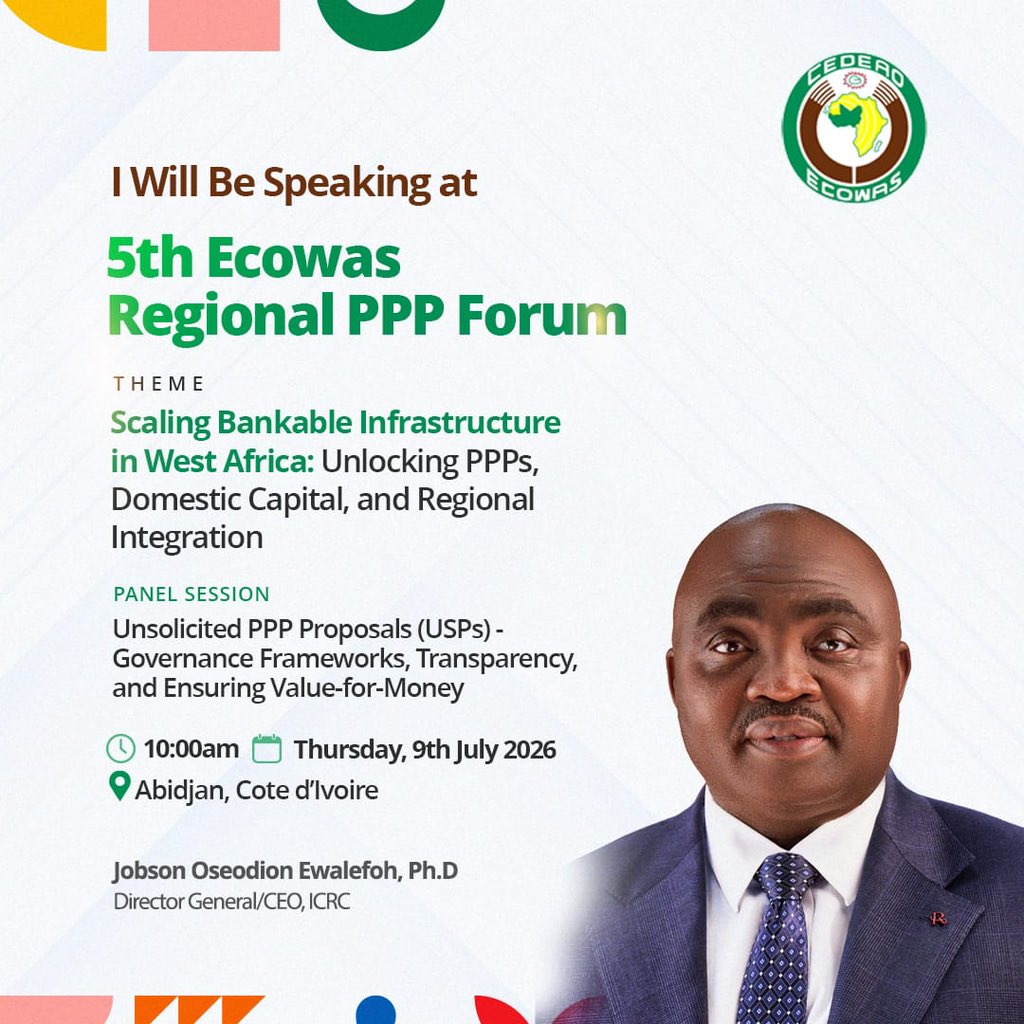
Today, I will be speaking during the panel session on “Unsolicited PPP Proposals (USPs): Governance Frameworks, Transparency, and Ensuring Value-for-Money.”
Across Africa, unsolicited proposals continue to present both opportunities and challenges. When supported by strong governance, transparent evaluation processes, and rigorous value-for-money assessments, they can unlock innovation, accelerate project delivery, and complement government infrastructure priorities. Without these safeguards, however, they risk undermining competition, public confidence, and investor certainty.
I look forward to joining distinguished policymakers, investors, development partners, and PPP practitioners at the 5th ECOWAS Regional PPP Forum in Abidjan, Côte d’Ivoire.
#ECOWASPPPForum #PPP #Infrastructure #WestAfrica
Early last week, we reached another important milestone in Nigeria’s infrastructure development journey with the official handover of the Akanu Ibiam International Airport, Enugu, to Aero Alliance Limited under a Public-Private Partnership (PPP) arrangement.
This achievement is the result of a rigorous and transparent PPP process undertaken in line with the ICRC Act and the National Policy on Public-Private Partnerships. It is also a testament to what can be achieved when institutions work together with a shared commitment to national development.
With an estimated investment of $60 million, this project will support the rehabilitation, modernization, expansion, and efficient management of one of the most strategic aviation gateways in Nigeria. Beyond infrastructure upgrades, the real impact will be seen in increased passenger and cargo traffic, improved service delivery, job creation, and expanded economic opportunities across the South-East and beyond.
I must commend the Minister of Aviation and Aerospace Development Festus Keyamo , the Governor of Enugu State Peter Ndubuisi Mbah , the Federal Airports Authority of Nigeria (FAAN), the Concessionaire Aero Alliance, and all stakeholders whose leadership and collaboration made this project possible.
As the airport transitions into this new phase, the role of the ICRC goes beyond project approval to ensuring continuous oversight, compliance monitoring, and accountability throughout the concession period so that the intended benefits are fully delivered to Nigerians.
The handover of Akanu Ibiam International Airport sends a strong signal to investors and development partners: Nigeria is committed to creating an enabling environment for sustainable infrastructure investment through credible and transparent PPP frameworks.
Great institutions are not built by chance; they are forged through disciplined leadership, clear vision, and an unwavering commitment to national growth.
As my custom is in dicussing with experts that sharpen the delivery of all we represent in ICRC, I had the distinct pleasure of sitting down with renowned leadership coach, Dr. Linus Okorie, for a deeply insightful conversation centered on leadership dynamics and the strategic conversations necessary to elevate the Commission to new heights.
As we navigate the complexities of accelerating Nigeria's infrastructure development through Public-Private Partnerships (PPPs), our leadership approach cannot remain static. To truly stand out, we must build an institution anchored on world-class execution, foresight, and people-centric governance.
At ICRC, We are committed to ensuring that the we doesn't just regulate, but actively catalyzes unprecedented growth in Nigeria's infrastructure landscape.
Thank you, Dr. Linus Okorie, for a brilliant, forward-thinking session. The journey to a more robust, beautifully built Nigeria continues!
At the beginning of this week as a nation we took a decisive step towards changing the narrative in the areas of fragmented data systems, weak traffic enforcement, poor monitoring infrastructure, which the Nigeria’s transport sector has struggled for decades in.
Present at the signing ceremony were the former head of the FRSC , Dr. Boboye Opeyemi, present head of the the FRSC, Corps Marshal Shehu Mohamme, Chairman Governing Counil NITT, Hon. Ejike Njeze Eric, the Egyptian Ambassador to Nigeria and other dignitaries.
Under the regulatory guidance of the ICRC, the Federal Government, through the Nigerian Institute of Transport Technology (NITT), has signed a landmark Public-Private Partnership agreement with Asia-Arab Investment (AAI) for the delivery of the Smart National Transport Data Bank Project.
The project will deliver:
- Deployment of 250 smart gantries across major highways nationwide, including key corridors from Lagos to Kaduna
- Real-time vehicle monitoring through RFID technology and AI-powered cameras to strengthen traffic enforcement, improve security, and reduce road-related crimes
- Establishment of Traffic Management Centres across all 36 states, providing states with modern monitoring and enforcement infrastructure
- A fully private-sector financed model at zero cost to government, with revenue-sharing mechanisms that ensure long-term public value
- Development of a unified national transport database integrating road, rail, air, marine, and pipeline transportation data to support smarter planning, investment, and policy decisions
- Improved road safety through automated detection of violations, helping reduce accidents and save lives
As I’ve always said PPPs are increasingly proving to be critical tools for closing Nigeria’s infrastructure gap and driving economic transformation. We must continue to leverage private sector innovation and financing to deliver sustainable public infrastructure and national impact.
Based on our mandate to provide regulatory guidance for PPP arrangements across sectors and institutions, I received the Commissioner of Police (Works), Force Headquarters, CP ORANWUSI JUSTINE OBIORA, psc, CFPM and other members at the ICRC office, for a strategic engagement on unlocking the value of Nigeria Police assets through Public-Private Partnerships (PPPs).
The meeting highlighted the significant potential within the land and infrastructure assets of the Nigeria Police Force across the country, as well as the opportunities for structured private sector participation to unlock sustainable value, strengthen institutional capacity, and improve service delivery.
From where we sit as regulators, The Nigeria Police Force stands to benefit significantly from well-structured PPP investments that not only improve infrastructure delivery but also strengthen operational efficiency and long-term value creation.
As we discussed, I assured the Commissioner of Police of ICRC’s commitment to ensuring that only credible and capable investors are attracted to such projects while stating the importance of proper alignment, transparency, and strategic understanding in developing these opportunities.
The Commissioner of Police (Works) also reaffirmed the commitment of the Nigeria Police Force to supporting PPP delivery in the country, while highlighting the need to improve critical infrastructure services that support effective policing and better service to Nigerians.
The conclusions and results from our meeting strengthened my resolve to build a strong PPP mindset to bridge our infrastructure gap.
As a nation, we must remember that PPP is the way to build strategic collaboration and deliver long lasting value for Nigerians.
A few days ago, I chaired the meeting of the Presidential Committee on the Nigeria Aircraft Leasing Company (NALC), alongside key stakeholders from the Federal Ministry of Aviation and Aerospace Development, Ministry of Finance Incorporated (MOFI), the Nigeria Civil Aviation Authority (NCAA), and MAG Group.
This initiative has the potential to fundamentally transform Nigeria’s aviation sector and unlock new opportunities for airlines, investors, and the public.
When operational, the Nigeria Aircraft Leasing Company will:
✅ Reduce aircraft acquisition and leasing costs for Nigerian airlines ✅ Help lower domestic airfares for passengers ✅ Address recurring flight delays and cancellations caused by limited fleet availability ✅ Expand domestic and regional route connectivity ✅ Position Nigerian carriers to reclaim a greater share of international air traffic currently dominated by foreign operators ✅ Attract private sector and development finance investment with zero direct federal budget exposure ✅ Create jobs and stimulate growth across the aviation value chain ✅ Establish Nigeria as a leading aviation financing and leasing hub in Africa
This is more than an aviation initiative. It is a strategic economic platform that strengthens national competitiveness, improves connectivity, supports business growth, and deepens investor confidence in Nigeria.
The Nigerian economy can be what we want it to be if we embrace the impact PPPs produce
Today, we celebrate the resilience of our democracy, the strength of our institutions, and the collective hope of a united Nigeria.
Together, let us continue to build a nation founded on freedom, justice, and opportunity for all.
Happy Democracy Day!
Leadership is not built on moments of convenience or bursts of motivation. It is built on consistency, discipline, and the willingness to keep showing up with excellence, even in the middle of the week when energy begins to dip.
One thing I have learned over the years is this: hard work remains at the core of every impactful leader. The results we admire publicly are often the outcome of private sacrifice, long hours, and sustained commitment.
As we move through today, may we resist complacency and stay focused on the bigger goal.
Nations, institutions, and lasting legacies are built by people who remain committed long after others have slowed down.
#WeareICRC
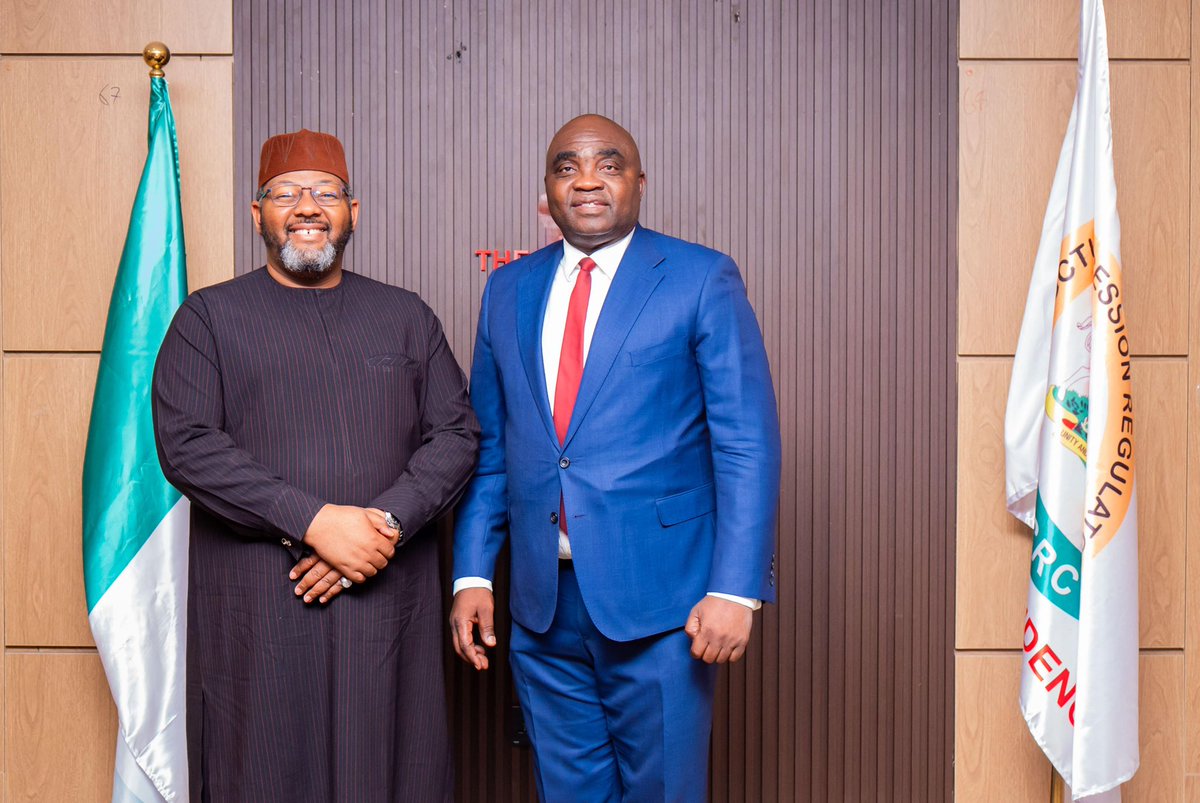
Earlier this week, we were honoured to receive the Chairman of the Presidential Initiative for Compressed Natural Gas (CNG), Barrister Ismael Ahmed, at the Infrastructure Concession Regulatory Commission (ICRC).
This courtesy visit marks a significant step in advancing Nigeria’s clean energy transition and deepening our commitment to structured, investor-friendly Public-Private Partnerships.
The Presidential CNG Initiative has already attracted over ₦32 billion in local investments and more than $2 billion in foreign direct investment. A clear signal of market confidence in Nigeria’s energy future.
At the ICRC, our mandate is to provide a clear line of sight for investors, assuring them of regulatory certainty, transparency, and a predictable return on investment across all PPP projects. That assurance does not waver!
We are fully committed to working with the CNG Initiative to make cleaner, more affordable transportation a reality for everyday Nigerians; whether through CNG-powered vehicles or electric vehicles (EVs).
Together, we are building the infrastructure of tomorrow
It was a pleasure welcoming the Director ECOWAS Project Preparation and Development Unit (PPDU), Mr. Kebba Sulayman Fye and the Project Preparation Officer, Shokunbi Olumuyiwa to the ICRC.
Our conversation centred on a crucial necessity for African PPPs: the need for local frameworks and policies that speak to local realities.
No two economies are identical, and our PPP structures must reflect that.
What is clear across the board, however, is this; if a project is viable and bankable, investment will follow. The funding is never the problem. The fundamentals are!
Beyond frameworks and financing, our meeting further proved to us more that Africa must own its narrative. We cannot continue to look outward for solutions to challenges we understand better than anyone else. The answers exist here.
The capacity exists here. The will must also exist here.
As a commission, we look forward to a productive collaboration with ECOWAS as we work together to deepen the PPP culture across West Africa.
As we celebrate this sacred season of Eid-el-Kabir, I join the entire family of the Infrastructure Concession Regulatory Commission (ICRC) in extending warm greetings and heartfelt prayers to all Muslim faithful and Nigerians at large.
Eid reminds us of the enduring values of sacrifice, faith, obedience, compassion, and service to humanity. These values remain vital not only to our personal lives but also to our shared commitment to building a stronger, more united, and prosperous nation.
May this blessed celebration bring peace to our homes, renewed hope to our hearts, and abundant blessings to our dear country.
Eid Mubarak.
Last week at the International Civil Service Conference 2026, I spoke as a panelist on Infrastructure Delivery for Growth, Resilience and Public Value; a conversation central to Nigeria’s development agenda.
My focus was simple; to establish and advocate for Public-Private Partnerships (PPPs) as a practical and necessary solution to Nigeria’s infrastructure gap.
The issue we face as a nation don’t need repetition. We have an estimated financing need of about $2.3 trillion and annual requirements nearing $100 billion. It is evident that government funding alone cannot deliver the infrastructure needed for sustainable growth.
Based on this, there is a need to emphasize that Infrastructure development cannot rest solely on public resources; it requires deliberate collaboration with the private sector
These things already work!
An example of the impact of innovative infrastructure models can be seen with the Abuja–Akwanga road. As it highlights how structured tolling and maintenance frameworks can keep critical infrastructure in good condition while providing confidence and guarantees for contractors.
This is why at ICRC, we are committed to strengthening frameworks that create an enabling environment for private investment; one that protects public interest, delivers value for citizens, and ensures sustainable returns for investors. Our focus remains clear: to unlock infrastructure development that drives growth, resilience, and national progress.
Yesterday, I had the privilege of joining the Governor of Lagos State, Babajide Olusola Sanwo-Olu, Governor of Taraba State, Dr. Agbu Kefas, Managing Director of the Nigerian Ports Authority (NPA), Dr. Abubakar Dantsoho, Director-General of the Nigerian Maritime Administration and Safety Agency (NIMASA) Dr. Dayo Mobereola, the Honourable Minister of Marine & Blue Economy, His Excellency, Adegboyega Oyetola Africa’s, foremost industrialist Alhaji Aliko Dangote, and over 350 international trade facilitators from across Nigeria and West Africa at the Opening Ceremony of the Port Management Association of West and Central Africa(PMAWCA) Board of Directors Meeting.
A high point of the meeting was Alhaji Dangote’s direct and urgent message to reduce the costs of Africa’s ports as the continent needs more ports. He said he is personally committed to championing the Lekki Free Trade Zone and what will become the deepest and largest port in Africa, a project poised to transform maritime trade across the entire continent.
This vision aligns deeply with the mandate of the ICRC seeing we have already regulated the concession of critical port infrastructure across Nigeria, including the Lekki Deep Seaport. If the Lekki Free Trade Zone and Deep Seaport will be developed through Public-Private Partnership, and it should, then the ICRC stands ready as the institution already proven, positioned, and empowered to structure and regulate that process.
#ICRC #PPP
Recently, we took another important step toward unlocking the immense potential of Nigeria’s tourism and creative economy through a strategic engagement with the Honourable @fmactce_nigeria of Art, Culture, Tourism and the Creative Economy, @hanneymusawa , on the development of critical tourism infrastructure projects through Public-Private Partnerships (PPPs).
Our discussions focused on transformative projects including the development of a world-class 7-star hotel infrastructure, a modern concert and entertainment arena, the revitalisation of national museums for tourism and cultural purposes, as well as strategic collaborations within the film and creative industry ecosystem.
What was exciting about this conversation is the shared understanding that infrastructure is at the heart of building a globally competitive tourism and creative economy.
The Minister reiterated that Nigeria has the talent, culture, creativity, music, fashion, food, and demographic strength to become a leading tourism and entertainment hub, but we must intentionally build the infrastructure that supports this vision.
The goal of unlocking a $100 billion tourism and creative economy by 2030 is ambitious, but achievable with the right partnerships, policies, and infrastructure in place.
The Minister showed grit, focus, and true passion for developing our creative economy and I look forward to working closely with the Ministry and private sector partners to turn these ideas into transformational projects that will redefine Nigeria’s tourism and creative landscape.
When we champion Nigeria as a good investment destination, we do so with much confidence and assurance of sustainability to our investors locally and internationally.
Receiving the delegation from the European Bank for Reconstruction and Development (EBRD) recently, led by the Managing Director, Harry Boyd-Carpenter further proved how much favorable it has become to do business in Nigeria.
Our engagement focused on unlocking stronger collaboration opportunities for Nigeria’s infrastructure and economic development agenda. The EBRD’s interest in Nigeria is particularly encouraging because it goes beyond financing. Their model emphasizes ensuring that projects have a clear pathway to success, sustainability, and long-term impact before investments are made.
The Bank expressed strong interest in supporting Nigeria through corporate finance, project finance, and equity participation in infrastructure projects. Their scope of engagement spans the public sector, private sector, and MDAs, demonstrating a broad commitment to driving growth across key sectors of the economy.
Importantly, the EBRD also conveyed its willingness to support policy development and institutional frameworks that can strengthen investor confidence and improve project delivery outcomes.
With operations in over 70 countries, the EBRD brings global expertise, strategic capital, and a development-focused approach that aligns with the ICRC’s vision of delivering bankable, sustainable, and transformational PPP projects for Nigeria.
For us as at ICRC, we look forward to deepening this engagement and building partnerships that will accelerate infrastructure delivery, strengthen institutions, and create lasting value for the Nigerian people.
Today, we celebrate the backbone of our nation; the hardworking men and women whose dedication drives progress across every sector of Nigeria.
As a country, our workforce remains our greatest asset. People who are resilient, capable, and committed to building a stronger, more prosperous Nigeria. Our sacrifices, professionalism, and unwavering commitment show in the sustainable economy that we are building for ourselves and the generations to come.
As we mark this year’s Workers’ Day, I
want to say thank you for showing up, for pushing through challenges, and for continuing to believe in the work we are doing together to improve the quality of life for all Nigerians.
Happy Workers’ Day.
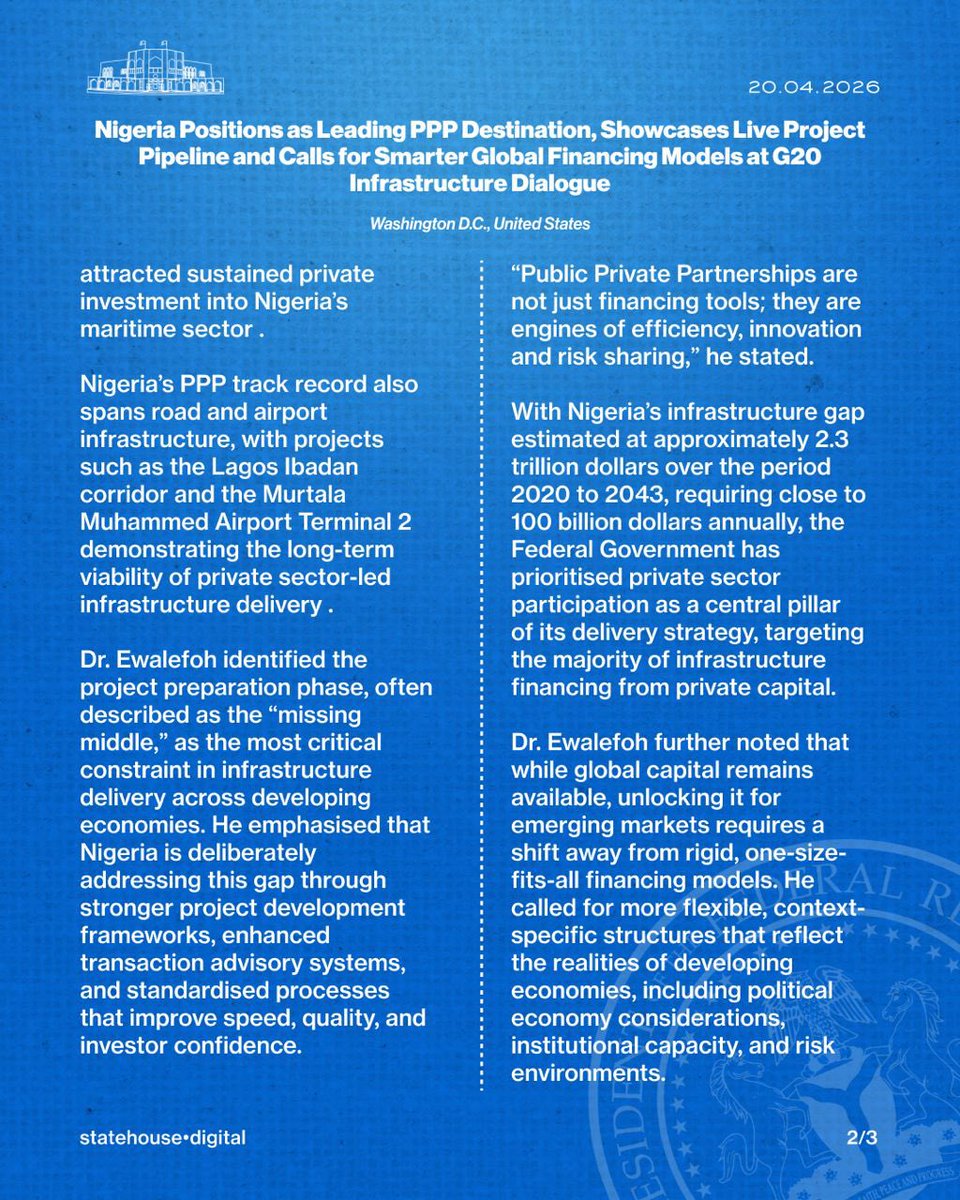
Nigeria is a great PPP destination and as DG, ICRC I will be more vocal about the possibilities and opportunities that abound here.
The G20 infrastructure dialogue provided an avenue to showcase live project pipeline and herald the call for smarter global financing.