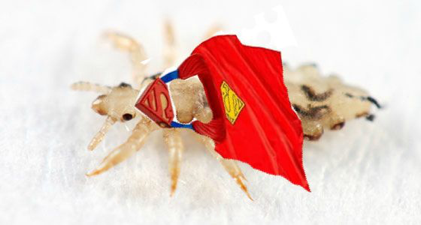
Adults: The adult louse is about the size of a sesame seed, has 6 legs (each with claws), and is tan to grayish-white image . In persons with dark hair, the adult louse will appear darker. Females are usually larger than males and can lay up to 8 nits per day.
Data show that head lice can survive under water for several hours but are unlikely to be spread by the water in a swimming pool. Head lice have been seen to hold tightly to human hair and not let go when submerged under water. Chlorine levels found in pool water do not kill lice
Nymphs: The egg hatches to release a nymph image . The nit shell then becomes a more visible dull yellow and remains attached to the hair shaft. The nymph looks like an adult head louse, but is about the size of a pinhead. Nymphs mature after three molts.
Eggs: Nits are head lice eggs. They are hard to see and are often confused for dandruff or hair spray droplets. Nits are laid by the adult female and are cemented at the base of the hair shaft nearest the scalp image . They are 0.8 mm by 0.3 mm, oval and usually yellow to white.
Uncommonly, transmission may occur by
Wearing clothing, such as hats, scarves, coats, sports uniforms, worn by an infested person;
Using infested combs, brushes or towels; or
Lying on a bed, couch, pillow, carpet, or stuffed animal that has been in contact with an infested person
*Lice die in 36 hours without a host
*nits die in about 4 hours without the consistent heat of the head and are not contagious , even a pulled down nit on the hair strand more than 2 inches from the head die from lack of incubation
*it takes 6 hours to drown live bugs
* lice can’t jump but can suicide dive off of the hair and land on a new hosts pants or shirt and climb up. They only leave the host they are on when the are overcrowded (more than 15 adults and 30 babies)
Reliable data on how many people get head lice each year in the United States are not available; however, an estimated 6 million to 12 million infestations occur each year in the United States among children 3 to 11 years of age.
Head lice are not known to transmit disease; however, secondary bacterial infection of the skin resulting from scratching can occur with any lice infestation.
Data show that head lice can survive under water for several hours but are unlikely to be spread by the water in a swimming pool. Head lice have been seen to hold tightly to human hair and not let go when submerged under water. Chlorine levels found in pool water do not kill lice
Adult head lice are roughly 2–3 mm long. Head lice infest the head and neck and attach their eggs to the base of the hair shaft. Lice move by crawling; they cannot hop or fly.
Head lice and their eggs (nits) soon perish if separated from their human host. Adult head lice can live only a day or so off the human head without blood for feeding. Nymphs (young head lice) can live only for several hours without feeding on a human.
Head lice are spread most commonly by direct contact with the hair of an infested person. Spread by contact with inanimate objects and personal belongings may occur but is very uncommon.
Head lice are not known to spread disease. Head lice can be an annoyance because their presence may cause itching and loss of sleep. Sometimes the itching can lead to excessive scratching that can sometimes increase the chance of a secondary skin infection.
Do not fear Lice Nurse is HERE Dubbed "super lice," these lice are simply head lice that are becoming more resistant to the active ingredients in many common head lice treatments.
@HRETNUH actually ancient Egyptians have dead bugs on their heads and we’re buried with their lice combs in their tombs. Unless you mean the 80s of the Egyptian government. Lol