By respecting each other’s right to express different viewpoints, society becomes stronger, tolerant, and truly free. It is only through mutual respect and a commitment to civil discourse, even in the face of disagreement, that a healthy, functioning democracy can be sustained.
If you escaped extreme poverty + got an education, you’re an OUTLIER.
It’s hard to be poor AND successful. But a good country isn’t built for OUTLIERS. It’s built for ordinary & average people who deserve a fair shot. That’s the Zambia I long for 🤨 #nodignityinpoverty
[as copied]
The darkest hour has one bad habit, it always thinks it has won. Then sunrise arrives, without holding a press conference. Politics has taught us many things. We have mastered blaming yesterday, campaigning today, and promising tomorrow. If promises alone built roads, we would all be driving on six lane highways to the next town.
Meanwhile, hunger remains gloriously non partisan. It never asks for a membership card. It attends every rally, applauds every speech, and still goes home unfed. Poverty, too, is remarkably diplomatic. It shakes hands with government and opposition alike, without discrimination. Inflation never votes. Unemployment never wears party regalia. They faithfully attend every administration.
Perhaps the greatest revolution is not changing faces, but changing hearts. A bridge carries more people than a wall ever will. Forgiveness costs less than revenge, yet pays far greater dividends. When insults become policy, everyone loses. When unity becomes policy, everyone wins. History rarely remembers who shouted the loudest. It remembers who healed the nation.
Let us campaign with conviction, disagree with dignity, and laugh at our political theatre without becoming prisoners of it. When the microphones are switched off, the posters come down, and the crowds go home, Zambia remains. Together, we remain. Together, we are one.
I am just a simple son of a Reverend.
I have been shopping in Zambia for just over a week now. I bought razors and shaving foam for a total of K315. Can people afford this considering the wages?
We need people to read more. Maybe, just maybe, we should stop mentioning Singapore and Zambia in the same breath simply because we once had a similar GDP.
A similar starting point means nothing without discipline, competent leadership, strong institutions, and a culture that respects the rule of law. Nations are built by intention with everyone following the same template.
Just drive around the country. Campaign posters are plastered on every available surface, despite laws and regulations. Then we are supposed to believe these are the same people who care about the country or have the discipline to transform it?
I do not understand why people call others fools when the so-called fools are responding rationally to their lived experience. By all means, vote because of what you believe in. But no one is a fool for voting differently. The job is to persuade, not to insult. If you cannot convince them, that is a failure of your argument, not their intelligence.
By respecting each other’s right to express different viewpoints, society becomes stronger, tolerant, and truly free. It is only through mutual respect and a commitment to civil discourse, even in the face of disagreement, that a healthy, functioning democracy can be sustained.
"Foreign reserves are a cushion for the state, not a meal for the people".
Boasting about foreign exchange reserves amid widespread poverty is a political and economic contradiction: it highlights a government’s focus on macro level indicators while citizens experience micro level deprivation. The tension is real, and it is well captured in current regional debates — especially in Zambia, where opposition figures have criticised the celebration of record reserves as disconnected from lived hardship.
Core idea
Foreign exchange reserves are buffers for the state, not bread for households. When leaders boast about them while people struggle to eat, it creates the perception — often justified — that the government is prioritising optics over welfare.
Why this critique resonates
1.Reserves don’t feed people As Brian Mundubile put it, “What good is a vault of dollars when the majority sleep hungry?” This captures the emotional truth: macro stability does not automatically translate into household well being.
2.Poverty remains stubbornly high In Zambia, critics point out that 64% of citizens remain in poverty, unemployment is high, and inflation still bites. The same dynamic exists in Malawi, where forex shortages and structural weaknesses have long constrained development.
3.Governments often use reserves as political trophies Announcing “record reserves” signals competence, stability, and international credibility — but it can feel tone deaf when citizens face rising food prices, joblessness, and deteriorating services.
4.Reserves serve technical purposes, not social protection Economists emphasise that reserves are meant to:
ostabilise the currency,
osecure essential imports (fuel, medicines),
osupport debt restructuring,
osignal creditworthiness. They are necessary but insufficient for inclusive growth.
Why governments still boast
Even when poverty is high, governments highlight reserves because:
•They are one of the few indicators fully under state control.
•They impress investors and lenders.
•They help negotiate debt and maintain currency stability.
•They create a narrative of “competent stewardship” even when citizens feel no improvement.
This is why the celebration of reserves often feels like macro triumph, micro failure.
The political risk
Boasting about reserves during hardship can backfire by:
•appearing insensitive to suffering,
•fuelling opposition narratives,
•undermining trust in economic policy,
•reinforcing the belief that leaders govern for markets, not people.
This is exactly what has happened in Zambia, where the opposition has weaponised the reserves narrative to highlight the disconnect between government messaging and daily life.
The critique is not that reserves are bad — they are essential. The critique is that reserves without welfare feel like a full treasury and an empty table. Mundubiles actual words were that "the UPND is full of good English talking rhetoric about reserves while farmers are not paid and majority of citizens struggle to put one meal on the table."
Or, in the spirit of the Zambian priest’s metaphor:
You cannot eat reserves. They stabilise the economy, but they do not put nshima on the plate.
~David Cameron resigned after losing the Brexit referendum.
~Theresa May resigned after failing to get her Brexit deal through Parliament.
~Boris Johnson resigned after a series of scandals and ministerial resignations.
~Liz Truss resigned after market turmoil following her economic plans.
~Rishi Sunak lost the 2024 election
Britain will miss the Indian Guy. He knew how to balance the country
One of the greatest mistakes believers make is expecting God's voice to always be dramatic. More often, the Holy Spirit speaks through Scripture, conviction, wisdom, peace, and gentle direction. The goal is not merely to hear God's voice occasionally but to develop a relationship where recognizing His voice becomes a natural part of your daily walk with Him.
6. Act on what God has already revealed (James 1:22)
Spiritual sensitivity grows through obedience. Many people seek new direction while ignoring previous instructions. When you faithfully obey what God has already shown you, your ability to recognize His voice becomes stronger.
1. Learn God's Word so you can recognize His voice (Hebrews 4:12)
The Holy Spirit will never speak contrary to Scripture. The more familiar you become with God's Word, the easier it becomes to recognize His leading. A believer who neglects Scripture will often struggle to distinguish God's voice from personal thoughts and emotions.
@ukusefya@ngomabest196@ChairmanMweemba If PF still "exists", it's current leadership are in partnership with UPND. So one discussion should be how UPND is in partnership with a party they defeated. Mundubile and Makebi are heading a different party altogether arguably advancing different policies. .
The problem is that educated folk tend to look at elections intellectually. It is often much simpler than that. The stomach, meaning the economy. Over the last five years growth has not diffused. For the majority the lived experience is a high cost of living, compounding from years of untamed inflation.
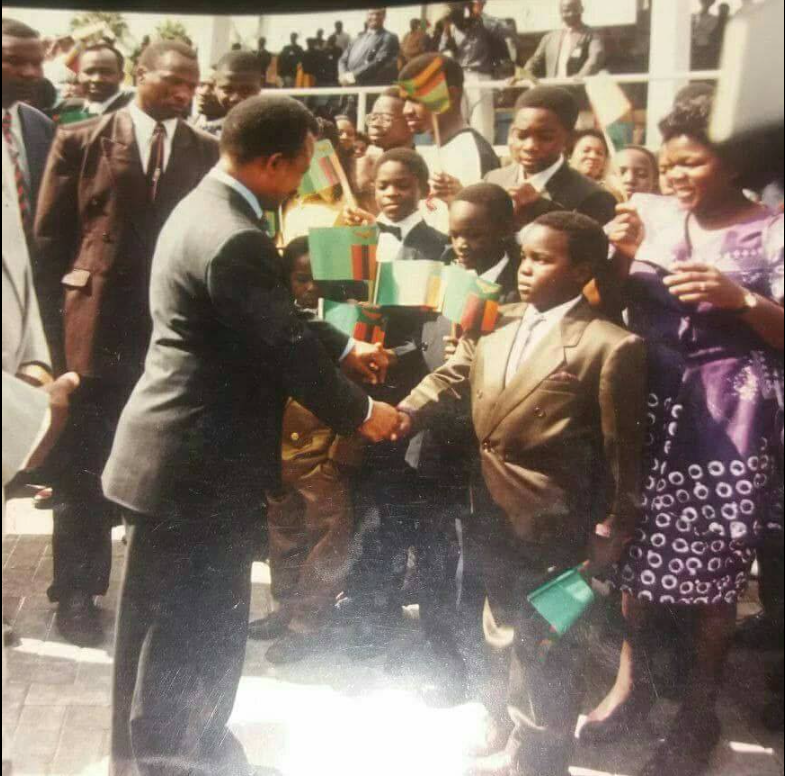
Anyone who knows me knows this is my favourite photo.
President Frederick Titus Jacob Chiluba leaned in, I stood tall, and my mother watched as power shook hands.
It was one of those fully parent driven events. I just knew my mum was excited that the Zambian president was coming to Kenya. This was in the early 1990s, not long after Chiluba had succeeded Kenneth Kaunda. At that time he represented hope, a fresh chapter for Zambia after nearly three decades of one party rule. For Zambians living in Nairobi it was a moment of pride, a chance to meet the new leader who carried so much promise. My mum, working at the British Council, insisted I be there. She had come to Kenya for further studies, met my dad, and built a life here, but her roots and her pride in Zambia’s future carried her to the airport that day with me in tow.
I did not grasp the gravity. I was just a child being taken to meet a visiting head of state. Yet today, when I look back, I see more. I see posture, symbolism, and history in a single frame. Chiluba leans forward, extending authority. I stand upright, unintimidated, hand outstretched. My mum looks on, smiling, the bridge between heritage, identity, and a moment of recognition.
This photo reminds me that we rarely understand the weight of moments while we are in them. Their meaning unfolds years later when life teaches us how to see.
For my mother, this was pride. For me, it became perspective. Power bends, youth rises, and the witness in the background holds both stories together.
Sometimes leadership is exactly that: recognising when to lean in, when to stand tall, and when to simply bear witness so that others can remember.
🚨BREAKING: Didier Drogba says if the USA didn't want other Countries citizens in the US they shouldn't have bid for the Fifa world cup 2026 and says denial of Iran supporters and Somali referee Omar Artan is totally unacceptable, Football should be separated from politics
"When a country bids to host the biggest football tournament on the planet, it knows exactly what comes with it. Players, referees, officials and supporters from every corner of the world are part of the package."
"I look at the situation involving Somali referee Omar Artan and I feel disappointed for him. FIFA selected him because he earned that opportunity on merit, yet he was unable to participate after being denied entry."
"Then you hear about Iran's football federation claiming that its supporter ticket allocation was withdrawn just days before the tournament. If true, that leaves ordinary fans paying the price for issues that have nothing to do with football."
"The people suffering are not politicians. They're supporters who save money for years hoping to follow their national team at a World Cup."
"Football has always been one of the few things capable of bringing different cultures together. The moment politics starts deciding who gets to be part of that experience, everyone loses."
"I played in World Cups and international tournaments. The beauty of those events is seeing supporters from dozens of countries sharing the same streets, the same stadiums and the same passion."
"No fan should be judged because of their nationality, and no referee should miss the biggest moment of his career because of political circumstances beyond his control."
"FIFA, governments and football authorities need to find solutions because the headlines right now are about visas, travel restrictions and disputes instead of the football itself."
"The World Cup should belong to the world. That's what makes it special. The game must always come first, and politics should never be allowed to overshadow football's greatest celebration."
@_mahmiss Most of the houses you are referring to are more than 100 years old. Plumbing (toilets inside the house) was not widely available until around 1940. So Most of those houses were just modified to have toilets inside.


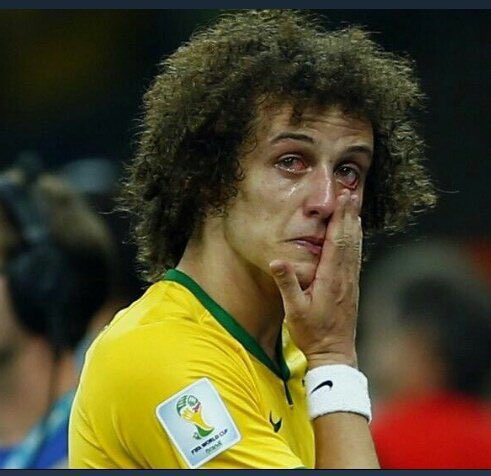
![DrCh0nya's tweet photo. [as copied]
The darkest hour has one bad habit, it always thinks it has won. Then sunrise arrives, without holding a press conference. Politics has taught us many things. We have mastered blaming yesterday, campaigning today, and promising tomorrow. If promises alone built roads, we would all be driving on six lane highways to the next town.
Meanwhile, hunger remains gloriously non partisan. It never asks for a membership card. It attends every rally, applauds every speech, and still goes home unfed. Poverty, too, is remarkably diplomatic. It shakes hands with government and opposition alike, without discrimination. Inflation never votes. Unemployment never wears party regalia. They faithfully attend every administration.
Perhaps the greatest revolution is not changing faces, but changing hearts. A bridge carries more people than a wall ever will. Forgiveness costs less than revenge, yet pays far greater dividends. When insults become policy, everyone loses. When unity becomes policy, everyone wins. History rarely remembers who shouted the loudest. It remembers who healed the nation.
Let us campaign with conviction, disagree with dignity, and laugh at our political theatre without becoming prisoners of it. When the microphones are switched off, the posters come down, and the crowds go home, Zambia remains. Together, we remain. Together, we are one.
I am just a simple son of a Reverend.](https://pbs.twimg.com/media/HOEGLpcXsAAKOjn.jpg)