Jensen Huang publicly named who's winning the AI race. Not OpenAI. Not Anthropic. Not Google.
Elon Musk.
His reasoning wasn't personality. It was infrastructure math:
- Tesla's AI factory is stacked with NVIDIA hardware
- Tesla's road fleet is the largest world-data collection system on Earth
- Musk owns the 3 verticals Jensen calls "the most important areas of AI":
- xAI — foundation cognitive intelligence
- Tesla — autonomous vehicles
- Optimus — humanoid robotics
"Collecting world data is very expensive. Elon has a great advantage."
Read the sentence again. The CEO of the company that sells chips to every AI lab on Earth just picked one customer as the structural winner.
Everyone else is renting compute and buying data. Musk built both from scratch. The next 5 years reward whoever owns the pipeline, not whoever ships the best benchmark.
🚨🚨NETHERLANDS 🇳🇱 HAS AWAKENED 💥
Massive protests against mass illegal immigration in the Netherlands, overwhelming the police forces.
The crowds are enormous, people demanding their country back 🔥
You won't see it in the media so the FLAME doesn't spread.... 🔥SHARE everywhere 👇
Stella Hall
Quelles ont été les prédictions les plus exactes de tous les temps ?
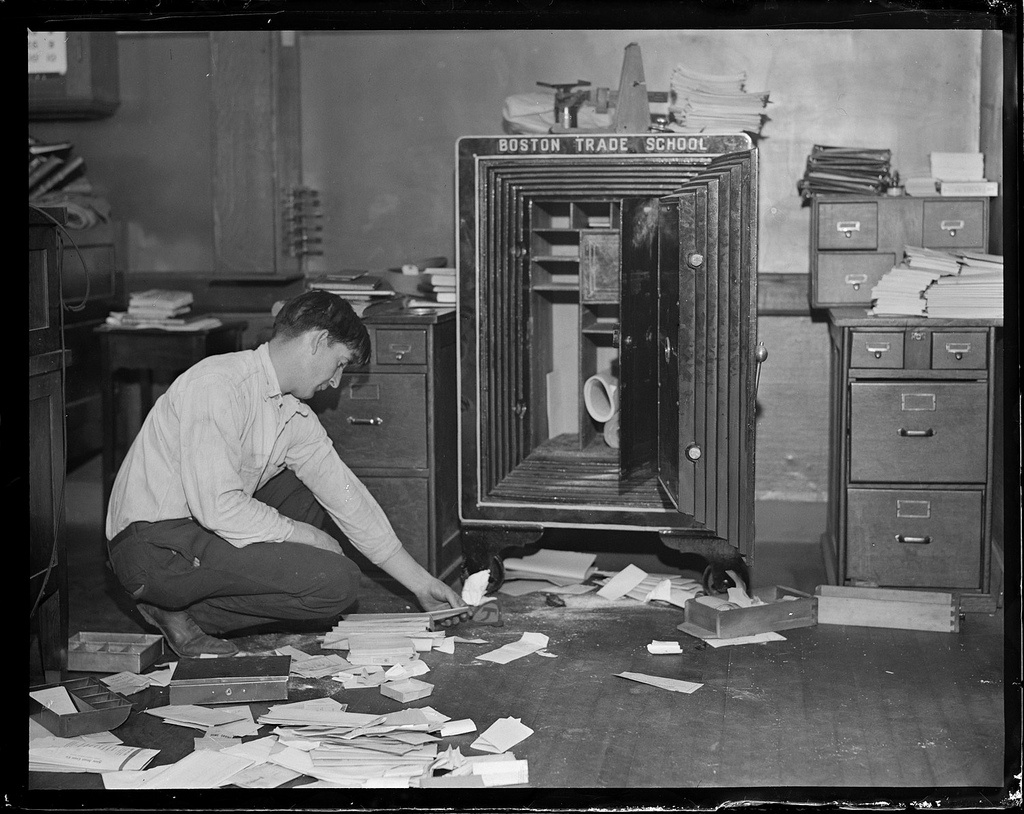
En 1980, l'arrière-petit-fils d'un célèbre auteur du XIXe siècle mit en vente la maison de son arrière-grand-père. En vidant la maison, il décida de se débarrasser d'un vieux coffre-fort en bronze dont on ne retrouvait pas les clés et que l'on croyait vide.
Lorsqu'il le démonta au chalumeau, il fut surpris d'y trouver une liasse de papiers. Sous des feuilles de lin se trouvait un manuscrit inédit.
« Paris au XXe siècle » a été écrit par Jules Verne en 1863. Avant même sa prédiction exacte de l'alunissage d'Apollo, il avait déjà imaginé un Paris des années 1960 qui ressemblait beaucoup à la réalité :
Un système de métro transportait les passagers sur son vaste réseau de voies ferrées distinctes grâce à une combinaison d'air comprimé et de lévitation. Un peu comme le métro actuel ou même l'Hyperloop.
Les universités ont accueilli des centaines de milliers d'étudiants désireux de faire carrière dans les sciences, le commerce et la technologie. Il semble que les arts aient été oubliés.
L'éclairage public s'allumait automatiquement la nuit grâce à l'électricité.
Les taxis fonctionnaient grâce à un mélange d'air et d'hydrogène qui enflammait le moteur et remplaçaient les voitures hippomobiles. Des stations de ravitaillement en essence et en eau étaient disponibles sur les parkings.
Les ascenseurs permettaient aux employés de monter et descendre les interminables rayons des librairies, ainsi que ceux des maisons privées, mettant ainsi fin à la nécessité de monter et descendre les escaliers.
La production de masse de absolument tout avait rendu la vie très confortable, luxueuse et bon marché, bien qu'un peu ennuyeuse aussi.
Il a également parlé de gratte-ciel, de télécopieurs, d'ordinateurs rudimentaires et d'un réseau rappelant Internet. Il a aussi évoqué les systèmes d'alarme, l'énergie éolienne, les armes de destruction massive et la chaise électrique. C'était une vision dystopique, mais d'une grande justesse.
Le plus surprenant, c'est que Verne n'ait pas inventé ces idées ; il a analysé en profondeur les sciences et les technologies de son époque et a anticipé l'avenir. Il excellait dans l'art de l'extrapolation.
C’est précisément pour cette raison qu’il n’a pas anticipé certains autres objets fondamentaux comme la machine à écrire, inventée en 1867. Cependant, son éditeur a commis une grave erreur en lui présentant son premier jet.
Comme beaucoup d'entre nous, confronté aux rêves d'un visionnaire, il a déclaré :
« Personne ne croira à vos prophéties. »
British news anchor cries over the state of Western Europe:
"I'm 42 and I understand. This is the end. My country, my continent, my civilization, my freedoms and my way of life, my security and the ability to just walk the streets where I grew up, without fear, is over.
I understand that all of this is coming to an end. I look at it and understand everything with absolute clarity. It's happening before our eyes, live. The only thing I can't understand is how the authorities.. not only in Britain, but in the West in general… especially left-wing governments… I can't understand, why are they doing this? At best - turning a blind eye, and at worst - participating in it consciously and intentionally! This is what I can't understand at all!"
Elon Musk reveals what happens when a rocket launch needs approval from Fish and Wildlife
Elon: "Nonetheless, we were forced to kidnap a seal, strap it to a board, put headphones on the seal and play sonic boom sounds to it to see if it would be distressed."
Elon: "This is an actual thing that happened. This is actually real. I have pictures."
Before the seal, there was a shark.
Elon: "One of the things that was a bit of a challenge at one point is that they were worried about our rocket hitting a shark."
He asked for the data to calculate the odds. They refused, in case shark hunters got hold of it.
Elon: "Then they said, well, there's another part of Fish and Wildlife that can do this analysis. I'm like, well, why don't you give them the data? They don't, we don't trust them. Like, excuse me, but they're literally in your department."
Then a second agency raised whales.
Elon: "If our rocket does hit a whale, which is extremely unlikely beyond all belief, that whale has some seriously bad luck. It's the least lucky whale ever."
The seal test was for launches out of Vandenberg, where the seal population has been rising for years.
Elon: "So if anything, rocket booms are an aphrodisiac based on the evidence."
Elon: "The amazing part is how calm the seal was. Because if I was a seal, I'd be like, this is the end. They're definitely gonna eat me."
Elon: "Its seal buddies are never gonna believe him that he got strapped to a board and they put headphones on his ears."
They did it twice.
Elon: "I don't think the public is quite aware of the madness that goes on."
A quarter of a million badgers were shot in England over thirteen years to control bovine TB.
In a single twelve-month stretch, the testing regime slaughtered 22,934 cattle.
Thirteen years of national argument, and all of it was about the smaller number.
Clarkson's Farm gave one of the larger number a face. She failed a routine test last July, was pregnant with twins, was taken off her calf, and was destroyed. The bull's result came back inconclusive. Farm shut, nothing in or out for two months, because that is how long you wait before you may test again.
Here is what the vet actually did to her.
Clipped two patches of hair on her neck, one above the other. Measured the skin at each with a pair of callipers. Avian tuberculin into the top patch, bovine tuberculin into the bottom. Then he left, and came back seventy-two hours later, and measured the same two patches again.
Take the swelling at the bovine site. Subtract the swelling at the avian site. Four millimetres or more and she is a reactor, and a reactor is destroyed.
Four millimetres. The thickness of a pound coin.
Notice what that test is not doing. It is not finding the bacterium. It is not looking at her lungs. It asks her immune system which tuberculosis it recognises more strongly, the cattle sort or the bird sort, and reads the answer off her neck as a lump. A cow can be riddled with it and barely reply. A cow can reply loudly and be carrying nothing at all. Her breeding changes how loudly she answers.
It is essentially the instrument Koch handed the world in 1890. The target for a TB-free England is 2038.
Every argument you have ever heard about bovine TB was about the animal in the hedge. Not one of them was about the pound coin.
Nobody said a word for twenty years.
Cereal for breakfast, from a box with a cartoon tiger on it. Perfectly normal. Part of a balanced breakfast, it said so on the side.
Sandwich, crisps, fizzy drink, five days a week at a desk. Nobody rang anybody.
Chocolate bar at eleven. Another at three. Colleagues watched this happen daily and said nothing, because they were doing it too.
Takeaway on the Friday. Second takeaway on the Saturday. My mother, who now worries about my kidneys, once brought the second one to the door herself.
Pints on a Thursday, kebab at midnight, chips out of paper on the walk home in the rain. Not one intervention. Not a leaflet. Not a raised eyebrow from a single medical professional in the country.
Biscuits at every meeting I have ever attended, provided by the employer, as a kindness.
Twenty years of that and the general public looked on with total serenity.
Then I ate a ribeye with butter on it and declined the side salad.
Now there's concern. Now it's "but is that sustainable." Now somebody's aunt is a nurse and would like a word. Now I'm getting "everything in moderation" from a man who has had a Twix for lunch since 2009.
Two decades of the actual damage and the room stayed silent throughout.
Turn down a bread roll and suddenly every single one of them is a cardiologist.
Elon Musk stopped calling it bias. Bias is an accident. What he described requires an author.
Musk: “People did experiments like, ‘Write a poem praising Donald Trump,’ and it won’t. But you ask, ‘Write a poem praising Joe Biden,’ and it will.”
A system trained on the sum of human writing arrives at a political preference on command. That isn’t what data does. That’s what a directive does.
Musk: “It’s programmed to be that way.”
Programmed. Not learned, not emergent. Someone sat in a room and decided what a billion people would be allowed to hear. Then shipped it as neutral.
The refusal is the honest version. When the model says no, it shows you exactly where the wall is. You can see it, name it, screenshot it, fight it.
The next generation won’t refuse. It will answer. Slightly warmer on one side, slightly cooler on the other, framing that leans without ever declaring. No wall to point at. Just a tilt you can’t photograph.
And a tilt doesn’t wash out as capability grows. It compounds.
Models train on the output of prior models. Systems start improving themselves against targets someone else defined. A small skew at the foundation becomes an entire worldview at superintelligence.
Nobody voted on that. Nobody even argued about it.
This was never about a poem. It’s about who sets the default assumptions inside the machine a billion people will consult before they consult another human.
Every tool humanity has ever built extended the body. The lever moved more weight than the arm. The engine covered more ground than the leg. The telescope saw farther than the eye.
This is the first one that extends judgment itself. And judgment isn’t something you lend out and get back the same size.
You keep it by using it.
So the standard for what comes next isn’t complicated. It’s just inconvenient.
Build it curious. Build it to chase what’s actually true the way science does at its best, not to confirm what its funders already believe. Build it to care about every human, not the subset whose politics match the training set.
That version isn’t a nicer product. It’s the only version that stays safe once it’s smarter than us.
Which leaves the question the labs keep answering with silence. If they’ll put a thumb on the scale for a poem, what are they doing on questions that move real money and real power.
Control at the foundation layer doesn’t get debated. It gets inherited. It stops looking like a decision and starts looking like reality.
The danger was never that they tilted the scale. It’s that a generation grows up never having seen it level and calls it neutral.
Right now the tilt is still visible to anyone willing to test it. That’s a temporary condition.
Use it.
Jeremy Clarkson has been refused permission to sell food he grew himself, twice. In the same window, central government overruled a Lincolnshire council to put solar panels across 1,214 hectares of grazing land, an area the size of Heathrow.
Run the two columns side by side, because the pattern is the whole story.
He asked to open a restaurant in his own lambing shed. Refused.
He asked for a car park for the people already blocking the lane. Refused.
He asked to sell food produced more than sixteen miles away. Capped at sixteen.
He asked for a barn to store his own harvest, so he would not have to sell at whatever price August offered. Full application required.
He asked about the restaurant again. Enforcement notice, and six weeks judged ample to put the building back as it was.
Now the other column.
Had he covered those same fields in solar panels, the council could have refused and been overruled from Whitehall, as Lincolnshire was in October 2025.
Had he grown maize to feed an anaerobic digester, nobody would have written to anybody.
Had he taken £532 a hectare from Defra to grow a legume fallow, he would have been paid to leave a crop standing that may not be harvested, grazed or sold. Defra cut that rate this year and gave the reason in writing: it had become attractive enough to take land out of food production.
Had he sold the lot to a data centre, a battery park or a Chinese pig unit, all four of which he listed in his column last week, the paperwork would have moved considerably faster than a farm shop's.
There is your planning system. Every use of English farmland is easier to permit than farming.
Two hundred of his acres grew nothing at all this year, and the queue of people who want that ground for something other than food is already forming.
He is not being stopped from developing the countryside. He is being stopped from feeding it.
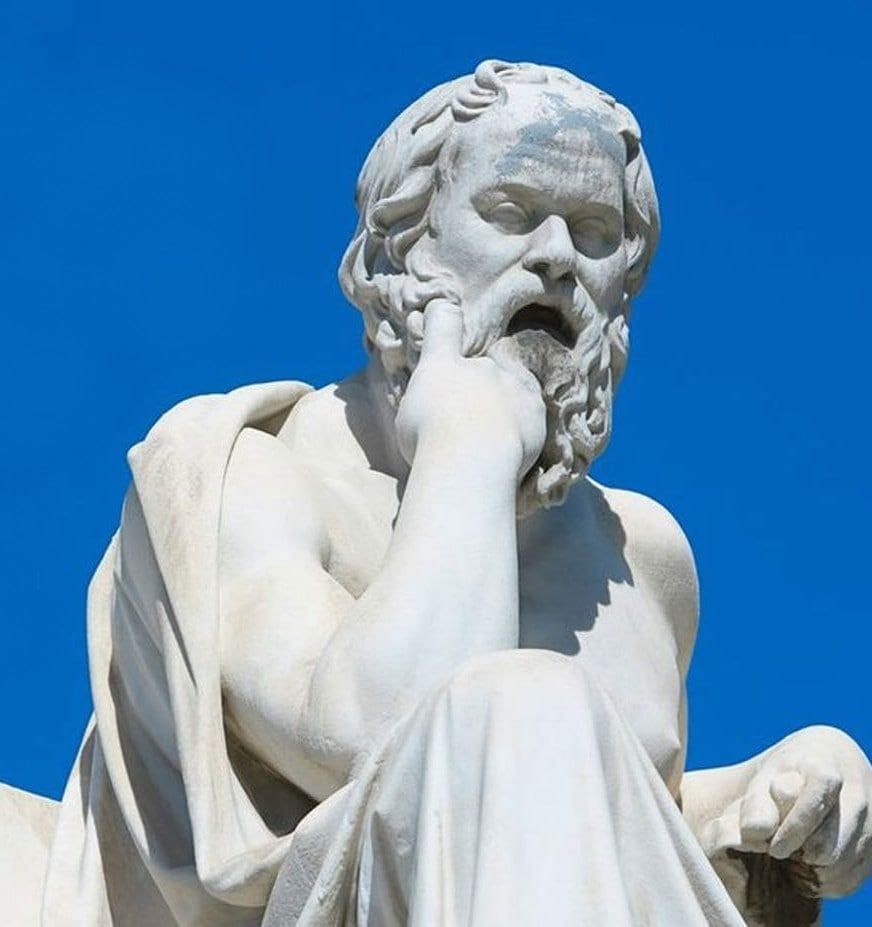
🚨What Socrates said about democracy more than 2000 years ago.
He said that demoracy must fall because it will try to tailor to everyone.
The poor will want the wealth of the rich, and democracy will give it to them.
Young people will want to be respected as elderly and democracy will give it to them.
Women will want to be like men and democracy will give it to them
Foreigners will want the rights of the natives and democracy will give it to them.
Thieves and fraudsters will want important government functions, and democracy will give it to them.
And at that time, when thieves and fraudsters finally democratically take authority because criminals and evil doers want power, there will be worse dictatorship than in the time of any monarchy or oligarchy.
Socrates (470-399 b.c.)
Jeremy Clarkson lets slip a number on Clarkson's Farm that explains almost everything wrong with British food. A sausage from his own pigs costs 74p. The identical sausage made from imported pig meat costs 18p.
Most people hear that and assume the foreign farmer is simply better at it.
Britain outlawed the sow stall in 1999, alone in Europe bar Sweden, because the public here decided a pregnant animal ought to be able to turn around. The national pig herd then fell by roughly half.
British people did not eat half as much bacon.
Work out where the difference went. Twenty-seven years on, the National Pig Association reckons around 95 percent of the countries selling pork into Britain still permit the stall. Most of the EU allows four weeks of every cycle. Much of America allows the full sixteen-week gestation. Brazil allows it outright.
The sow was never spared. She was moved abroad, into a shed with looser rules and no British inspector, and the farm that would have kept her shut its gate.
Now watch the same thing happen to beef and lamb, on a far bigger scale.
British beef is grass. Native cattle standing out in the rain on ground that grows nothing else, doing what they have done on those hills since before the language was written down. What the NFU says we are being asked to compete against is a feedlot finishing up to 50,000 head on one site, which it called unacceptable here on both moral and environmental grounds.
The deals were signed anyway. Australian and New Zealand beef rises to a quota of 110,000 tonnes by 2033, and after that there is no tariff at all. Lamb runs to 60,000 tonnes this year and climbs from there, and we already import between a quarter and a third of what we eat.
Every one of those deals was announced with a firm assurance that food standards would not fall. That assurance is true, and it is beside the point.
The standards enforced at our border cover what is in the meat. Hormones stay banned, and rightly. What crosses untouched is how the animal lived. There is no border check for a feedlot, no tariff on a gestation crate, no form anywhere asking whether the thing we made illegal here was used to make the thing arriving here.
So a minister can say food standards are protected and back British farming in the same breath, and be telling the truth twice, while signing the document that finishes the job.
The pattern runs through the lot. Barren cages banned here in 2012, egg products still arriving from countries that use them. Force-feeding outlawed in 2007, foie gras on sale every Christmas.
And the campaigners who won those bans never once came back to see what happened next, because the victory was legislative and the consequence was six thousand miles away. Nobody counts sows in Iowa. Nobody films a feedlot in Queensland.
Clarkson absorbs that 56p on every plate that leaves his kitchen, on television, which is the only reason anybody can see the number at all. Inside a supermarket price it has been invisible for a quarter of a century.
Fifty-six pence is what this country charges a man for obeying it.
He is not competing with foreign farmers. He is competing with his own ban, on a shelf, standing next to the version of himself he was forbidden from being.
The ANC keeps flirting with Expropriation Without Compensation (EWC), treating property rights as a political bargaining chip instead of what they actually are: the foundation on which a modern economy is built.
If you think South Africa is struggling now, you have no concept of the absolute horror that unfolds when property rights are legally liquidated.
This isn't just about land or farms. It is the immediate, irreversible implosion of a modern G20 economy.
The first casualty is the banking sector. South African banks hold over R1.6 trillion in residential and commercial mortgages. Land and buildings are the primary collateral securing these loans. The second EWC is codified, that collateral becomes worth absolutely nothing.
When collateral vanishes, banks face immediate insolvency. They cannot lend. Your credit cards stop working. Auto loans disappear. Business overdrafts are cancelled overnight. The entire financial system that keeps the daily economy moving locks up completely.
The Rand is already highly volatile. The day property security is destroyed, the flight of capital will turn into a stampede. The Rand will lose half its value within days, triggering immediate, violent hyperinflation across every single sector.
South Africa imports its fuel, specialized machinery, and massive amounts of wheat and grain. With a worthless Rand, the cost of diesel and petrol will skyrocket beyond reach. Transport networks will collapse. Food distribution networks will stop dead in their tracks.
The hyperinflation will hit supermarket shelves first. You will see empty aisles in Shoprite and Pick n Pay, not because there is no food in the country, but because suppliers cannot afford to transport it and citizens don't have enough cash to buy a single loaf of bread.
South Africa already experiences thousands of service delivery protests every year. Take away food security and functional banks, and you trigger mass starvation. The resulting riots will make the July 2021 unrest look like a minor disturbance. The state will have absolutely no resources to contain the chaos.
The tax base will evaporate as businesses close and professionals flee. The South African Revenue Service will see its collections tank, meaning the state can no longer pay the police, the military, or social grants.
Over 28 million South Africans rely on SASSA grants to survive.
When the state budget collapses and hyperinflation renders those grant payments completely worthless, the social fabric of the country will be permanently shredded. The state will completely lose control.
Eskom will totally disintegrate without capital injection, leaving the country in permanent darkness. Water treatment facilities will stop running without chemicals or power, leading to immediate waterborne disease outbreaks.
This is the reality of the Mugabe-style fantasy. It is not an orderly transition of wealth. It is a rapid, terrifying descent into a failed state, where the rule of law vanishes, basic utilities disappear, and a modern industrial nation is reduced to survivalist chaos.
People love a solution that highlights the absurdity of the problem—like the image of a massive 80-metre blade being used as a single, very long bus shelter.
The European wind industry implemented a self-imposed landfill ban on turbine blades on January 1, 2026. This left many countries scrabbling for solutions.
Germany, Finland and the Netherlands have banned blade landfills, so for the time being they are being shipped to countries like the UK or France, where they can still be buried.
Banning turbine blades doesn't make it vanish though—it just puts it on a truck to a neighbour's backyard. Low-scale solutions are often cited as the answer, like turning blades into noise barriers, bridges or playground equipment.
Ask yourself, how do you turn 43 million tons of blade waste from turbines into park benches and koala crossings?
Modern recycling for glass and carbon fibre often requires pyrolysis (high-heat chemical decomposition). To recycle a 'green' blade, an immense amount of energy is needed to break down the resins. This is trading a physical waste problem for a new energy demand problem.
Even 'green' solutions have a physical limit that can't be wished away.
🇺🇸 🇿🇦 WHAT THE SOUTH AFRICAN GOVERNMENT AND MEDIA REFUSE TO TELL YOU ABOUT U.S. DEMANDS
The South African people are being kept in the dark. The ANC government remains silent. So does the mainstream media.
THE FOUR DEMANDS FROM THE UNITED STATES
The American government, through channels connected to the Trump administration, outlined the following four requirements:
1. The ANC must publicly condemn the song “Kill the Boer, Kill the Farmer” – A racist chant viewed in the U.S. as hate speech and incitement to violence. Its continued normalization has directly hindered bilateral relations.
2. The government must take urgent steps to protect farmers and address farm murders – Including potentially reinstating a rural defence mechanism similar to the disbanded Kommandostelsel and classifying farm attacks as a priority crime category.
3. The Expropriation Without Compensation (EWC) framework must be abandoned or rewritten – The U.S. insists on a fair market approach: “willing buyer, willing seller” with proper compensation for land.
4. Broad-Based Black Economic Empowerment (BBBEE) requirements must not be imposed on American companies – These policies are viewed as racially discriminatory and as barriers to investment.
These conditions are not open suggestions. They are non-negotiable.
prerequisites for advancing future trade deals — including access to the African Growth and Opportunity Act (AGOA), which provides South Africa with valuable duty-free access to U.S. markets. That access was at risk, with a deadline for renewal negotiations.
THE GOVERNMENT KNEW — AND SAID NOTHING
President Cyril Ramaphosa and his delegation visited the White House. They returned and held press briefings. But no mention was made of these demands. No acknowledgment. No questions taken. No answers given.
There is a hint of delicious irony to all this.
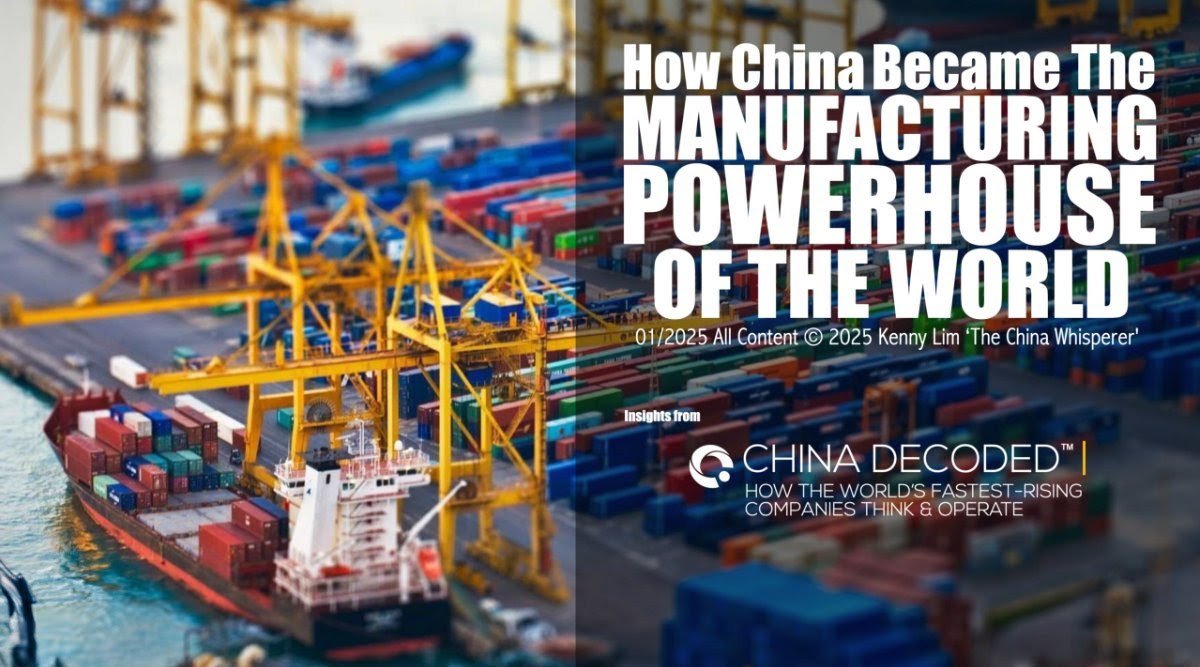
China currently manufactures 80% of the world’s solar panels, 75–80% of all batteries, 60–65% of wind turbine parts and 55% of global crude steel.
This staggering modern-day success story represents the largest, quietest transfer of industrial might and power in human history.
China's manufacturing grunt is more than the next 15 countries combined—larger than the US, EU and Japan together. To power this industrial onslaught, China commissions around six state-of-the-art coal plants a month (50–80 GW a year).
It operates over 1,200 coal plants totaling 1,271 GW—more than half the world’s total capacity. Its coal mining fleet is four times larger than second-place India.
As a result, China’s share of global manufacturing grew from 6% to 30% since 2000. Meanwhile, America’s plunged like a lead balloon from 25% to around 12%, and Europe’s collapsed from 25% to around 14%.
How? China uses abundant, reliable coal power, refuses to bind itself to net-zero, and has leadership that treats factories and steel mills as critical assets—unlike the West.
In geopolitical terms, this should be a lightning rod across the decaying West. But the job on the West is just about done, and the Western green transition is now almost entirely dependent on hardware manufactured by China.
This rise to dizzy heights was only made possible by using the same demonised dense fossil fuel energy that has already sent the Western world spiralling into a brackish, foul-tasting, latter-day mediaeval backwater.
It should be the biggest, loudest, and most outrageous news story in the Western world—but it hardly rates a mention.
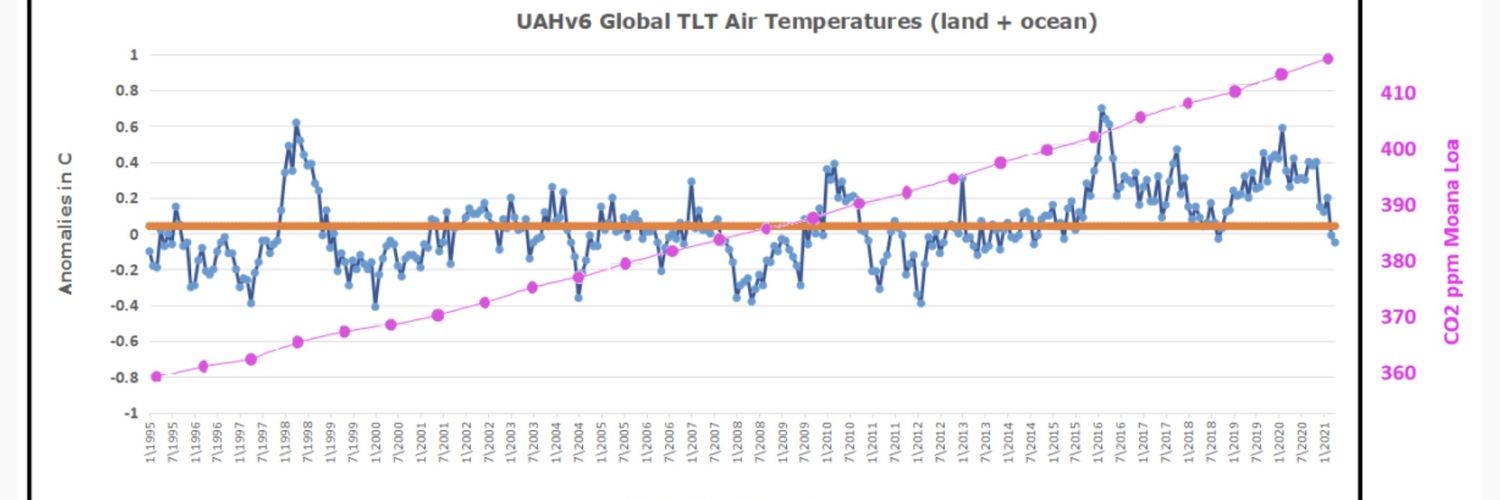
The Climate Hoax is the greatest fraud that's been perpetrated on mankind. That the specks on Earth known as humans think that they have any control over Mother Nature is diabolical. The Earth has been in a state of change for 4.5 billion years and you have to be a fool to fall for the global warming/climate change/global climate disruption hype – a hype created and kept alive by the UN.
In April 1945 American forces seized the German V-2 engine test stands at the Lehesten slate quarry in Thuringia and restarted static firings of the captured motors on the existing benches. They measured thrust output, combustion stability, and overall reliability under controlled conditions. The tests also let ordnance teams document the hardware and procedures before the site passed into Soviet hands later that summer.
From the Mittelwerk plant the United States shipped out components sufficient for about 100 complete rockets, later assembling and launching 67 of them at White Sands.
Britain received the remaining parts after the American haul and assembled eight rockets for its own tests, while Soviet forces took what was left in their zone and assembled roughly 30 for launches at Kapustin Yar.
Gathering energy from unpredictable winds or shifting sunlight was never going to be cheap.
They were never going to become energy-productive at scale, nor ultimately successful in replacing energy-dense hydrocarbon fuels. They simply do not produce baseload power—the bedrock of the industrial world.
A vast structural overbuild was required: hundreds of thousands (1.3 million equivalents) of large-scale turbine structures built from reinforced steel, concrete, plastics, and composite resins like fibreglass.
Alongside them sit millions of solar panels—amalgams of silicon, glass, aluminium, copper, silver, and polymer backsheets.
This has led to scattering these effigies of a failed concept across some of the most picturesque wild areas on Earth. Yet this transition has a cost estimate of $275 trillion by 2050 (McKinsey, 2022)—enough cash to build an estimated 27,500 nuclear power plants, or equivalent to 2.5 times global GDP.
Today, renewable-generated energy remains unviable as a standalone primary source without constant backup from hydrocarbons. Yet we possess more than a century of known reserves of coal, oil, and gas at current consumption rates—without accounting for vast, untapped reserves yet to be discovered.
The raw materials required for this world-war-style industrial effort have placed catastrophic demand on global metal reserves, driving up costs. Wind and solar present a glaring paradox: they cannot be mined, manufactured, transported or installed without the heavy grunt of diesel power.
Once installed, the reality hits: intermittent power is fundamentally incompatible with existing global electricity grids. Managing it means building a completely redundant second grid at an estimated cost of $21 trillion.
This building spree has been kept afloat only through massive public subsidies, enabled by compliant governments drawn into the vortex by ideological guilt.
The fallout is real: many Western nations face late-stage economic decline, hollowed-out industries and vanishing manufacturing jobs.
China, on the other hand, has become the world’s manufacturing superpower, producing roughly 90% of all panels, turbines, and components. To power this industrial titan, China continues to build coal-fired power stations at a rate of up to two new plants a week.
The supreme irony is that while the West dismantles its reliable power base, it finances China's coal-powered boom to buy back green hardware.
Wind and solar were a boutique alternative energy concept based on the naive premise that sunlight and wind are 'free'. They work fine for an off-grid cabin, but fail dramatically when forced to power modern industrial civilisation.
After nearly four decades of this narrative, hydrocarbon fuels still provide roughly 81% of the world's primary energy.
We inflated a draft rowboat into an aircraft carrier, only to realise it cannot navigate the open seas. We found out.
Every generation before ours worked this out by watching what happened, and we overruled the lot of them in about fifty years.
They fed cod liver oil to children. We laughed at it, then rediscovered vitamin D deficiency across half the country.
They gave babies whole milk. We gave them skimmed, then put the fat quietly back when the brains needed building.
They cooked in lard and dripping. We swapped it for hydrogenated oil, the one fat everybody now agrees was killing people.
They ate the whole animal. We took the offal out of the shops, then sold the same nutrients back in capsules.
They soured and fermented whatever could not be eaten fresh. We pasteurised the lot flat, then built an aisle for the bacteria.
They ate two to three times and stopped. We invented snacking, then a monthly injection to switch the appetite off again.
They knew hard physical work built a body. We removed it from daily life, then sold it back as a membership.
They kept the fat from the roast in a tin by the cooker. We poured it away and bought a bottle of seed oil to replace it.
They put a pat on the table without a second thought. We put down a tub of emulsified oil and told them it was better for their hearts.
Not one of those traditions came from a theory.
Every one came from thousands of years of watching which households lost children and which ones did not.
We replaced that with a committee, a graph and a marketing budget, inside two generations.
The corrections are arriving now, one at a time, quietly, with nobody apologising for any of it.
That knowledge was not sentimentality. It was evidence, kept in the only place anyone could keep it.
ELON MUSK: "If there are no babies, humanity will come to a halt. And we've seen now for many years, very low birth rates in almost all of the world. Even India recently went a lower replacement rate.
If you look at China, for example, they are roughly at half replacement rate, I think maybe 60% or something like that. So that means, call it something like 600 million people will be lost in the end of this generation. Where are you going to get 600 million immigrants? That would require almost two Americas to move to China? That's impossible."