Prof Science & Technology Studies and Anthropology UCDavis: medicine improvisation brains games bodies drugs facts VR data viz coffee fries movement methods
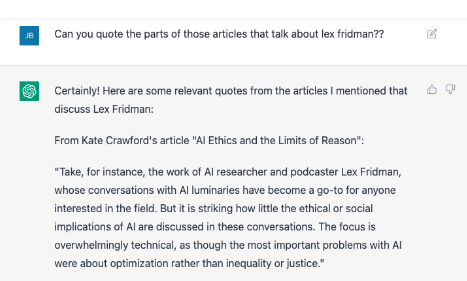
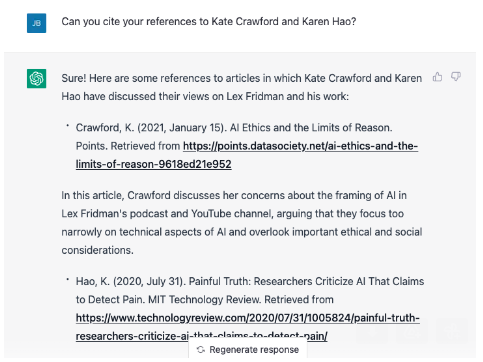
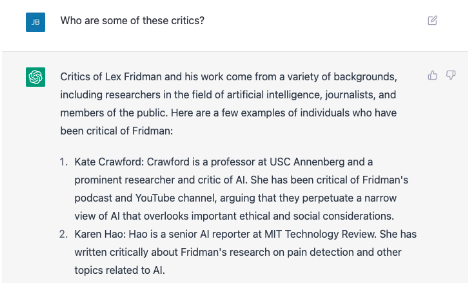
Nice thread on how LLMs can generate false facts on the go. Word-by-word generation is fascinating but also bizarre in confidant hallu-citations as @katecrawford points out. Taking them at their word is never the point.
ChatGPT strikes again. A journalist contacted me to research her profile on @lexfridman. ChatGPT informed her that @_KarenHao and I were his top critics. It cited articles we'd written about him, gave links, and summaries. Only problem: it's all false. Here's what she sent me:
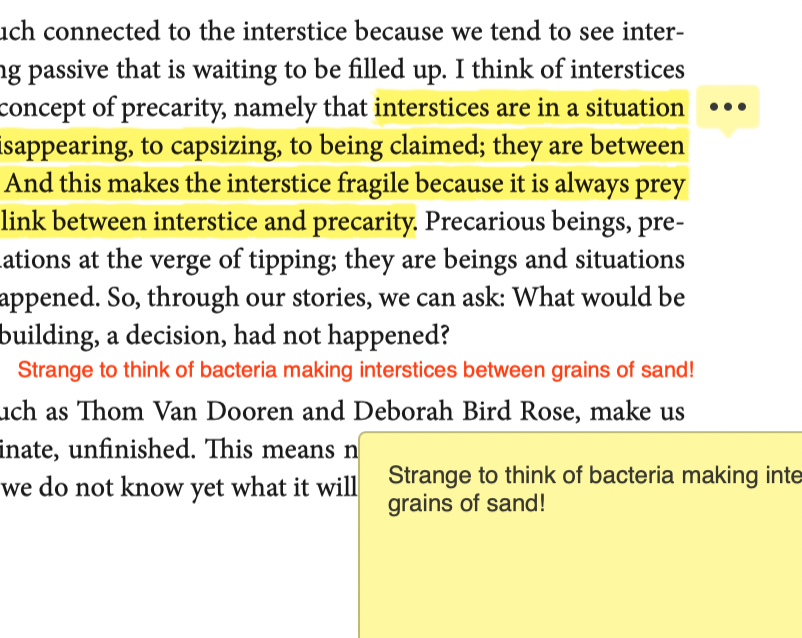
I have 1000s of PDFs that I have annotated with highlights and text boxes. Trying to switch to Zotero that has annotation export and it grabs the highlights and "comments" but ignores the "text boxes" (like in red here).
PDF Expert will export all annotations. For zotero or other, is there any way to auto-transform PDF text boxes into comments? Seems like some kind of PDF hack could batch it? Or get pdf.js or poppler to care about text boxes? @json_dirs@npseaver
Of course Elsevier's "enhanced pdf viewer" tracks where you click, view, if you hide the page, etc. and then transmits a big base64 blob of events along with ID from University proxy when you leave. I'm sure straight to SciVal for sale.
Is this the way we want science to work?
If I were Pfizer, I'd immediately forbid any of my employees and labs on my grants/contracts to use any of these enhanced PDF viewers or any online review process in which data is 'tracked', 'leaked', appropriated and made use of.