To make positive impacts globally through acts of compassion, inspiration, and education. Striving to be a better mentor, leader, and growing every day.
@chanduuu_cs “Before I answer the question, can you please provide more info on the motivation behind it. Also, what’s your company’s practice on ai-assisted development?”
Which Claude model should you build with?
Our new guide breaks down when to use Fable 5.2, Opus 5.5, Sonnet or Haiku. It also covers when to adjust effort instead of switching models, and how to save cost by putting subagents on smaller models.
https://t.co/1VmXqhkZB0
We aren't really enabling AI. We're enabling our people to use it wisely and responsibly.
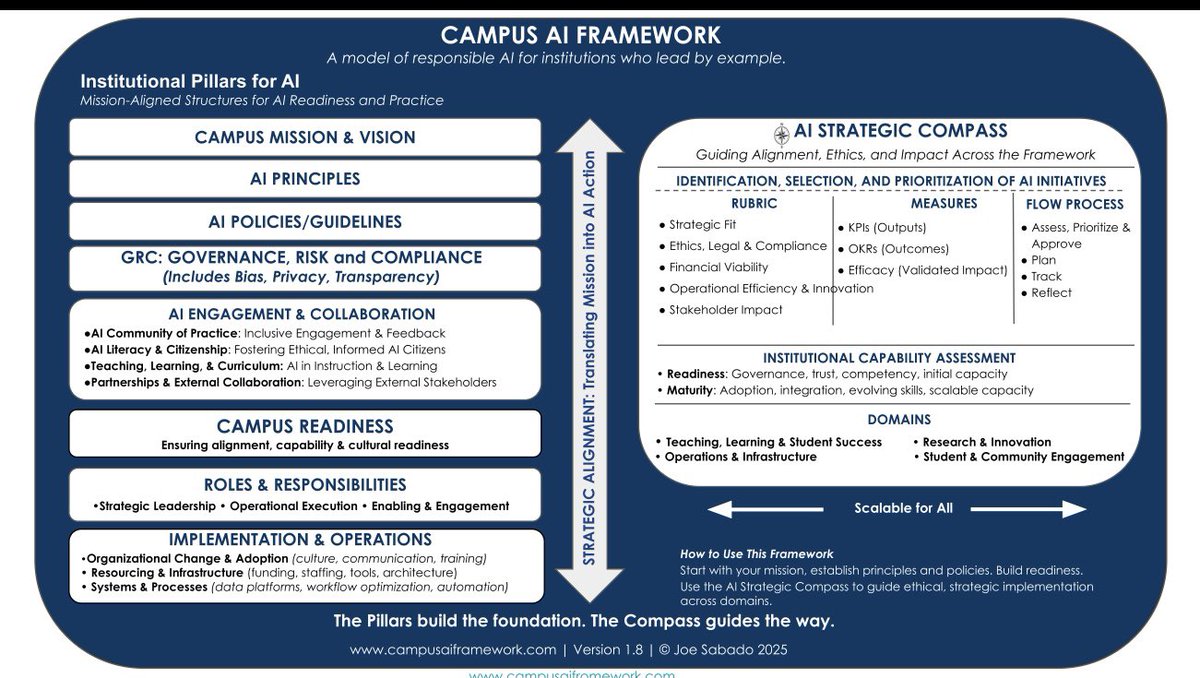
That's the idea behind the AI Proficiency Continuum, Pillar 6 of the Campus AI Framework.
https://t.co/i2vYLaKpuS
#educause26#highered
AI in the classroom and workplace efficiency remain to be the domains of discussions at #educause but I’d argue there are other domains that require attention and governance.
https://t.co/PCKGztqSmC
Most campuses started their AI work in the same place: teaching and academic integrity. Many stopped there.
Meanwhile, AI arrived everywhere else: vendor contracts, advising tools, research workflows, admissions, HR, the back office. A policy here, a pilot there, a workshop somewhere else, and few of them knew about each other.
AI doesn't respect the boundaries a campus organizes itself around. Govern it one office at a time and the response fractures.
That's why I built the Campus AI Framework as a connected model: eight pillars, the AI Strategic Compass, and companion sites that go deeper where a pillar needs it. It's driven by what AI could make possible for students, faculty, and staff, and grounded in what hundreds of institutions are already doing.
It's informed by almost 35 years in higher education, shaped by countless colleagues across the US and internationally, and still a work in progress.
I wrote about the story behind it here: https://t.co/ZuM6ugP1It
The whole picture, on one page: https://t.co/CYeeGrtkxz
#HigherEducation #AIGovernance #ResponsibleAI #educause #edu26
The California Community Colleges system has made AI a budget priority for the coming year, planning AI professional development and literacy efforts, a grant fund for pilot projects and a partnership with UC San Diego.
https://t.co/lg4QELNMMy
Forty-two years after I left the Philippines, an animated movie brought me home.
On Friday night I watched Forgotten Island, DreamWorks' new film rooted in Philippine folklore. Small moments kept catching me: a grandmother telling stories, a father working abroad, two best friends about to be separated by an ocean. I was eleven again, back in La Union with my grandparents, who taught me to say "bari-bari" whenever I passed a mound of earth, asking permission from the little beings said to live inside.
I came to the U.S. in 1984. Like many immigrants, I learned early that who I was at home didn't seem to have a place at school, and I carried other people's doubts about whether I'd make it here. Some of that doubt followed me into my career.
After three decades in higher education, I've seen what happens when students see themselves reflected in the world around them. They stand a little straighter. They stop wondering whether they belong. That's why representation matters to me, even when it's imperfect and even when it lasts two hours.
I wrote about what the film brought back, and about the next eleven-year-old who needs to see their story on screen.
https://t.co/esP9lRkv5x
#FilipinoAmerican #Belonging #HigherEducation #ForgottenIsland
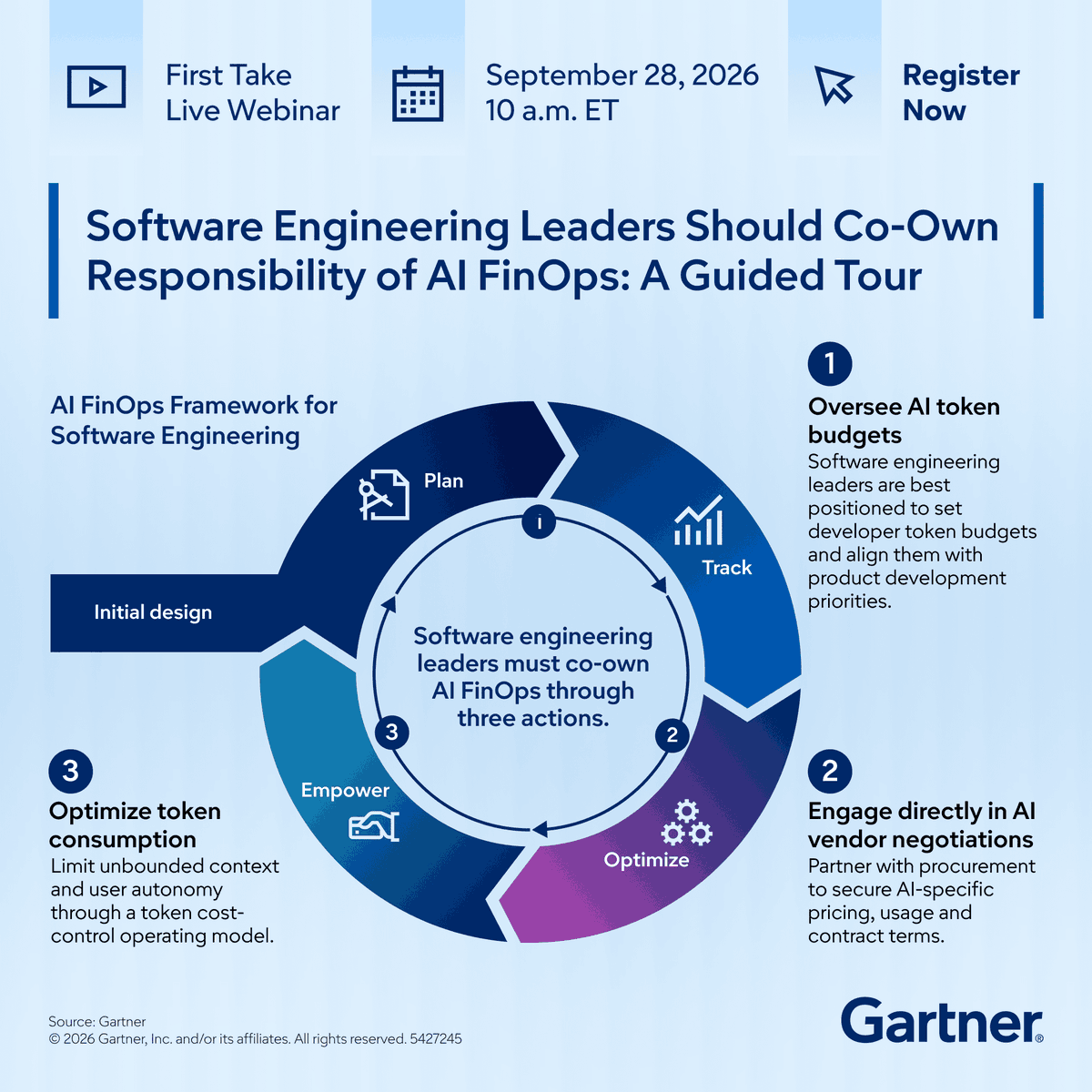
A First Take on the changing economics of AI.
Google's latest Gemini Enterprise pricing changes signal a broader shift in how organizations will budget for AI, from user-based licensing and consumption pricing to AI coding agents that can significantly alter usage patterns.
For software engineering leaders, CIOs and CTOs, managing AI costs is becoming as important as deploying AI itself.
Join the conversation in our live webinar → https://t.co/QL3cUZ0ST6
@MarkCCrowley Transactional leadership, treating people as if they’re just units of work, and get the to bottom line at any cost contributes to diminishing the value of psychological safety.