Questa settimana l'attenzione mondiale è concentrata sui #NobelPrize🏅Congratulazioni a Francis Halzen a cui oggi è stato assegnato il premio Nobel per la Fisica dalla Accademia Reale Svedese delle Scienze.
La settimana degli annunci è appena iniziata.
Stay tuned! 🇸🇪
Un sentito ringraziamento a Guerre & Pace FilmFest, a @CittadiNettuno, per la presentazione del libro “Se non io chi” di Stefano Bufi ieri sera. La storia di Edvard Selander Patrignani, il giovane soldato volontario italo-svedese caduto in Ucraina, merita di essere conosciuta.🕊️
NATO’s decision to choose GlobalEye is significant for the Alliance, for Sweden and for the transatlantic defence industrial base. It recognises Swedish technology and is a concrete Swedish contribution to NATO’s deterrence, defence and future air surveillance. (1/3)
Condivido la bella intervista di @GazzettaDip alla Console di Svezia a Trieste Cristina Sbaizero: un interessante approfondimento sulle relazioni tra Svezia e Friuli Venezia Giulia e sulle attuali collaborazioni culturali ed economiche 🇸🇪❤️🇮🇹 https://t.co/fpnxy6BUeY
L’Ambasciata augura a tutti una felice Festa Nazionale svedese 🇸🇪🎉
Sotto il cielo di Roma abbiamo celebrato in una cornice davvero speciale. Grazie di cuore ai nostri partner e a tutti coloro che hanno contribuito a questa splendida celebrazione 💙🇸🇪✨
Glad Nationaldag!🇸🇪
SECRETARY RUBIO: Sweden was an incredible addition to NATO. It made the alliance much stronger.
Sweden has a mature defense industrial base that it now brought into NATO, so the ability to work on aircraft together is extraordinary. 💪
Honored to host the seven Arctic Allies on the margins of the NATO Foreign Ministers Meeting in Helsingborg today. A7 will continue cooperating on Arctic security and shaping NATO’s role in the Arctic and the High North.
https://t.co/R2blLtDjNY
La Svezia come nuovo Stato membro dell’Alleanza è orgogliosa di ospitare la prossima riunione dei Ministri degli Esteri della #NATO il 21-22 maggio a Helsingborg 🇸🇪 #ForMin
Ecco il programma 👇
➡️https://t.co/vUMss93ley
@Antonio_Tajani@ItalyMFA
Felice di aver partecipato alle celebrazioni di @ISV_Roma istituzione storica che da un secolo contribuisce al dialogo accademico e culturale tra 🇸🇪 e 🇮🇹. Serata speciale con la Principessa Ereditaria Victoria, l'illustre lectio di Salvatore Settis e dei bei momenti musicali ✨
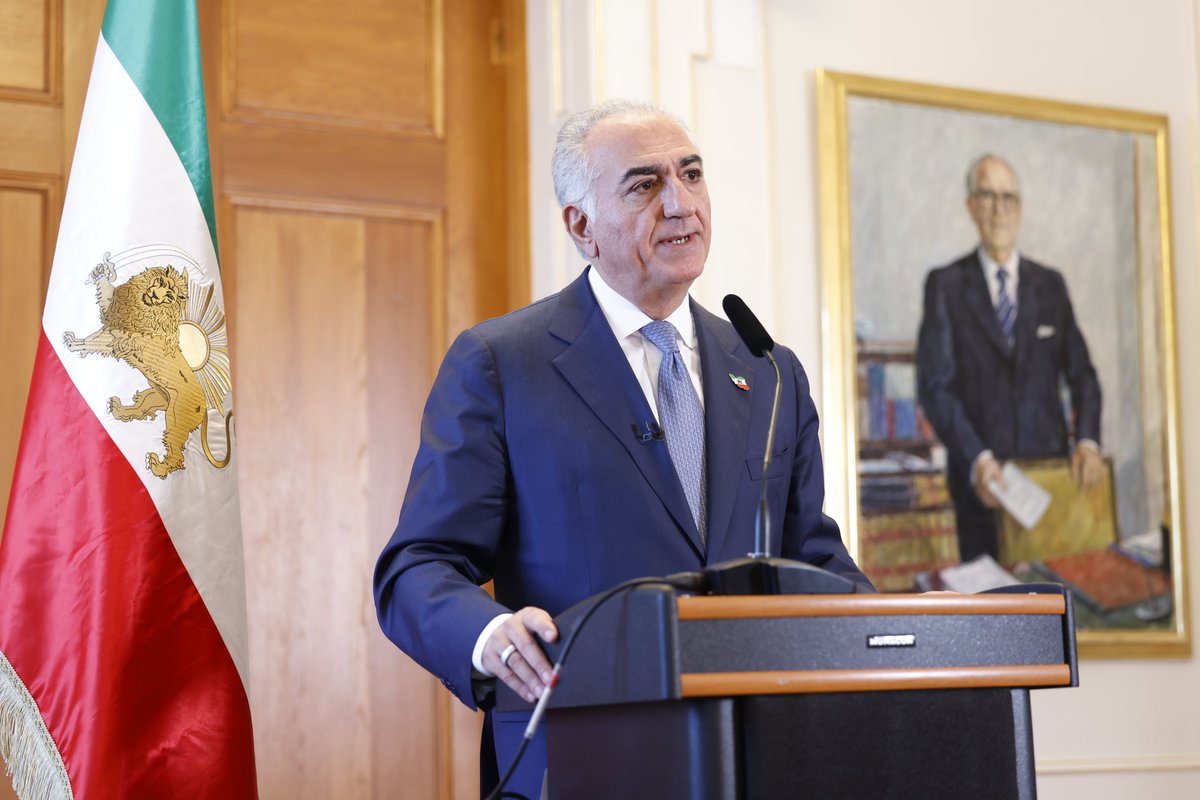
My remarks today at the Swedish Parliament:
"Esteemed Members of the Riksdag, Ladies and Gentlemen,
I stand before you today, not to speak of policy abstractions or diplomatic courtesies. I stand before you to speak of a people — a great, ancient, and proud people — who at mortal cost, are fighting for freedom.
What is unfolding across Iran is not simply a political dispute. It is not a contest between factions within a system. It is something far more elemental: a national reckoning between a civilization, and a ruthless regime that has occupied it for nearly half a century.
Since inception, the Islamic Republic has not behaved as a state among states. It has operated as a revolutionary enterprise — exporting instability through proxies, subverting its neighbors' sovereignty, fueling conflict from Baghdad to Beirut, from Sanaa to Damascus, and advancing its nuclear ambitions beneath a fog of denial. It has not sought a place in the community of nations. It has sought to overturn that community.
Yet something irreversible has now changed inside Iran. The battle in my country today is not between reformers and hardliners. It is between occupation and liberation. It is a battle for the soul of a nation.
What we are witnessing is not a fleeting protest movement. It is a generational revolt — the most profound uprising in Iran since 1979 — uniting workers and students, women and minorities, professionals and poets, and yes, even elements within the state apparatus itself. Together, they have rendered their verdict: this regime has forfeited all legitimacy. Indeed, it is a revolt against the 1979 revolution itself.
When legitimacy dies, power begins to crumble. The regime understands this — which is precisely why it silences voices, shuts down the internet, and turns weapons against unarmed citizens.
And the cost has been heartbreaking — a cost that demands this noble chamber bear witness.
Men and women are being slaughtered in the streets and in their homes. More than 40,000 Iranians were massacred in a single week. The regime's operatives hunted wounded protesters in hospitals and executed them in cold blood. Bodies were collected by dump trucks. Families were forced to search through rows of unmarked body bags.
40,000…
The number is almost too large to comprehend. Too abstract. It allows too many in the outside world to look at it like a mere statistic. So let me tell you some of their names and stories.
Consider Hamid Mahdavi, the 38-year-old firefighter from Mashhad, who spent his final moments carrying wounded protesters to safety—only to be shot dead by regime forces for the crime of saving lives.
Think of Sina Kazemi, 22 years old. He was in his final term of engineering school. He had a lifelong passion for music and technology. He chose to fight for his and his nation’s dignity. He was looking forward. Security forces shot him in the back of the head.
In Bushehr, nurse Mansoureh Heydari and her husband, teacher Behrouz Mansouri, were shot dead side by side while protesting peacefully. They left behind two young children, ages 8 and 10 — a family destroyed for daring to dream of freedom.
Twenty-eight-year-old biotechnology student Negin Ghadimi went out to protest despite her father’s pleas. Mortally wounded, she died in his arms whispering, ‘Dad, I’m burning’— a bright future stolen in a single night of terror.
But the terror is not over. It continues every day. Access to the Internet is still blocked. And while the people of Iran are disconnected from the world, the regime continues to kill. Today the media speak of a ceasefire. What ceasefire? There has been no ceasefire in the Islamic Republic’s war on the people of Iran. At check points that mark most every street, regime thugs and their imported terrorists harass, beat, and murder innocent Iranians.
For those who cry of war and its costs, this is the war you should be speaking of: the Islamic Republic’s war on my compatriots. That war that rages on everyday, far from the headlines of your Western newspapers, and the minds of your television producers.
But they are not far from my mind. My brave compatriots continue to resist. Many stand with broken bodies but unbreakable wills. They would rather die standing than live kneeling. So would I.
Churchill understood such a people when he said that nations do not die when their soldiers fall — they die only when their spirit surrenders. I am here to tell you, Iran’s spirit has not surrendered and it never will!
Despite its brutality, the Islamic Republic is closer to collapse today than at any point since 1979.
And one fact is now beyond dispute: the Iranian people will never accept a repackaged version of this regime. Too much blood has been spilled. Too many graves have been dug. The demand is not for a kinder jailer. The demand is for freedom.
There is a military dimension to these events that this chamber is watching closely, and I will not pretend otherwise. But I say to you: however the military operation currently on pause turns — whether it accelerates the Islamic Republic's fall or merely deepens the fractures within it — the outcome of Iran's revolution will not be determined by any force from the outside. It will be determined by the Iranian people themselves.
The Lion and Sun Revolution — the uprising that the people of Iran ignited in January with their own blood and their own courage — cannot be extinguished by any regime calculation, any diplomatic maneuver, or any military result. The people started it. The people will finish it.
If the military operation pushes the Islamic Republic into the historical abyss where it belongs, we will be there — ready, organized, and determined — to build what comes after. And if the regime survives the immediate storm, we will continue the revolution until it is complete. We began this journey. We will see it to its end. History has given us no other choice.
When I look at Europe, I see ambivalence and a continued inability to see the reality of the streets of Iran. I am disappointed, yet not surprised, at the rush to engage this criminal regime. The regime that has murdered tens of thousands of its own citizens. The regime is sponsoring terrorism on the streets of Europe, including in Sweden. The regime is threatening and blackmailing European Governments with hostages and violence.
The Europe I believe in is supposed to stand for human rights, democracy, and equality.
It has a proud record in previous struggles - fighting apartheid in South Africa, supporting the Solidarity movement in Poland, and now in backing Ukrainians in the fight for sovereignty.
So why should Iran be different? Are Iranians’ human rights less important? Are their lives worth less?
Perhaps to some, but not to us.
Sadly this is not new. For decades Europe has appeased and emboldened this terrorist regime. It has been a policy that has helped this Regime survive and kill its own people.
I hope the Swedish Government will press the European Union and other countries to stand with the people of Iran and their struggle for liberty. I am pleased and heartened that so many members of the Riksdag, across multiple parties, are here today to hear a message from the people of Iran. On behalf of my compatriots who are far too often silenced, thank you.
Esteemed members of this Riksdag, this is no longer distant geopolitics — it is a security emergency on Swedish soil.
The Swedish Security Service, SÄPO, together with the Swedish Police Authority, has confirmed that the Islamic Republic of Iran operates within Sweden through criminal proxy networks. These are not surveillance operations alone. They carry out acts of intimidation and violence — targeting Jewish communities, Iranian dissidents, and Swedish citizens at large.
On the third of March this year, shortly after the outbreak of the current conflict in the Middle East, SÄPO issued an urgent public warning of a heightened threat level.This is not speculation. This is a statement from your own security services.
And here is what makes this threat particularly corrosive: the criminal networks that Tehran employs do not cease to exist between assignments. They are embedded in Swedish society. They are the same networks already identified as a major internal threat to public safety.
Sweden has responded with resolve. You have restricted visas for Iranian embassy staff. You prosecuted Hamid Noury for crimes against humanity under universal jurisdiction — setting a historic precedent. But it did not last.
Sweden returned Noury to Tehran where he was given a hero's welcome by his fellow murderers. While he was allowed to return to boast of his crimes on state television, Dr. Ahmadreza Djalali was forced to continue to suffer in the regime’s torture chambers. It was ten years ago that he was taken. And he is still captive.
Decisions like this embolden the Islamic Republic to take more hostages, to commit more crimes, and to further defy the world. A French senator told me a few months ago: our governments have become hostages to our hostages.
But governments still have a choice whether to give in to blackmail or not.
Václav Havel once said that the only genuine security in the world is a security rooted in truth. The truth is, as long as this regime remains in power, Sweden and the free world will not be safe.
Why did Sweden join NATO? Because of Putin’s war of aggression against Ukraine. That decision was correct. And it was necessary.
Let us not forget that the Islamic Republic is not a bystander to Russia's war. Tehran has supplied drones and missile technology to Moscow. Iranian-manufactured weapons have struck Ukrainian cities. Regime technical cooperation has sustained Putin’s capacity to wage war against a democratic neighbor.
As President Zelenskyy and I have discussed and stated together: the Russian threat to Europe and the Islamic Republic’s threat to Europe are not two separate problems. They are two manifestations of a single challenge.
Sweden now stands inside NATO's collective defense. But collective defense is not only military. It is political, economic, and moral. It requires that democratic nations recognize threats in their totality — and treat the Islamic regime's support for Russian aggression as the direct security concern that it is.
Let me now speak, not of present dangers, but of future possibilities.
The relationship between Sweden and Iran has deep roots. In the early decades of the twentieth century, Swedish experts and businesses built strong ties in Iran. During the celebrations of 2,500 years of Iranian civilization at Persepolis, Sweden was represented by then-Crown Prince Carl Gustaf. His Majesty and I sat together and spoke of the future of our nations and people.
That future, with a democratic Iran, would change the security calculus of the entire region — and of Europe. It would immediately dismantle the proxy networks operating on Swedish soil. It would end the hostage diplomacy that has poisoned relations with Western nations for decades. It would cooperate on intelligence and the rule of law. It would cease its support for Russia's war machine. It would secure Europe’s energy needs for decades to come.
It would emerge as a natural partner — a nation of 90 million people with extraordinary human capital, a rich civilization, and a desire to rebuild after decades of misrule.
Sweden has every reason to be part of that future. Your excellence in information technology and digital infrastructure, your defense industry — Saab's world-class capabilities in aerospace and defense — your engineering heritage through Volvo and Scania, your commitment to culture, your tradition of precision manufacturing and industrial innovation: these are precisely what a rebuilding Iran will need. This is not charity. This is partnership between equals, between nations with complementary strengths and shared values.
At this historic moment, as Iranians call upon me to help provide leadership toward a democratic transition, I reaffirm the commitment I have made throughout my life: to serve as a unifying national figure — not a partisan one, not a claimant to power — but a facilitator of stability, of national unity, and of a peaceful transfer to democratic governance.
I am not alone in believing this is possible. Together with economists, legal experts, security professionals, and civil society leaders from across the Iranian political spectrum, we have developed detailed transition frameworks — the Iran Prosperity Project — to ensure institutional continuity, prevent instability, and allow rapid national recovery after the regime's end. There is a plan. There is a path. There is a responsible alternative.
Even within the state apparatus, the fractures are deepening. Reports indicate that members of the armed forces and security institutions are increasingly refusing orders to participate in violence against civilians. Many have quietly signaled where their true loyalties lie: with the nation, not with those who repress it. When the path emerges, I am confident they will act.
No government can survive once it loses the willingness of its own institutions to enforce repression. We are approaching that moment.
Let me conclude, esteemed members of this Riksdag, with what I believe is the simplest and most important truth of this address.
The Iranian people are not asking you to fight their revolution. They are already risking their lives doing that themselves — with a courage that should humble all of us.
They are asking something far more modest:
Do not legitimize those who oppress them.
Do not strengthen those who terrorize them.
Protect those who have sought refuge among you.
Prepare for the day when Iran stands free.
There are moments in history when neutrality is not a position — it is a decision. When caution is not prudence — it is complicity. When history quietly presents a question and waits, with terrible patience, for an answer.
Churchill faced such a moment in 1940. Havel faced it in 1989. Zelenskyy faces it today. And in their own way — with no aircraft, no armies, no diplomatic immunity — the people of Iran face it in every street, every prison cell, every unmarked grave.
The Iranian people have already answered. They have answered in the streets and in their prisons. They have answered with their lives. They have chosen freedom.
History now asks the democratic world a simpler question, and Europe in particular:
Will you stand with a free people? Or will you accommodate those who oppress them?
Future generations will not read your statements. They will assess your actions. They will not ask what you said. They will ask what you did — and what you refused to do when it mattered.
And one day soon — and I say this, not as sentiment but as strategic conviction — when Iran is free, when its people stand again among the free nations of the world, when its children inherit a country without fear, we will all know that this was the moment when history turned. The moment when a great people refused to kneel. The moment when free nations chose not to look away.
Let it be written that when that day came, Sweden was ready.
When the Iranian people stood for freedom, Sweden stood with them.
Thank you."
Stockholm, Sweden
April 13, 2026
4 anni. 1.461 giorni. Ogni giorno è un giorno di troppo.
La Russia deve porre fine alla sua guerra. Solo #Ucraina ha il diritto di decidere sul suo futuro. L'incredibile resilienza del popolo 🇺🇦 mantiene vive le speranze. #Svezia rimane fermamente al suo fianco.
#StandwithUkraine
Quattro anni fa, la Russia ha iniziato la sua guerra d’aggressione contro l'Ucraina, una palese violazione del diritto internazionale, dei diritti umani e della sicurezza europea.
Da Roma affermiamo #inseme e con forza: #WeStandWithUkraine 🇺🇦
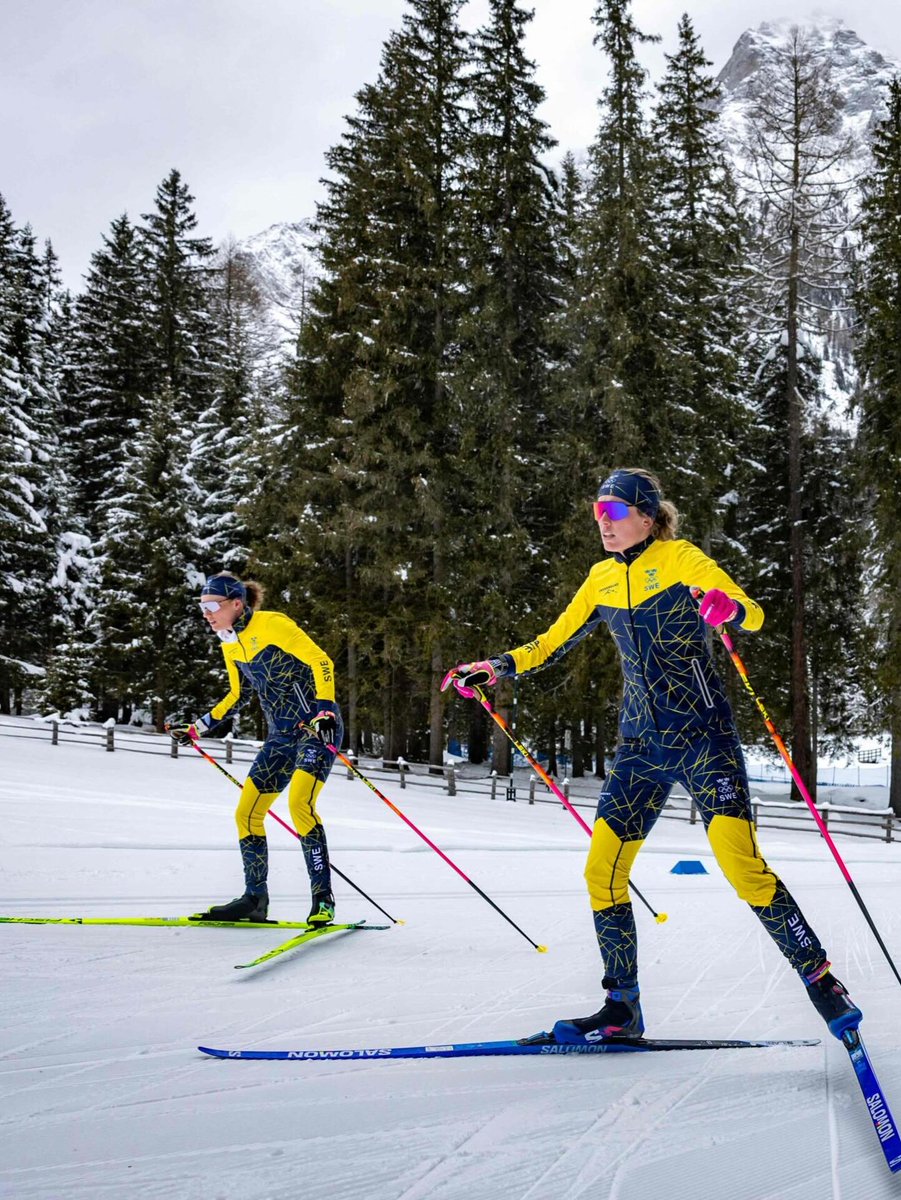
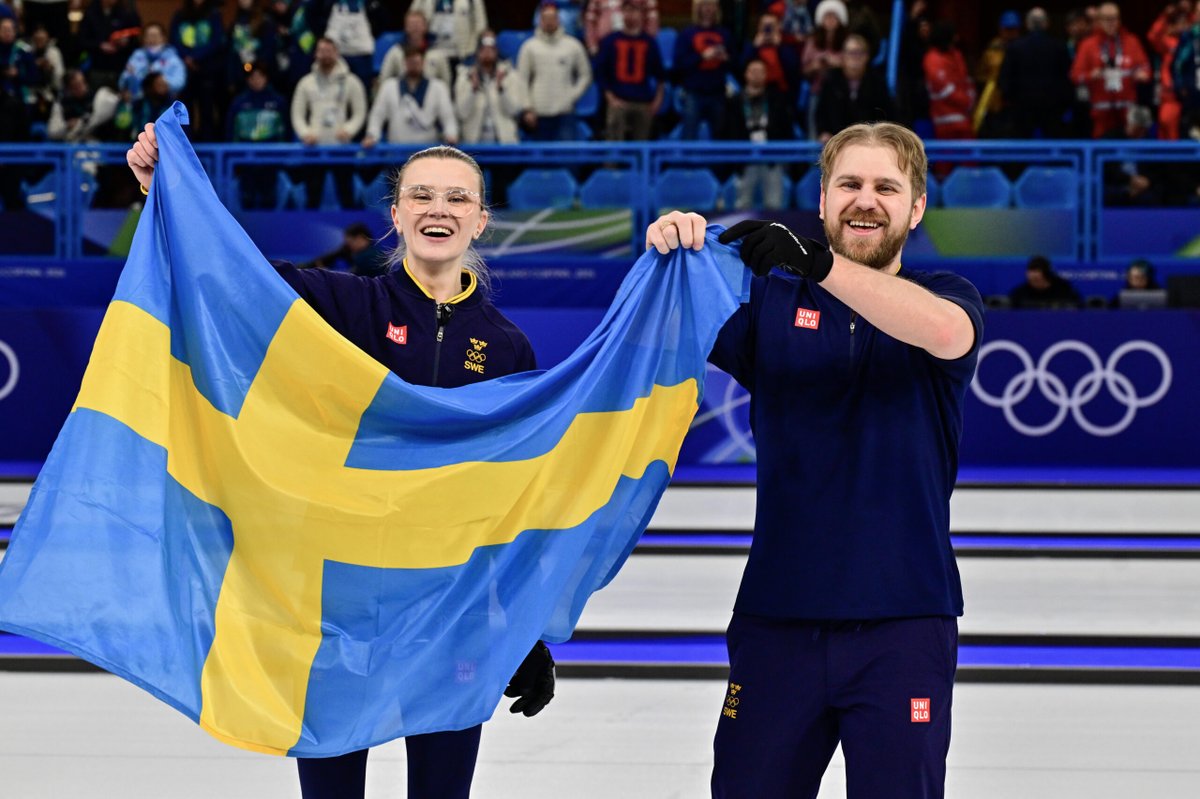
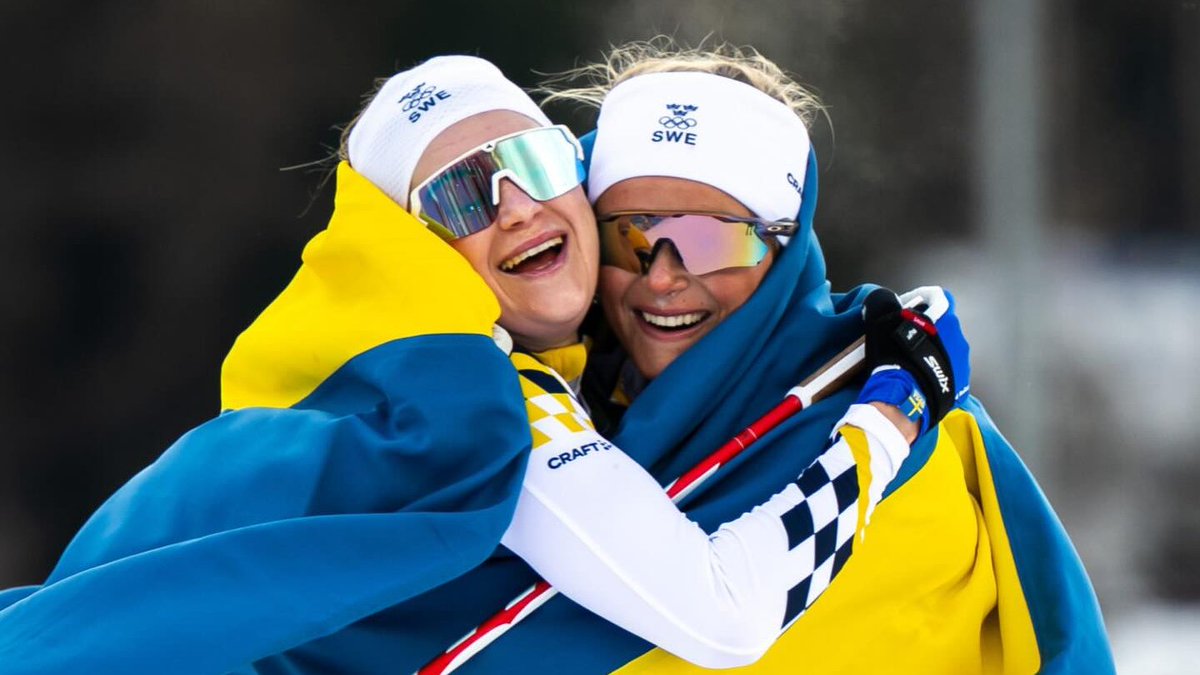
Finale incredibile per la Svezia a @milanocortina26 !
La fondista Ebba Andersson e la nazionale femminile #curling hanno chiuso i Giochi invernali in grande stile – due ori meritatissimi!🥇🥇 Un’edizione da ricordare per la Svezia, la migliore di sempre: 18 medaglie di cui 8 ori.
🇸🇪🥌 Vincere l'oro olimpico è un'emozione incredibile.
Vincere con tuo fratello o tua sorella, con il tuo migliore amico e compagno di squadra è qualcosa di unico e indimenticabile.
E se a vincere l'oro olimpico insieme sono i tuoi figli...
#MilanoCortina2026#Olympics#Svezia
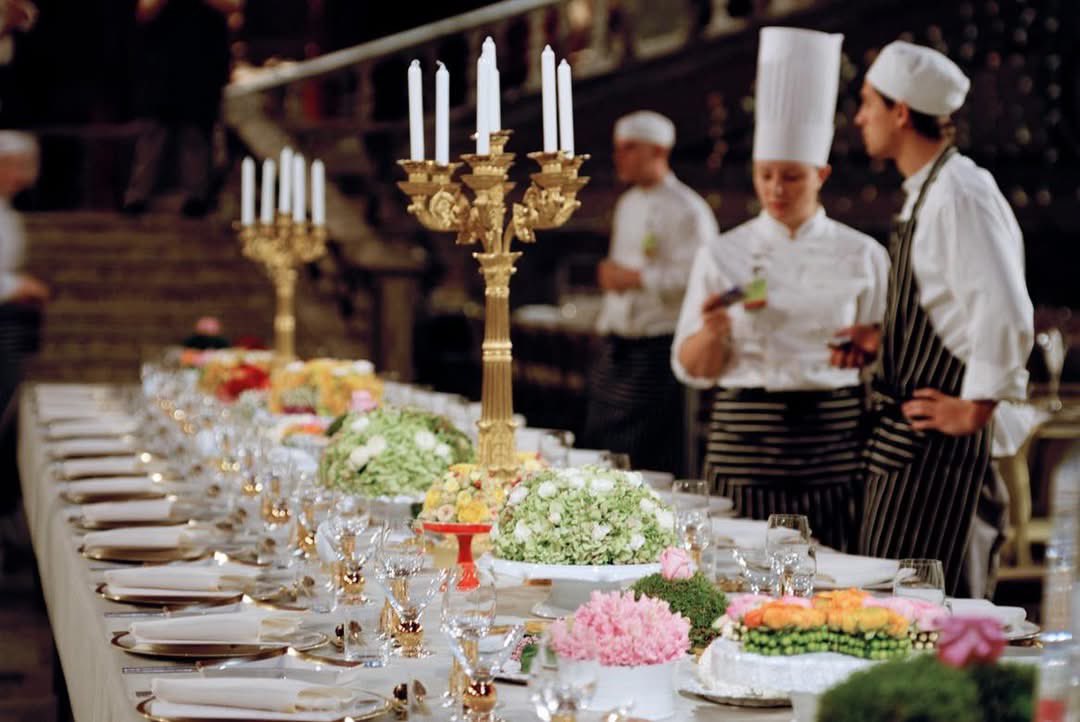
🏅✨ Oggi si celebra la prestigiosa Cerimonia del Premio Nobel! Ogni anno, il 10 dicembre, #Stoccolma si veste di eleganza per onorare menti brillanti che hanno contribuito in modo straordinario alla scienza, letteratura, pace ed economia.
#alfrednobel#nobelprize
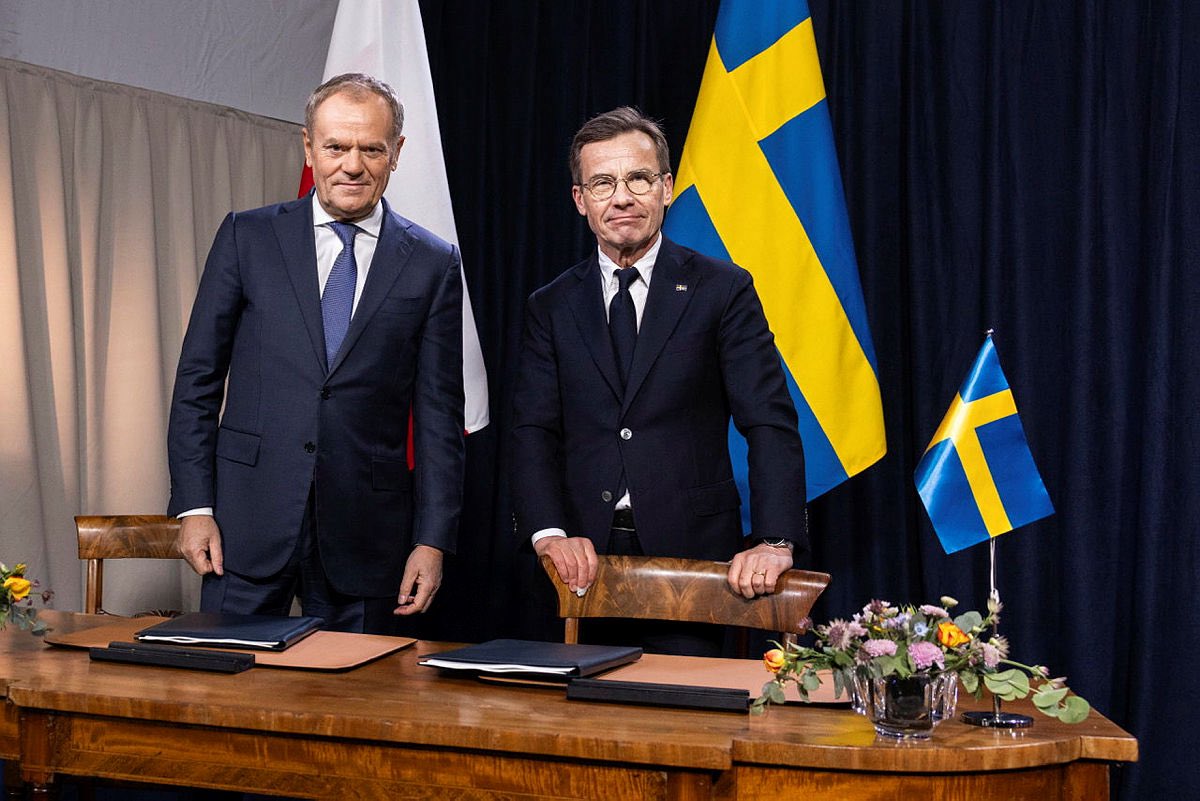
Poland has chosen Sweden as partner for its submarine program.
This shows the strength not only of the cooperation between our countries, but also of Sweden as a defense-industry nation. It is confirmation that the Swedish defense industry stands strong. Saab has a world-leading submarine program.
Poland and Sweden share a common view of the challenges to European security. Together, Sweden and Poland will take greater responsibility for security in the Baltic Sea. We are now significantly deepening our political, defense, and industrial cooperation.
In a time of uncertainty for our entire region, we are now strengthening our part of the world together.
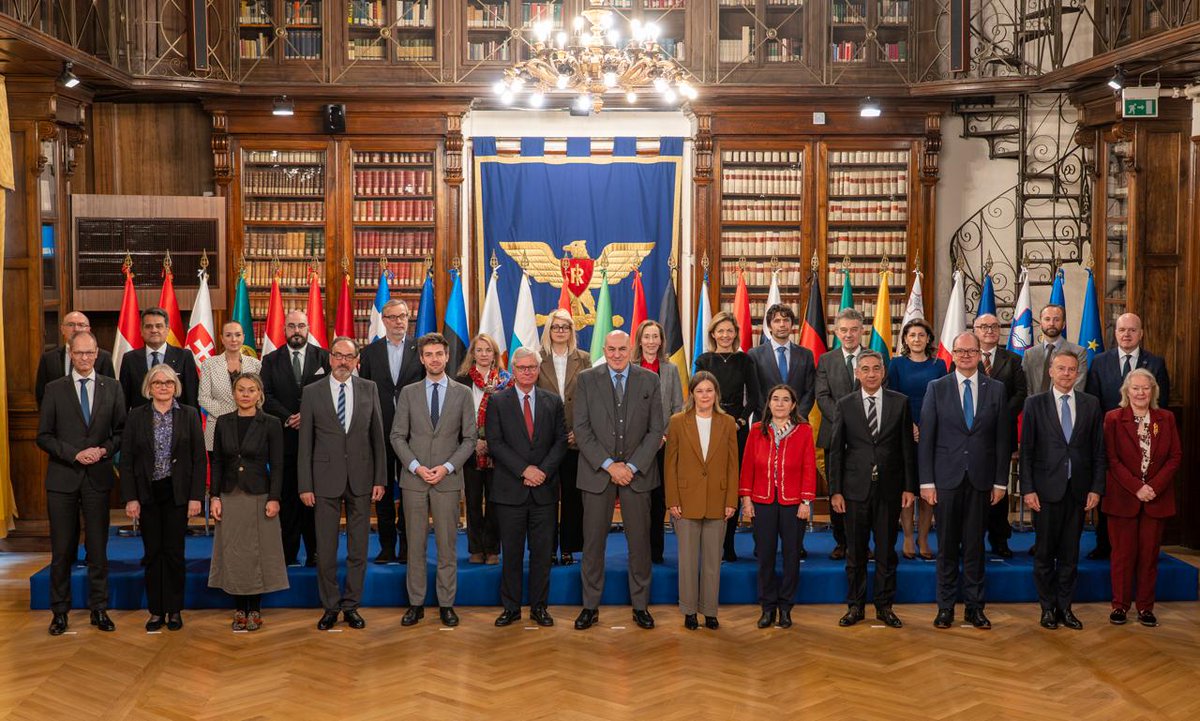
"L’#Europa rischia di perdere rilevanza se resta divisa. Le sfide attuali - tecnologiche, energetiche, strategiche e geopolitiche - richiedono un approccio comune e investimenti condivisi per costruire un vero pilastro europeo della #NATO. A queste si sommano disuguaglianze, polarizzazione e guerra ibrida, che minano la resilienza delle nostre democrazie. Per difendere il modello europeo, fondato sulla dignità della persona, è necessario superare vecchi schemi e unire rapidamente le forze. Solo insieme possiamo costruire il nostro futuro." Così il Ministro @GuidoCrosetto incontrando gli Ambasciatori degli Stati membri dell’#UnioneEuropea e il Rappresentante del Consiglio #UE.