Entre 20% (RCP2.6) y 54% (RCP8.5) de las orquídeas en Honduras perderán su nicho al 2100 por el cambio climático, sequías y pérdida de microhábitats. 1 de cada 5 especies podría extinguirse localmente.
Acceso libre en Biodiversity and Conservation:
https://t.co/1zlA6QeRsr
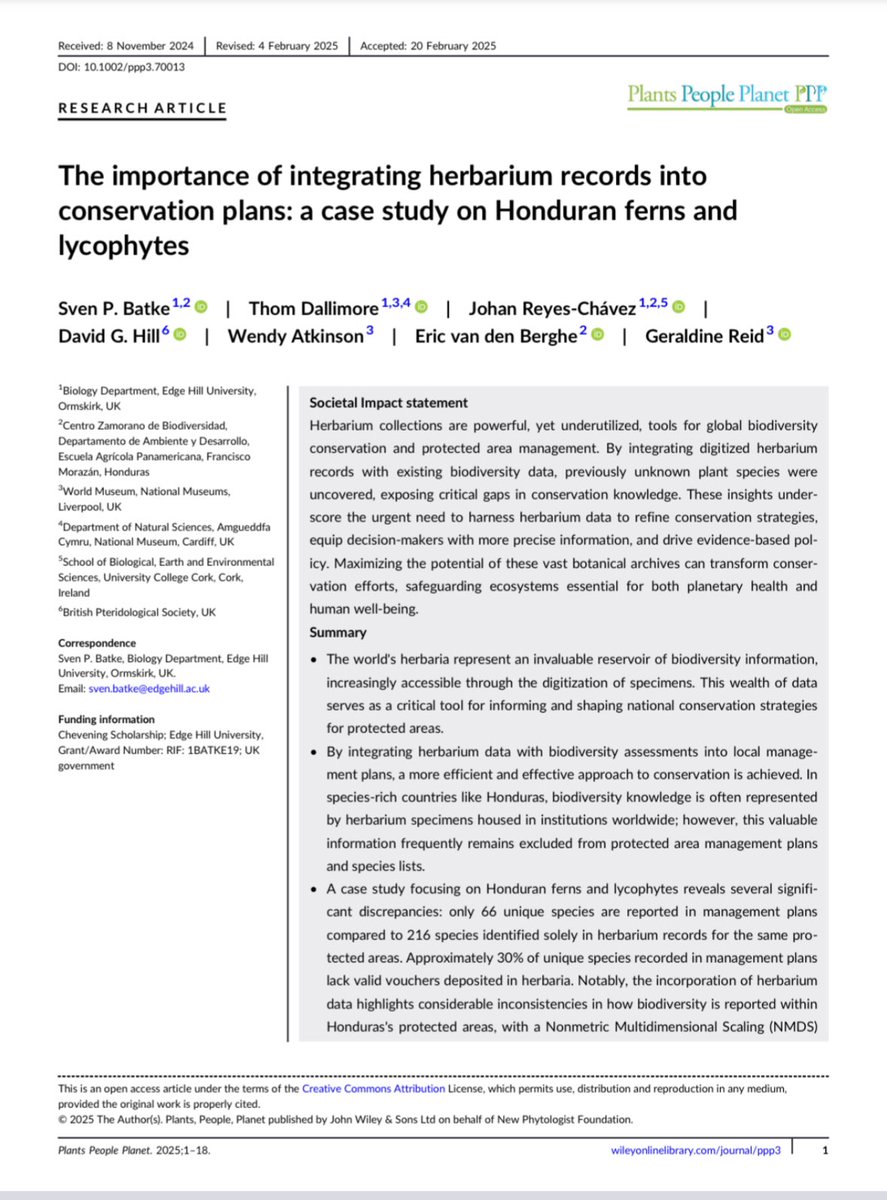
En Honduras, la mayor parte de nuevos registros son accidentales. Incorporando modelación de la "diversidad oscura" de un grupo, podremos informar acerca de potenciales nuevos registros a escala país.
Esto discutido en nuestro más reciente articulo:
https://t.co/Ag0mM1jVoj
Un orgullo ver como el trabajo de mi maestría por fin sale a la luz. Gracias a @CheveningFCDO y @edgehill por permitir avanzar la ciencia en Honduras. El articulo muestra la información que dejamos por fuera de los planes de manejo al no considerar los herbarios.
Curious about how Principal Component Analysis (PCA) can streamline your data before diving into K-means clustering? Let's explore!
🔍 PCA Before K-means Clustering:
1️⃣ Data Simplification: PCA condenses complex data by capturing its essential information into fewer dimensions, making it more manageable for clustering.
2️⃣ Dimension Reduction: It reduces the number of features while retaining most of the variance, making subsequent clustering more efficient.
3️⃣ Enhanced Interpretation: PCA transforms variables into uncorrelated components, aiding in identifying meaningful patterns and relationships between data points.
4️⃣ Optimal Clustering: By reducing noise and redundant information, PCA helps K-means clustering focus on relevant features, leading to more accurate cluster assignments.
5️⃣ Improved Performance: With fewer dimensions, K-means operates faster and more effectively, especially on large datasets.
By leveraging PCA before K-means clustering, you can:
✅ Enhance Clustering Results: Identify clearer and more distinct clusters within your data.
✅ Boost Efficiency: Speed up the clustering process and conserve computational resources.
✅ Facilitate Interpretation: Simplify understanding by visualizing data in reduced dimensions.
✅ Optimize Resource Allocation: Allocate resources more effectively by concentrating on the most influential features.
Would you like to learn more about PCA? Explore our Statistics Globe online course on how to apply PCA using the R programming language.
More info: https://t.co/DUfoAHuxxD
#datastructure #datascienceeducation #database #DataScience
Are you interested in Biodiversity Credits? Read the inaugral Georgina Mace Review in @royalsociety: 'What is a unit of nature? Measurement challenges in the emerging biodiversity credit market' out today.
https://t.co/ilJROTMSRN
Oficialmente a 2 semanas de iniciar mi PhD en Ecología en @UCC. Emocionado de iniciar mis estudios enfocado en cambio climatico y el impacto de la traslocación de especies en comunidades nativas. #Ireland#CollegeCork#Academia
📣 Solicitudes para el Fondo de Desafío contra el Comercio Ilegal de Vida Silvestre (IWT) están ABIERTAS 🌟 Apoyamos proyectos para reducir el impacto del comercio ilegal de vida silvestre y combatir la pobreza en países en desarrollo 🌍 @UKBCFs
🌐 https://t.co/YnP0BZ2r9y
Don't use Sci-Hub — it's a "controversial" website with 84M+ research papers freely available.
We should all try to make billion-dollar academic publishers richer.
Anyway, here's a thread on how to integrate Sci-Hub with Zotero 7 to get free papers.
DO NOT DO IT!
It took me SEVEN years to figure out that you can save a ggplot as a vectorized .svg file ggsave("file.svg"). The svg file can be opened on powerpoint and it will be completely vectorized, even text are still recognized as text boxes! No more recreating plots on illustrator!!!!!
Check this out! Mapping Asia Plants: Plant Diversity and a Checklist of Vascular Plants in Indonesia
“The 5 largest genera are Dendrobium (790 spp), Bulbophyllum (721 spp), #Syzygium (456 spp), Ficus (373 spp) & Rhododendron (288spp).” https://t.co/IIKHolu63f
Más del 15 % de las especies de #PlantasVasculares podrían no estar descritas científicamente. El estudio “Plant diversity darkspots for global collection priorities” identifica regiones prioritarias para futuras #colecciones y #conservación: 👇
▶️ https://t.co/X9TUNtzjEW
Perplexity's popularity recently surged!
It grew 658% over the past year.
But many scholars are not aware of its use in research.
In my newsletter tomorrow, I'm sharing an entire workflow to use Perplexity for research
It's a 3- part series, consider it a FREE course!
I had shared part 1 last week
🔗 See thread for the link
Part 2 is due tomorrow. Sign up here:
🔗 https://t.co/wA0G0dpx4a
----------------------------------------
Help others learn too ⤵
🔄 Like and Retweet
[bookmarking doesn't help with reach]
-----------------------------------------
✅ Follow @RaziaAliani to get more useful AI in Research content (no clickbait stuff!) in your X feed.
-------------------------------------------------------
#aiinresearch #perplexity #phd #academicresearch
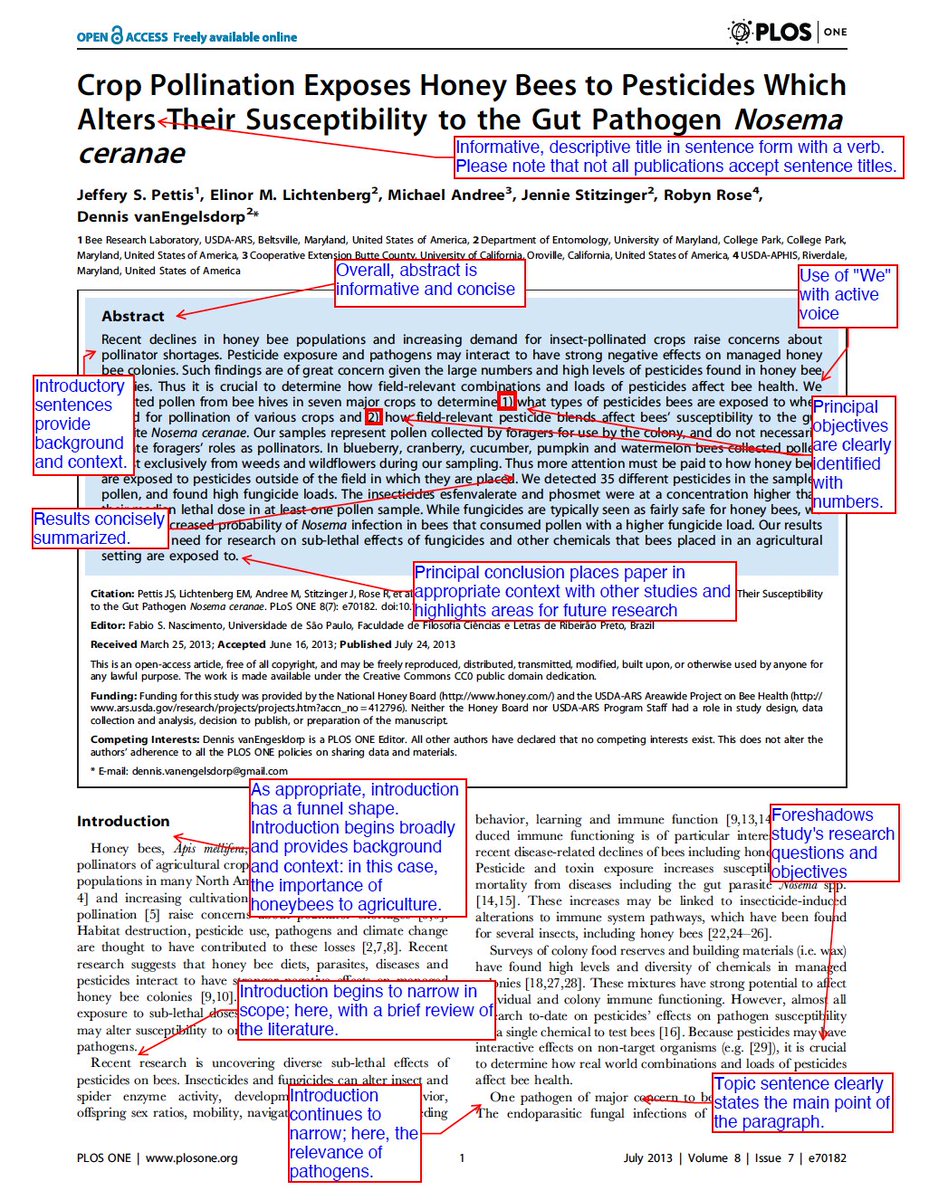
They tell you well-written paper is the key to publication
.. but rarely anyone shows you HOW.
This 4-part series will break down a top-notch scientific paper.. section by section.
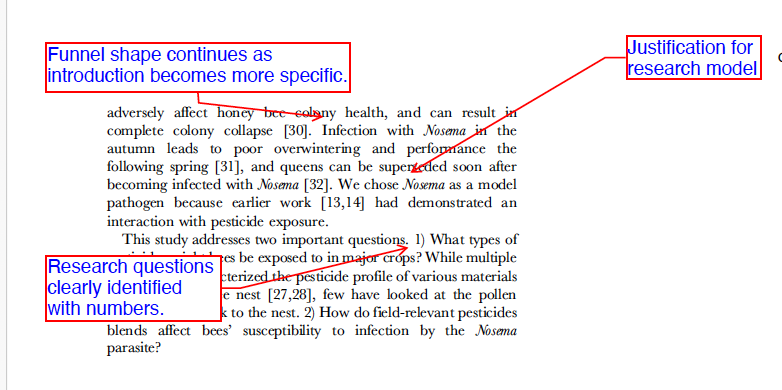
𝐏𝐚𝐫𝐭 1: Abstract and Introduction
Here's what makes this paper's opening shine:
1️⃣ Clear, concise title that hooks you in
2️⃣ Structured abstract summarizing key points
3️⃣ Introduction that:
— Sets the context (pollinator decline & pesticide concerns)
— Identifies the knowledge gap
— States the research questions
𝐏𝐫𝐨 𝐭𝐢𝐩: A strong intro should make you say
'𝘈𝘩𝘢! 𝘵𝘩𝘢𝘵'𝘴 𝘪𝘮𝘱𝘰𝘳𝘵𝘢𝘯𝘵 𝘵𝘰 𝘴𝘵𝘶𝘥𝘺!'
Stay tuned for Part 2 where we'll dissect the Methods section!
𝐈𝐧 𝐚 𝐡𝐮𝐫𝐫𝐲 𝐭𝐨 𝐬𝐞𝐞 𝐭𝐡𝐞 𝐟𝐮𝐥𝐥 𝐚𝐧𝐧𝐨𝐭𝐚𝐭𝐞𝐝 𝐏𝐃𝐅?
Comment 'PDF' & Retweet
.. & I'll slide into your DMs
(make sure you're following me!)
---------------------------
Useful find? Pass it on!
🔄 Like and Retweet
---------------------------
✅ Follow @RaziaAliani to get more useful AI in Research content (no clickbait stuff!) in your X feed.
----------------------------------------
Want FREE tips on using AI in research?
Join 6500+ researchers ↙️
🔗 in the bio







![RaziaAliani's tweet photo. Perplexity's popularity recently surged!
It grew 658% over the past year.
But many scholars are not aware of its use in research.
In my newsletter tomorrow, I'm sharing an entire workflow to use Perplexity for research
It's a 3- part series, consider it a FREE course!
I had shared part 1 last week
🔗 See thread for the link
Part 2 is due tomorrow. Sign up here:
🔗 https://t.co/wA0G0dpx4a
----------------------------------------
Help others learn too ⤵
🔄 Like and Retweet
[bookmarking doesn't help with reach]
-----------------------------------------
✅ Follow @RaziaAliani to get more useful AI in Research content (no clickbait stuff!) in your X feed.
-------------------------------------------------------
#aiinresearch #perplexity #phd #academicresearch](https://pbs.twimg.com/media/GVFoMDIaAAAV4Va.jpg)