Christ died for ALL people: not Jews alone, but Gentiles too. Every tribe, every language, every nation.
Definite atonement doesn’t mean a small family. It means a Savior who brings his people home from every corner of the earth.
Bessent doesn't know that the U.S. Constitution leaves the power of the purse to Congress. He also claims $5k "dividends" can be sent to every adult American without any impact on the budget. Republicans must call for his resignation as Treasury Secretary.
Hayek explains why the term “social justice” is meaningless:
“Justice is an attribute of individual action; I can be just or unjust towards my fellow men.”
“But the conception of a social justice, to expect a just result from an impersonal process which nobody can control, is meaningless and completely impossible.”
@MikeWingerii We ought not be surprised when the ungodly act like reprobates. The great sin and shame is this is tolerated by many professing Christians.
The congregation doesn't need your coffee joke.
They buried someone this week.
They're sitting in pews with divorce papers in their glovebox.
Kids who won't speak to them.
Test results they haven't opened.
They drove past three churches to hear you say something that costs you something.
So open the Book.
Forget the illustration you found on Google.
Skip the movie clip.
Kill the countdown timer on your outline.
Preach like a man possessed.
Preach like you'll answer for every wasted syllable.
Preach like their blood is on your hands.
Because it is.
The pulpit isn't a stage.
"A state is nothing else than an institution built on taxation and unsolicited, noncontractual interference with the use that private people can make of their natural property"
https://t.co/mXsefA7vTF
Ludwig von Mises sat down in 1920 and published a paper that ended the intellectual case for socialism, even if the socialists took another seven decades to notice.
The argument was precise. Mises showed that without private ownership of the means of production, there are no real prices for capital goods. Without prices, you cannot calculate profit and loss. Without profit and loss, economic planners have no way of knowing whether they are creating value or destroying it. They are flying blind, spending real resources with no feedback mechanism telling them whether the factory, the railway, or the grain depot was worth building. Every allocation becomes a guess dressed up as a decree.
This, he called the Socialist Calculation Problem, and nobody answered it. Oskar Lange tried in 1936, proposing that socialist planners could simulate prices by trial and error. Mises read this and was unimpressed (charitably put). Lange assumed you could reproduce the function of market prices without the institution that generates them: private property, genuine exchange, real skin in the game. You cannot fake the signal and expect accurate information.
The Soviet Union spent seventy years proving Mises right. Chronic shortages, misallocated steel, surplus winter boots in Georgia in July, famine engineered by committees convinced they understood grain supply better than the price system. The USSR collapsed in 1991 under the weight of precisely the inefficiencies Mises predicted in Vienna in 1920.
You are watching this play out again today, every time a government sets energy prices, rent ceilings, or pharmaceutical price caps, and then expresses shock at the resulting shortages. The calculation problem did not expire with the Soviet Union. Bureaucrats who override price signals recreate the same blindness Mises identified. Mises told you exactly what would happen.
A theologian takes his or her place within the community of faith and acknowledges what a rich privilege and honor it is to work with God’s revelation in submission to Holy Scripture.
— Herman Bavinck, Reformed Dogmatics: Abridged in One Volume, p. 10
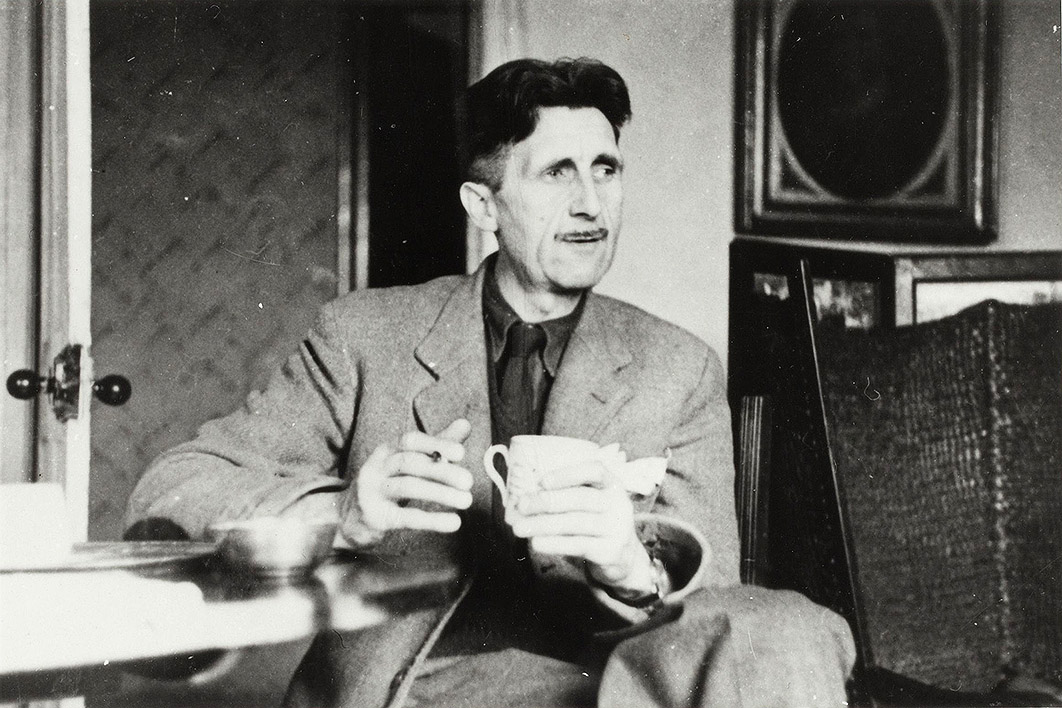
George Orwell, reviewing The Road to Serfdom in 1944:
“Professor Hayek’s thesis is that Socialism inevitably leads to despotism, and that in Germany the Nazis were able to succeed because the Socialists had already done most of their work for them, especially the intellectual work of weakening the desire for liberty.
By bringing the whole of life under the control of the State, Socialism necessarily gives power to an inner ring of bureaucrats, who in almost every case will be men who want power for its own sake and will stick at nothing in order to retain it.
Britain, he says, is now going the same road as Germany, with the left-wing intelligentsia in the van and the Tory Party a good second. The only salvation lies in returning to an unplanned economy, free competition, and emphasis on liberty rather than on security.”
Worst small group question for Bible studies…
“What does it mean to you?”
Don’t ask what it means TO YOU but what it means independent of whether you exist or not.
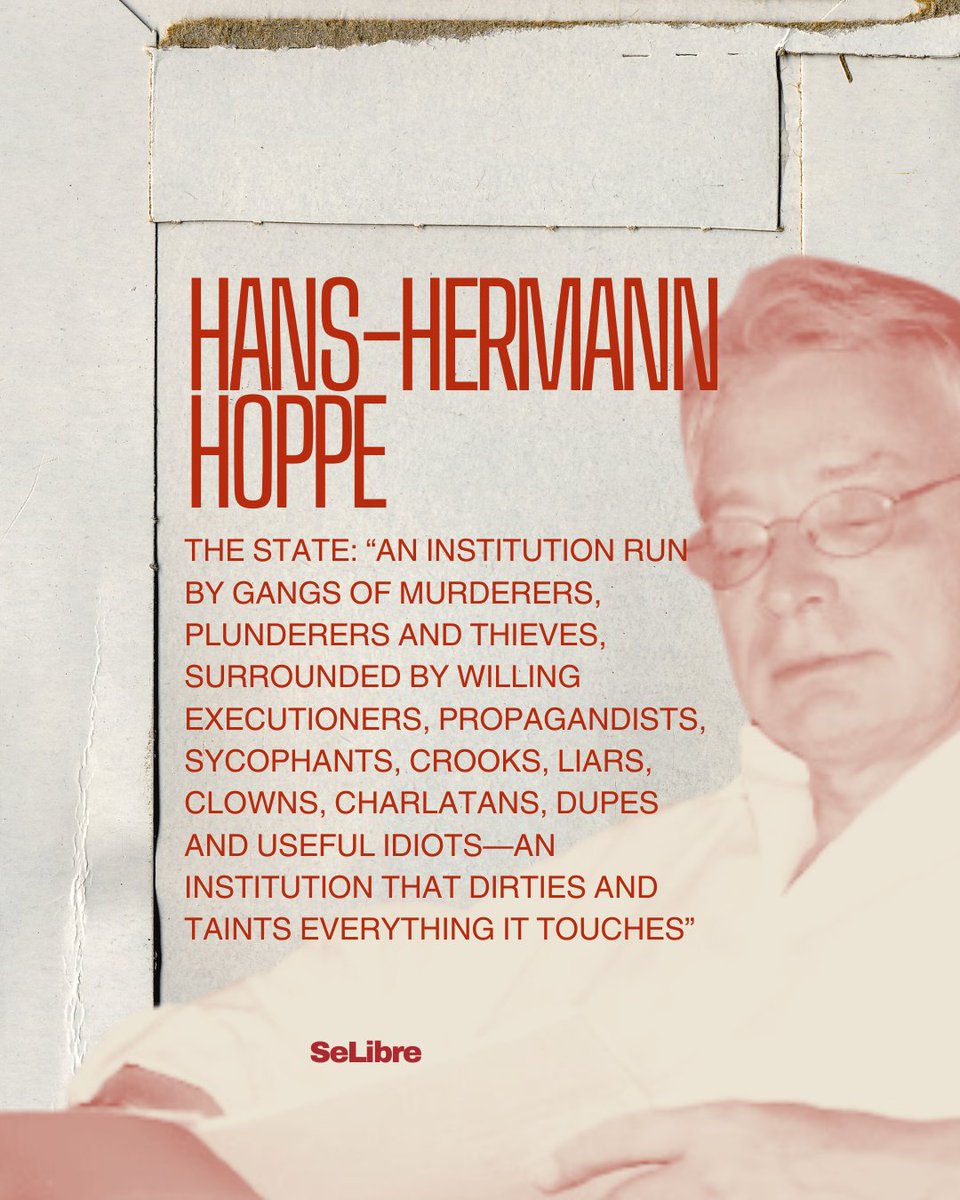
What if the supposedly greatest political achievement in history was actually a giant step backward? In "Democracy: The God That Failed" (2001), one of the most provocative political economy books of this century, Hans-Hermann Hoppe argues that democracy doesn’t work.
Hoppe's central argument is that democracy creates short-term incentives. Elected politicians act as temporary custodians of the state rather than long-term owners. Because they do not own the state's assets, they have an incentive to maximise current consumption through higher spending, debt accumulation and redistribution, while leaving future taxpayers to bear the costs. Democracy has transformed the state from a limited institution into a mechanism through which competing interest groups vote themselves ever larger claims on other people's property. Instead of preserving prosperity, democracy exhausts resources in pursuit of short term goals.
In contrast, Hoppe argues that a hereditary monarch behaves more like the owner of a capital asset. Since the kingdom can be passed on to future generations, there is a stronger incentive to preserve its long-term value by maintaining fiscal discipline and protecting productive capital. Importantly, Hoppe does not argue that monarchy is morally superior, but rather that the incentive structures differ in economically significant ways.
Political institutions should not be judged by the promises they make, but by the behaviour they systematically encourage. Democracy gives people a voice and offers a peaceful means for the transition of power, but is a poor custodian of our wellbeing and liberties. Instead of protecting the rights of citizens, it becomes a means of violating our fundamental rights to private property and person freedom.
Three decades after its publication, "Democracy: The God That Failed" remains essential reading for anyone willing to question whether modern democracy has become less a guardian of liberty and more a vehicle for the gradual erosion of property, responsibility and individual freedom.
"None of the state’s “own” land and property — misleadingly called public property — and none of its money income is derived from original appropriation, production, or voluntary exchange"
https://t.co/DkrUkySmUz