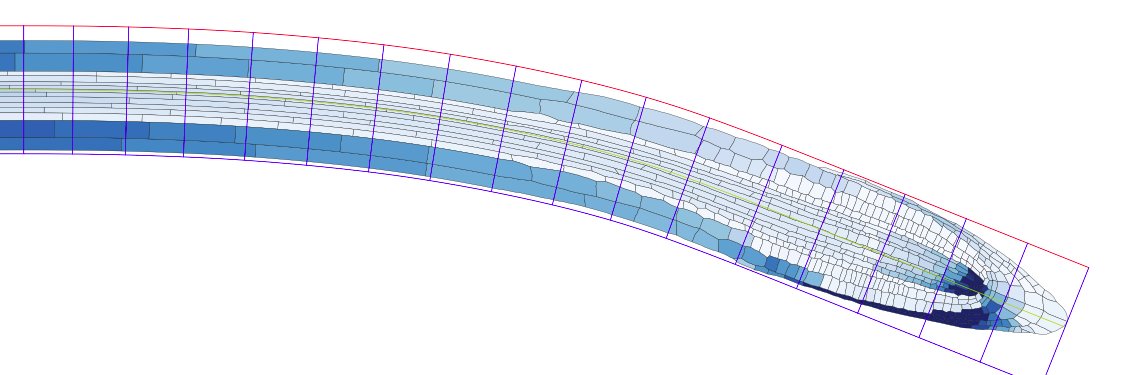
Happy to share the alpha release of camdl, a new compartmental modeling framework I've been cooking up.
With coding agents writing more of our scientific code, I think it's more important than ever to shift to architectures that engineer in robustness...
https://t.co/RSJjZFYa5c
Imagine every pixel on your screen, streamed live directly from a model. No HTML, no layout engine, no code. Just exactly what you want to see.
@eddiejiao_obj, @drewocarr and I built a prototype to see how this could actually work, and set out to make it real. We're calling it Flipbook. (1/5)
Today, we released Lyra 2.0, a framework for generating persistent, explorable 3D worlds at scale, from NVIDIA Research.
Generating large-scale, complex environments is difficult for AI models. Current models often “forget” what spaces look like and lose track of movement over time, causing objects to shift, blur, or appear inconsistent. This prevents them from creating the reliable 3D environments required for downstream simulations. Lyra 2.0 solves these issues by:
✅ Maintaining per-frame 3D geometry to retrieve past frames and establish spatial correspondences
✅ Using self-augmented training to correct its own temporal drifting.
Lyra 2.0 turns an image into a 3D world you can walk through, look back, and drop a robot into for real-time rendering, simulation, and immersive applications.
➡️ Learn more: https://t.co/ROR7miJeCU
📄 Read the paper: https://t.co/1osU9EGjGD
Genie3 generates videos. We generate 𝟯𝗗 𝘄𝗼𝗿𝗹𝗱𝘀 you can actually use.
Launching tomorrow — Tencent #HYWorld 2.0, an engine-ready World Model🚀
This isn't a video. It's a real 3D scene, all generated & editable. One image in. A whole 3D world out.
🔥Open-source tomorrow
📢GaussianGPT: autoregressive 3D Gaussian scene generation.
We introduce a GPT-style model that directly generates 3D Gaussian scenes, token by token, in a series of small, discrete decision steps. Generation, completion, and large-scale outpainting in a single pipeline.
Unlike diffusion-based approaches, GaussianGPT explicitly models the scene distribution at every step, allowing for quite flexible scene synthesis.
🌐 https://t.co/Ewv4CyLD2O
▶️ https://t.co/zKOugfD9gl
Great work by @nicolasvluetzow, @barbara_roessle, @katha_schmid
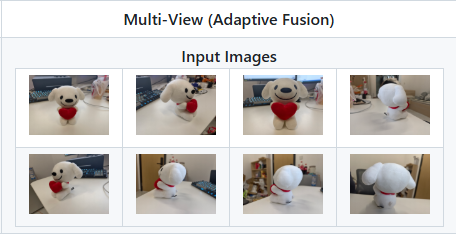
this is another implementation of SAM3D with multi-view.
I'll be honest, SAM3D's only flaw was the lack of multi-view, and this solves it.
Hopefully it gets a node too, or get rolled into another SAM3D custom node.
https://t.co/DPFH9pnnIZ
I’m very happy to present my toy research project: Sotaku!
It's a neural net that automatically discovered the rules of sudoku and learned to solve them, achieving a new state-of-the-art score of 98.9% on one of the hardest sudoku datasets, while being agnostic to the game, and beating all other sudoku-optimized neural net architectures*
Read more for fun motivations, plus some extremely unconventional discoveries, e.g. reverse curriculum consistently beating curriculum (!), emergent reasoning-like capabilities, and the future of traditional programming
Inspired by 2swap's Klotski visualization video, I asked claude to make interactive state-space adjacency graph visualization, using @threejs and InstancedMesh for optimized rendering. It nearly zero-shot it.
Absolutely wild time we live in.
(almost) legit cool research? In *my* sigbovik??
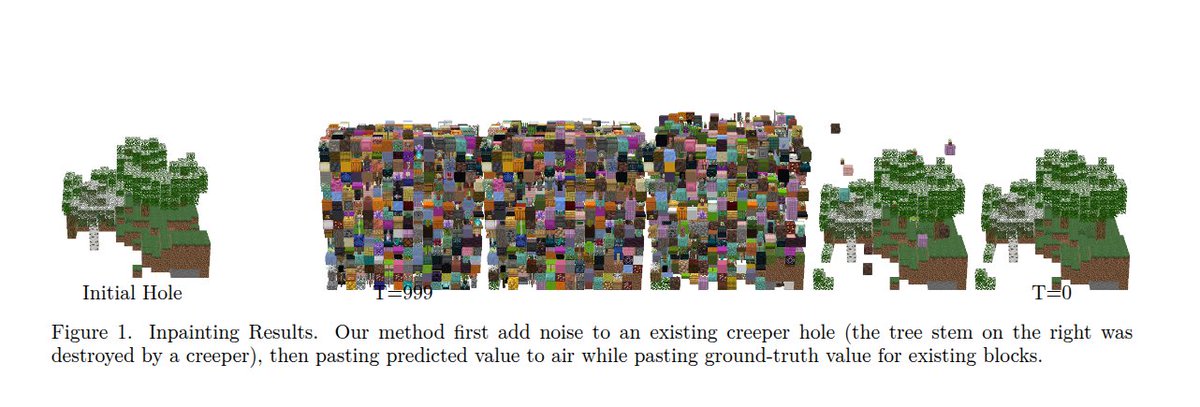
"A Creeper Hole is Worth 16x16x16 Words: Transformers for Block Deterioration at Stale"
Using a diffusion model to inpaint the holes left by creeper explosions
Big & Clean Labeled Data is everything in AI, in this project we tried to go to the extreme and reached the 1 Billion mark, which was done before in natural images in LAION, CLIP, diffusions, SAM, etc.. but this is the first in medical imaging that a BILLION is reached
"Doing arithmetic with floating-point numbers is like moving piles of sand. Each time you do it, you lose a little sand and pick up a little dirt."
from "Dirty Pixels", Jim Blinn, 1989
PhD studentship available on “Mathematical modelling of environmental information processing in hybrid aspen” with Prof Peter Stewart (UoG) and Prof Rishikesh Bhalerao (SLU). https://t.co/hS0yWYRZ1G
Nice discussion on how cell painting can be replaced by simpler and cheaper bright field imaging - see also the ISBI lightmycells challenge https://t.co/QjJ8LWBzAf
Why Recursion Pharmaceuticals abandoned cell painting for brightfield imaging
https://t.co/YFgR9UOaQz
After over a decade, @RecursionPharma changed its primary assay. Why is that? I answer that question over 5.6k words (26 minutes to read)
first journalism-y piece!
🚀Join us for the first AIBIO-UK Hacky Hour on Thursday, 10th October 2024, at 3-5pm!
An informal space to solve problems & share ideas in research & programming.
✉️Email Charlie Harrison ([email protected]) with “AIBIO-hackyhour” to sign up! 💻
#AIBIOUK#HackyHour
Great to be able to share this preprint! Once again, influenza A viruses seemingly get the last laugh. This time, by puppeteering a dying cell to facilitate its intercellular transmission. Thanks to everyone involved! 🦠🔬 https://t.co/GyBP66ggjE
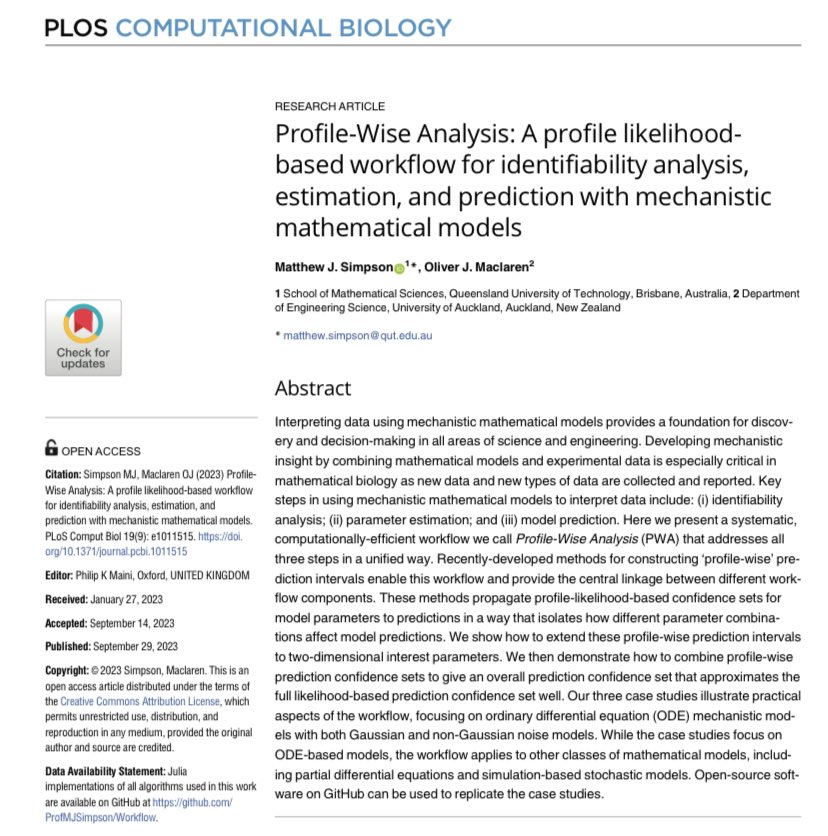
Predictions are very important but I also think parameters are important for capturing the ‘theoretical content’ of models. Here’s a brief summary article on models etc, as well as an attempt to link param & predictions. 1 https://t.co/nuWcdlCgVL and 2 https://t.co/wJZflM97sr