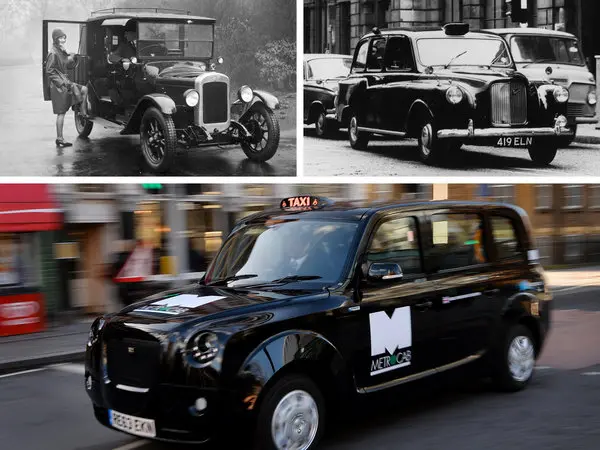
To get a license to drive a black cab in London, you have to memorize 25,000 streets, 20,000 landmarks, and the fastest route between any two points in a six-mile radius of Charing Cross. It takes most people three to four years.
A British neuroscientist asked the obvious question nobody had thought to ask. What does that actually do to a human brain?
Her name was Eleanor Maguire. The study changed neuroscience forever.
The exam is called The Knowledge. It was introduced in 1865, and the format has barely changed since.
Applicants ride a moped around London for years with a clipboard strapped to the handlebars, tracing every possible route between every possible pair of points in the city.
They get tested in person by an examiner who can ask them, on the spot, for the shortest legal route between any two addresses in a database of tens of thousands. Half the people who attempt it fail.
The ones who pass have spent an average of four years studying full time and have taken the test 12 times before getting through.
Maguire was watching a TV movie about it in 1995 when she had the idea. These were not ordinary people. They were people running one of the most extreme spatial memory training programs that exists anywhere on Earth.
If the human brain could be reshaped by experience, this was the cleanest natural experiment anyone was ever going to find.
She put 16 of them in an MRI machine.
Their posterior hippocampi were significantly larger than the brains of matched controls. The longer a driver had been working, the bigger the difference got.
A 40-year veteran had a measurably more developed hippocampus than a 5-year veteran, and both had more than someone who had never driven a cab.
Here is why that finding broke a century of consensus.
Until 2000, every neuroscience textbook in the world taught a version of the same idea. The adult brain is essentially fixed. You are born with a set number of neurons. Childhood is the window where the wiring gets laid down. After puberty, the structure freezes, and the rest of your life is just slow decline.
Maguire's study was one of the first pieces of human evidence that this was simply wrong. Adult brains physically remodel themselves in response to what you ask them to do. Not metaphorically. Structurally. With grey matter you can measure on a scan.
The skeptics had an obvious objection. Maybe people with bigger hippocampi were just more likely to become taxi drivers in the first place. The brains were not changing. The job was selecting for brains that already looked that way.
So Maguire ran the experiment again. Properly this time.
She recruited 79 trainees who were just starting to study for The Knowledge and 31 controls who were not. She scanned all of them at the start. Then she waited four years. Of the 79 trainees, 39 eventually passed the exam and 20 failed. She scanned them again.
The trainees who passed had grown larger posterior hippocampi over those four years. The trainees who failed had not. The controls who never studied had not. The brain change was not selection. It was construction.
The act of memorizing the city had physically rebuilt the part of the brain responsible for spatial memory, and the rebuild only happened in the people who actually did the work.
There is a quieter finding from this research that almost nobody quotes, and it is the one I cannot stop thinking about.
The drivers had a bigger posterior hippocampus, but they had a smaller anterior hippocampus. The brain had not magically expanded. It had reallocated. Tissue that was being used for one type of memory had been compressed to make room for another.
When Maguire ran follow-up cognitive tests, the cabbies were measurably worse than controls at certain visual memory tasks unrelated to navigation. They had paid for The Knowledge with something else. The trade was real.
She also ran a second control experiment that is the part of the story most people never hear. She scanned London bus drivers. Same hours behind the wheel. Same city. Same traffic. Same stress. The only difference was that bus drivers follow fixed routes. They do not have to navigate. Their hippocampi looked completely normal.
The cab drivers had not grown bigger hippocampi from driving. They had grown them from the constant, active, effortful retrieval of spatial information from memory.
That distinction is the entire study.
Then in 2020, McGill researchers ran the inverse experiment. They tracked 50 regular drivers and measured how often they used GPS. The participants who relied most heavily on turn-by-turn navigation had measurably weaker spatial memory. When the researchers retested a subset of them three years later, the heavier GPS users had declined fastest.
The hippocampus, the same region the cabbies had built up by ignoring shortcuts, was being slowly hollowed out in everyone else by accepting them.
The mechanism Maguire spent 25 years documenting works in both directions. Brains grow what you make them grow. They lose what you stop asking them to do.
The taxi drivers were running the most intense spatial memory training program on Earth. Most of the rest of us are running the opposite program without realizing it.
Maguire died in early 2025. UCL's tribute described the cabbie study as a stroke of creative genius. She had spent her entire career on a single question. What does it physically take to remember something, and what changes inside a person who remembers a lot of it.
The answer is the part that should change how you live.
@SimonCalder just at Palermo airport after first trip under new EEC procedures. Took 1 hour queuing on landing for photo/fingerprints, 5 minutes just now pre-departure, for same photo/fingerprints. My question is how will they separate returners from the first-timers next time?
@British_Airways@Anduaen Is it just me who thinks that all your responses to all the real problems raised on X with you are utterly feeble and fail to convince me that any action will actually be taken!
@RoyalMail what a bloody joke: my 48 signed for packet from Surrey to Worthing, Sussex is now (3 days later) in Chester. Apparently they are delivering today between 10:30 and 1:30 - any one taking bets?
Here I am in 2020 in the flimsiest, most pitful PPE - like so many other NHS staff, some of whom died from the Covid they caught in their hospitals.
Tory peer @MichelleMone - who today rightly (& wonderfully) lost her legal case - dares to claim she’s been ‘scapegoated’.
What, Michelle?
For the £122 million you pocketed from taxpayers for delivering unusable PPE – at least £65 million of which went straight into your venal husband’s offshore accounts in the Isle of Man?
For being one of a small minority of corrupt grifters who saw a global pandemic as nothing more than a chance to get rich quick?
For caring more about lining your own pockets than the deaths of NHS staff & patients?
For being disgustingly cynical & avaracious - unlike all those millions of ordinary, decent Britons across the country who stepped up with such courage & decency?
I was given masks whose ear loops fell off & aprons so flimsy they ripped apart when you tried to put them on, Michelle.
Nurses and porters in our hospital died from the Covid they caught there, Michelle.
How dare you try to bleat victimisation now, Michelle?
You are the polar opposite of the values that should govern public life.
Repay what you owe & get your dishonourable form as far away from the House of Lords as possible.
@ElmbridgeBC Start by putting more rubbish bins near popular sites. This was last Wednesday (& most weeks) near entrance to Wilderness off Orchard Lane
@Argos_Online - your item 722/1923 solar lights is not as described: there are 6 lights per pack not 3 - though heaven knows why I’m bothering to tell you, as you make contacting you so bloody difficult! Bottom line is I’m returning half my order
Ok…then fuck it, since you’ll never see it. I can let you know. I won the whole thing and made the best dishes ever tasted on the show. Gregg Wallace said, and I quote- “this quiche is so tasty that I’m going to pull its pants down and roger it senseless right now.”
1. I don’t often tweet about my personal life, but on 1st November, my mum Jane was hit by a large vehicle as a pedestrian in St. Louis, USA. She suffered a severe brain injury & remains in a coma in hospital.
Here's Jane & me in happier times.