UPD countdown to Christmas day 7/15: New guest blog! 🎄
In today’s UPD guest blog, @JohnTStats and Helen Strongman from @ehr_lshtm share their research and discuss their perspectives on the impact of opt-outs on health research.
Read below!👇 https://t.co/pbCJEeAWgx
The English NHS data opt-out allows people to prevent use of their health data other than for direct care. Tazare+al describe how opt-outs varied in 2021 by key demographic characteristics, and discuss statistical and epidemiological implications
➡️https://t.co/00n7x0YpPo
Changes in sick notes associated with COVID-19 from 2020 to 2022: a cohort study in 24 million primary care patients in OpenSAFELY-TPP https://t.co/z23h3sLZLr @anschaf @johntstats
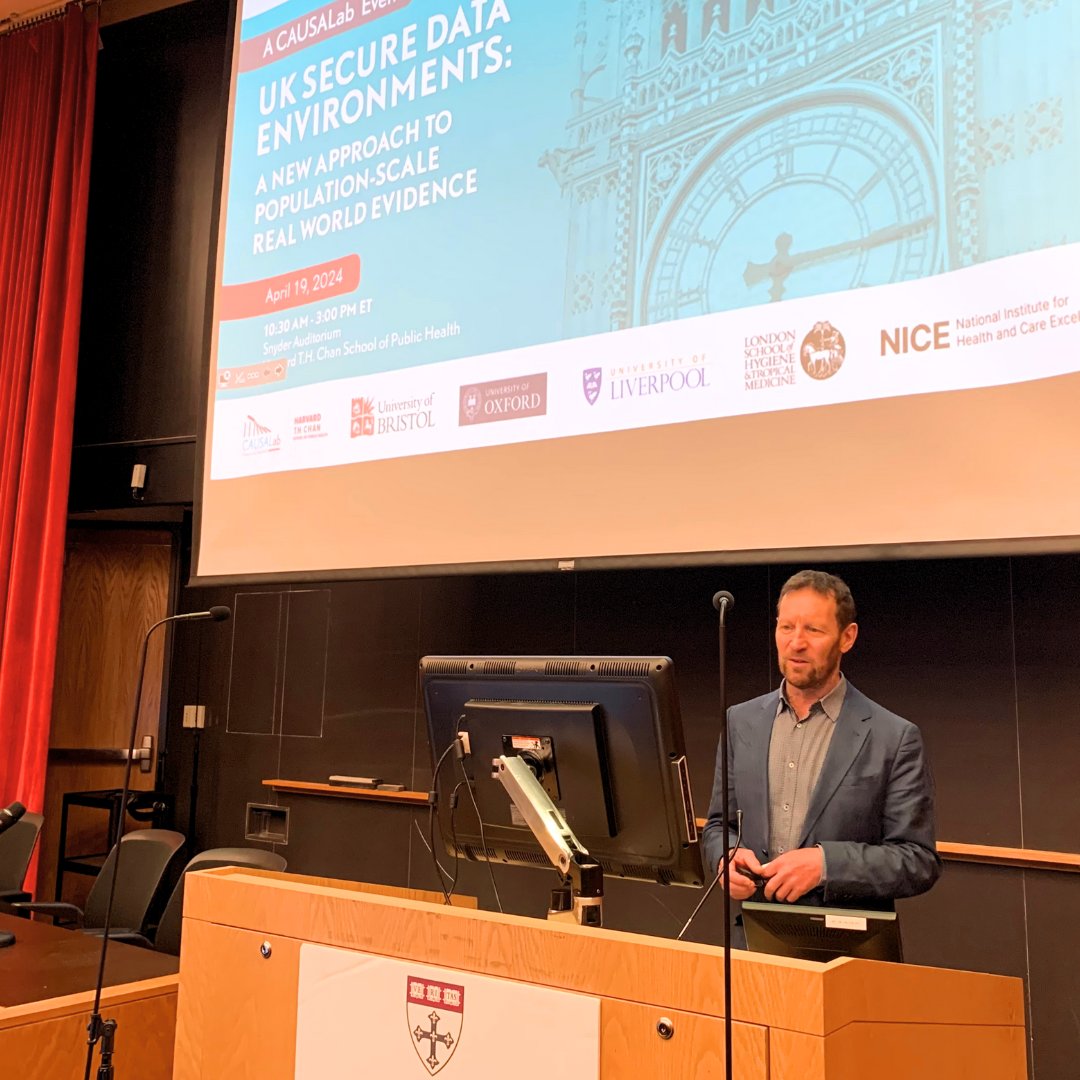
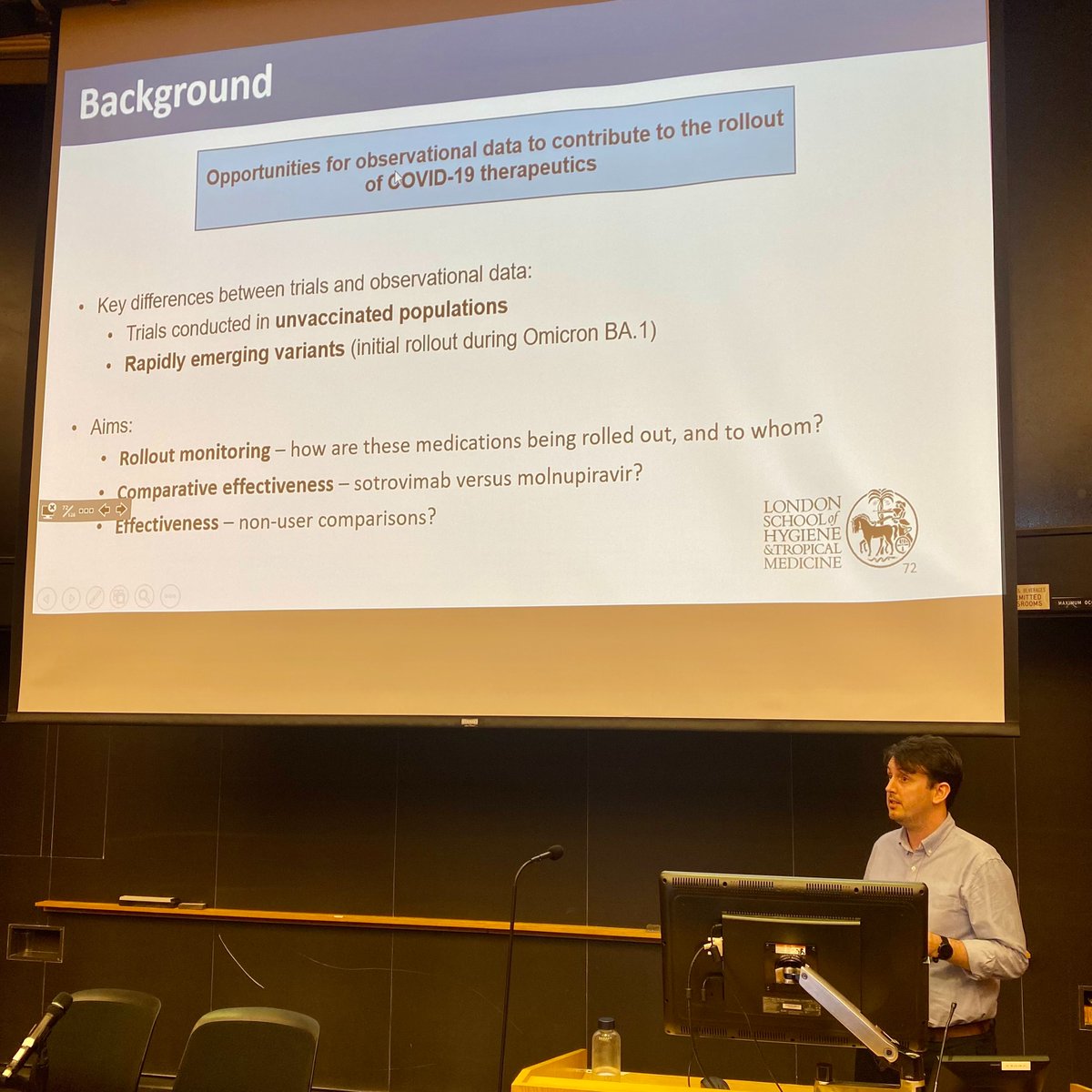
The 17th Kolokotrones Symposium, "UK Secure Data Environments: A New Approach to Population-Scale Real World Evidence,” was a success!
Thanks to our speakers for providing valuable insight into the British data model.
Presentations now live on YouTube:
https://t.co/68ixgBgIMH
Looking forward to this @HarvardChanSPH event on Secure Data Environments for medical data & electronic health records, which features a talk from LSHTM's @JohnTStats https://t.co/kG0oJQ33XE
Very exciting to see code sharing forming part of the BMJ's new data sharing policy (and not just for trials!). Will be interesting to see how this is implemented and followed 👀
The BMJ's policy, alongside other open research indicators, could be monitored with a new "open research" tag at the end of manuscripts which might encourage the reporting of other important transparency indicators in a standardised way - e.g., pre-registration and pre-printing.
Our Letter to the Editor in response to the inclusion of code sharing in @BMJ's newly announced data sharing policy has been published. (https://t.co/J28PXvzb5L)
#transparency#openscience#reproducibility
@AnnaTheresia and I highlight that, as epidemiologists, much of our research involves the use of data for which sharing is not a legal possibility. Therefore, programming code sharing has an important role in improving the transparency of this research.
🔊 Our Early Career Researcher Showcase!
Join us for an exciting hybrid event on Nov 7th, featuring LSHTM's emerging talents in data and statistical science.
Nominate yourself or a colleague by completing the form before the Oct 13th deadline.
👇
https://t.co/tbXcX0Mb3E
🚨Want to apply the high-dimensional propensity score algorithm? As well as great software available in SAS and R, there's now a dedicated Stata package for implementing these approaches!
https://t.co/xsFZ0vk5H3
Join us for inaugural lectures from Jonathan Bartlett, Ruth Keogh and Fizz Williamson
"Please mind the methodology gap: biostatistics to the rescue"
📅Thurs 14 September
🕔17:15 UK GMT +1 [BST]
📍LSHTM & online
🔗https://t.co/gg1CwGS4qO
Delighted to see our commentary published, outlining the potential for trial emulation with observational data from #CysticFibrosis (CF) registries. By @RuthHKeogh
and I on behalf of the CF trial emulation network (CF-TEN) https://t.co/k1pXmx7GPn
At #ICPE23 and interested in open science? Come to our symposium, “Sharing is Caring?”, about the sharing of programming code in pharmacoepidemiology at 4.15 in MR201! We’ll have review results, examples and live polls ✨@JohnTStats@Shirley_Wang_V @prieto_alhambra
New study shows among people with blood sugar levels below threshold for diabetes:
Men with raised blood sugar had 30% greater risk of developing cardiovascular diseases (CVDs)
Women with raised blood sugar had 30-50% greater risk of developing CVDs📈👥
Reviewing initial applications of a novel methodological proposal allowed us to understand current practice whilst identifying gaps in methodological knowledge and potential barriers to wider uptake.







![LSHTM_datastats's tweet photo. Join us for inaugural lectures from Jonathan Bartlett, Ruth Keogh and Fizz Williamson
"Please mind the methodology gap: biostatistics to the rescue"
📅Thurs 14 September
🕔17:15 UK GMT +1 [BST]
📍LSHTM & online
🔗https://t.co/gg1CwGS4qO https://t.co/z1llClB70J](https://pbs.twimg.com/media/F5u2mszWcAA_wW_.jpg)





