“At some point, calling [@chainlink] an oracle network now feels like calling Amazon a bookstore.”
Love this quote from @jonmorgan_HODL in the daily @Stocktwits crypto newsletter. It really resonates because I started using Amazon to buy college textbooks way back in 2001. Now, as a dad of four, we use it for everything.
I think Chainlink will have a similar story.
🚨Chainlink announces more than any other crypto, & this from their Q2 report is proof.
$7B+ migrated to CCIP, quarterly volume hit $4.9B up 353% YoY!
Projects have abandoned legacy bridges to integrate with @chainlink!
$LINK isn’t chasing adoption, adoption is chasing $LINK!
With our payments scheme, financial institutions can enhance front-end digital experiences by improving FX and fee transparency, and giving customers clearer, real-time tracking. At the same time, they can address last-mile frictions around speed and traceability – guided by benchmarks and insights aligned to G20 targets.
Find out more: https://t.co/PlnDNuzZop
#CrossBorderPayments #SwiftScheme
A year and a half ago, @SergeyNazarov stood on stage at the D.C. Blockchain Summit and laid out exactly what the U.S. needs to do to win the onchain financial system. Three principles on where the puck is going and what it takes to catch it.
I went back and reread that keynote this week. Then I cross-referenced it against everything @chainlink has shipped since. The gap between vision and execution is smaller than I expected.
1. Asset origination
The U.S. needs to be the place where digital assets are born. Not just where companies are headquartered, but where the underlying value sits. Stablecoins already get this right, over 90% of stablecoin backing assets are U.S.-based.
The play is to replicate that dominance across every asset class. Tokenized funds, tokenized equities, tokenized commodities, tokenized real estate. The metric that matters is market share: what percentage of the Web3 financial system runs on U.S.-issued assets?
2. Automation of compliance
Compliance is the largest transaction cost in finance. If the U.S. creates the best assets in the world but international buyers in Dubai or Singapore face a mountain of friction to acquire them, demand goes elsewhere. The fix isn't removing compliance. It's automating it to the point where buying, holding, and reselling a U.S.-issued tokenized asset is cheaper and faster than the traditional equivalent. Lower friction means net capital inflows. That's the entire ballgame.
3. Global distribution
DeFi protocols, fintech apps, and institutions all become distribution rails. They take those low-friction U.S. assets and push them to every corner of the global financial system. The demand flows back to the U.S. economy.
So what actually got built?
The keynote was March 2025. Let's run through what Chainlink has shipped or announced since then that maps directly onto this framework.
1. Asset origination: Digital Transfer Agent (DTA)
The DTA is a technical standard for tokenized fund operations. It handles the entire lifecycle: minting, redeeming, recordkeeping, distributions, corporate actions, onchain. This is the piece that makes the U.S. the origination point. If funds, equities, and real-world assets can be issued through a standardized onchain transfer agent that proves reserves and composition, the U.S. becomes the default birthplace for digital assets. The same way Delaware is the default for corporate incorporation.
https://t.co/N3btIDX4Ss
2. Automation of compliance: Automated Compliance Engine (ACE)
ACE launched as a product. It doesn't remove compliance requirements. It encodes them into programmable rules that execute automatically: KYC, AML, sanctions screening, jurisdictional restrictions, all of it. The goal is exactly what Sergey described:
"Make compliance a feature that unlocks global demand instead of a cost center that blocks it. International buyers can acquire U.S. assets with the compliance checks happening programmatically in the background, at a fraction of the traditional cost."
https://t.co/4NBxgNt7jC
3. Cross-chain minting: CCIP
CCIP has gone from "the cross-chain protocol we're building" to the connective tissue of major institutional projects. Project Pangea with 50-plus banks, $10 trillion in AUM, T+0 atomic FX settlement using regulated euro and won stablecoins, runs on CCIP.
The @The_DTCC and @EuroclearGroup are using it. Swift's experiments with tokenized asset settlement use it. This is no longer a whitepaper. It's moving real value between real institutions across real chains.
https://t.co/c1cTZL6DlJ
4. Onchain golden records: Proof of Reserve + DataLink
Chainlink's Proof of Reserve now covers a long and growing list of tokenized assets, verifying that the onchain token matches the offchain collateral in near real time. DataLink, the newer product, lets institutions publish and commercialize their own data across blockchains. Think of it as the pipeline that feeds verified offchain information into those golden records. The pieces are being wired together.
https://t.co/wZ4QgenDtc
5. Global distribution: CRE + Equity Streams
The Chainlink Runtime Environment (CRE) is the orchestration layer that lets institutions plug into blockchain infrastructure on their own terms: Their choice of chain, their compliance rules, their data sources. It's the "run it how you want" layer that makes distribution practical.
On the retail side, Equity Streams launched in APAC, bringing tokenized equity pricing and data feeds to markets that want them. The distribution rails are being laid in parallel on both the institutional and consumer sides.
https://t.co/zHA88TBalG
6. Privacy: Chainlink Privacy Standard
This one deserves its own mention. Private transactions on any blockchain. If institutions are going to move real volume onchain, and not just proof-of-concept volume, they need confidentiality. Counterparty exposure, trade sizes, portfolio composition. You can't have all of that sitting on a public ledger for competitors to scrape. The Privacy Standard makes the vision viable for the institutions that actually move the money.
https://t.co/lQJWLgGoUb
The part that connects the dots
Here's what gets me. Sergey's framework wasn't a product roadmap. It was a strategy thesis about how the U.S. maintains financial dominance in a world where value moves on blockchains. But when you line up what Chainlink has shipped since, the products map onto the principles almost one-to-one.
The question Sergey posed at the end of his keynote still hangs in the air: "When the global financial system went from paper to internet and databases, the U.S. gained market share and leadership. What happens now, as it transitions into Web3?"
His answer was that it depends entirely on whether the U.S. builds the infrastructure to originate the best assets, automate compliance to attract global demand, and distribute those assets through DeFi and fintech rails.
A year and a half later, the infrastructure is no longer theoretical. It's being built. The assets are starting to flow. The banks are showing up, not for press releases, but for settlement infrastructure. The question is shifting from "can we build this" to "who moves first at scale."
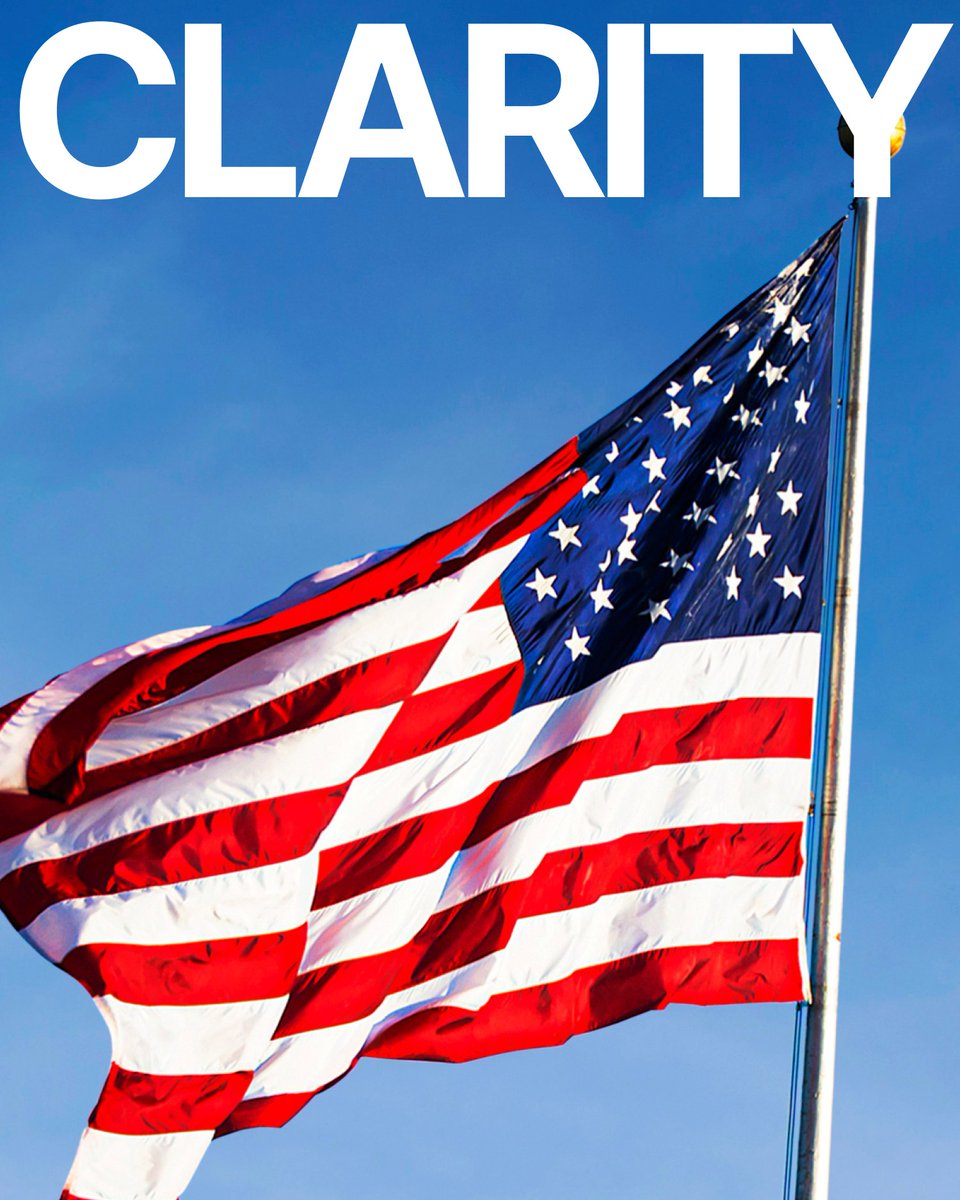
It's time to pass the Clarity Act 🇺🇲
After years of bipartisan work, the U.S. is closer than ever to establishing clear rules for the digital asset industry.
Regulatory clarity fosters innovation, protects consumers, & helps establish America as the crypto capital of the world.
NOW: United Stables adopts Chainlink as official data oracle & cross-chain infra to expand the distribution of the $1B+ U stablecoin native to @BNBCHAIN across DeFi.
@UTechStables chose Chainlink because it provides the institutional-grade security required for global scale.


![AndrewMcMarkets's tweet photo. “At some point, calling [@chainlink] an oracle network now feels like calling Amazon a bookstore.”
Love this quote from @jonmorgan_HODL in the daily @Stocktwits crypto newsletter. It really resonates because I started using Amazon to buy college textbooks way back in 2001. Now, as a dad of four, we use it for everything.
I think Chainlink will have a similar story.](https://pbs.twimg.com/media/HOUooJrXsAEmyMU.jpg)
![AndrewMcMarkets's tweet photo. “At some point, calling [@chainlink] an oracle network now feels like calling Amazon a bookstore.”
Love this quote from @jonmorgan_HODL in the daily @Stocktwits crypto newsletter. It really resonates because I started using Amazon to buy college textbooks way back in 2001. Now, as a dad of four, we use it for everything.
I think Chainlink will have a similar story.](https://pbs.twimg.com/media/HOUooJpWUAATd9O.jpg)


![AndrewMcMarkets's tweet photo. “At some point, calling [@chainlink] an oracle network now feels like calling Amazon a bookstore.”
Love this quote from @jonmorgan_HODL in the daily @Stocktwits crypto newsletter. It really resonates because I started using Amazon to buy college textbooks way back in 2001. Now, as a dad of four, we use it for everything.
I think Chainlink will have a similar story.](https://pbs.twimg.com/media/HOUooJuWMAAG4SM.jpg)