Transportation Policy Advisor @ThirdWayEnergy | Aviation & Rail | Clean Energy Enthusiast | Past @UGA_SPIA @JHUArtsSciences | Occasional college football fan
@tyleracole@ThirdWayEnergy Not to mention a huge market opportunity for agricultural feedstocks as we start to electrify ground transportation and see ethanol demand decline.
"As the largest biofuels producer and exporter in the world, the US has an obligation to give our farmers and producers the tools and resources to be competitive in emerging sectors like SAF," Third Way's @John_R_Hebert writes.
Read more⬇️
https://t.co/PgBsC81I3q
Today, Third Way, along with a coalition of organizations sent a letter to Congress to spur additional investment in sustainable aviation fuel #SAF.
The case:#SAF is pivotal to reaching our climate goals & decarbonizing our aviation sector.
Read letter: https://t.co/d9wyUPlRzf
New tax credits and other programs in the #IRA have created a strong foundation for the SAF industry, but a federal LCFS for aviation is arguably the missing link to transform SAF from an emerging to an established technology.
What's the key missing ingredient in the U.S.'s approach to sustainable aviation fuel (SAF)? @ThirdWayEnergy’s recent report finds a proposed low carbon fuel standard would significantly increase SAF production volumes and use: https://t.co/f1UqIHvUir
I’ve leaned on and learned from @ThirdWayTweet for most of my career. Love their balanced and pragmatic approach to solving problems. Getting the energy question right means reducing emissions, increasing manufacturing and union membership so workers are cut in on the deal.
As @axios writes, sustainable aviation fuel could be a BIG help in cutting CO2 from air travel. My colleague @AlexanderLaska @John_R_Hebert are doing excellent work to help make this possible https://t.co/zooOVzlRG7 #axiosgenerate 1/
📝New Report: "The Dept of Defense has recognized that its reliance on petroleum-based fuels creates significant strategic risks for our armed forces due to the volatility of fuel supplies," @John_R_Hebert writes.
Read why the military should use #SAF⬇️ https://t.co/IA5dFASo53
Great to see progress moving piston planes away from unleaded fuel, but G100UL is not going to become the norm overnight. Production will need time to scale up and the cost differential will still be about 50-80 cents per gallon for the foreseeable future.
https://t.co/XbH7gtNHet
New educational series released yesterday by @Airbus to explain #sustainableaviationfuel to kids. Great. Now do one for voters.
https://t.co/tBZrLBHLXv
📝New Report: Read how key investments along the US EV supply chain can contribute to our #netzero climate goals, generate $1 trillion global market annually by 2050, & produce as many as 10 M jobs in the sector over the next 3 decades⬇️ https://t.co/3xLHwx7HL2
The heavy weight and lower power density of batteries means that we can only electrify short distance routes. Some regional routes may become viable with improvements in battery technology, but the bulk of aviation emissions (>80%) come from medium-long distance travel.
Don't get me wrong, electric planes are an exciting concept. But there's an important reason that airlines aren't making them a centerpiece of their ESG reports...they're not actually going to do much to reduce emissions.
https://t.co/eSEn4VNJAt
Emissions benefits from #SAF are well established when you look at the full LCA of the fuel, but emissions related to SAF combustion is an underexplored area. Good to see FAA funding going toward this research by @MissouriSandT
https://t.co/XggSWpz8CH
The private sector has already committed to purchasing large quantities of sustainable aviation fuel despite its high cost. @david_alman makes a great case here for why DOD, the largest consumer of aviation fuel in the world, should follow suit with its own purchasing commitment.
Money spent on sustainability need not always come at the expense of national security. In fact, sustainable defense might just be better defense. https://t.co/dygZUwMd8D
@USDOT announced that 25 states will receive grant funding by the #FHWAClimateChallenge to help to reduce GHG emissions in highway projects through the use of sustainable construction materials. 6/
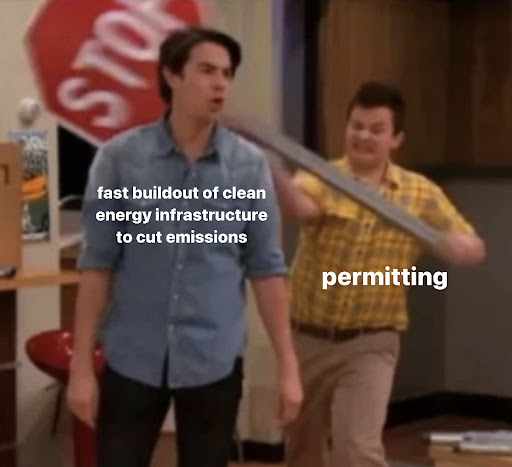
Clean energy is the best tool we have in the fight against climate change but something is standing in the way:: siting and permitting.
Let’s talk about what must happen if we want to make meaningful change within the next decade. 🧵1/
Our new report shows that eight major European airlines frequently use cheap, poor-quality offsets to fool us into believing that we can fly with little to no environmental impact.
We lift the veil on the murky world of voluntary airline climate action: https://t.co/zb0Db0i5F6
First off, a person's second flight (or the 2nd half of a round trip flight) does not make someone a frequent flyer by any stretch. Suggesting up to a $177 tax for a one-way flight is also way too high, especially since that is on top of all the other user fees they'd have to pay
I'm all for finding creative ways to finance RDD&D for clean aviation technology but you really need to start with more realistic numbers if you're going to propose a tax like this.
https://t.co/aRcKef2VRR