Dear Southeast Governors: I hereby strongly urge Your Excellencies to implement what you had promised in this video regarding MAZI NNAMDI KANU & take prompt steps to collectively meet with President Tinubu as you had promised to do. Remember that a promise is a debt. Thank you.
Oh finally!
It is encouraging that the leadership of the Nigerian labour movement @NLCHeadquarters and @TUCNigeria have finally arrived at the same position the @aacparty adopted long ago.
Nigerian workers deserve a national minimum wage of no less than ₦500,000. The demand is both necessary and long overdue in the face of the country’s economic realities and soaring cost of living.
Now that there is consensus, the focus must shift from declarations to action.
Let’s unite and fight until Nigerian workers receive a living wage of at least ₦500,000.
We must vote for leaders who genuinely want the betterment of Nigerian workers, not those who have consistently treated workers as enemies.
#Sowore2027
IPOB Activist Rejects Integration of Alleged Criminals into Biafra Struggle https://t.co/FaO0MmPLGS
Yuri Clement Nwafor has publicly questioned any move to allow individuals he describes as criminals into the Indigenous People of Biafra (IPOB), warning that such a step risks undermining the broader Biafran self-determination effort.
In a statement circulating on social media platforms, Nwafor named Simon Ekpa, Gentle de Yahoo and Igwe Butuzo as criminals who “we can’t and can never allow… into IPOB.” He extended the exclusion to anyone previously expelled from the group over criminal activities. Addressing those close to IPOB leader Mazi Nnamdi Kanu (MNK), Nwafor urged them to convey that the organisation cannot accept criminals into the Biafra struggle, stating: “we don’t want the Biafra struggle to die because of criminality.” The post carried the hashtags #IPOB and #Biafra.
The statement reflects a recurring theme in IPOB-related discourse: the insistence that the movement’s legitimacy depends on rejecting criminality and maintaining clear separation from groups blamed for insecurity in the South-East.
Looting of Foreign National-Owned Businesses continues in South Africa. 🇿🇦
Video circulating since yesterday shows people looting foreign shops in KwaMashu and Ntuzuma Township..
A court in Mississippi, USA has sentenced three men from Nigeria to a total of 235 years in prison for running online scams that duped people out of tens of millions of US dollars.
They are:
Oladimeji Seun Ayelotan, 30. He was sentenced to 95 years in prison.
Rasaq Aderoju Raheem, 31. He got 115 years in jail.
Femi Alexander Mewase, 45, received 25 years in jail.
A jury found all three guilty of mail fraud, wire fraud, identity theft, credit card fraud and theft of government property.
Terrorists killed her first husband. Years later, after she found the courage to remarry and rebuild, they killed her second husband too. While still battling that trauma and struggling to feed her children, they attacked her again — this time on her own farm while she was trying to collect some potatoes for her daughter’s tuition 💔.
Uzo uwani local government chairman,I and my boys are coming to visit you. South East wake up, Apply the law of moses, if fulani kill you make una kill back, Na their people dey supply gun to dem to come dey kpai kpai us.
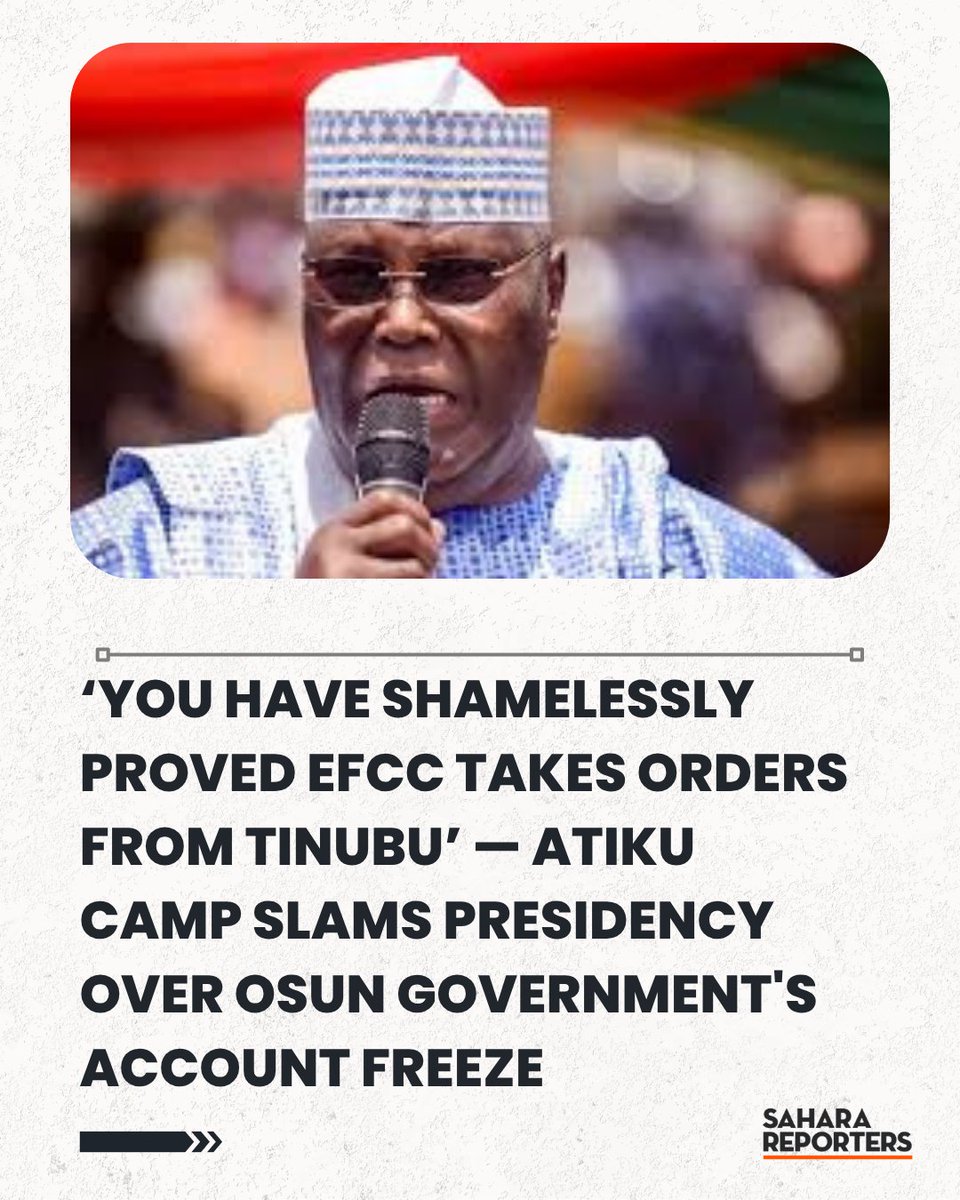
The @officialEFCC has become a joke, reduced to carrying out the @officialabat's wishes of rather than functioning as an independent financial crimes agency.
If the President can simply direct it to do his bidding, then its independence exists only on paper.
C'est fini! #RevolutionNOW
Nonso Nkwa was one of the figures who stood firm against the criminal activities of Simon Ekpa. He fought hard to distance Mazi Nnamdi Kanu from all of Simon Ekpa’s violent activities. I’m sure he will be disappointed when he comes to terms with the fact that Mazi Nnamdi Kanu is/was working with Simon Ekpa behind the scenes.
“Nigerians, Remember The Video I Made Where Band!ts Called Me And Warned Me To Stay Away From Anything Related To Them? They Called Me Again Today. In This Video, I Share What They Said, The Threats They Made, And One Thing That Stood Out To Me: Despite They Calling On Video Call From Deep Inside The Forest, Their Network Connection Was Clear And Strong. So I Want To Ask, Who Is Providing Network Coverage In Those Areas For Them?.” ~ D English Alhaji Reveals 😳
Thank you once again, @AlistairBurtUK, for taking the time yesterday to meet with me, my son and @margieOBE. I truly appreciate your willingness to listen and engage with our concerns.
During our meeting, I explained how the DSS allegedly falsified my husband Mazi Nnamdi Kanu's medical records and how the medical practitioner whose independent assessment differed from the official account was reportedly assaulted. Despite concerns about his health, he was declared fit to stand trial.
My husband is an exceptionally resilient man. Even when he is in significant pain, he has always chosen to remain composed and dignified rather than reveal his suffering and has constantly said to the consular officials that he is ok on the contrary - partly because they don't do much about it. I fear that this extraordinary strength has too often been mistaken for good health.
I would therefore like to bring to your attention his recent petition to the Medical and Dental Council of Nigeria (MDCN), in which he states that his life remains in danger and raises serious concerns about his medical care while in detention.
At this stage, I respectfully ask that his health and wellbeing be treated as a matter of utmost urgency. Whatever the legal proceedings, no British citizen should be placed in a position where concerns about access to proper medical care remain unresolved.
Thank you once again for your continued interest and for taking the time to hear our family's concerns.
https://t.co/HHG2CntSrR
@FCDOGovUK@Miatsf
Biafra Self-Determination Debate: Analyst Argues Regional Consensus Outweighs Single-State Recognition
In a detailed comparative analysis published today on The Biafra Post, writer Anyi Kings examines the international politics of self-determination, arguing that broad regional acceptance often proves more decisive for lasting legitimacy than recognition by any single country even a powerful one.
Titled “Biafra Beyond Veto Politics: Why Regional Consensus May Matter More Than Single-State Recognition,” the piece draws lessons from Somaliland, Kosovo and Taiwan to address questions surrounding proposals for an internationally supervised referendum and potential pathways toward wider international status for Biafran aspirations.
Kings opens by noting that recognition by one state can carry diplomatic weight, yet “broad regional acceptance can be far more consequential for achieving durable international legitimacy.” The analysis stresses that no single historical case transfers directly to another, but the three examples reveal a recurring pattern: international status is shaped less by isolated endorsements and more by regional organizations, neighboring states, multilateral institutions and diplomatic coalitions.
Somaliland and the African Union Barrier:
Somaliland declared independence from Somalia in 1991 and has since built functioning institutions, security structures and electoral processes. Despite this, it remains outside the United Nations membership system and lacks widespread formal recognition. Kings identifies the African Union’s longstanding emphasis on preserving colonial-era borders as a central obstacle, rooted in concerns that altering boundaries could trigger instability across the continent.
Any recognition by an individual country, including Israel, the analysis states, would need to be viewed in this wider context. Such a step might open a diplomatic relationship and raise visibility, but “it would not automatically transform the position of the African Union, secure universal recognition, or guarantee UN membership.” The piece concludes that single recognition can open a door without removing the regional barriers behind it. The African Union functions as a regional gatekeeper whose stance influences how non-African governments approach the issue, creating a distinction between bilateral recognition and regional legitimacy.
Kosovo’s 2008 declaration of independence brought recognition from numerous countries, including major Western powers. Yet the process remains incomplete, with several states continuing to reject its status. This has left Kosovo’s international position contested and limited its full participation in some institutions. Kings presents the case as evidence that recognition by influential states strengthens an entity’s standing but does not guarantee universal acceptance when geopolitical divisions persist.
Taiwan: Engagement Without Formal Recognition
Taiwan maintains limited formal diplomatic recognition yet sustains extensive economic, technological, educational and cultural ties worldwide. The analysis highlights this as a model showing that international engagement extends beyond formal state-to-state recognition. Diplomatic influence, Kings writes, can be built through sustained relationships rather than measured solely by the number of formal recognitions.
Shared Principles and Application to Biafra:
Across the three cases, the common lesson is that international legitimacy rarely stems from a single diplomatic event. It typically results from a combination of regional acceptance, bilateral relationships, legal arguments, political legitimacy, functioning institutions, economic ties, public diplomacy, multilateral engagement and shifting geopolitical conditions.
Applying this framework to the Biafra question, the analysis cautions against focusing exclusively on the five permanent members of the UN Security Council. While the P5 wield significant influence, their positions on sovereignty and territorial integrity are shaped by broader strategic interests that may not align. A strategy centered only on securing recognition from one powerful state risks encountering the same limitations seen elsewhere.
Instead, Kings advocates a broader multilateral approach emphasizing engagement with African institutions, European states, other UN members and international civil society. Institutional credibility also matters: movements that present themselves through durable structures, supporting leadership succession, accountability, constitutional governance, diplomatic representation and policy continuity, may be easier for external actors to assess. Institutionalization alone does not guarantee recognition, the piece notes, but it offers a consistent framework for presenting political claims over time.
On the question of an internationally supervised referendum, the analysis observes that such a process differs from unilateral recognition. Its significance would depend on agreed conditions, participation rules, verification mechanisms, the applicable legal framework and the willingness of relevant institutions to engage. The fundamental issue is whether the surrounding diplomatic environment can generate sufficient agreement for the process to be viewed as legitimate by key stakeholders.
Hierarchy of Outcomes:
Kings outlines a practical hierarchy: single-country recognition can confer visibility; recognition by several influential states adds weight; regional acceptance can remove major geopolitical barriers; broad multilateral consensus builds a stronger foundation for legitimacy; and, where legal and political requirements are met, UN membership represents the institutional culmination of a wider process rather than the automatic result of one country’s decision.
The central strategic question, the analysis concludes, is not simply “Which powerful country will recognize us?” but “Can a sufficiently broad regional and international consensus be built around a legitimate, peaceful and internationally credible process?”
The full analysis by Anyi Kings appears on The Biafra Post, dated August 7, 2026.
🚨 BREAKING:
Chinasa Nworu Set to Break Silence in Explosive August 8 Radio Biafra Broadcast
By Anyi Kings | The Biafra Post | August 5, 2026
A special edition of a Radio Biafra broadcast featuring Mazi Chinasa Nworu has been announced for Saturday, August 8, 2026, with organizers describing it as a major program focused on security, the Biafra movement, and the institutional development of the Indigenous People of Biafra (IPOB).
According to the announcement, the program will begin at 7:30 p.m. (Biafra Time) and will be hosted by Mazi Patrick Ikem. It is scheduled to be broadcast simultaneously across several affiliated media platforms, including Biafra Television, Radio Biafra, IPOB Community Radio, and IPOB Rapture Media.
The organizers say the broadcast will address several key topics affecting the South-East and the Biafra movement. Among the issues listed for discussion are concerns about what they describe as the dangers of attributing crimes in the South-East to IPOB and the Eastern Security Network (ESN), allegations involving Nigerian security agencies and regional political leaders, and claims regarding security challenges in the region.
The program is also expected to discuss the reported activities of Fulani herdsmen and jihadist groups in parts of the South-East, with speakers expected to call for resistance to insecurity irrespective of those allegedly responsible or accused of collaboration.
Another major segment of the broadcast will focus on responding to what organizers describe as falsehoods, deception, and propaganda directed against the IPOB Directorate of State (DOS) leadership and the broader Biafra movement. The discussion will also outline perspectives on the institutionalization of IPOB and what organizers consider the way forward for the Biafra struggle.
Organizers have described the event as "The Long Awaited Radio Broadcast" and are encouraging supporters and interested members of the public to tune in across the designated media platforms on the scheduled date and time.
The broadcast is expected to attract significant attention from followers of the Biafra movement, given the range of issues announced for discussion and the prominence of the featured speaker.
@real_IpobDOS@radiobiafralive
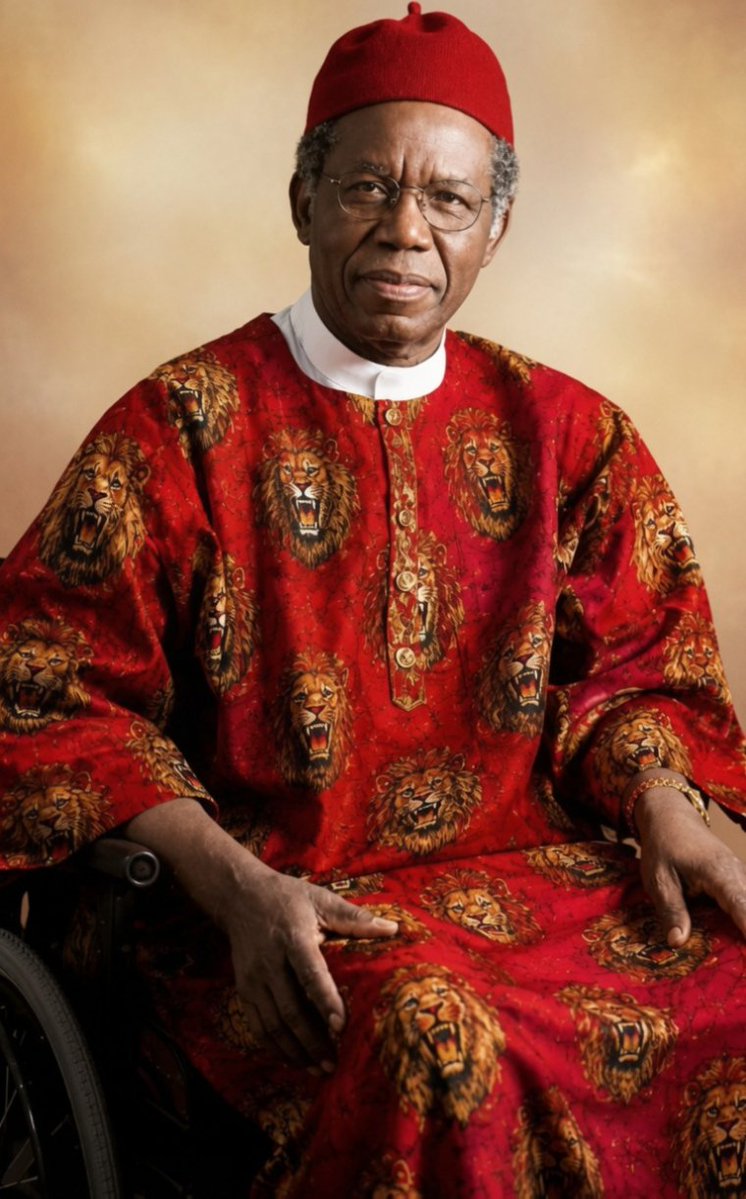
Prof Chinua Achebe rejected Nigeria national honor twice. He asked them; why are you giving me national honor, who told you that you are worthy to give me honor when my people are facing persecution, political crisis, governance issues and you failed to address it? Legend!
So EFCC moves under the directive of the Villa?
Can you show me where the 1999 Constitution conferred on the president the powers to order the EFCC to unfreeze a bank account?
The EFCC is no longer independent?
When did Mr President become the spokesman for the INDEPENDENT National Electoral Commission? INEC is no longer independent?
Are you running a Constitutional Monarchy?
The APC has lost the plot in Osun. They might as well forget about the coming election.