For most of history no one knew what was at the bottom of the sea, and the guesses were wrong. People assumed the deep ocean was a dead, still desert, too dark and crushing for anything to live. Then we sent cameras down. We found forests of tube worms taller than people, feeding on the chemicals of volcanic vents. Fish that glow. Whole food chains that never touch sunlight. There is more living space in the deep ocean than in every forest, field, and desert on the surface combined, and we have seen almost none of it. The largest habitat on Earth is the one we understand the least.
There is a cloud in space, thousands of light years away, that holds enormous amounts of alcohol. Real alcohol molecules, drifting between the stars, built by chemistry in the cold and the dark. The galaxy is a stranger place than any bar.
Glass is a strange in-between. It is rigid like a solid, but its atoms are jumbled like a liquid that froze before they could line up into a crystal. Scientists still argue about how to classify it. The window near you is something physics does not have a clean name for.
The reason your keyboard starts with QWERTY is a problem that no longer exists. Early typewriters jammed when common letters were struck in quick succession, so the layout was scrambled on purpose to slow typists down and split up frequent pairs. The jamming vanished over a century ago. The workaround stayed. Faster layouts exist and almost no one uses them, because billions of us already learned the old one. Sometimes the world does not keep the best design. It keeps the first one everybody agreed on.
A blue whale's heart weighs about as much as a grand piano, and when the whale dives its heartbeat can slow to two beats a minute. You could count the long pause between beats.
Down where no sunlight has ever reached, life did not give up and go dark. It started making its own light. Some of these animals have never once been touched by a ray from the Sun.
This drop of glass can take a direct hammer strike on its bulb without a scratch. Molten glass dropped into cold water freezes under enormous internal stress, squeezed tight at the surface and stretched at the core. Nick the thin tail end though, and the whole drop disintegrates into powder in a fraction of a second. 📷 Mg3kc at English Wikipedia / Wikimedia Commons
Guess which came first on Earth: sharks, or trees.
Sharks won this one by a wide margin. Sharks have been swimming for about 400 million years. The first trees did not appear until tens of millions of years later.
So somewhere out there, ancient sharks were already patrolling oceans on a planet that did not have a single tree yet. What is another pairing where the order surprises you?
SIX PLANETS ARE ABOUT TO SHARE THE SKY
Something incredible is about to unfold before sunrise…
On July 17, Mercury, Venus, Jupiter, Saturn, Uranus, and Neptune will all appear along the same stretch of sky in a rare planetary parade. While Uranus and Neptune will require binoculars or a telescope to see, this will still be one of the year’s most impressive skywatching events.
👇 If you catch this rare lineup, come back and share your photos in the comments!
#MrMBB333 #PlanetParade
There is a thread packed inside almost every cell in your body that is longer than you will ever be. Uncoil the DNA from a single cell and it stretches about two meters, thin enough to stay invisible, folded down into a nucleus you could not see without a microscope.
Now multiply that by the trillions of cells you are made of. Laid end to end, the DNA in your body would stretch from Earth to the Sun and back, not once, but many times over. You are, quite literally, carrying enough molecular thread to cross the solar system's own front yard and return home again and again.
And it all fits inside you, coiled so tightly you never feel its length at all.
Voyager 1 is now about 24 billion kilometers from Earth and still transmitting, nearly 50 years after launch. If it ever drifted close to another star, the trip would take about 40,000 years. It carries no other cargo, just a gold plated disc built to keep playing long after every civilization that made it is gone. 📷 NASA/JPL-Caltech
A desert on one continent is quietly feeding a rainforest on another.
Every year, seasonal winds lift enormous plumes of dust off the Sahara, sometimes hundreds of millions of tons of it, and carry that dust thousands of kilometers west across the entire Atlantic Ocean. Satellites can track the plume the whole way, a pale haze drifting over open water for days.
Here is the part that sounds backwards. That dust is not just drifting harmlessly. Sahara sand is loaded with phosphorus and minerals that tropical soil in the Amazon rainforest badly lacks, because relentless rain there washes nutrients out of the ground faster than the jungle can hold onto them. The dust falling out of the sky over South America effectively refertilizes an entire rainforest from a desert on the far side of an ocean.
Some of that same dust keeps going, drifting as far as the Caribbean and the southern United States, occasionally turning skies hazy thousands of kilometers from where the wind first picked it up.
One continent's driest, most lifeless ground is, every single year, keeping another continent's most abundant ecosystem alive.
Taipei 101 sways on purpose. Deep inside the tower hangs a solid steel sphere weighing about 660 tons, suspended on cables like a giant pendulum. When wind or an earthquake pushes the building one way, the sphere swings the opposite way and cancels the motion before people inside ever feel it sway. 📷 Rodrigo Ghedin from Maringá, Brasil / Wikimedia Commons (CC BY 2.0)
A whale on one side of an ocean can hear another whale's call from thousands of kilometers away. Sound travels almost four times faster through water than through air, so a single low frequency call can cross an entire ocean basin before it fades out. What sound would you want to hear travel that far?
There is an animal that never has to die of old age.
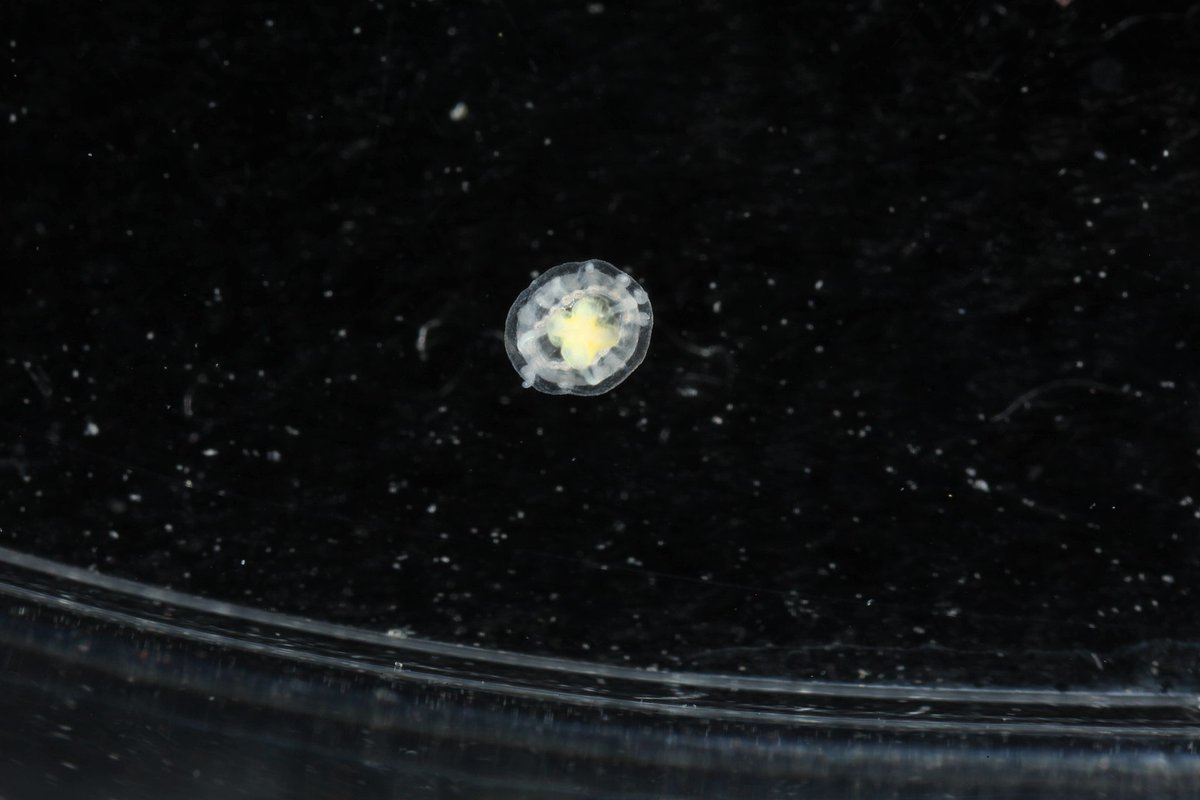
Turritopsis dohrnii is a jellyfish barely the size of a fingernail, and when it is injured, starved, or simply old, it does something no other known animal can do. Its cells reverse course. The adult body collapses back into an earlier life stage, the same one it passed through as a juvenile, and it starts growing all over again.
Here is the part biologists still cannot fully explain. This is not regeneration like a lizard regrowing a tail. It is closer to a butterfly turning back into a caterpillar, then living long enough to become a butterfly again, and doing it again, and again.
In labs, individual colonies have been cycled through this reversal dozens of times without ever dying naturally. That does not make the jellyfish invincible. A hungry fish or a change in water chemistry will still kill it in an instant. But left alone, its clock does not appear to run out.
Somewhere in the ocean right now, a creature the size of a grain of rice may be the closest thing biology has ever produced to functional immortality. 📷 Dr. Karen J. Osborn / Wikimedia Commons (CC0)