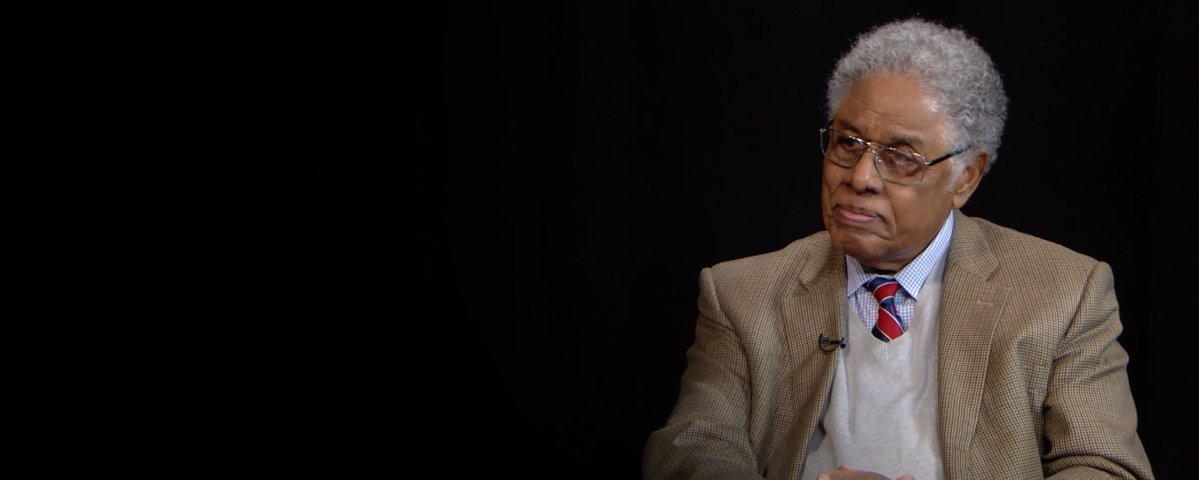
Hayek finished the job of obliterating the entire socialist project in 1945 with one devastating insight: the knowledge needed to run an economy does not exist in any one place.
It is scattered across millions of minds – the farmer who knows his field, the shopkeeper who knows his street, the engineer who knows his machine – and only prices can gather it. No planner can collect it, because most of it cannot even be written down. The socialists spent the next eighty years building bigger ministries to collect it anyway.
And yet here we are, watching politicians explain that this time it will work, because now they have data, experts and algorithms. They cannot tell you how many nurses a single hospital will need next winter – how exactly are they going to know what three hundred million people want, need and can make, every day, in every town?
Every Soviet shop with left shoes only, every empty Venezuelan shelf, every five-year plan fulfilled on paper was just Hayek being proven right. He left the planners one sentence to hang over their desks: "The curious task of economics is to demonstrate to men how little they really know about what they imagine they can design." But sure, let's give the committee a supercomputer. What could go wrong?
Mises obliterated the entire socialist project in 1920 with one devastating insight: "Where there is no free market, there is no pricing mechanism; without a pricing mechanism, there is no economic calculation." The socialists spent the next century pretending this problem didn't exist while their economies collapsed around them.
And yet here we are, watching politicians promise they can "fix" healthcare, housing, and energy markets through central planning. They can't even calculate the cost of their own programs correctly — how exactly are they going to allocate resources across an entire economy?
Every Venezuelan breadline, every Soviet grain shortage, every Chinese famine was just Mises being proven right in the most brutal way possible. But sure, let's try democratic socialism this time. What could go wrong?
@Paris_dnd It’s about neither. People should obey the law. If they don’t there should be consequences. Rich or poor - red or green or orange or purple.
I hate the common misunderstanding of capitalism. Everyone points to cronyism and state regulation as evidence to why capitalism doesn’t work
Capitalism is voluntary exchange of private property.
That’s it. Period.
Not corporations getting bailouts.
Not regulatory capture.
Not “the rich writing the rules”
Those are features of the current mixed system, not free markets. Please read into what capitalism is, and why it necessarily needs no state intervention
@DrJoelGator The answer is make the government smaller and have it not involved in housing and health care. The path to Hell is paved with good intentions.
Capitalism is perhaps the most misunderstood economic system in history, largely because it is routinely blamed for the consequences of violating its own principles.
Capitalism means private property, individual rights, voluntary trade, and a government limited to protecting those rights. It is a system in which individuals are free to produce, compete, trade, and prosper without requiring political permission or favoritism.
Cronyism, by contrast, means government granting economic privileges through subsidies, bailouts, tariffs, regulations designed to protect favored businesses, and other forms of political favoritism.
Socialism, communism, fascism, theocracy, absolute monarchy, feudalism, mercantilism, corporatism, and cronyism differ in their doctrines, methods, and objectives. Yet all have permitted political authority or privileged groups to override individual economic freedom.
The fundamental distinction is between voluntary exchange and political coercion.
Under capitalism, economic success depends on creating value that others voluntarily choose to purchase. Under cronyism, political influence can substitute for earning that success through trade.
This brings us to the mixed economy, where elements of capitalism coexist with government intervention, redistribution, regulation, and political favoritism.
When intervention produces unintended consequences, critics routinely attribute those failures to capitalism simply because they occurred in an economy containing private businesses and markets.
That is a fundamental error of causation.
The existence of private businesses does not make every government policy capitalist. Nor does the existence of wealthy businessmen make political favoritism a product of free markets.
A businessman who earns a fortune through voluntary trade and one who obtains privileges through political coercion are operating on fundamentally different principles.
Pure laissez-faire capitalism has never been fully implemented. Yet to the extent economic freedom has existed, it has demonstrated its extraordinary capacity to create wealth, increase productivity, encourage innovation, and raise living standards.
And here lies the great irony.
The remaining economic freedom continues to generate much of the wealth that makes government intervention and redistribution possible, while helping cushion society against their destructive consequences.
Critics then demand further intervention to remedy problems caused or aggravated by previous interventions, perpetuating a cycle in which political power expands while capitalism receives the blame.
Before blaming capitalism for any economic problem, establish whether that problem arose from voluntary exchange or the coercive exercise of political power.
You cannot reasonably condemn a system for the consequences of violating its principles while ignoring the benefits produced when those principles are respected.
Several centuries ago the Pope decreed that all the Jews had to convert to Catholicism or leave Italy.There was a huge outcry from the Jewish community so the Pope offered a deal.
He would hold a religious debate with the leader of the Jewish community. If the Jews won, they could stay in Italy. If the Pope won, they'd have to convert or leave.
The Jewish people met and picked an aged and wise rabbi to represent them in the debate. However, as the rabbi spoke no Italian and the Pope spoke no Yiddish, both sides agreed that it would be a "silent" debate.
On the chosen day the Pope and rabbi sat opposite each other. The Pope raised his hand and showed three fingers.
The rabbi looked back and raised one finger and shook it at the Pope.
Next the Pope waved his finger around his head.
The rabbi pointed to the ground where he sat.
The Pope brought out a communion wafer and a chalice of wine.
The rabbi pulled out an apple.
With that, the Pope stood up and declared himself beaten and said that the rabbi was too clever. The Jews could stay in Italy.
Later the cardinals met with the Pope and asked him what had happened.
The Pope said, "First I held up three fingers to represent the Trinity. He responded by holding up a single finger, shaking it to remind me there is still only one God common to both our beliefs.”
"Then, I waved my finger around my head to show him that God is all around us. He responded by pointing to the ground to show that God is also right here with us.”
"I pulled out the wine and wafer to show that God absolves us of all our sins. He pulled out an apple to remind me of the original sin.”
"He beat me at every move and I could not continue."
Meanwhile, the Jewish community gathered to ask the rabbi how he'd won.
"I haven't a clue," the rabbi said. "First, he told me that we had three days to get out of Italy so I shook my finger saying no.”
"Then he tells me that the whole country would be cleared of Jews and I told him that we were staying right here."
"And then what?" asked a woman.
"Who knows?" said the rabbi. "He took out his lunch so I took out mine."
@RealAppraiserSC@ClayTravis Let’s keep falling back an hour every 6 months and we’ll have more hours in the day. I just wish we would leave it only one way or the other. It screws me up everytime.
@garrxttt Many are also ungrateful for what was built by our capitalistic system and the sacrifices that have been made to keep it and the freedoms we have. More education needs to be given as to where these come from. We need more self reliance and self pride.
Thomas Sowell grew up poor in Harlem and spent his twenties as a Marxist. A job inside the federal government ended that. Asked what changed his mind, he gave a one-word answer: "facts."
Chicago sharpened the habit, with Milton Friedman teaching him, and he carried it through more than 45 books and a column in over 150 newspapers. From housing to the minimum wage, he checked what policies did and ignored what their authors promised.
His most famous line sits in A Conflict of Visions: "There are no solutions. There are only trade-offs." Politicians hate that sentence because it puts everyone selling solutions out of work. Every program has a price, and voters rarely pay it.
Sowell lived by it. When the Reagan administration put him on an economic advisory committee, he resigned after the first meeting. He pointed to Friedman's view that some individuals "contribute more by staying out of government."
He retired from writing in December 2016 at 86 and turned 96 this June. His method fits on an index card: skip the promises, check the results.
Now go ahead and do that with your local ruling class.
Here are 10 jobs that don't exist yet but could employ millions by 2040:
1. AI companion therapists
2. Brain implant calibrators
3. Climate engineering technicians
4. Synthetic organ fabricators
5. Space habitat maintainers
6. Longevity treatment specialists
7. Robot fleet coordinators
8. Neural privacy guardians
9. Gene editing counselors
10. Quantum network operators