If you know people who describe themselves as "child free" or DINKs (dual income, no kids), please forward them my essay. I believe a generation has been brainwashed to not want kids, and that they will come to deeply regret that decision.
https://t.co/6YPz71AwY8
White smoke! The 133 Cardinal electors gathered in the Vatican’s Sistine Chapel have elected the new Pope. He will appear soon at the central window of St. Peter’s Basilica.
I just saw a video where jihadists in Syria crucify and kill a Christian man.
I'm not going to share the video here.
This is 1000 times worse than what the media is telling you.
I'm happy this Protestant-Eucharist conversation is happening! Protestants should be accusing Catholics of idolatry, and Catholics should be explaining why it is NOT idolatry. Let me explain:
Catholics claim to adore and worship with latria (worship reserved to the Trinity) the Eucharistic Body and Blood of Christ in our Churches.
@GeorgeJanko claims that the Eucharist is just "bread and wine". His claim entails that we are worshipping creations as God. Worshipping bread as if it were God is 100% idolatry. Catholics would be IDOLATORS.
Yet, we Catholics confidently believe and teach that it is NOT substantially bread and wine. The Eucharist is Jesus Christ. The bread and wine transubstantiate into the Body and Blood of Jesus Christ. Thus, refusing to worship the Eucharist is a refusal to worship Jesus Christ.
There is no "ecumenical" middle ground here. You're either Catholic (This is my Body) or Gnostic (It's just a symbol), as Ignatius of Antioch taught in AD 108:
“They [Gnostic heretics] abstain from the Eucharist and from prayer, because they confess not the Eucharist to be the flesh of our Saviour Jesus Christ, which suffered for our sins, and which the Father, of His goodness, raised up again.” Ignatius of Antioch, Epistle to Smyrnaeans, 7,1
1/ Ordo Amoris: Do I Love My Family More Than a Stranger?
@JDVance made headlines this week when he introduced into public discourse the Catholic teaching on the Ordo Amoris. Let's review what this is all about.
🧵👇
For who among you delights in life, longs for time to enjoy prosperity? Guard your tongue from evil, your lips from any breath of deceit.
Turn away from evil and do good; seek peace and pursue it.
1 Peter 3:10-11
“What profit is there in my death, if I go down to the pit? Will the dust praise you? Will it tell of your faithfulness?" Psalms30:10
We are called to proclaim the faithfulness of the Lord through our lives
If we try to destroy evil by using evil we end up becoming evil ourselves. That is the temptation of Boromir. If we try to use the One ring to destroy the One ring we end up becoming like Sauron
Too often in our personal lives and in politics we take actions to achieve something good but we should ask ourselves are those actions morally acceptable or not.
In the end, the ends do not justify the means.
The Temptation of Boromir https://t.co/7PQtkG9udq via @CrisisMag
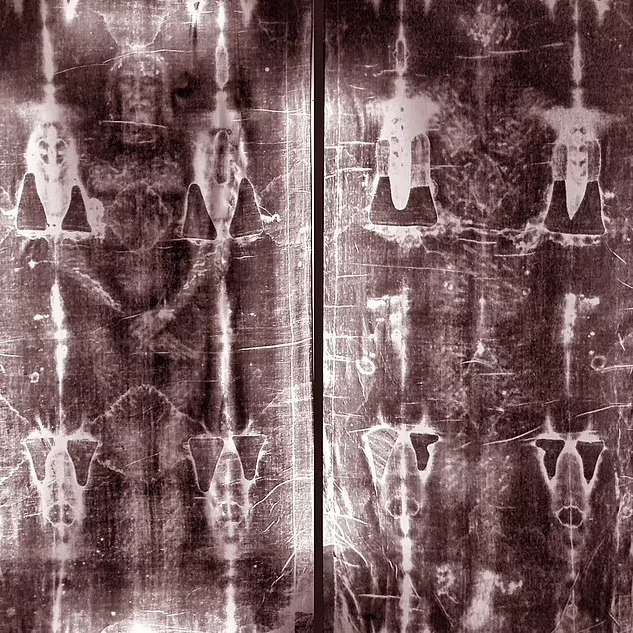
2. Rolfe offered a million dollars to whoever can recreate the shroud's image of a crucified man without any traces of ink, paint or other agents. The prize remains unclaimed
As the world prepares for the official opening of Cathédral Notre Dame de Paris this weekend, I’ve prepared my first MEGA 🧵 for your edification — so buckle up!
Peter explained what happens at baptism when he said, “Repent, and be baptized every one of you in the name of Jesus Christ for the forgiveness of your sins; and you shall receive the gift of the Holy Spirit” (Acts 2:38). But he did not restrict this teaching to adults. He added, “For the promise is to you and to your children and to all that are far off, every one whom the Lord our God calls to him” (2:39, emphasis added). We also read: “Rise and be baptized, and wash away your sins, calling on his name” (Acts 22:16). These commands are universal, not restricted to adults. Further, these commands make clear the necessary connection between baptism and salvation, a connection explicitly stated in 1 Peter 3:21: “Baptism . . . now saves you, not as a removal of dirt from the body but as an appeal to God for a clear conscience, through the resurrection of Jesus Christ.”
Furthermore, Paul notes that baptism has replaced circumcision (Col. 2:11–12). In that passage, he refers to baptism as “the circumcision of Christ” and “the circumcision made without hands.” Of course, usually only infants were circumcised under the Old Law; circumcision of adults was rare, since there were few converts to Judaism. If Paul meant to exclude infants, he would not have chosen circumcision as a parallel for baptism.
This comparison between who could receive baptism and circumcision is an appropriate one. In the Old Testament, if a man wanted to become a Jew, he had to believe in the God of Israel and be circumcised. In the New Testament, if one wants to become a Christian, one must believe in God and Jesus and be baptized. In the Old Testament, those born into Jewish households could be circumcised in anticipation of the Jewish faith in which they would be raised. Thus, in the New Testament, those born in Christian households can be baptized in anticipation of the Christian faith in which they will be raised. The pattern is the same.
But one might ask, does the Bible ever say that infants or young children can be baptized? The indications are clear. In the New Testament we read that Lydia was converted by Paul’s preaching and that “She was baptized, with her household” (Acts 16:15). The Philippian jailer whom Paul and Silas had converted to the faith was baptized that night along with his household. We are told that “the same hour of the night . . . he was baptized, with all his family” (Acts 16:33). And in his greetings to the Corinthians, Paul recalled that, “I did baptize also the household of Stephanas” (1 Cor. 1:16).
In all these cases, whole households or families were baptized. This means more than just the spouse; the children too were included. If the text of Acts referred simply to the Philippian jailer and his wife, then we would read that “he and his wife were baptized,” but we do not. Thus his children must have been baptized as well. The same applies to the other cases of household baptism in Scripture.
If you don't like that where is tweeting in the bible?