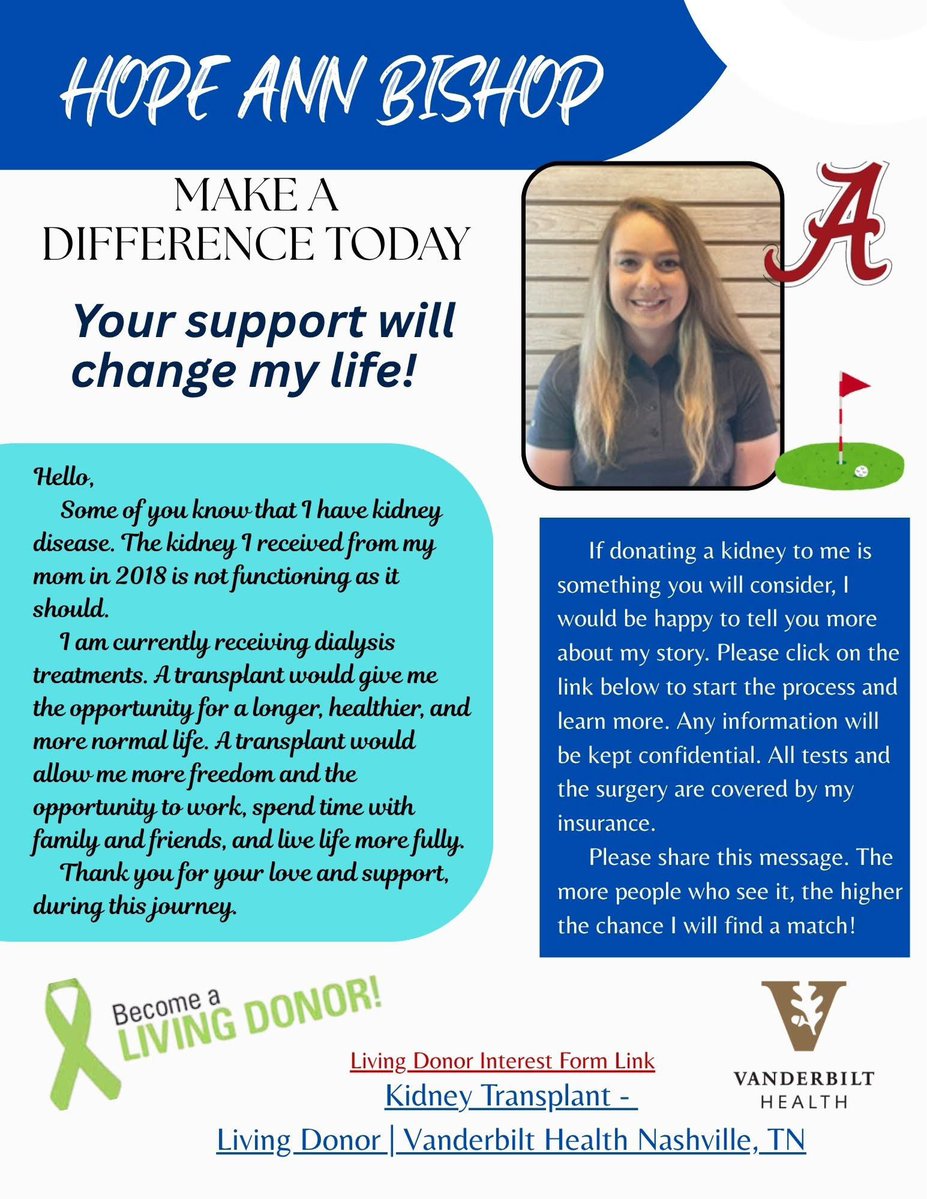
Hey friends. I haven’t been as active the last couple weeks because I was sick and in the hospital. Here is why:
I am usually someone to proud to ask for help but unfortunately I need it now. I had a kidney transplant in 2018 and unfortunately need another one now. I am on Dialysis treatments and I feel great but to get back to living a normal life I need a kidney transplant.
Please consider being a Living Kidney Donor! Click on the Vanderbilt Health link and complete the Living Donor Interest Form. You will list Hope Bishop as the name of the person you want to donate to. Also, please select YES on being a paired donor if necessary.
https://t.co/kupjI3ZlXX
This Memorial Day weekend, Veterans on Duty is honoring the memory of those who made the ultimate sacrifice in defense of our nation during the Global War on Terror. As we gather with family and friends, we remember the ones who never made it home and the enduring legacy they left behind.
Remembering Lieutenant Michael P. Murphy 🇺🇸
Lt. Michael Murphy or “Murph” to those that knew him, grew up in Patchogue, NY, born to Maureen and Daniel Murphy, a veteran of the Vietnam War. He graduated from Penn State with honors and chose the United States Navy SEAL trident over a comfortable life.
Lt. Murphy joined the Navy in 2000. By 2005, he was leading a four-man SEAL reconnaissance team deep in the mountains of Afghanistan on Operation Red Wings, a mission to hunt down a Taliban commander near Asadabad.
When his team was ambushed and surrounded by enemy fighters, Lt. Murphy stepped into the open fully exposed to transmit a distress call for his men. He was shot multiple times but made the call anyway. He gave his own life so others could live. He was 29 years old.
He was posthumously awarded the Medal of Honor, the first Navy recipient since Vietnam. A destroyer, a museum, and a workout known around the world bear his name.
Every year, millions of Americans do "The Murph" to honor him. 🇺🇸
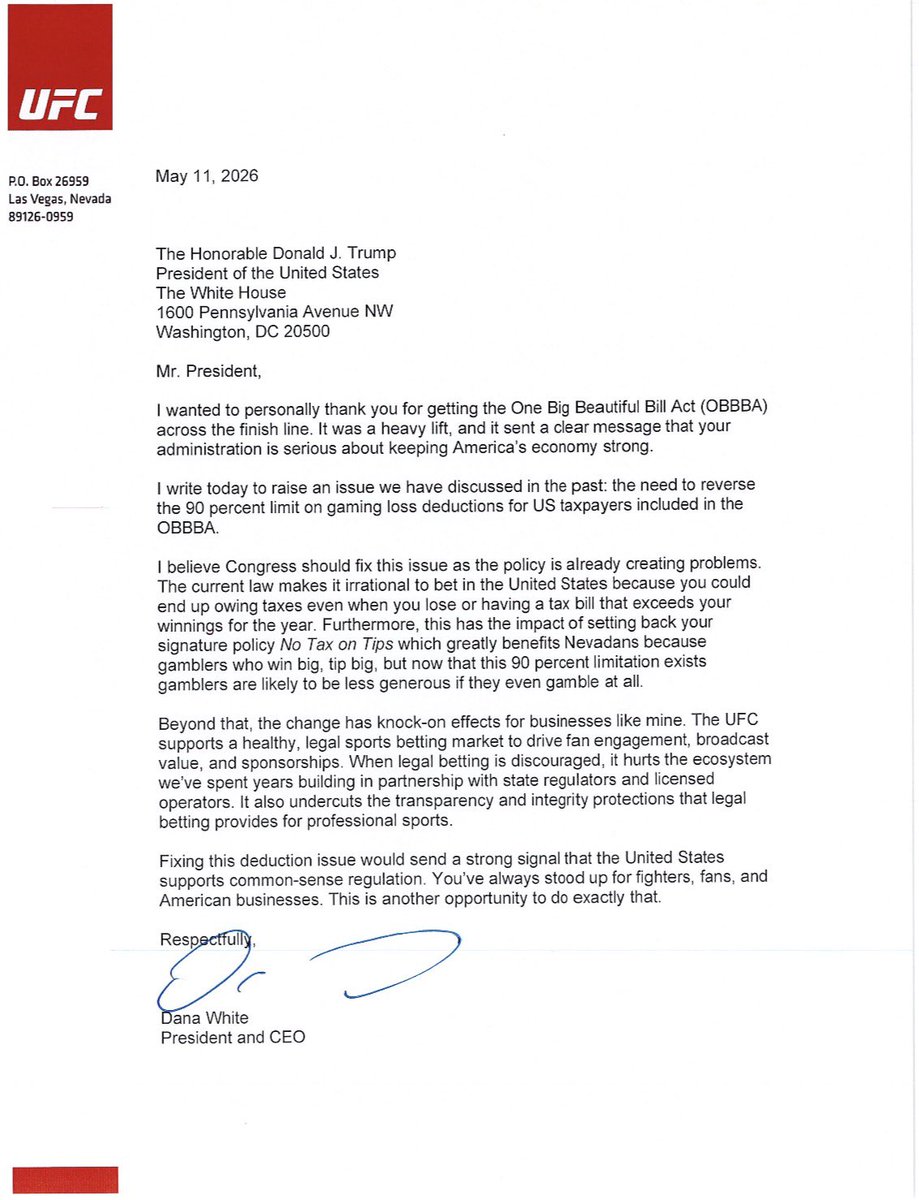
New: UFC President Dana White has sent a letter to President Donald Trump asking him to help reverse the 90 percent limit on gambling loss deductions for US taxpayers that became law last year.
The issue has been a concern for both bettors and the gambling industry itself.