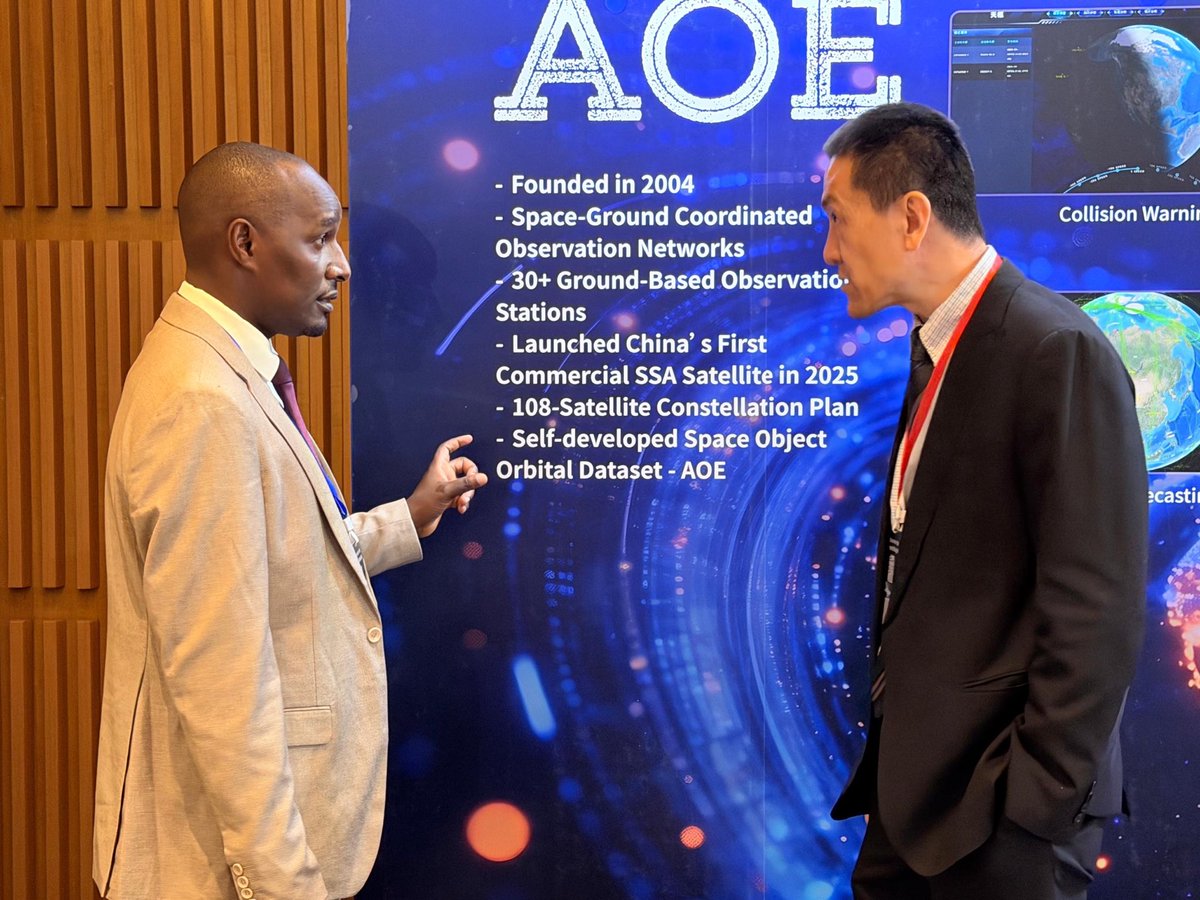
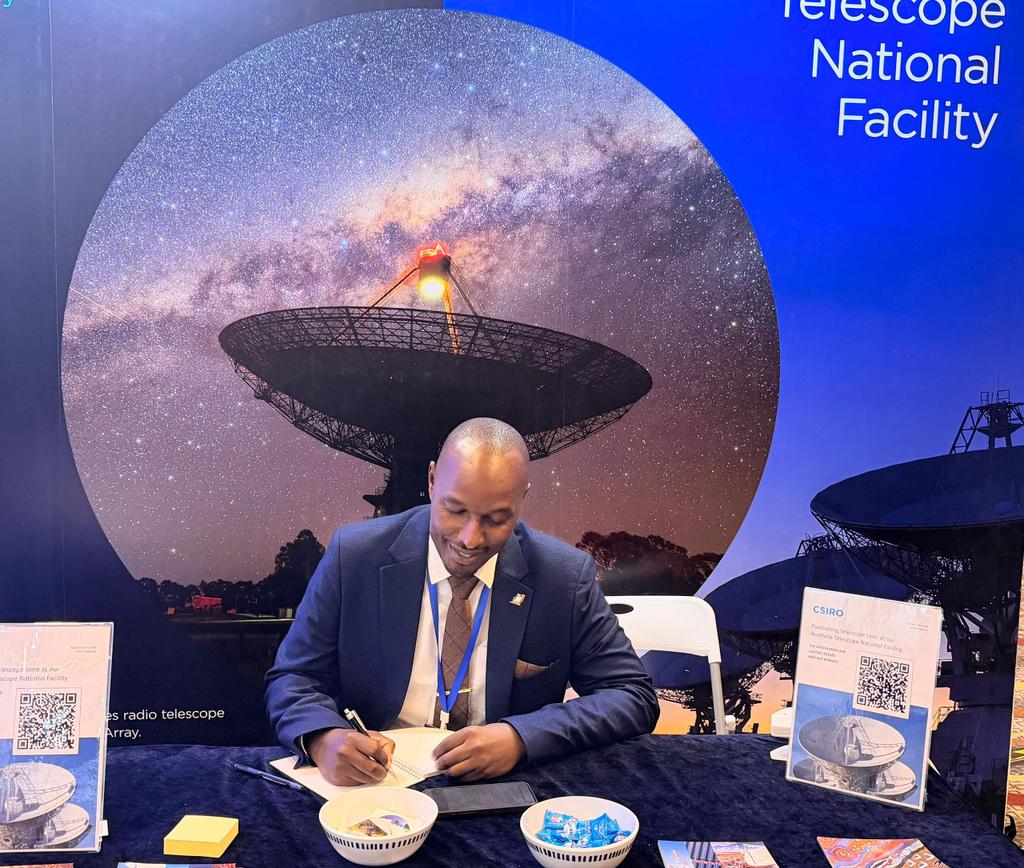
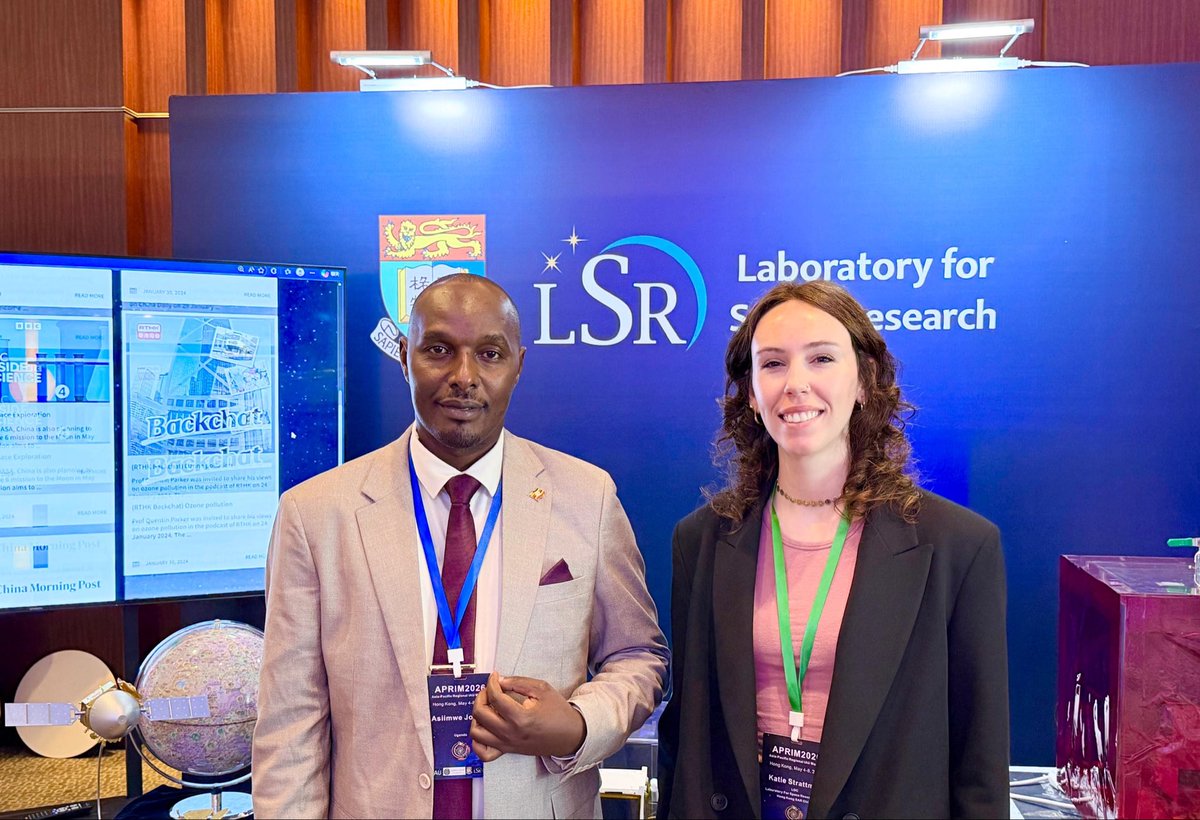
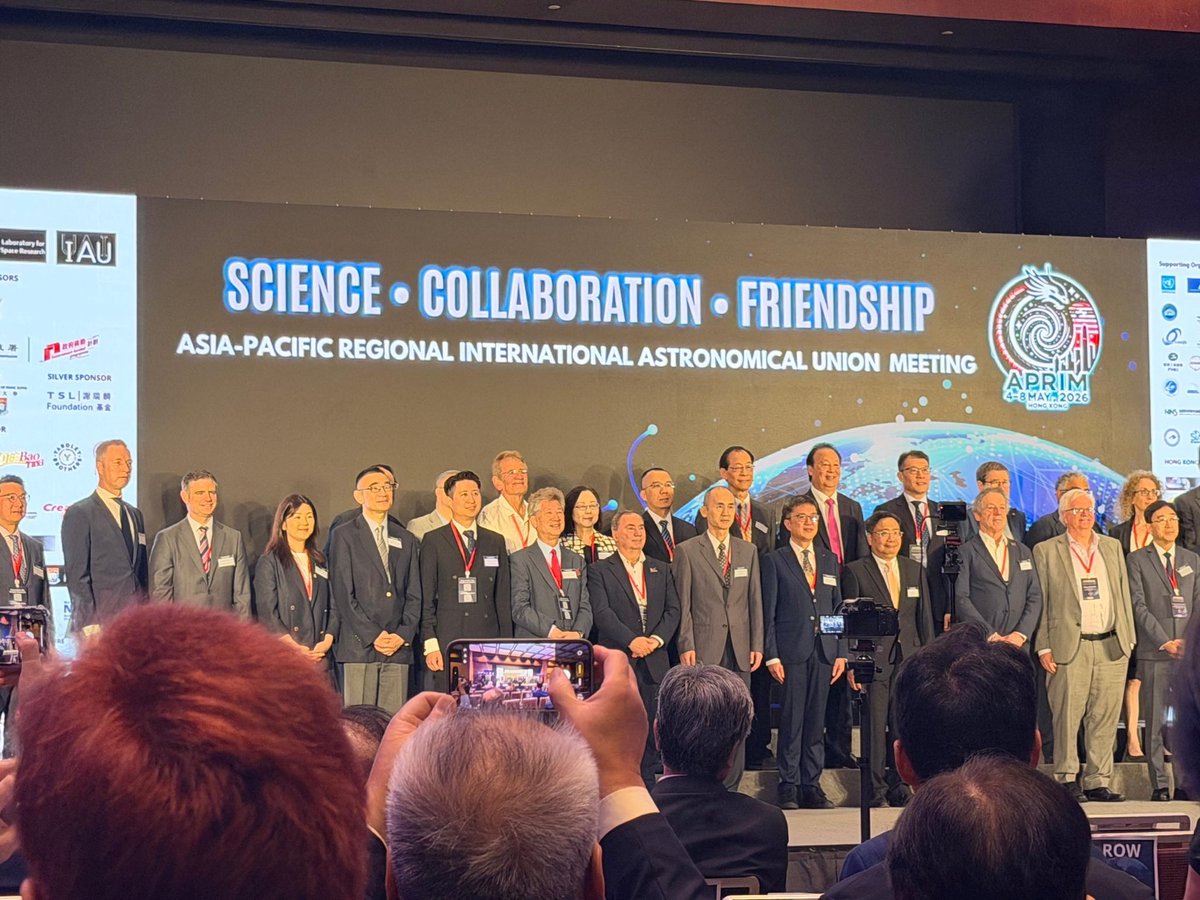
While participating at the Asia-Pacific Regional International Astronomical Union Meeting (APRIM2026) in Hong Kong, I was invited by Prof. Suen Wai Mo, CEO of ClusterTech Limited, one of China’s leading innovation hubs within the Hong Kong Science Park Smart City ecosystem & engaged in high-level discussions on advanced computational science & space-related technologies.
In this meeting, I engaged with ClusterTech’s leadership & technical teams, exploring their PhD-led HPC ecosystem (avg. 19 years applied expertise) & flagship systems such as CHESS (HPC Environment Software Stack) & CPAS atmospheric simulation platform, which drive advanced modelling in climate science, mission planning, & complex systems simulation. We agreed to pursue structured collaboration pathways with Uganda in high-performance computing, AI-driven data systems, & space science applications, anchored in knowledge transfer & institutional cooperation.
Through this engagement, I am positioning Uganda within practical frameworks for HPC adoption, satellite data analytics, & scientific infrastructure development, with direct impact pathways in agriculture intelligence, communications systems, & national research capacity strengthening.
This is a deliberate bridge between Uganda & leading Asian computational science ecosystems, turning global innovation into national capability.
“Knowledge becomes transformative when intelligence learns not only to store information, but to connect it.”
While interacting with emerging AI-driven astrophysical systems at #APRIM2026, the session on Knowledge Graph-Enhanced Multi-Agent Identification Systems for Planetary Nebulae illuminated a convergence between astronomy & machine intelligence.
Multi-agent AI and knowledge graphs are improving planetary nebula classification across vast sky-survey datasets.
Planetary nebulae formed during late stellar evolution number in the thousands across the Milky Way, yet many remain misclassified due to morphological complexity and spectral overlap. Knowledge graphs now help AI connect spectral signatures, morphology, chemical composition, and observational metadata with deeper reasoning.
These systems allow intelligent agents to collaborate, validate, & refine detections across distributed datasets transforming astronomy into a domain of interconnected machine reasoning.
“Not all stars speak in silence; some breathe, pulse, & write their physics in waves of light.”
At #APRIM2026, the study of Pulsating AGB Stars has revealed how stellar evolution can be decoded through light-curve analysis & variability modelling. Focus was placed on ascending width parameters p & q & width parameter w, used to characterize pulsation timing, asymmetry, and luminosity changes in late-stage stars.
These models help explain mass loss, internal dynamics, & dust formation in AGB stars, though irregular variability & observational noise remain major challenges. Some Mira-type AGB stars vary in brightness by 100–1000× over cycles lasting hundreds of days, making them vital laboratories for stellar physics & galactic evolution.
Africa, with growing observational capacity & dark-sky potential, can contribute meaningfully to variable-star astronomy & astrophysical data science.
The universe records its history in patterns of light; we must be part of reading them.
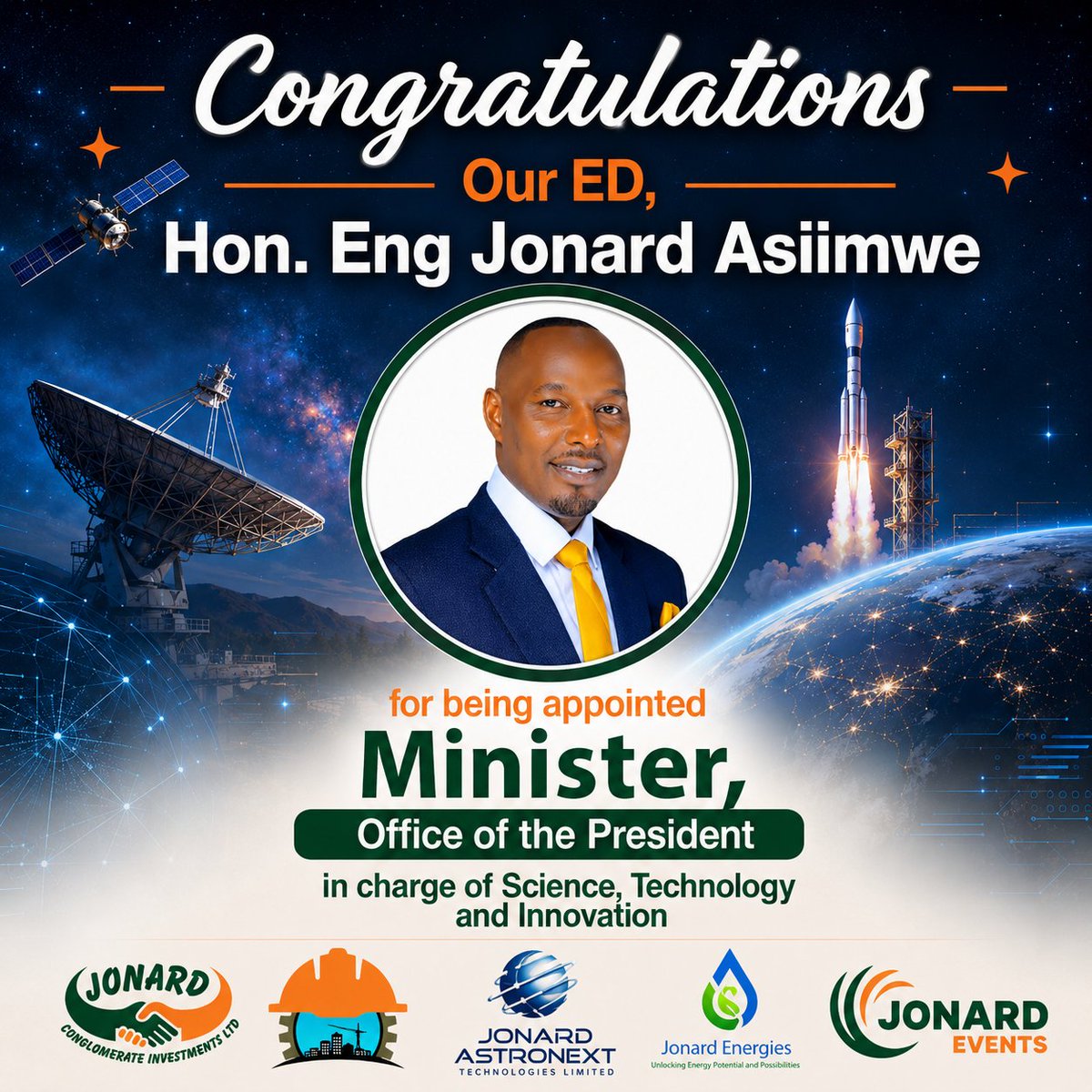
Eng. Jonard Asiimwe ONC Western
“When the universe speaks in curvature, only spacetime itself becomes the messenger.”
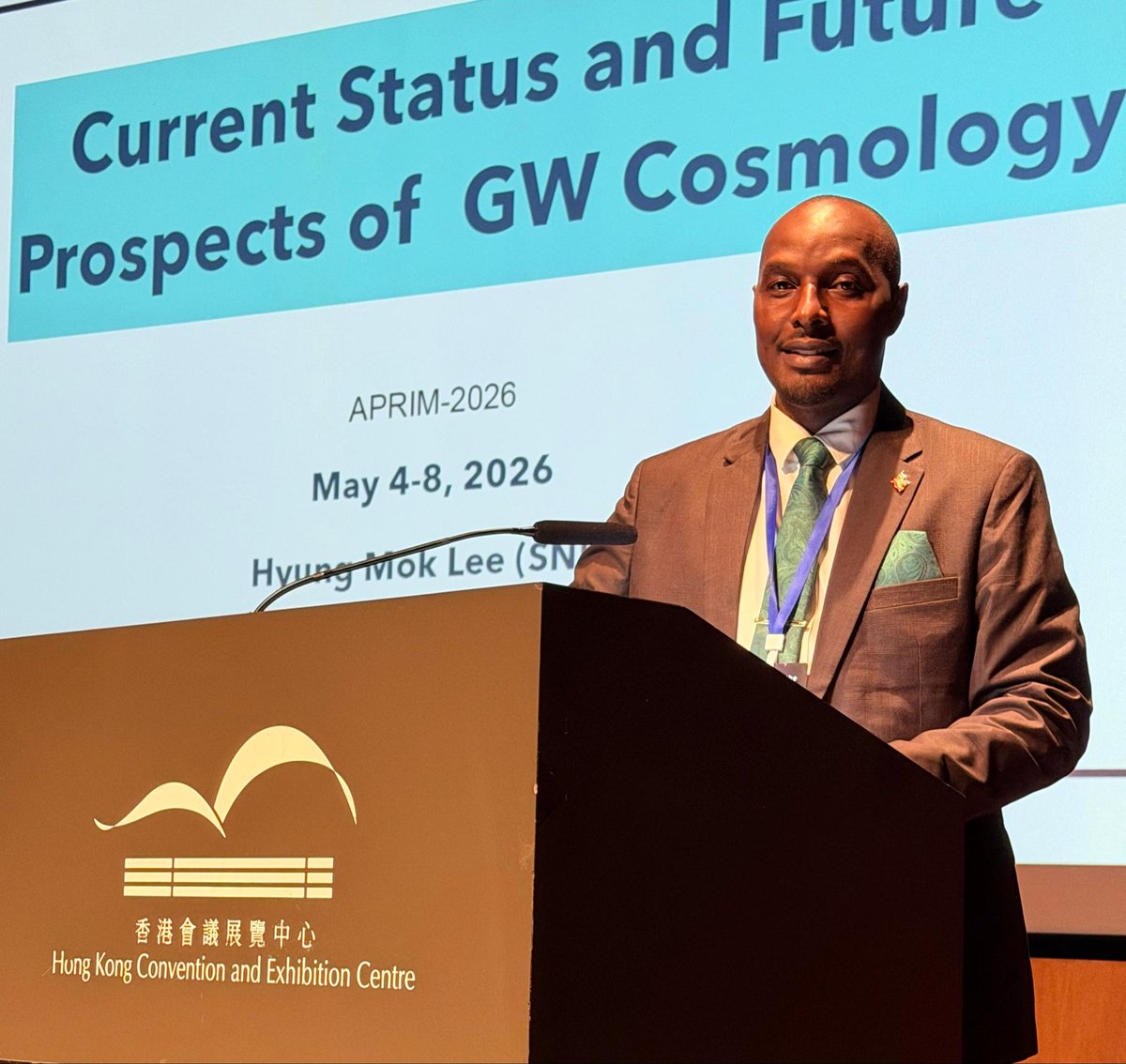
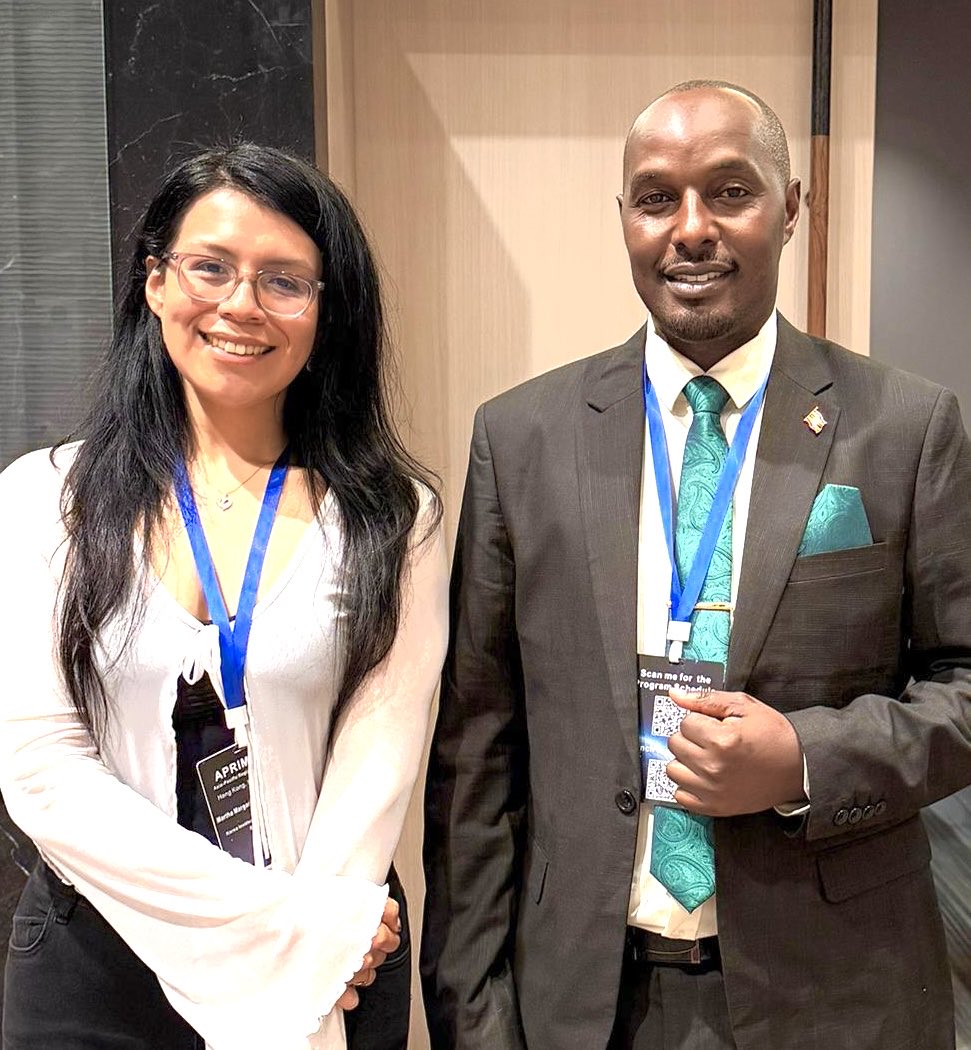
At #APRIM2026, in Current Status & Future Prospects of GW Cosmology presented by Eng. Jonard Asiimwe & Prof. Martha Margarita López Gutiérrez (Korea Institute for Advanced Study, South Korea), the frontier of cosmology is being redefined through gravitational-wave science.
Since the first detection in 2015, over 100 confirmed gravitational-wave events have been recorded, revealing black hole & neutron star mergers & opening a new observational window beyond electromagnetic astronomy. GW cosmology now probes Hubble expansion, dark energy constraints, & early-universe structure formation, with next-generation detectors expected to improve sensitivity by up to 10×, reaching deeper cosmic epochs.
“In every ripple of spacetime, the universe encodes both origin & destiny.” This insight connects detection physics with cosmological evolution, where gravitational waves become direct tracers of cosmic history.
Africa is part of this expanding scientific horizon through growing engagement in astrophysics, data science, and space technology collaboration positioning the continent within the global gravitational-wave research ecosystem.
UPDATES:
𝐍𝐈𝐑𝐀 𝐓𝐞𝐦𝐩𝐨𝐫𝐚𝐫𝐲 𝐒𝐞𝐫𝐯𝐢𝐜𝐞 𝐋𝐨𝐜𝐚𝐭𝐢𝐨𝐧 𝐂𝐡𝐚𝐧𝐠𝐞.
The National Identification and Registration Authority (NIRA) wishes to inform the public that it has temporarily relocated its services to Kitante Primary School, adjacent to the Uganda Museum, effective today Wednesday 6th May up to Tuesday 12th May 2026.
During this period, all @NIRA_Ug services will be accessed from the temporary location to facilitate smooth operational arrangements linked to ongoing national preparations for the swearing-in activities.
Normal operations at the NIRA offices will resume on Wednesday 13th May 2026.
The Authority appreciates the understanding and cooperation of the public during this temporary arrangement.
“Where movement increases without coordination, risk becomes inevitable; order must be engineered, not assumed.”
The focus on the Neutral Space Traffic Coordination Platform marked a shift toward structured orbital governance treating space as a shared, dynamic environment rather than an unregulated frontier.
With 36,000+ tracked debris objects and 10,000+ active satellites projected to exceed 100,000 with mega-constellations orbital congestion is accelerating. Neutral coordination systems are emerging to enable real-time conjunction assessment, collision warnings, and standardized data exchange, covering both government and commercial space traffic operations with transparency and neutrality.
Commercial space traffic is now a defining layer of orbital activity, requiring integrated management alongside scientific and governmental missions.
The future of space will be governed by coordination as much as capability. Africa must not remain outside this system.
#APRIM2026 #SpaceTrafficManagement #CommercialSpace #OrbitalSafety #AfricaInSpace
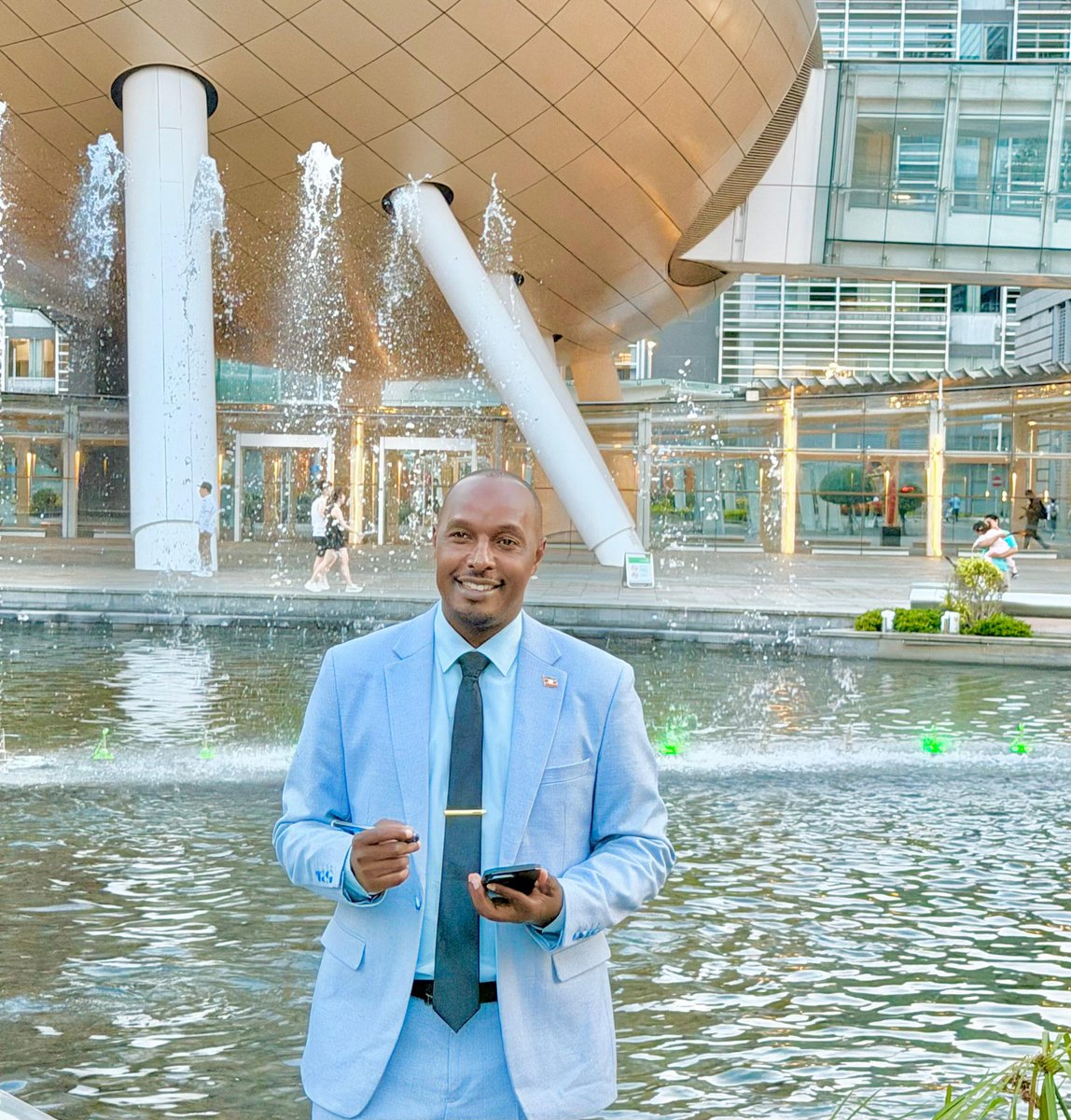
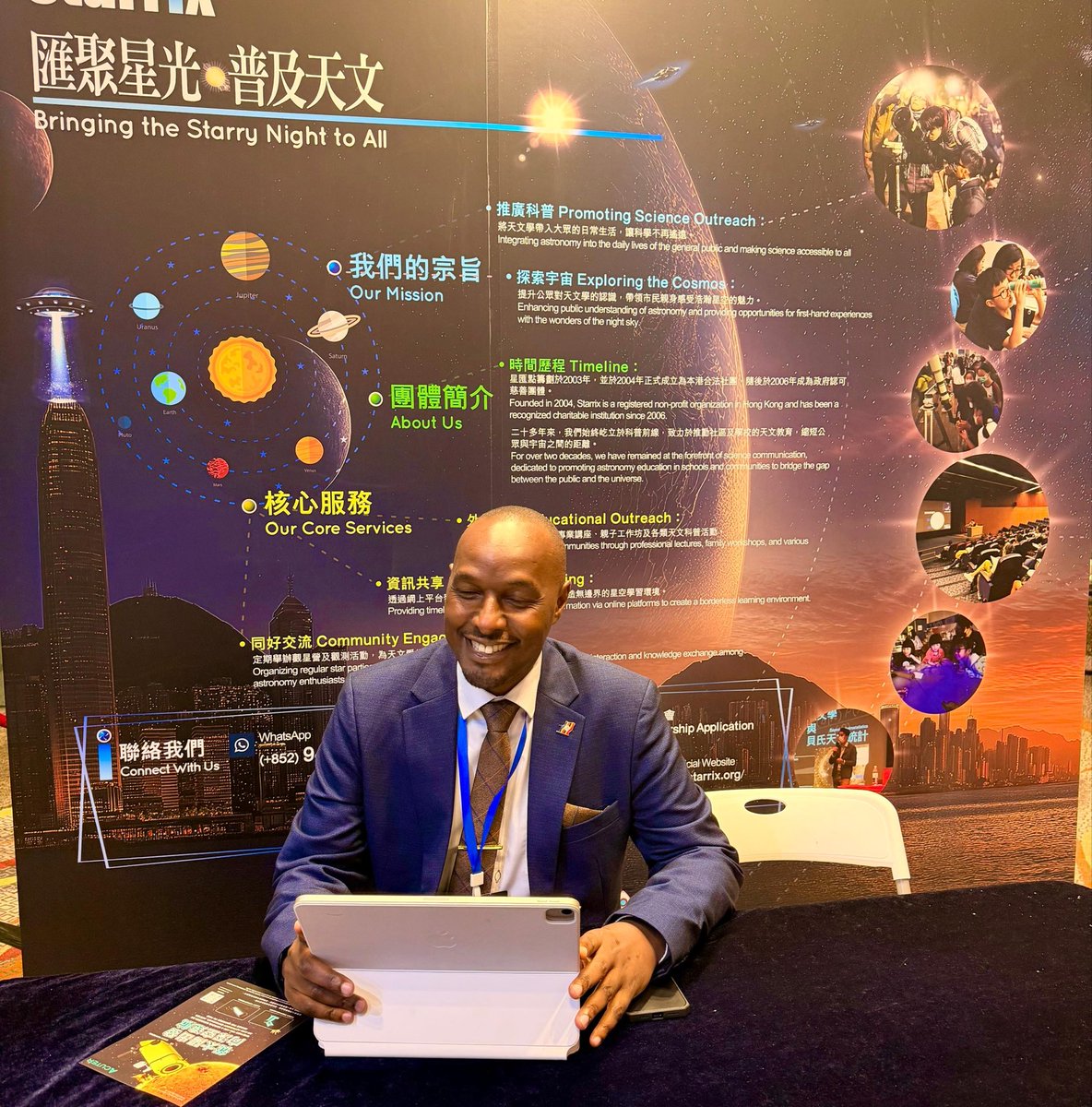
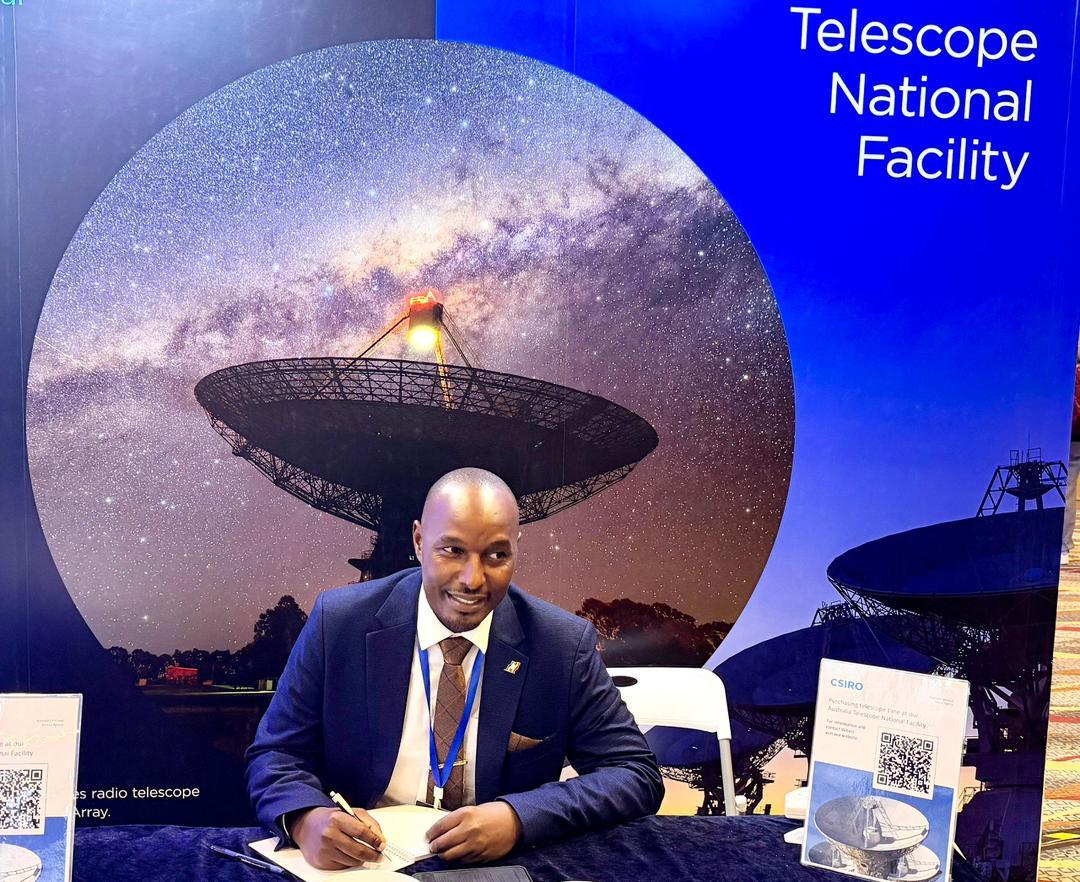
From Uganda 🇺🇬 to Hong Kong 🇭🇰, @EngJonard (NRM Western Region Vice Chairperson) is representing Africa at the Space Technology Conference Week.
He is taking part in high-level sessions on space exploration and astronomy, with a focus on translating knowledge into practical solutions for Earth observation, climate resilience, communication systems, and scientific advancement.
The message is clear: Africa is not catching up — Africa is contributing, innovating, and shaping the future of global technology.
#SpaceTech #AfricaRising #Innovation #Science #GlobalLeadership
#HongKong:-“Sustainability in space is not preservation alone; it is intelligent continuity of access, use, & responsibility."
"With-in this global shift, Africa must not stand outside the architecture of sustainable space development. With growing satellite dependence for communication, climate services, & development, the continent must embed sustainability into its emerging space." Hon. Eng. Jonard Asiimwe Akiiki.
@AaronKaviiri@BavuleOfficial@influencer74@JonardAstronext@NyonyoziUg@Lumpemediaug
Uganda in Space 🌔🌔✅🌖🌑
The ascent of Uganda into the celestial arena represents a critical shift from terrestrial ambition to a localized astropolitical reality.
As JONARD Astronext spearheads this trajectory, the nation is no longer merely gazing at the stars but is actively preparing for orbital insertion.
To transform this vision into a sustainable presence, Uganda must establish a robust domestic legal framework that aligns with the United Nations Office for Outer Space Affairs (UNOOSA) standards.
This involves the ratification and integration of the Outer Space Treaty of 1967, ensuring that Ugandan innovation remains compliant with international norms regarding the non-appropriation of celestial bodies and the peaceful utility of the vacuum environment.
To facilitate the transition from theoretical innovation to active mission profiles, the creation of a National Space Agency is paramount.
This body would govern the licensing of launch vehicles and the management of radiofrequency spectrum allocations, preventing signal interference for domestically produced satellites.
By establishing clear protocols for space debris mitigation and Right of Way in Low Earth Orbit (LEO), Uganda can protect its high-value assets from kinetic hazards.
JONARD Astronext’s role as a primary innovator necessitates a legal landscape that incentivizes Private-Public Partnerships (PPPs), offering intellectual property protections that thrive within the unique constraints of microgravity research and extraterrestrial manufacturing.
Furthermore, Uganda’s roadmap must address the complexities of Liability and Registration Conventions. As the launching state, the government assumes international responsibility for any object propelled into the thermosphere from its soil or under its jurisdiction.
Therefore, legislative efforts should focus on creating an indemnity structure that balances the risks of high-energy propulsion with the rewards of deep-space telemetry.
By codifying these regulations now, Uganda ensures that its transition to a spacefaring nation is not only technologically sound but legally shielded, allowing innovators to push past the Kármán line with the full weight of a sovereign legal mandate behind them.
#Team Eng. Jonard Asiimwe Akiiki
#Uganda to the Space
#Africa in Space ✅🌓
“Enduring progress is not built by expansion alone, but by the wisdom to sustain what we create.”
On Sustainable Space Hubs with reference to models like École Polytechnique Fédérale de Lausanne, I engaged on how the future of space lies in integrated ecosystems, not isolated missions.
EPFL’s space initiatives combine engineering, data science, policy, & sustainability, advancing debris mitigation, in-orbit servicing, & circular space technologies. With over 36,000 tracked debris objects & mega-constellations expanding rapidly, sustainability has become a systems-level challenge requiring design, regulation, & innovation to work together.
“Sustainability in space is not preservation alone; it is intelligent continuity of access, use, & responsibility."
Within this global shift, Africa must not stand outside the architecture of sustainable space development. With growing satellite dependence for communication, climate services, & development, the continent must embed sustainability into its emerging space.
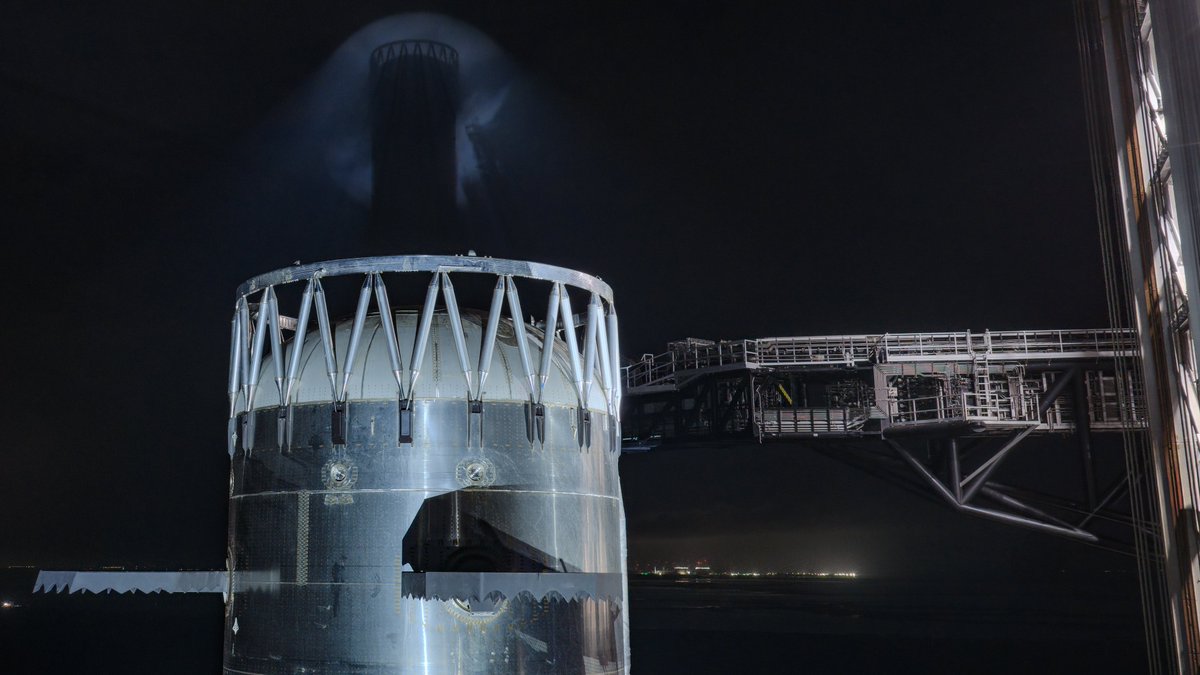
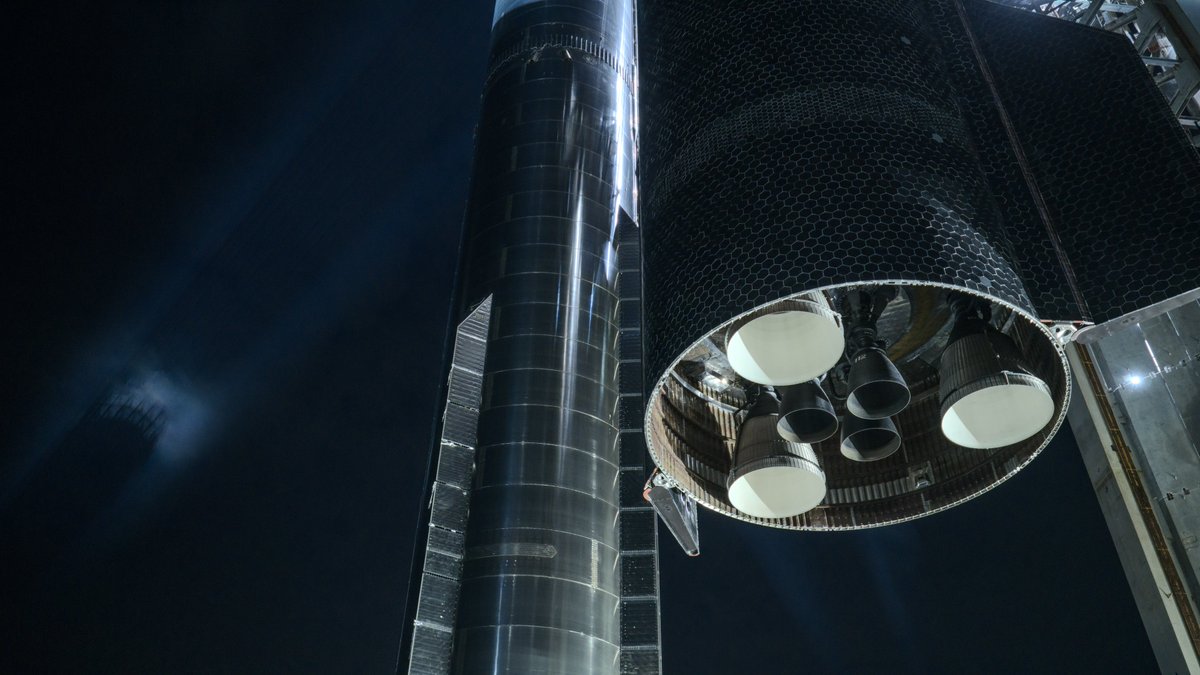
Neil Armstrong's "one giant leap for mankind," Carl Sagan's view of Earth as a "pale blue dot," and Elon Musk's goal to make humanity a "multi-planet species". [1, 2, 3]
From Uganda to Hong Kong for Space Technology Conference Week, I carry the spirit of a continent rising with purpose and precision. We’ve sofar concluded impactful sessions on space exploration and astronomy implementation turning knowledge into practical solutions for Earth observation, climate resilience, communication systems, and scientific advancement across the globe.
As engagements continue, one truth stands firm: Africa is not catching up; we are contributing, innovating, and shaping the future. With science as our tool and innovation as our voice, we are claiming our place among global technology leaders.
Africa can. Africa will.
Eng. Jonard Asiimwe, the National Vice Chairperson NRM Western Region.
#JonardAstronext#AfricaInSpace #InnovateAfrica #SpaceForDevelopment
At #Asia-Pacific Regional International Astronomical Union Meeting, We’ve just concluded a high-impact session on CISLunar Space Exploration, with China as a compelling case study in bold, strategic advancement beyond low Earth orbit. Cislunar space; the dynamic region between Earth and the Moon is rapidly emerging as the backbone of the next space economy, enabling deep-space navigation, satellite relays, lunar missions, resource utilization, and advanced scientific research.
What we are witnessing is not theory; it is deliberate execution. Nations are building infrastructure, shaping policy, and securing presence in this critical domain. Africa must not watch from the margins. At JonardAstronext, as we build our satellite, we are aligning our vision with this expanding frontier because the future of connectivity, data, and discovery will extend far beyond Earth.
The frontier is open & Africa belongs
#JonardAstronext #CislunarAfrica #SpaceLeadership #AfricaInSpace
At APRIM 2026 International Astronautical Conference, I’ve engaged in a critical session on Space Debris and Sustainability: A Strategic Vision for a Global Challenge, and Resilience Under Stress; Cooperative Remediation and Limits of Existing Space Governance.
Earth’s orbit is increasingly congested with defunct satellites and fragments, threatening active systems and future missions. Sustainability in space is now a necessity, not an option. Without coordinated action, orbital space risks becoming unsafe and unusable.
Resilience requires active debris removal, shared responsibility, and stronger governance aligned with today’s rapid space activity.
At JonardAstronext, as we build our satellite, we remain committed to responsible, sustainable, and safe orbital design.
Africa must enter space wisely, strategically, and sustainably.
#JonardAstronext #SpaceSustainability #CleanOrbit #AfricaInSpace
















![EngJonard's tweet photo. Neil Armstrong's "one giant leap for mankind," Carl Sagan's view of Earth as a "pale blue dot," and Elon Musk's goal to make humanity a "multi-planet species". [1, 2, 3] https://t.co/nkpMg27jmo](https://pbs.twimg.com/media/HHhxlFoaAAELf5d.jpg)