Thank you to the @heartfoundation for their award of a post-doctoral fellowship to support my ongoing research @UniofAdelaide.
As ever, I am grateful to @PrashSanders and @Elliott_AD for their continued mentorship. #CHRD
https://t.co/7DjFcoBOy8
APHRS 2025 is over and been amazing 🇯🇵
8 oral presentations, 6 posters and 2 LBCTs for the #CHRD Team 🎖️
And what about a squid that is so fresh it escapes from the plate? 🦑
@UniofAdelaide
Kicking off #APHRS2025 with an insightful session on “What is the best treatment for arrhythmias in patients with heart failure?”
Fantastic presentation by CHRD member @JonathanAriya unpacking how AF intersects with HFrEF and HFpEF.
#chrd@UniofAdelaide@PrashSanders
On behalf of senior author @gregorymmarcus and trial team:
Honored to present the late-breaking clinical trial DECAF at #AHA25 today
In contrast to conventional wisdom, coffee ☕️resulted in less AF #afib compared to abstinence!
#SimPub@JAMA_current
https://t.co/26K8Rn6jfU
Longer AF ablation waiting lists are resulting in poorer ablation outcomes BUT obtaining and maintaining sinus rhythm during the wait time could help. New data from @BlackpoolHosp@AArujuna@DrScottGall@PrashSanders
The Impact of Prolonged Waiting List Times for Ablation of Atrial Fibrillation on Arrhythmia Recurrence Post-Ablation
@JonathanAriya
https://t.co/aPPtbRRbeO
The Impact of Prolonged Waiting List Times for Ablation of Atrial Fibrillation on Arrhythmia Recurrence Post-Ablation
@JonathanAriya
https://t.co/aPPtbRRbeO
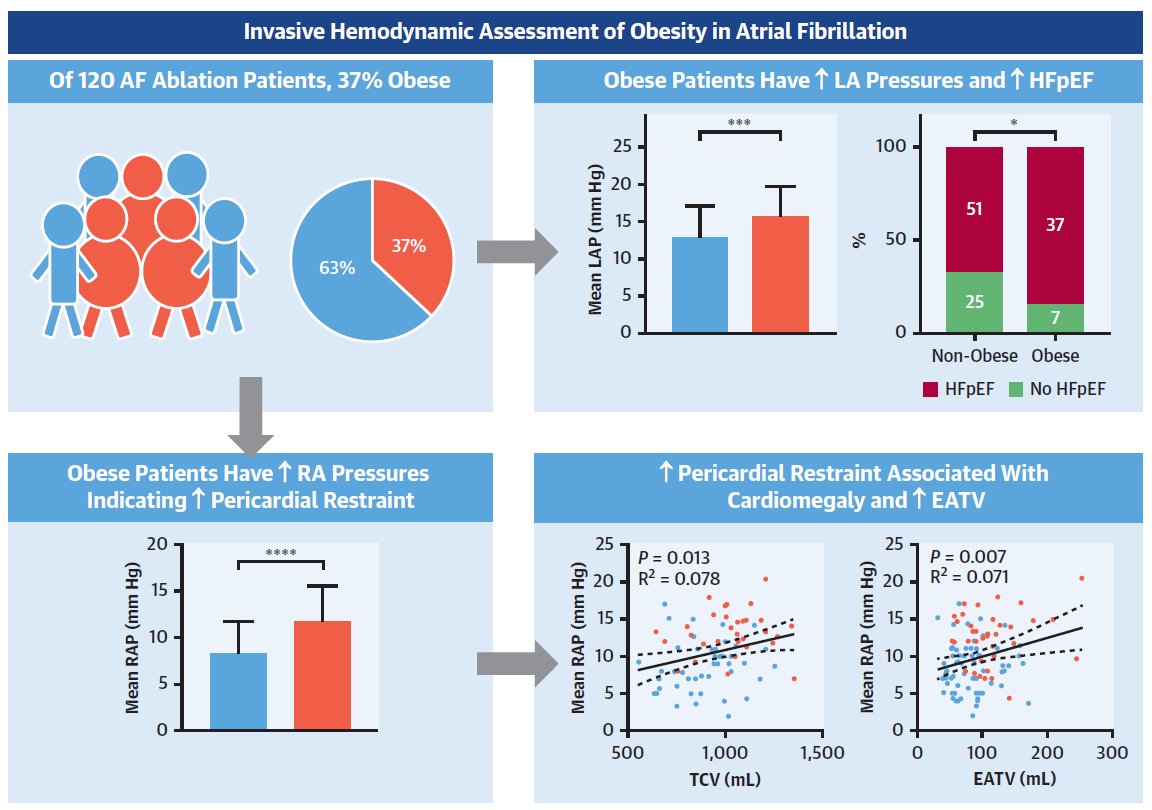
🚨 New from #CHRD in JACC EP:
Obesity presents a unique phenotype of HFpEF
In AF patients, obesity & ↑ epicardial adipose tissue drive higher atrial pressures, pericardial restraint & greater prevalence of HFpEF
Targeting weight loss may improve symptoms & reduce HF risk.
https://t.co/DFNsgWSOVS
@JonathanAriya@UniofAdelaide
Obesity is a major driver of AFib.
Our latest review in @HeartLungCirc explores the pathophysiological links & how lifestyle & pharmacological therapies may help reduce AF burden.
📄 : https://t.co/X93Jn6jd8s
@Elliott_AD@JonathanAriya@melissaemm1@PrashSanders
Looking forward to presenting the CAAN-AF study as a Late-Breaking Clinical Trials: recent advances in CIED therapies at #ESC2025@escardio
Link to methodology paper:
DOI: 10.1016/j.hroo.2025.07.018
@UniofAdelaide#CHRD@nhmrc
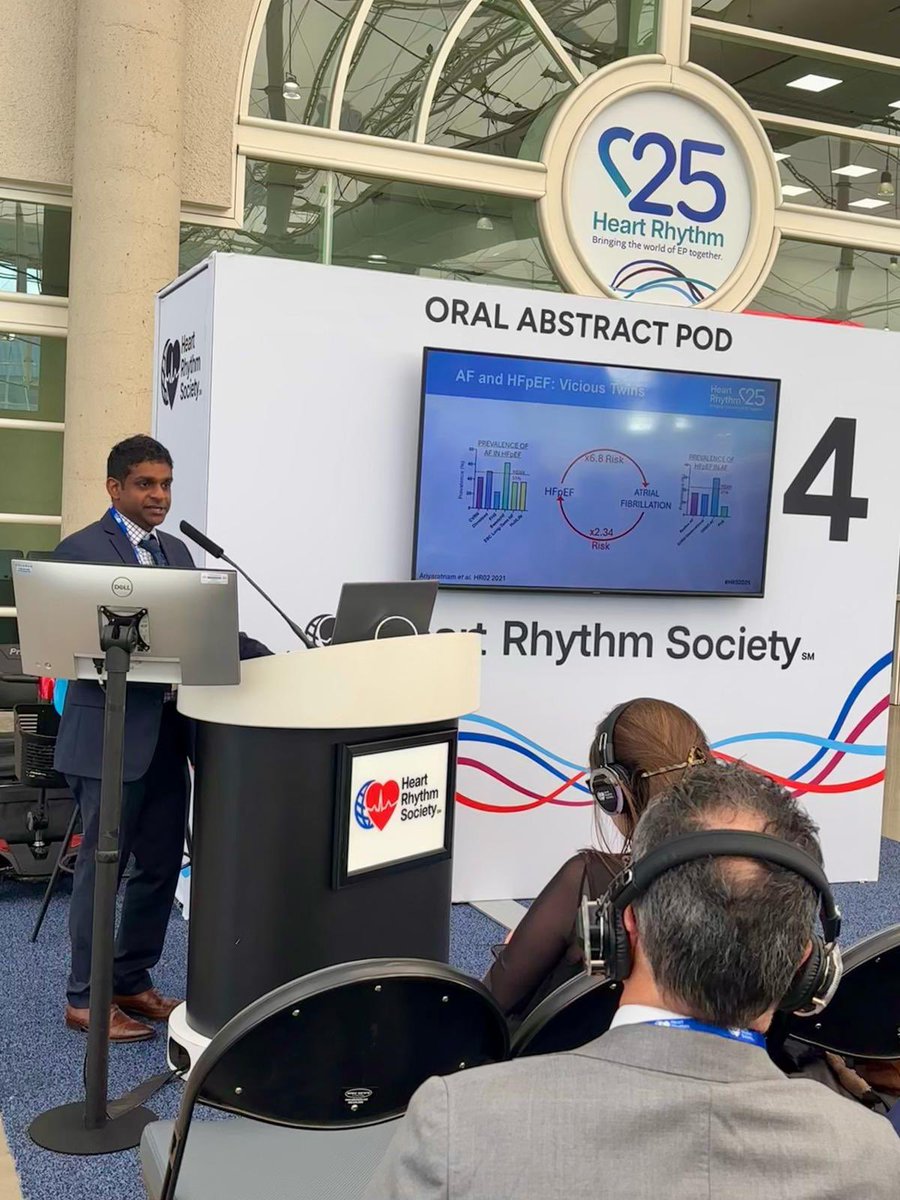
@JonathanAriya shows that many AF ablation patients have subclinical HFpEF — elevated filling pressures, impaired reserve, yet no ‘diagnosis.’
If it’s there and it matters, shouldn’t we be treating HFpEF while we ablate? 🔥❤️🩹 #AFib#HFpEF#CSANZ2025
HFpEF + AFib = a toxic duo. @JonathanAriya work shows AF isn’t just a bystander — it worsens haemodynamics, drives symptoms, and fuels hospitalisations.
If AF is part of the problem, shouldn’t ablation be part of the solution? 🔥❤️🩹 #AFib#HFpEF#CSANZ2025
🚨 New study out now!
Can your pacing lead handle a hypertrophied septum? We developed an ex-vivo ovine model to test Stylet Driven vs Lumen Less Leads in thick septa.
🧠 SDLs went deeper, faster, and with less torque.
📄 https://t.co/JAEPK1qR9v
#EPeeps#LBBAP#CardioTwitter #HeartRhythm
#CHRD @UniofAdelaide@HRSonline
Not all symptoms are equal‼️
@JonathanAriya outlining the significance of Exertional Symptoms 🗣️ in the LAST-AF cohort.
Another piece in the puzzle for EARLIER detection of HFpEF in patients with AF #HRS2025#CHRD